
The Federal Government has finalized plans to sell a vast estate linked to former Central Bank of Nigeria Governor, Godwin Emefiele, to low- and middle-income Nigerians.
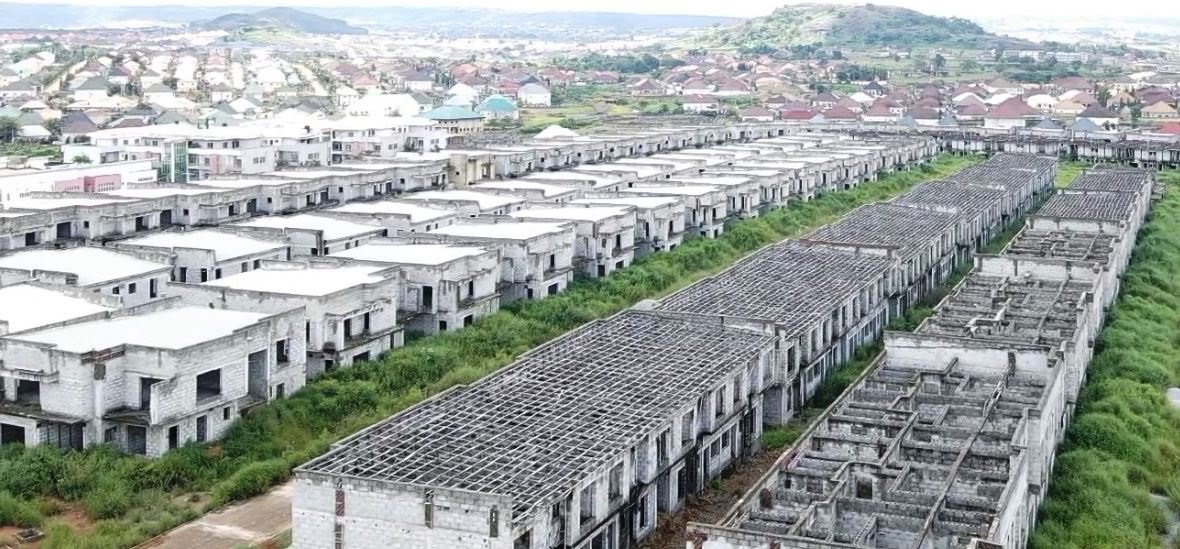
The estate, comprising 753 housing units, was recovered by the Economic and Financial Crimes Commission (EFCC) in December 2024.
According to the EFCC, the property, which spans more than 150,000 square metres and includes various types of apartments and duplexes, marks the agency’s largest single asset recovery since its establishment in 2003.
Following a final forfeiture order granted by Justice Jude Onwuegbuzie of the FCT High Court on December 2, 2024, the estate was handed over to the government.
Although Emefiele challenged the forfeiture in April 2025, alleging he wasn’t notified of the proceedings, the court dismissed his request.
On May 20, 2025, EFCC Chairman Ola Olukoyede officially handed over the estate to the Minister of Housing and Urban Development, Ahmed Dangiwa.
According to the ministry’s spokesperson, Badamasi Haiba, the estate, still under construction, will undergo structural evaluations before being offered to the public.
“Next would be to profile the houses and decide how they will be sold to Nigerians. However, the intention of the minister has always been homeownership for all categories of Nigerians, including low and middle-income earners, so we should expect to see such intentions play out here, all-inclusive,” Haiba said.
He explained that the ministry’s online portal will be used to ensure transparent and inclusive sales.
“Homes sold by the ministry will always have flexible payment options, including mortgage, instalment, rent-to-own payment, etc., whether in this case or any other,” he added.
Haiba emphasized transparency in the allocation process.
“With the renewedhopehomes.fmhud.gov.ng portal, the ministry has cut off human interference to ensure that the sales process is transparent and all-inclusive.”
“Any Nigerian can sit in their home, log onto the portal, browse through the different types of units and locations, select the house they want, select a payment option, submit their application, and get an offer letter right there and then.”
However, a visit to the estate showed the property has deteriorated, overgrown with bushes and reportedly infested by snakes, the estate appears neglected.
Security guards nearby said construction stopped in July 2023, about a month after Emefiele’s arrest by the DSS.
“When construction was ongoing here, there were nothing like snakes. But since they stopped work, snakes have been coming from that bushy estate. We’ve killed many,” one guard recounted.
Real estate and urban development experts have expressed skepticism about the plan to sell the estate to low-income earners.
Moses Ogunleye, former President of the Association of Town Planning Consultants of Nigeria, questioned the affordability.
“If those properties have four bedrooms, I don’t think they can be for low-income earners… If they want to give them to low-income earners as they are, the buyers are going to be spending a lot of money.”
Similarly, Stephen Eke, President of Fajiri Construction Ltd, called the plan impractical.
“These estates are usually designed for luxury and exclusivity, making them structurally and financially incompatible with the affordability thresholds required for social or middle-income housing.”
He recommended that the government sell the estate at market value and use the proceeds to build affordable homes.
“With the funds, government or development agencies can construct multiple units of affordable housing… using cost-efficient materials and designs suited to their needs.”
Kunle Awobodu, former President of the Nigerian Institute of Building, added, “The government should offer it at a subsidised rate. It should be gradual, like a mortgage.”
Jeremiah Akinsele, CEO of Magnificent Choice Services, also doubted the feasibility.
“Attempting to sell such high-value properties at discounted rates… is unrealistic and prone to abuse… considering the minimum wage in Nigeria is around N70,000, it is practically impossible for them to afford a plot of land or upkeep a luxurious estate in places like Abuja.”
Adewunmi Okupe, CEO of Ace Hi-Tech Construction, proposed remodelling.
“Each large unit on the estate could be subdivided into four or more smaller apartments… This strategy offers a practical pathway to expanding affordable housing.”
Godfrey Godfrey of the Nigerian Institute of Building shared his concerns:
“We are talking about a duplex in Africa. So, honestly, it is not within the reach of a low-income earner in Nigeria.”
He warned against political hijack of the sales: “Those in government may end up finding a way to acquire them for themselves. The intended low- or even middle-income earners may never get hold of them.”
Azeez Ayodabo, General Secretary of the Nigerian Institute of Quantity Surveyors, pointed out the pricing issue.
“Looking at the cost of those buildings, they may not be less than N100m to N200m per unit at the moment.”
He also proposed a redesign: “You have duplexes, but what does a low-income earner want to do living there and maintaining it? One duplex can be remodelled into about four flats.”
Aliyu Wamakko, past President of the Real Estate Developers Association of Nigeria, advocated a fair and open process.
“There should be equal opportunity for all Nigerians… A portal should be opened… so that at least everybody has equal opportunity to get to the website and apply.”
Festus Adebayo, Executive Director of the Housing Development Advocacy Network (HDAN), urged the government to retain the estate as a social housing project.
“The seized property… should not be sold to the highest bidders, but rather restructured and retained under public ownership for the benefit of Nigeria’s most disadvantaged population.”
He proposed a digital raffle draw system to allocate homes affordably.
“The draw would be conducted publicly… Winners would be notified automatically via SMS… The proceeds from the raffle sales could generate as much as N10bn… sufficient to fund the remodelling and completion of the estate.”
HDAN emphasized that converting the estate into rental units managed by the Federal Housing Authority could offer a lasting solution to Nigeria’s housing crisis.