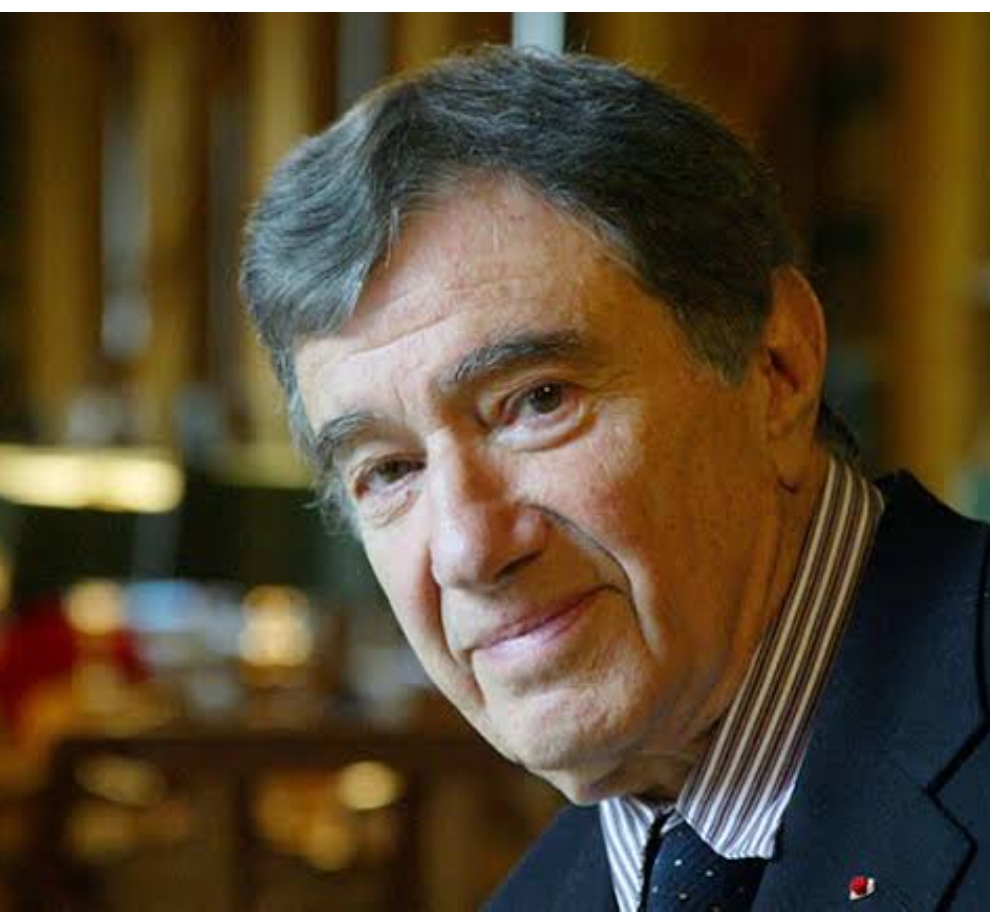

French biologist and trailblazer in reproductive health, Etienne-Emile Baulieu, has died at the age of 98.
He passed away peacefully at his Paris home, as confirmed by his wife, Simone Harari Baulieu.
Best known for his groundbreaking role in the development of the abortion pill mifepristone (RU-486), Baulieu was a lifelong advocate for scientific innovation, women’s rights, and medical progress.
“He was committed to empowering women and using science to enhance human life,” said Simone Harari in a heartfelt statement.
French President Emmanuel Macron paid homage to Baulieu’s enduring legacy, describing him as “a beacon of courage” and a visionary “who enabled women to win their freedom.”
Macron added, “Few have transformed the world as profoundly as he did.”
Baulieu’s most notable contribution to medicine was the invention of mifepristone in the early 1980s, a pill that revolutionized access to safe, non-surgical abortion worldwide.
Despite intense backlash and personal attacks from anti-abortion groups, particularly in the United States, he remained steadfast in defending the drug and the principles behind it.
In 2023, when Wyoming became the first U.S state to ban the abortion pill, Baulieu, then 96, condemned the move as “scandalous,” underscoring his lifelong dedication to reproductive rights.
Born Etienne Blum on December 12, 1926, in Strasbourg, Baulieu grew up under the care of his feminist mother after losing his physician father early in life.
He joined the French resistance against Nazi occupation as a teenager, adopting the name Emile Baulieu, and later added Etienne to honor his past.
After World War II, he turned to medical research, focusing on steroid hormones. In the 1960s, while working in the U.S, he was encouraged by contraceptive pioneer Gregory Pincus to delve into reproductive hormones.
This led him back to France, where he developed a method to block progesterone, the hormone necessary for pregnancy continuation, paving the way for mifepristone.
Baulieu had a deep appreciation for the arts and counted figures like Andy Warhol among his friends.
“Artists explore the soul in a way scientists never can,” he once reflected, acknowledging the creative world’s influence on his thinking.
Throughout his career, Baulieu remained a tireless researcher.
Even in his 90s, he was active in his lab, conducting studies on Alzheimer’s disease and depression.
He believed that science could eventually unlock solutions for both conditions and had initiated global clinical trials for treatments.
In 1963, he also became the first to describe the hormone DHEA, theorizing about its anti-aging potential, a view that gained traction in the cosmetics industry, though with limited medical results.
Over his lifetime, Baulieu received numerous accolades, including the Lasker Award in 1989.
In 2023, Macron honored him with France’s highest national distinction, recognizing his courage in the face of fierce opposition and personal attacks, often laced with anti-Semitism.
He was previously married to Yolande Compagnon and, after her death, wed Simone Harari in 2016.
He is survived by three children, eight grandchildren, and nine great-grandchildren.
Baulieu leaves behind a legacy not only in medicine but in the ongoing global dialogue about reproductive rights, scientific integrity, and the pursuit of human dignity through knowledge.