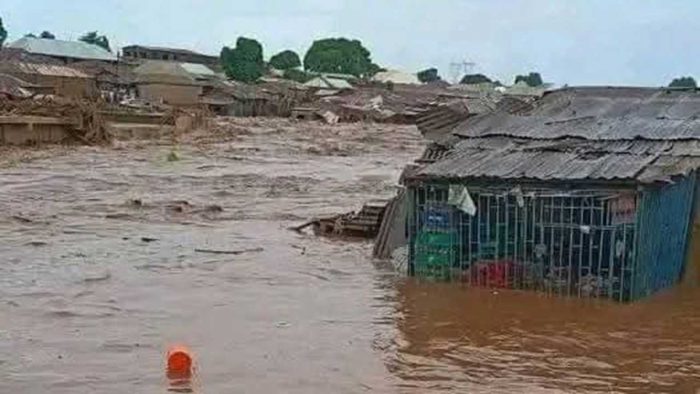

In a show of solidarity, Borno State Governor, Babagana Zulum, has extended financial support amounting to ₦300 million to assist victims of the devastating flood that recently struck Mokwa Local Government Area in Niger State.
Governor Zulum led a Borno delegation to Minna on Tuesday, June 10, 2025, where he paid a condolence visit to Niger State Governor Umaru Bago and expressed his sympathy over the disaster that claimed over 200 lives and left thousands displaced.
“The donation is to support and complement the efforts of the Niger State Government in response to the disaster,” Zulum said, describing the scale of destruction, homes, farmlands, and livelihoods lost, as deeply concerning.
Highlighting the broader environmental challenges at play, Zulum stressed the need for greater collaboration among states.
“It is time for subnational governments to work collectively to mitigate the impact of climate change, which is contributing to these disasters,” he said.
He further called on the Federal Government to implement a strategic and robust national framework to confront the recurrent issue of flooding and other climate-induced emergencies.
“The Federal Government should establish a comprehensive mechanism to address the recurring challenge of flooding and other climate-related issues,” Zulum urged.
Responding to the gesture, Governor Umaru Bago expressed heartfelt gratitude to his Borno counterpart for both the visit and the significant donation.
Describing the support as timely, Bago said, “It is a true demonstration of solidarity and brotherhood.”
He acknowledged the historical and cultural bonds shared between Niger and Borno states and commended Zulum’s leadership qualities.
“Zulum’s commitment, resilience, and compassion continue to inspire other leaders,” he added.
Governor Bago assured that the ₦300 million would be transparently and effectively deployed to bring relief to the affected areas. He also emphasized preventive measures, including better community awareness.
“We must sensitize residents on the dangers of living close to coastal and flood-prone areas to prevent future occurrences,” he stated.