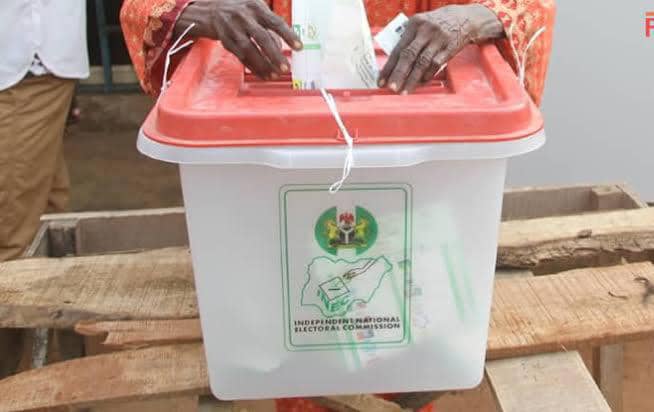

In a stark warning about Nigeria’s growing electoral costs, the Westminster Foundation for Democracy (WFD) has revealed that obtaining a House of Representatives ticket may now cost up to ₦500 million, while defending or challenging a result in court could set a candidate back by ₦1 billion.
The revelation came during the official launch of a new WFD report in Abuja, titled “How Money is Undermining Nigeria’s Democracy.”
The report was supported by the European Union under the WYDE Civic Engagement project.
It paints a grim picture of Nigeria’s democratic future, warning that women, youth, and Persons With Disabilities (PWDs) are increasingly priced out of the political arena.
“Justice itself is now only affordable to the highest bidders,” the report stated, adding that “some senior lawyers now charge between ₦500 million and ₦1 billion per client to handle election disputes from the tribunal level to the Supreme Court.”
According to the WFD, the country’s political economy now allows only the wealthiest to compete.
In the 2024 off-cycle elections, it estimated that major governorship contenders in Edo and Ondo states spent between ₦2.3 billion and ₦3.8 billion, respectively.
The report also criticized the Electoral Act’s campaign spending limits, arguing that while they exist on paper, “enforcement remains weak or non-existent.”
Meanwhile, the Independent National Electoral Commission (INEC) has unveiled its official timetable for the 2025–2026 election cycle.
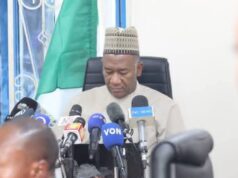
INEC Chairman, Prof. Mahmood Yakubu made the announcement during the second quarterly consultative meeting with Resident Electoral Commissioners (RECs) in Abuja.
“The five major elections highlighted in the new timetable include by-elections in 12 states, slated for August 16, 2025, followed by the Anambra State Governorship election on November 8, 2025.”
“Looking into 2026, the schedule includes Area Council elections in the Federal Capital Territory (FCT) on February 21, 2026, the Ekiti State Governorship election on June 20, 2026, and the Osun State Governorship election on August 8, 2026,” he said.
Yakubu also announced that Continuous Voter Registration (CVR) will resume nationwide, beginning with online pre-registration on August 18, 2025, followed by in-person registration from August 25.
For Anambra State, ahead of its off-cycle election, the CVR will begin next week and take place across all 326 wards, in line with the Electoral Act’s 90-day voter registration requirement.
INEC also used the occasion to welcome two new National Commissioners, Prof. Sunday Aja and Abdulrazak Yusuf, along with six recently appointed RECs attending the meeting for the first time.
Yakubu reminded the RECs of their frontline role in electoral management:
“The critical role of RECs in election management cannot be overemphasized. I urge you to proactively implement policy and procedural issues without constant prompting from the Headquarters.”
In response to lingering legal ambiguities, INEC disclosed plans to issue supplementary regulations on the review of election results, specifically to clarify Section 65 of the Electoral Act 2022, which deals with reviewing declarations and returns.
“As we approach the by-elections, the off-cycle governorship elections and ultimately the 2027 general election, the commission is concerned with the various interpretations given to the provision of Section 65 of the Electoral Act 2022 on the review of election results,” Yakubu said.
“Pursuant to our powers to issue regulations, guidelines and manuals to give effect to the provisions of the Electoral Act and for its administration, the Commission is working on a supplement to the Regulations and Guidelines for the Conduct of Elections 2022 to provide clarity on the review of declaration and return at elections.”
He added that the new supplementary guidelines could be released this week and will be made available on INEC’s official website and platforms.