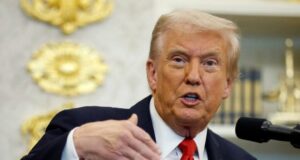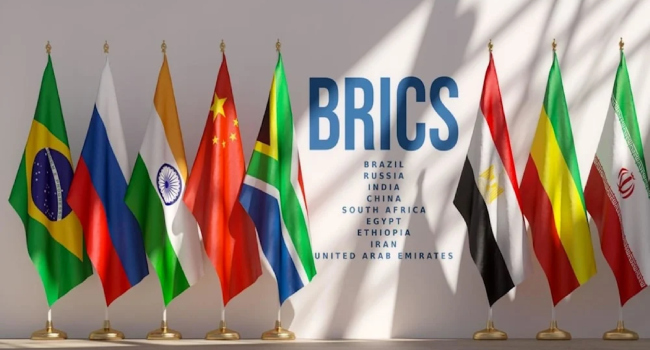

As the 17th BRICS Summit opens in Rio de Janeiro, member nations are poised to push back against US President Donald Trump’s recent tariff threats without explicitly naming him.
Instead, summit declarations are expected to deliver a measured critique of “unfair US import tariffs.”
Diplomats from the bloc including Brazil, Russia, India, China, and South Africa have been working on the language behind the scenes.
The expected statement will avoid directly naming the US but is described by Marta Fernandez, director of the BRICS Policy Center in Rio, as “a clear political shot directed at Washington.”
Fernandez noted that the final declaration will carry a “cautious tone,” adding:
“It will be difficult to mention the United States by name in the final declaration.”
China in particular is treading carefully: “This doesn’t seem to be the right time to provoke further friction,” Fernandez added, referring to China’s recent trade negotiations with the US.
Chinese President Xi Jinping is notably absent opting out for the first time in his 12 years while Russian President Vladimir Putin will participate only via video link.
Ryan Hass, a Brookings Institution fellow, suggests Xi’s absence may reflect a desire not to be “upstaged” by India’s Prime Minister Narendra Modi, who will be a special guest of honor with a state lunch.
The notable no-shows are a setback for host President Luiz Inácio Lula da Silva, who is seeking to elevate Brazil’s global standing.
Over the next year, Brazil is set to host the G20, BRICS, and COP30 before its presidential elections.
The wars in Gaza and Iran–Israel conflict have sparked debate among BRICS members.
Iranian negotiators are advocating for a tougher stance calling for more than just a statement endorsing a Palestinian state and peaceful settlements.
Their president, Masoud Pezeshkian, is also absent from the summit.
Brazil’s Foreign Minister Mauro Vieira expressed hope that the bloc could unite on Middle East issues, stating:
“BRICS… have managed to speak with one voice on major international issues, and there’s no reason why that shouldn’t be the case this time on the subject of the Middle East.”
Beyond geopolitics, BRICS leaders will explore artificial intelligence, health initiatives, and bloc expansion.
The group now includes Saudi Arabia, Iran, the UAE, Egypt, Ethiopia, and Indonesia, boosting its influence but adding complexity to consensus-building.