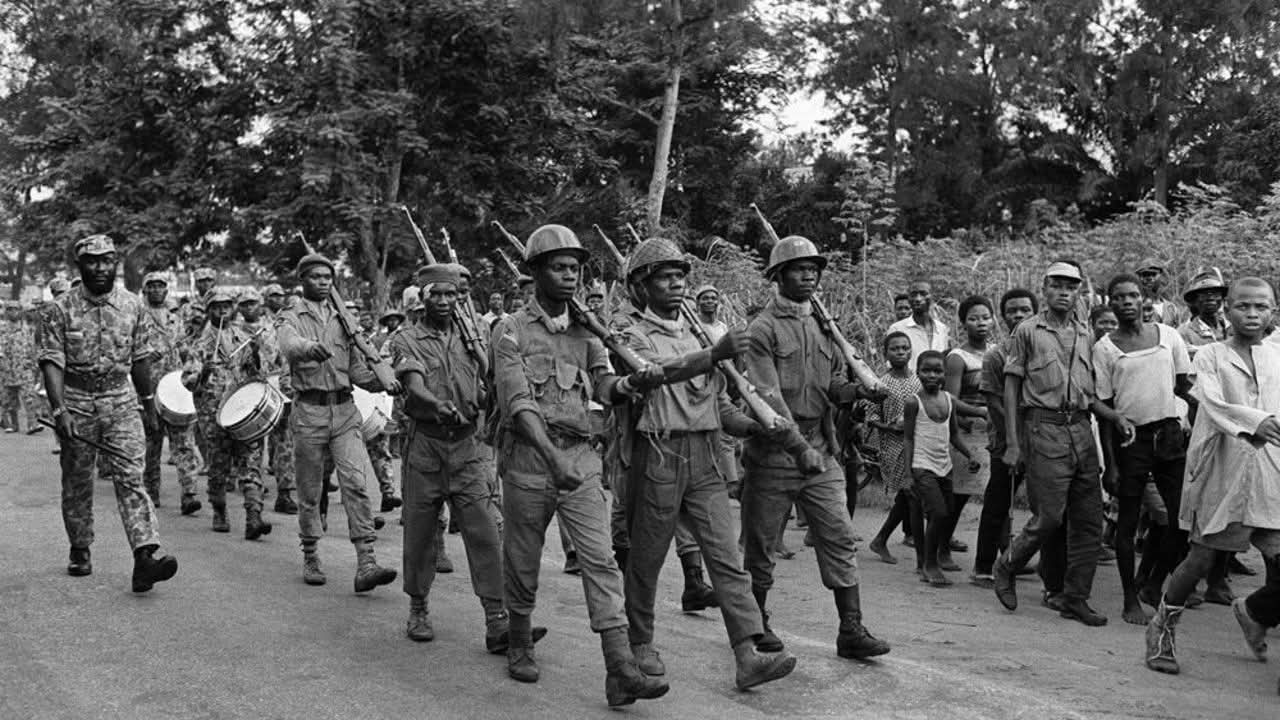

The Biafra-Nigerian Civil War, remains one of the most harrowing chapters in the nation’s history.
Sparked by deep-rooted political, ethnic, and economic tensions, the war broke out in July 1967 when the Eastern Region of Nigeria declared independence as the Republic of Biafra.
In response, the Nigerian federal government launched a military campaign to reclaim the breakaway region, igniting a brutal conflict that would last nearly three years.
From 1967 to 1970, Nigeria was consumed by a war that devastated its southeastern region and left deep scars that still linger today.
According to records cited by Wikipedia, more than 100,000 soldiers were killed during the fighting. But the greater tragedy was borne by civilians, between 500,000 and 2 million Biafrans died, primarily due to starvation.
The humanitarian crisis reached global attention as images of emaciated children flooded the media, prompting international aid efforts and raising urgent questions about the ethics of warfare and blockades.
The Biafran side, encircled and cut off from vital food and medical supplies, suffered immensely under the weight of famine.
Though the war ended in January 1970 with the reintegration of Biafra into Nigeria, its legacy remains.
The phrase “No Victor, No Vanquished” became a slogan of post-war reconciliation, but for many, the psychological and emotional wounds never fully healed.
Today, the Biafran War serves as a solemn reminder of the dangers of division, the importance of dialogue, and the enduring cost of armed conflict on civilian populations.