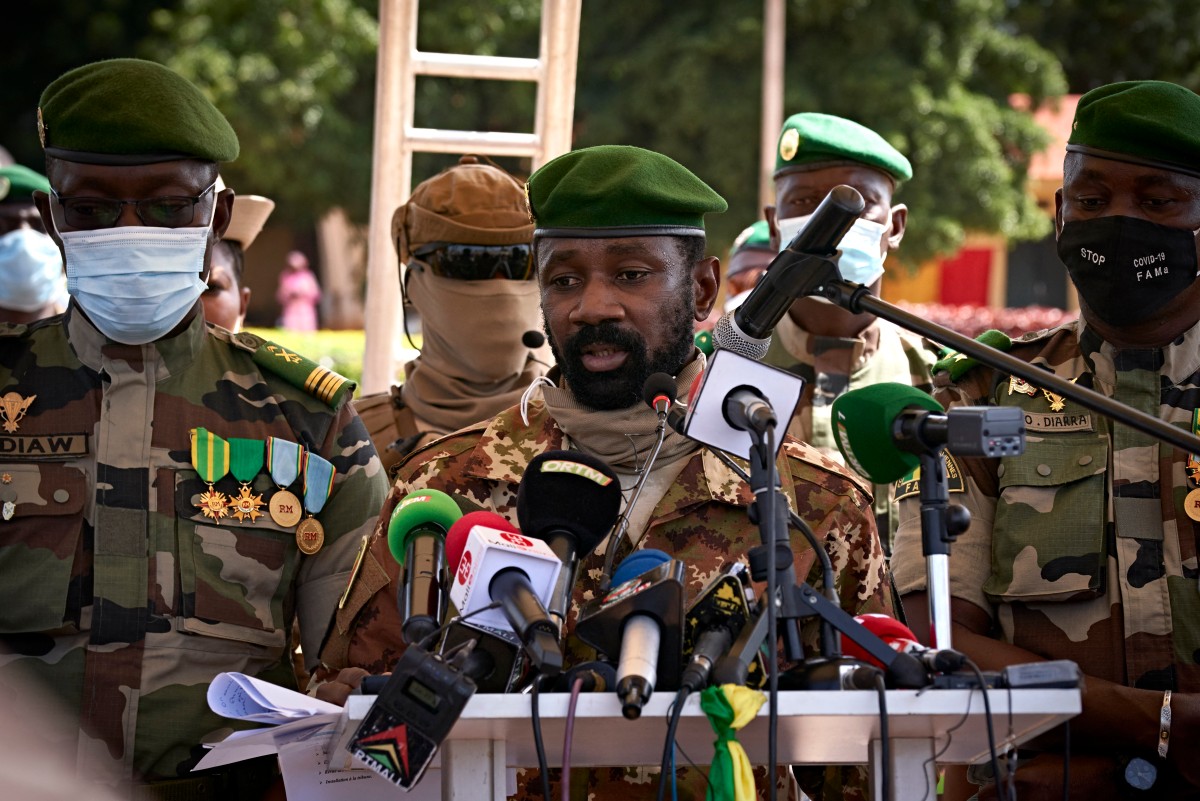

Mali’s junta leader, General Assimi Goïta, has officially signed into law a new measure that grants him a five-year presidential term renewable “as many times as necessary” without the need for an election.
The law, signed on Tuesday and made public on Thursday, was passed last week by the military-appointed legislative body and had been widely anticipated.
It enables Goïta to remain in power until at least 2030, contradicting earlier commitments made by the military government to transition to civilian rule by March 2024.
According to the new legislation, Goïta will serve “as head of state for a term of five (05) years, renewable as many times as necessary, until the country is pacified.”
The law is the latest step in a string of moves by Mali’s military rulers to consolidate authority and restrict civil liberties, as the country continues to battle jihadist insurgencies across its territory.
The country’s Council of Ministers had previously adopted the measure last month before it received Goïta’s final endorsement.
Goïta, who seized power in 2021, had originally pledged to restore democracy and prioritize the fight against jihadist violence.
Upon assuming control, he was hailed by some as a national hero, with hopes that he could restore stability to the troubled West African nation.
However, critics argue he has reneged on his promises to hand over power to an elected civilian government.
“Although we strongly disagree with the decision of the Supreme Court, but as adherents to the rule of law, we are bound by their verdict,” he said previously, reflecting his controversial hold on power.
Earlier this year, a junta-organized national consultation boycotted by most political parties, recommended installing Goïta as president without an election for a renewable five-year term.
The same gathering also advocated for the dissolution of existing political parties and stricter conditions for forming new ones.
Following that recommendation, the military regime announced in May the dissolution of all political parties and civic organizations and imposed a ban on public meetings.
This political tightening has occurred alongside calls from the military for national unity and support for the junta.
Goïta’s administration has also overseen a major geopolitical shift.
Under his rule, Mali severed ties with France and other traditional Western allies and pivoted toward Russia.
Together with fellow junta-led nations Burkina Faso and Niger, Mali has formed the Alliance of Sahel States (AES), a regional confederation that plans to deploy a joint 5,000-strong military force.
Mali’s partnership with Russian mercenaries operating under the Africa Corps banner has drawn international scrutiny.
These forces, deployed primarily to combat jihadist groups, have frequently been accused of human rights violations against civilians in conjunction with the Malian army.
Since 2012, Mali has grappled with violent attacks from jihadist factions affiliated with Al-Qaeda and the Islamic State, along with various criminal networks. These assaults have escalated in recent weeks.
Despite the deteriorating security and political climate, General Goïta retains support from a portion of the population that continues to view him as “an architect of reform and newfound sovereignty.”