
Calls for the creation of new states and local government areas, establishment of state police, and the inclusion of constitutional roles for traditional rulers took center stage during public hearings on the review of Nigeria’s 1999 Constitution held across the northern region over the weekend.
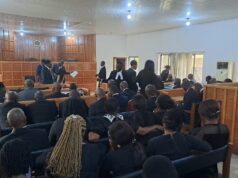
The House of Representatives Committee on Constitution Review conducted zonal public hearings in the North East, North Central, and North West to gather inputs from stakeholders, civil society organizations, traditional leaders, and other interest groups.
The committee revealed it had received 46 formal requests for new states and 117 demands for new LGAs from across the country, with proposals representing all six geopolitical zones.
“The committee had disclosed that it received 46 formal requests for the creation of new states, alongside 117 demands for new local government areas across the country, adding that the proposals submitted by various interest groups span all the six geopolitical zones.”
Despite repeated attempts in the past two decades to amend the constitution—costing over N20 billion and resulting in at least 30 alterations—progress has often been stalled due to lack of concurrence from two-thirds of the state assemblies or presidential assent.
North East Zone:
In Borno and Gombe, which hosted the North East hearings, stakeholders submitted seven proposals for new states and over 40 requests for additional LGAs.
The proposed states include Amana (from Adamawa), Savannah (Borno), Katagum (Bauchi), Tangalwaja (Gombe), and Muri, Kwararafa, and South Sardauna (Taraba).
Alhaji Sali Bello, Dan Amar Mubi, and leader of the Amana State movement, emphasized the longstanding demand:
“The state is long overdue,” he said, “stressing that they had been unjustly treated by the Nigerian state.”
Amb. Dauda Danladi, who advocated for Savannah State, argued:
“Creating the state would spur economic and rich cultural benefits which abound in its geographical location.”
Traditional rulers also strongly advocated constitutional recognition.
The Shehu of Borno, Dr. Abubakar Ibn Umar Garbai El-Kanemi, and the Emir of Gombe (represented by Dr. Sani Jauro), both submitted memoranda demanding defined roles for traditional institutions.
Hon. Zainab Gimba (Bama, Ngala, Kala-Balge Federal Constituency) called for gender inclusion:
“Reserved seats for women [are needed] to enable them have a voice in the decision-making process.”
North Central Zone:
In Minna, Niger State, stakeholders called for new states and LGAs, state police, and penalties for governors who undermine local government autonomy.
Proposed states include Kainji and Edu (from Niger and Kebbi), Okura and Okun (from Kogi), and Ifesuwakpo (from Kwara).
Amb. Ahmed Musa Ibeto, leading the Kainji State creation movement, said:
“The new state comprising Borgu and Kontagora Emirates and Zuru Emirate would reduce ungoverned spaces and aid the fight against insurgency.”
Kogi’s Governor, represented by Attorney-General Muzi Yinus Abdullahi (SAN), made a case for mining rights:
“A sector such as mining which is significant economic activity in Kogi State, both the federal and state governments should have the authority to legislate and regulate,” he said.
Niger State’s Attorney-General, Nasiru Mu’azu, emphasized broader reforms covering devolution of power, fiscal federalism, restructuring, and the electoral process.
Prof. Kathleen Okafor, consultant to the House Committee, presented a summary of the constitutional bills, covering key areas including the judiciary, legislative reforms, inclusive governance, rural development, and fundamental rights.
Labour groups also weighed in. The Nigeria Labour Congress (NLC), through Niger State Chairman Idrees Lafene, opposed removing Labour from the Exclusive Legislative List, warning against federal abdication of responsibility.
North West Zone:
At the Kaduna hearing chaired by Hon. Madaki Aliyu, Deputy Minority Leader, the demand for additional states, decentralization, and women’s political inclusion featured prominently.
Kano delegates advocated for Ghari State, while Southern Kaduna groups under SUKAPU submitted a detailed proposal for Gurara State.
Shuiabu Dabo, representing the Muslim Ummah of Southern Kaduna, said:
“Muslims in Southern Kaduna who make up about 30 percent of the population have agreed to align with the demand for the creation of Gurara State.”
Lt. Col. Shehu Ibrahim (rtd) supported the creation of both Gurara and a “New Kaduna” State. From Katsina, retired Justice Saminu Sanusi called for Kar’adua State, while Jigawa’s Malam Musa Shuaibu renewed a longstanding push for Hadeja State.
Alhaji Kabiru Ado advocated for Bayajidda State from parts of Katsina and Jigawa. A new state, “Chika,” was also proposed by labour leader Alhaji Baffa Sani Gaya.
The Emir of Zazzau, Amb. Nuhu Ahmad Bamalli, emphasized the need for traditional roles to be constitutionally recognized. Similarly, Aisha Ismail, former Women Affairs Minister speaking for the Arewa Consultative Forum, said:
“The forum supports the creation of state police.”