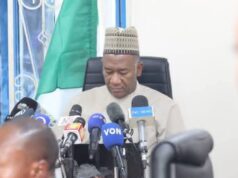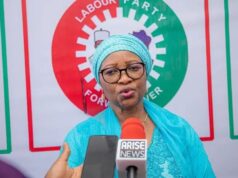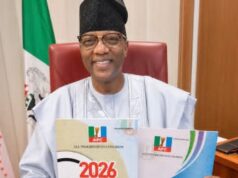

At a high-level summit in Abuja, former President Olusegun Obasanjo challenged widespread calls for a complete overhaul of Nigeria’s 1999 Constitution, stating that the country’s governance issues stem more from poor leadership than from flaws in the legal document.
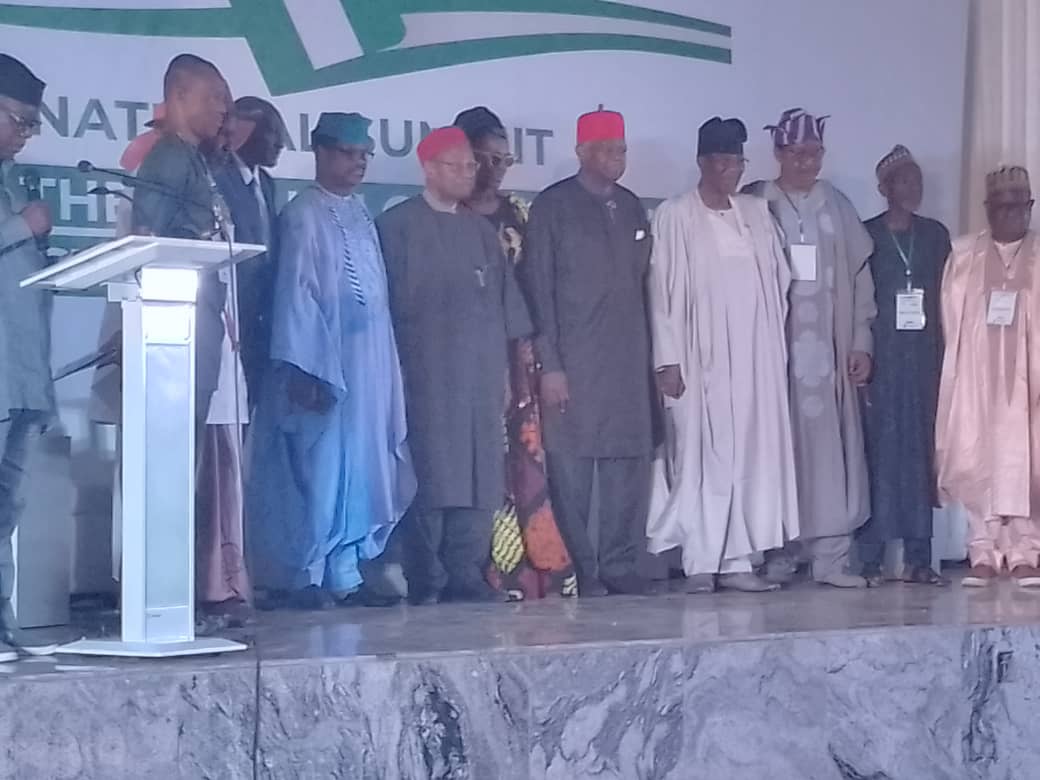
The summit, titled National Summit on the Future of Nigeria’s Constitutional Democracy, was convened by The Patriots in partnership with the Nigeria Political Summit Group.
The gathering attracted statesmen, legal experts, activists, and political leaders for a robust dialogue on Nigeria’s constitutional system.
While figures like Chief Emeka Anyaoku and former Governor Victor Attah advocated replacing the military-era constitution, Obasanjo and rights lawyer Femi Falana placed the blame squarely on those in power rather than the document itself.
Represented by Olawale Okunniyi, Secretary-General of Eminent Patriots, Obasanjo explained that although constitutional amendments are necessary, they won’t yield results unless political actors act responsibly.
“From my experience, I will be the first to acknowledge that our constitution needs amendment. But the most important issue is the operators of the constitution,” he said.
“The best constitution can be perverted and distorted by bad operators. In the past 15 years, Nigeria’s constitution has been sacrificed on the altar of selfishness, corruption, impunity, and disregard for morality and the rule of law.”
Obasanjo emphasized that no legal framework could fix the country’s problems if the current leadership model continues unchecked.
“At this critical time, the spotlight should be on leadership,” he added.
Speaking in more radical terms, human rights lawyer Femi Falana (SAN) condemned the ruling elite for resisting necessary reforms, especially those related to elections.
“The only way to discard the 1999 Constitution is through a revolution,” he said.
Falana criticized the judiciary for enabling stagnation, citing judgments that rendered electronic voting tools like BVAS and card readers optional.
He also slammed the National Assembly’s constitutional review process, labeling it ineffective and elitist.
“The current legislature is uncomfortable with any reform that threatens the status quo. Until citizens apply pressure, we won’t get real change,” Falana asserted.
Former Akwa Ibom State Governor Victor Attah took a firm stance, calling the 1999 Constitution illegitimate and undemocratic.
“This constitution robbed Nigerians of their sovereignty and promotes elite authoritarianism,” he said.
“We are governed not by democracy but by a handful of power brokers. That’s why voter turnout is declining and public trust is eroding.”
He advocated sweeping structural changes, including a return to federalism, a single legislative chamber, elected ministers, and stronger accountability mechanisms.
“Sovereignty must return to the people. We must end this unitary presidential system and reinstate the federal structure our founding fathers agreed upon,” he said.
Delivering the keynote address, former Commonwealth Secretary-General Chief Emeka Anyaoku stressed that only a truly federal and inclusive constitution could reflect Nigeria’s diversity.
“The 1999 Constitution is neither democratic nor inclusive. It was imposed by military decree and promotes excessive administrative spending at the expense of development,” he said.
Anyaoku underscored the summit’s importance in shaping a new constitutional direction:
“This summit is an opportunity to chart that course,” he added.
Ambassador Godknows Igali, speaking for the Pan Niger Delta Forum (PANDEF), supported a return to the 1963 Constitution’s principles. PANDEF demanded resource control, state police, rotational presidency, and greater fiscal autonomy for producing states.
Afenifere leaders, including Oba Oladipo Olaitan and Chief Femi Okurounmu, echoed these calls and proposed adopting the 2014 National Conference Report as a working blueprint.
According to Senator Gbenga Daniel, co-chair of the Summit Organising Committee, participants will examine issues such as federalism, local governance, judicial and electoral reforms, and national security.
“The conclusions will be consolidated into a communique for presentation to the Presidency and the National Assembly,” he announced.