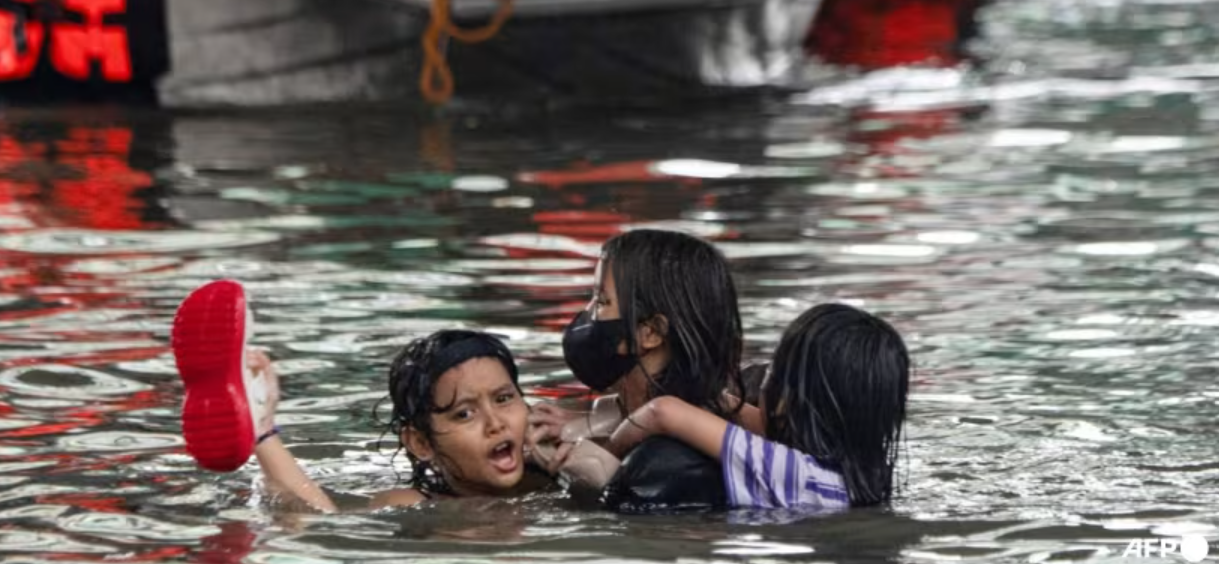

Torrential rainfall brought by Typhoon Wipha has paralyzed much of the Philippine capital, Manila, and surrounding provinces, leaving thousands displaced and two individuals missing.
Heavy downpours overnight caused the Marikina River to overflow, prompting emergency evacuations.
According to Wilmer Tan from the Marikina rescue office, the river reached a dangerous height of 18 meters (59 feet).
“Usually these people are from low-lying areas like beside creeks [feeding into the river],” Tan explained, referring to the 23,000 residents evacuated from areas near the river. Another 25,000 people were forced to flee their homes in Quezon and Caloocan cities.
Schools and government offices were shut down across Metro Manila as widespread flooding halted daily activities.
Rescue operations were ongoing Tuesday, following reports that an elderly woman and her driver were swept away while trying to cross a swollen creek in Caloocan.
“Their car was recovered last night. The rescue operation is continuing, but as of today, they haven’t found either of them,” said John Paul Nietes, an assistant supervisor at the emergency operations center.
“The car window was broken, so the hope is that they were able to escape.”
Though floodwaters had begun to recede by Tuesday morning, many evacuees remained in shelters, unable to return to their homes.
Since Tropical Storm Wipha brushed past the Philippines last Friday, at least three deaths and seven missing persons have been recorded in the central and southern regions, according to the National Disaster Risk Reduction and Management Council.
The Philippines, which experiences around 20 typhoons or storms annually, continues to face severe impacts from climate change, with extreme weather events growing in intensity. Poor and low-lying communities remain particularly vulnerable.
“This is hard, because if the rain continues… the river will swell,” said Avelina Lumangtad, a 61-year-old street sweeper, as she stood near a flooded road.
“The floods are dangerous.”