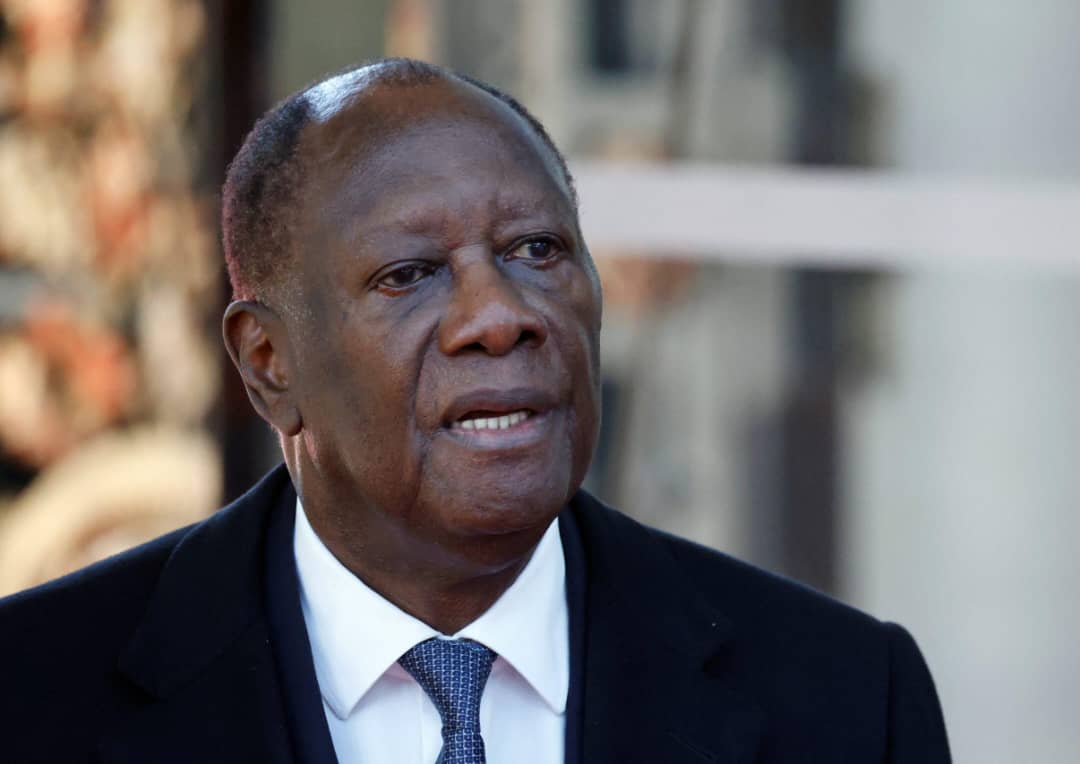

Ivory Coast’s President Alassane Ouattara, 83, announced on Tuesday that he will contest for a fourth presidential term in the country’s upcoming October 25, 2025 election.
The declaration comes amid heightened political tensions following the disqualification of several leading opposition figures from the race.
Speaking publicly for the first time since his party nominated him, the long-serving president said:
“I am a candidate because the constitution of our country allows me to run for another term and my health permits it.”
He argued that Ivory Coast, the world’s leading cocoa producer, was grappling with serious economic, security, and monetary challenges, which require experienced leadership to manage.
Ouattara has been in power since 2011 and is the standard-bearer of the ruling Rally of Houphouetists for Democracy and Peace (RHDP) party.
His decision to seek re-election has drawn sharp criticism from political opponents and civil society groups, who accuse him of consolidating power and undermining democratic norms.
Tensions have been escalating as key opposition candidates; Laurent Gbagbo, Charles Blé Goudé, Guillaume Soro, and Tidjane Thiam, have been barred from contesting by the electoral authorities.
Gbagbo, a former president; Blé Goudé, his ally; and Soro, a former prime minister, were excluded due to prior criminal convictions.
Thiam, an ex-international banker and head of the Democratic Party of Ivory Coast (PDCI), was reportedly disqualified over nationality concerns.
In response, the PDCI and the African People’s Party of Ivory Coast (PPACI)—led by Gbagbo, have launched a joint campaign demanding that their disqualified candidates be reinstated.
Opposition parties have accused the ruling authorities of manipulating the legal system to silence key challengers and control the outcome of the election.
However, the government maintains that the judiciary remains independent and that all decisions regarding candidate eligibility followed the rule of law.
Critics say the political environment is becoming increasingly repressive, warning that the country risks sliding back into unrest reminiscent of past election-related violence.