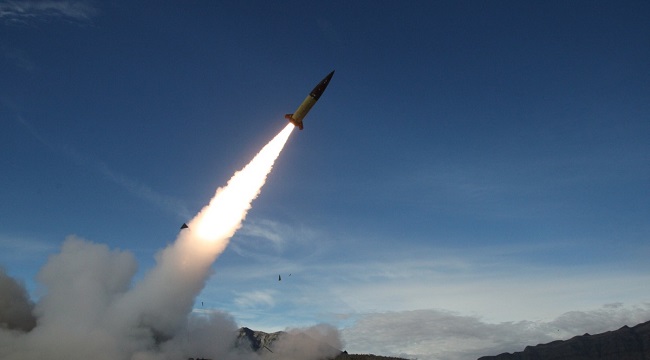

United Nations Secretary-General António Guterres has issued a powerful caution to global leaders, urging them to refrain from “playing with fire” as the world faces the growing threat of nuclear tests.
His remarks came on the International Day Against Nuclear Tests, a day dedicated to raising awareness of the dangers posed by nuclear detonations.
In his message, Guterres emphasized the need for global action, stating: “Stop playing with fire. Now is the time to silence the bombs before they speak again.”
The warning comes at a time when international tensions are rising, and the possibility of renewed nuclear testing looms large.
The UN chief’s statement marked the 80th anniversary of the first nuclear test, which took place on July 16, 1945, in the New Mexico desert as part of the United States’ Manhattan Project.
Since that fateful day, more than 2,000 nuclear tests have been conducted worldwide, many of which have left a long-lasting, devastating impact on both the environment and human health.
Guterres underscored the lasting consequences of these tests, which have led to the contamination of land and seas, forced the displacement of communities, and caused generational health issues.
The early atmospheric tests in particular spread radioactive fallout across continents, leaving survivors grappling with various health crises that have passed down through the generations.
The International Day Against Nuclear Tests was established by the UN General Assembly in 2009, following Kazakhstan’s decision to close the Semipalatinsk nuclear test site.
This site has since become a symbol of the global fight for the cessation of nuclear testing and the movement toward full nuclear disarmament.
Guterres pointed out that despite international efforts, the threat of nuclear testing remains a significant danger, particularly in light of escalating geopolitical conflicts.
He reminded the world of the “horrific legacy” left by over 2,000 nuclear tests, adding, “The world cannot accept this.”
As part of his appeal, Guterres urged nations to ratify the Comprehensive Nuclear-Test-Ban Treaty (CTBT), which was adopted by a wide majority in 1996.
Unfortunately, nearly three decades later, the treaty has yet to come into full force, with several key countries still holding out on ratification.