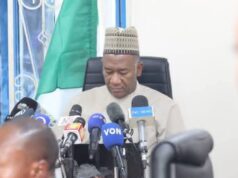

The Speaker of Nigeria’s House of Representatives, Dr. Abass Tajudeen, has voiced deep concern over the nation’s escalating debt burden, which has reached ₦149.39 trillion (approximately $97 billion) as of Q1 2025.
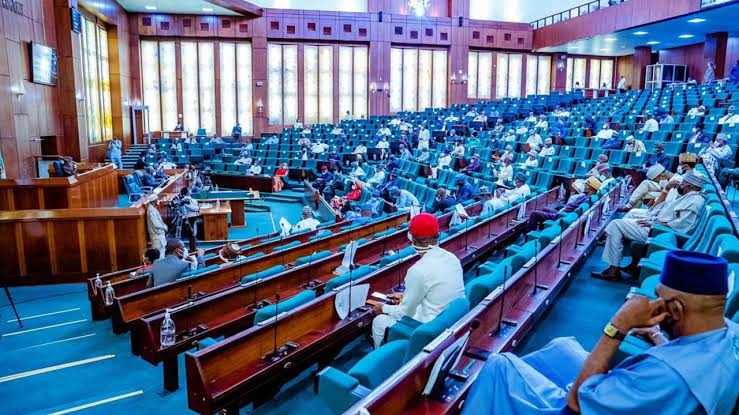
Speaking at the opening session of the 11th Annual Conference and General Assembly of the West Africa Association of Public Account Committees (WAAPAC), held at the National Assembly complex in Abuja, the Speaker described the debt situation as “worrying” and a “threat to fiscal sustainability.”
According to Dr. Abass, domestic debt accounts for 53% of the total, while external borrowing makes up 47%.
He noted that this figure marks a steep rise from ₦121.7 trillion recorded the previous year, highlighting how rapidly the debt load has grown.
“Even more concerning is the debt-to-GDP ratio, which now stands at approximately 52 per cent, well above the statutory ceiling of 40 per cent set by our own laws,” he warned.
The Speaker argued that breaching the debt ceiling signals growing pressure on Nigeria’s economic framework, and called for enhanced transparency in borrowing, as well as stronger fiscal oversight mechanisms.
He stressed that every borrowed naira must deliver tangible social and economic returns.
Shifting focus to the broader African landscape, Dr. Abass painted a troubling picture.
He said that Africa’s public debt hit $1.8 trillion by 2022, with external debt alone expected to surpass $1 trillion by 2023. Several countries, he said, are already in critical debt territory.
“Sudan’s debt-to-GDP ratio stands at 344 per cent, Angola at 136.8 per cent, Ghana at 84 per cent, Kenya is approaching 70 per cent, and South Africa is above 77 per cent,” he noted.
“In many of these countries, more is spent servicing debt than on critical areas like healthcare, thereby shrinking the fiscal space for development.”
He described the situation not just as a fiscal challenge, but a structural crisis that demands urgent and coordinated parliamentary intervention across the continent.
Dr. Abass further revealed that 35% of Africa’s government debt is currently held by Western private lenders such as banks, asset managers, and oil traders.
Another 39% is owed to multilateral institutions like the IMF and World Bank, 13% to bilateral lenders, and 12% to Chinese creditors, a figure he said is often exaggerated in public debate.
“To place this in sharper focus, in 2019, bondholders alone represented 27 per cent of Africa’s external debt, making them the single largest creditor group, ahead of China at 13 per cent,” he explained.
“The implications of this structure are far-reaching. A significant share of our national revenues is tied to debt servicing rather than being invested in the things our people need most: roads, schools, hospitals, and innovation.”
Dr. Abass warned that the high cost of commercial loans, combined with the obligation to repay in foreign currencies, leaves many African economies exposed to market shocks.
This, he said, severely limits policy flexibility and slows sustainable development.
“If Africa is to grow stronger, we must not only negotiate fairer terms of borrowing but also rethink our dependence on external finance,” he urged.
“We must channel more energy into mobilising domestic resources, fostering intra-African trade, and creating financial instruments that serve the continent’s own development priorities.”
The Speaker concluded with a rallying call for public financial accountability:
“Effective oversight of public debt demands vigilance, knowledge, and institutional strength,” he said, stressing the need to empower Public Accounts and Finance Committees.
He encouraged conference participants to share ideas and experiences that could lead to responsible debt governance, and urged for reforms that strengthen fiscal discipline across the continent.