
Nepal’s capital city of Kathmandu began to return to normal on Saturday following days of violent anti-corruption protests that left at least 51 people dead and led to the collapse of the government.
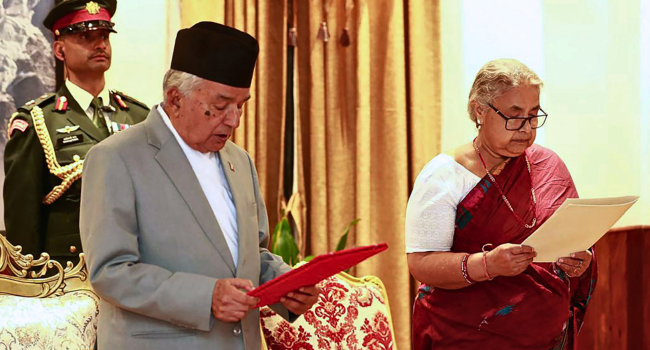
The unrest, the most severe since the country abolished its monarchy in 2008, forced sweeping political changes including the appointment of Sushila Karki, a former chief justice, as the country’s first female prime minister.
“Nepal has got its first woman prime minister,” said Suraj Bhattarai, a 51-year-old social worker.
“We think that the prime minister, our former chief justice, will address Nepal’s fight against corruption and take good governance forward.”
After days of military deployment and nationwide curfews, security forces began pulling back on Saturday.
Markets reopened, traffic resumed, and families were seen visiting temples, bringing a sense of relief to residents.
Karki, 73, was sworn in Friday evening at the presidential palace following a closed-door deal brokered by President Ram Chandra Paudel and Army Chief General Ashok Raj Sigdel.
The move followed intense consultations with youth activists, especially representatives from the “Gen Z” protest movement.
The new interim government will oversee the country until fresh elections scheduled for March 5, 2026, with parliament now dissolved.
Thousands of young Nepalis, frustrated by corruption and high unemployment, organized much of the protest activity through platforms like Discord, where they openly debated leadership options.
“The interim government decision is good for now,” said Durga Magar, 23, who works in a Kathmandu shop.
“The main issue for the people, especially young people, at this time is corruption.”
“It doesn’t matter whether it is Gen Z, or anyone older in politics who tackles it, it just needs to stop.”
The economic frustration fueling the protests is real, nearly 20% of Nepalis aged 15 to 24 are unemployed and the GDP per capita is just $1,447, according to the World Bank.
“We don’t know what will happen in the future now, but we are satisfied today and hope it will not remain as tense ahead,” Magar added.
Despite the current calm, Nepal faces significant challenges.
More than 12,500 inmates reportedly escaped during the unrest, posing serious national security concerns.
In addition, protesters’ calls for a complete overhaul of the political establishment remain loud and clear.
Former Prime Minister KP Sharma Oli, who resigned on Tuesday during his fourth stint in power, has not been seen since.
“They were playing a game of musical chairs,” said Shikhar Bajracharya, a 32-year-old businessman in Kathmandu.
“There was no possibility for younger people to come into power.”
India’s Prime Minister Narendra Modi sent his congratulations to Karki, expressing support for Nepal’s stability.
“Best wishes to Prime Minister Karki. India remains firmly committed to the peace, progress, and prosperity of the people of Nepal,” Modi said in a statement on Saturday.
As the dust settles, many in Nepal hope that the new interim leader, known for her integrity and independence, can restore trust and chart a new path for the country.