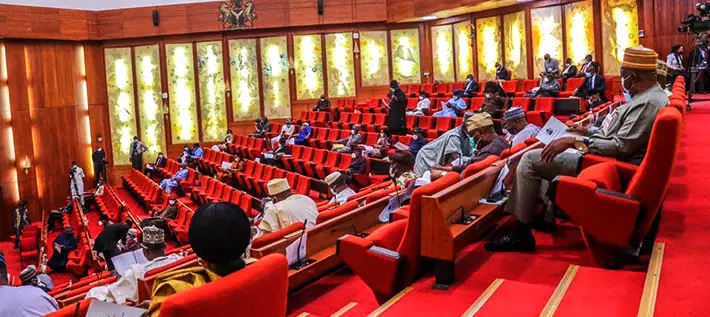

Efforts to improve women’s representation in Nigeria’s politics gained momentum yesterday as President Bola Tinubu, Senate President Godswill Akpabio and Speaker of the House of Representatives Tajudeen Abbas declared their support for a constitutional amendment bill seeking to create reserved legislative seats for women.
The bill, currently under discussion at a national public hearing in Abuja, aims to amend Nigeria’s 1999 Constitution to guarantee additional seats in the National and State Assemblies exclusively for women.
President Tinubu, represented by Secretary to the Government of the Federation, George Akume, emphasized that constitutional reforms must reflect the realities of today’s Nigeria.
“This process is about restoring public trust in democracy and ensuring all Nigerians feel represented. The final outcome will be treated with utmost importance,” Tinubu stated.
Senate President Akpabio, represented by Deputy Chief Whip Onyekachi Nwaebonyi, said the constitution belongs to the people, not just lawmakers, and urged citizens to seize the opportunity to help shape it.
House Speaker Tajudeen Abbas described the Reserved Seats Bill as a vital legal tool for equity, not sympathy.
“This is about fairness and justice. We are also exploring quotas for women in ministerial roles and greater inclusion of persons with disabilities,” he said.
Deputy Speaker Benjamin Kalu, chair of the House Committee on Constitution Review, called the proposal “transformative” and a solution to the systemic exclusion of women from governance.
“This isn’t symbolic. It’s a real step towards more inclusive leadership,” Kalu added.
Over one million Nigerian women submitted signed petitions in support of the bill, while hundreds held a peaceful protest in Abuja, urging lawmakers to pass the legislation.
Irene Awunah-Ikyegh, President of the League of Women Voters of Nigeria (NILOWV), presented the signatures, calling the bill a “legacy opportunity” for the 10th National Assembly.
“With only 15 women in the House and four in the Senate, our democracy isn’t representative. Reserved seats could change this forever,” she said.
Support also came from international bodies, including the British High Commission, European Union and United Nations, all of whom praised the move as a major step for democracy and inclusion.
The National Assembly has begun reviewing 87 constitutional amendment proposals covering a wide range of issues:
1. State & Community Policing
There is a major push for creating state and community police forces to improve local security. This proposal has long faced political resistance but is gaining renewed support due to growing insecurity nationwide.
2. Reserved Seats for Women and Persons with Disabilities
The proposed constitutional changes aim to legally reserve seats in the legislature for women and people with disabilities—a historic step toward inclusion.
3. Local Government Autonomy
Another major amendment seeks to grant financial and administrative independence to local governments, including the establishment of independent local election bodies.
Other key reform themes include:
- Electoral Reforms: Electronic transmission of results, diaspora voting, independent candidacy, and single-day elections.
- Judicial Reforms: Expanding the roles of courts, improving appointment processes, and reducing case backlogs.
- Human Rights: Prohibiting public parading of suspects and strengthening protections for vulnerable groups.
- Devolution of Powers: Transferring control of resources like water, minerals, and mines to state governments.
Deputy Speaker Kalu described the hearing as “the most inclusive constitutional review in Nigeria’s history” and urged Nigerians to remain engaged in the process.
A civil society group, One Nation One Law (ONOL), has called for the removal of Sharia law provisions from the Constitution, arguing that they contradict basic human rights protections and enable torture.
Presenting their position at the public hearing, ONOL stated that Sections 275–279, which permit Sharia law in 12 northern states, directly conflict with Section 34(1)(a), which prohibits torture and inhuman treatment.
“These provisions allow for punishments like stoning, flogging, and amputation, which violate human rights and fuel mob violence,” said ONOL spokesperson, Benson Sunday.
The group also criticized the religious imbalance in the Constitution, noting that terms related to Islam appear 165 times, while Christianity is not mentioned once, calling it discriminatory in a multi-faith country.
ONOL concluded that removing Sharia law from the Constitution would help reduce mob killings and religiously motivated violence, citing recent cases in Niger, Sokoto, and Kano.
The Etsu of Nupe, Yahaya Abubakar, urged constitutional recognition of traditional authorities as peacekeepers and community leaders.
Lois Auta-Udonkanta called for better representation, citing examples like Kenya’s inclusion of a visually impaired senator.
Former Information Minister Frank Nweke Jnr. pushed for diaspora voting rights, citing over $20 billion in annual remittances from Nigerians abroad.
The Nigeria Security and Civil Defence Corps requested constitutional recognition of its mandate in areas like infrastructure protection and school safety.
A PDP representative supported e-transmission of results and proposed mechanisms to ensure transparent 2027 elections.