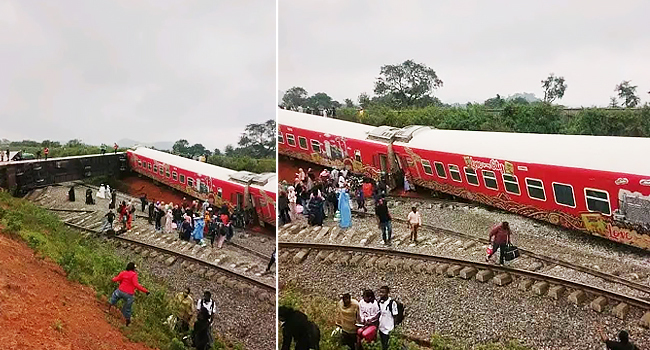

The Nigerian Railway Corporation (NRC) has announced that the Abuja-Kaduna passenger train service will resume next week, marking the end of a month-long suspension following a derailment incident near Asham.
Operations on the route were halted on August 26, 2025, after a section of the track was damaged, prompting safety concerns and a full suspension of service.
In a statement issued on Saturday and signed by Callistus Unyimadu, the Chief Public Relations Officer of the NRC, the Corporation confirmed that repairs and safety evaluations on the affected track have been successfully completed.
“The Nigerian Railway Corporation is pleased to announce that the Abuja-Kaduna passenger train service is set to resume operations next week, following the successful completion of repair and safety checks on the affected section of track at Asham,” the statement read.
Unyimadu noted that NRC engineers and technical teams had worked “tirelessly” to restore both infrastructure and rolling stock to international safety standards and emphasized the Corporation’s commitment to passenger safety and service quality.
As part of efforts to mitigate the impact of the disruption, the NRC disclosed that refunds have been issued to 512 passengers out of the 583 onboard the train at the time of the incident.
The Corporation said it is working to reach the remaining passengers to complete the refund process.
“We appreciate the patience and understanding of our valued passengers during this period,” Unyimadu said.
“Safety, comfort, and satisfaction remain our top priorities.”
The NRC also acknowledged the role played by the Federal Ministry of Transportation, security agencies, and the media in supporting the recovery process.
While no specific date was provided for the resumption of services, the Corporation assured the public that train schedules and operational details will be announced in the coming days.
The derailment, which occurred shortly after the train departed Abuja en route to Kaduna, caused panic among passengers.
Eyewitnesses described the scene as “chaotic,” with travelers scrambling for safety.
A preliminary investigation by the Nigerian Safety Investigation Bureau (NSIB) identified multiple lapses that contributed to the derailment.
Key findings included poor maintenance of the track, with previously damaged sleepers only patched rather than fully repaired, a faulty track switch that had to be manually operated using a broken point clip, lack of refresher training for NRC personnel, raising concerns about operational preparedness and limited access to essential maintenance tools and spare parts from the Original Equipment Manufacturer (OEM).
The NSIB’s report has raised fresh questions about NRC’s safety protocols and its preparedness for emergencies.