By Justice Chidi
Enugu, once the beating industrial heart of Eastern Nigeria, bears scars that tell of broken promises and abandonment. Names that once stood for livelihoods, pride, history and local industry have for decades been forgotten in the dusty archives of existence.
Places like Sunrise Flour Mills, Hotel Presidential, Nigergas, United Palm Products Ltd are more than just abandoned buildings: they are symbols of aspirations, blueprints of hope and echoes of tomorrow left in the dark.
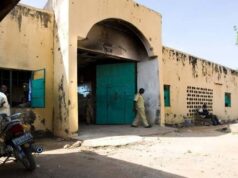
Sunrise Flour Mills, for instance, commissioned in the early 1980s, was meant to anchor local grain processing, reduce dependence on imported flour, and feed families. By the mid‑1980s, the machinery grew quiet; by the 2000s, its gates got rusted, and its silos overgrown by the weed of negligence.
And this wasn’t just about Sunrise. Similar stories played out: industries built with promise decayed under wrong policies or lack of vision. Facilities were either transferred, sold off, litigated over, or simply left to the weeds.
But in the decay, there remained memories: old photographs, testimonies, the stories grandparents told of a time when Enugu didn’t have to plead for oxygen, when “made in Enugu” meant more than the raw stones, but the finished steel, the packaged flour, and the hotel guests. As years passed by, these beautiful memories continued to fade into mere whispers of aborted aspirations.
When Governor Mbah came into office, he carried two intertwined promises: first, to restore Enugu’s dormant assets; second, to remake Enugu’s economy. The boldness of his manifesto, aiming to grow Enugu’s GDP from around US$4.4 billion to US$30 billion in a few years, would have seemed utopian to some, and rightly so.
But what broke through was the practical commitments: a framework of public‑private partnerships, legal claims to assets long held by others, revamping of facilities, and policies that showed seriousness
Mba did not start by speeches alone; moves were made. For instance, in April 2024, 14 properties forfeited to the EFCC were handed over to the state, some real estate, medical facilities, and transmission equipment. What had lain in bureaucratic and legal limbo since the 2000s was reclaimed.
Some of the most powerful moments in this war on dormant assets are already visible. Nigergas Company Limited: Established in 1962, built in the Okpara era had been silent for over three decades.
Today, under Mbah, it has been revamped to produce medical and industrial gases with capacity upgrades; it plans to branch into nitrogen, argon, CNG, CO₂. What this means is more than gas: shorter supply chains for hospitals, less cost for workshops, jobs, and revival of a sleeping industry.
The name, Sunrise Flour Mills, evokes memories of productivity, but for 39 years, it lay fallow, dormant, and deserted. Today, the Mba government has injected billions into it to get machinery working, and in parallel with establishing farmland to supply raw materials. This is an attempt not just to reopen a mill but to rebuild an agro-ecosystem that will catalyse farm inputs, processing, and distribution.
United Palm Products Ltd (UPPL) is yet another legacy industry. It has equally had a feel of the Mba midas touch. The revamp here involves private sector engagement and a plan that spans upstream, midstream, and the downstream srctors. The revival promises thousands of jobs for the teeming Enugu youths.
Hotel Presidential and International Conference Centre are heritage landmarks, once symbols of sophistication, hospitality, and state pride. They, too, have been resurrected by a wave of Governor Mba’s magic wand. The idea is not just about physical restoration of structures but about rewriting Enugu’s global profile.
These revivals are not just about buildings and factories, neither are they about political showpieces. For a young person in Enugu East or Nsukka whose parents once worked at Sunrise or UPPL, this revival means the possibility of a job without migration, a future without flickering dreams.
For hospitals currently reliant on distant oxygen suppliers, having Nigergas produce oxygen locally isn’t just cost saving. It could mean saved lives, especially in crises.
For youths in tourism, hospitality, and arts, Hotel Presidential and Internatonal Conference Centre are not just venues, platforms, and stages. They’re symbols of hope, power, and opportunity made possible through the ingenuity of a thinking government.
From the foregoing, it’s obvious that the governor understands that the ghosts of past decays are painful, but they also teach us that the easiest way to break will is to let things rot; that the strongest way to build is to restore what was lost, sharpen it, and make it live again.
The war against dormant assets in Enugu State is more than a bureaucratic project; it is a moral, economic, and cultural undertaking. Under Governor Mba, the dormant halls are being heard again; the mills, the gas plants, the conference halls, the forfeited properties—they are being turned back into instruments of life: of employment, health, and pride.
There is pride when a state reclaims its heritage. With the way the governor is going: reclaiming the forgotten, placing value on public assets, enabling private actors to partner rather than just privatizing in one direction, Enugu may well become a case study of how sub‑national African governance can resurrect, repurpose and reindustrialize without losing heritage.