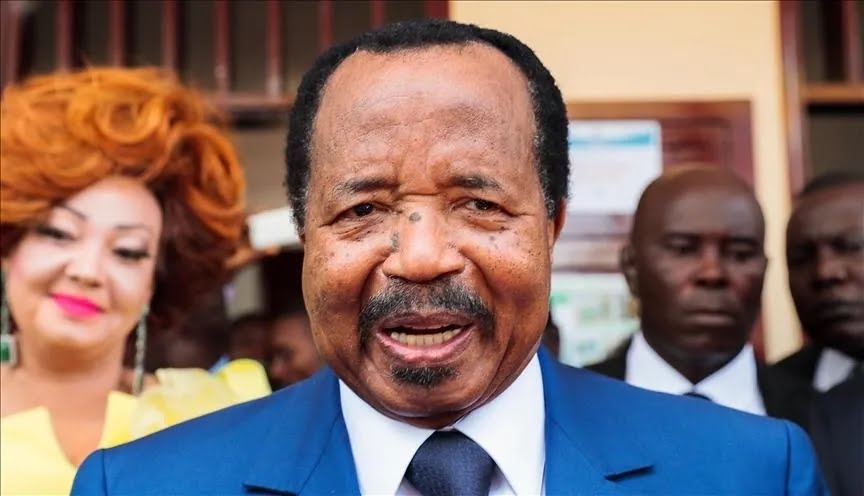

As Cameroon prepares for its presidential election on Sunday, 92-year-old President Paul Biya appears set to secure an eighth term, despite growing calls for change and concerns over the credibility of the vote.
Biya, already the world’s oldest serving head of state, has ruled the Central African nation since 1982. With the opposition fragmented among 11 candidates, he remains the overwhelming favourite in a race many critics describe as skewed in his favour.
More than 7.8 million Cameroonians are registered to vote, most of whom have never known any other national leader.
Yet as Biya edges closer to 100, questions around his health and fitness for office continue to mount.
The most formidable opposition figure, Maurice Kamto, who came second in the 2018 elections, was disqualified from running this year.
His absence has deepened voter frustration, particularly among young Cameroonians.
“This vote is a scam,” said Theophile, a 24-year-old artist in Douala who had hoped to support Kamto. “Nothing will change as long as the current system remains.”
Still, some citizens view Biya’s long tenure as a source of stability. Giovanni, a 20-year-old student, expressed cautious optimism: “He’s wise and experienced. Even if not all promises have been kept, I still believe in him.”
Biya’s minimal presence on the campaign trail has only fuelled speculation about his health. Earlier this month, he travelled to Switzerland, his preferred destination for medical treatment, before making a rare appearance at a campaign rally in Maroua on Tuesday.
“My determination to serve you remains intact,” he told a modest crowd during a 25-minute speech that focused on youth, women, and infrastructure. While his team expected tens of thousands to attend, eyewitnesses estimated only a few hundred showed up.
Biya first assumed the presidency in 1982 after his predecessor, Ahmadou Ahidjo, stepped down.
He won re-election unopposed in 1984, and again in 1988. Since the introduction of multiparty politics, Biya has continued to win elections with comfortable margins, often amid allegations of vote rigging and repression.
Over the years, he has used a combination of patronage, political alliances, and suppression of dissent to maintain control.
In past elections, he secured 93% of the vote in 1997, 71% in both 2004 and 2018, and 78% in 2011.
Despite widespread dissatisfaction particularly over the high cost of living, unemployment, poor infrastructure, and inadequate healthcare, there has been little public protest.
“I keep dreaming of a better Cameroon, one where young people have job opportunities and decent education,” said Boris, a computer engineer in Buea. “I imagine roads like those in Paris, where things work.”
To safeguard the election process, several civil society groups are deploying independent observers to monitor voting and tally results. The government, however, has dismissed these efforts as attempts to “manipulate public opinion.”
This weekend’s election will take place under the cloud of an ongoing conflict in Cameroon’s anglophone regions, where separatist fighters and government forces remain locked in a deadly struggle.
In the last election, turnout in these regions was significantly suppressed due to violence and insecurity, a pattern likely to repeat itself this year.