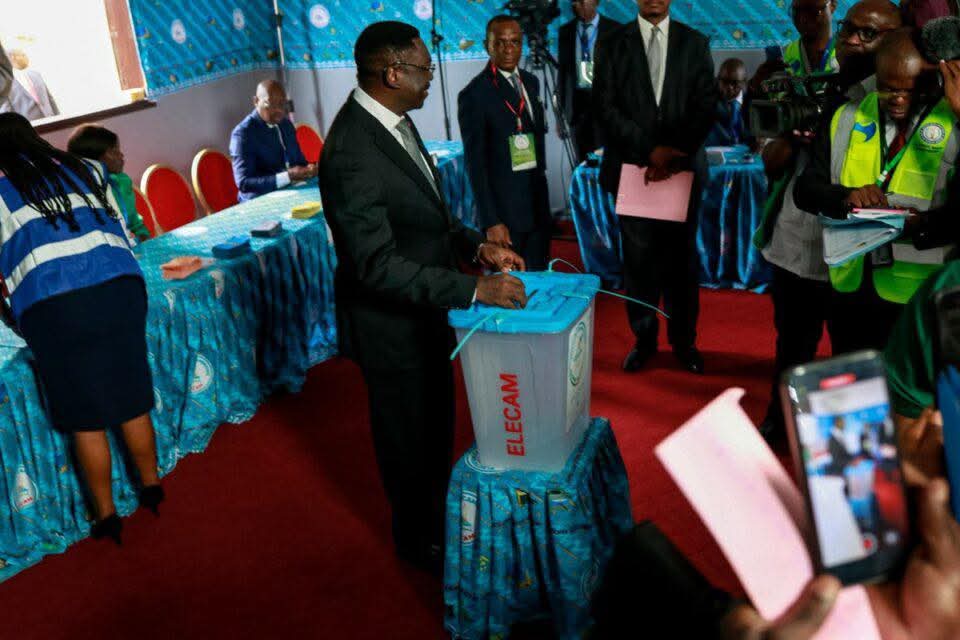

Cameroonians headed to the polls on Sunday in a presidential election that could extend President Paul Biya’s 43-year rule.
At 92, Biya is the world’s oldest serving head of state and is widely expected to secure an eighth term in office.
Polling stations opened at 8:00 a.m. and are scheduled to close at 6:00 p.m., with over eight million registered voters participating in a one-round vote.
Despite facing 11 challengers, Biya remains the overwhelming favorite.
However, the campaign has been more active than in previous elections, raising hopes of a more competitive outcome.
“This election could bring surprises,” said political analyst Stephane Akoa, though he cautioned against unrealistic expectations due to the entrenched nature of the current system.
Biya kept a low profile throughout the campaign, making only one public appearance since May. His rally in Maroua, a key region with 1.2 million voters, drew a modest crowd.
In contrast, his main challenger, Issa Tchiroma Bakary, 79, drew thousands in the same region.
Bakary, a former ally and employment minister under Biya, defected to the opposition earlier this year, energizing a voter base that is mostly under 20 years old.
He emerged as the top opposition figure after Maurice Kamto, who came second in the 2018 election, was disqualified from the race.
Kamto’s exclusion, criticized by rights groups like Human Rights Watch, has cast doubt on the fairness of the election.
Though half of Cameroon’s population is under 20, many young voters have only ever known Biya as president.
Frustration runs deep over high living costs, lack of clean water, poor healthcare, and weak education systems.
Yet, this dissatisfaction has mostly remained online, without spilling into widespread protests seen in countries like Tunisia or Madagascar.
“There is a sign of change, but maybe not strong enough to spark street movements yet,” Akoa noted.
The government has accredited 55,000 local and international observers, including from the African Union, to monitor the election.
However, concerns remain about transparency, especially as independent platforms have pledged to tally results, drawing criticism from authorities who accuse them of trying to influence public opinion.
Voting is also taking place amid a long-running conflict between separatist groups and the government in the country’s English-speaking regions. In the 2018 elections, turnout was notably low in these conflict-affected areas.
The Constitutional Council is expected to announce official results by October 26.