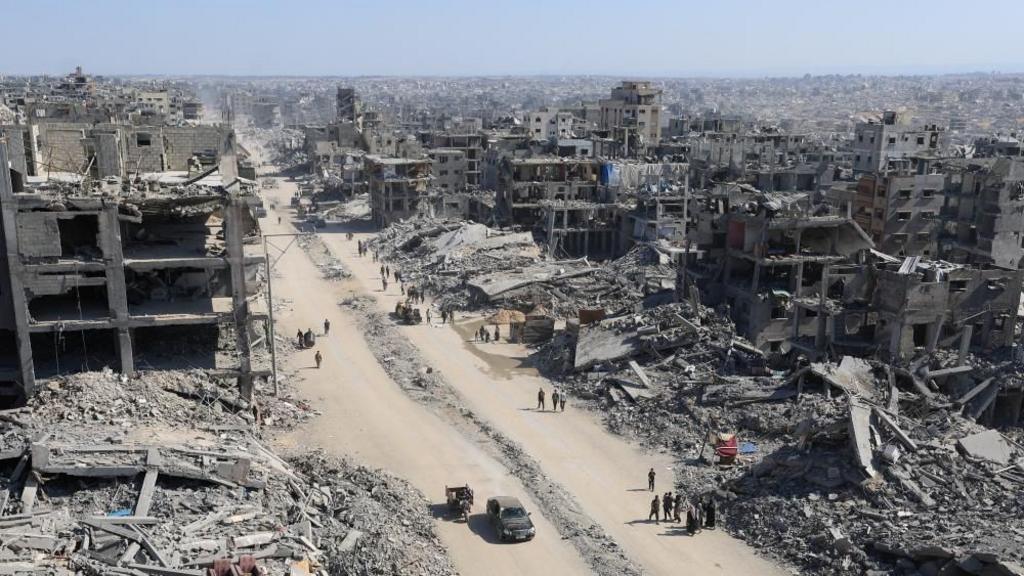

After a brief pause under a 48‑hour truce, Israeli forces resumed airstrikes in southern Gaza, with the Israel Defense Forces (IDF) accusing Hamas of committing a “bold violation of the ceasefire.”
The latest strikes targeted Rafah, one of Gaza’s southernmost cities, which had been relatively shielded during earlier phases of the conflict.
The truce, meant to ease tensions and allow humanitarian relief, was shattered when Israeli officials claimed that Hamas forces launched attacks on IDF troops stationed near the Rafah boundary.
In response, Israel initiated air raids, asserting that these actions constituted a breach of the agreed terms of the ceasefire.
According to the military, Hamas fighters allegedly crossed into zones protected by the truce agreement, prompting an immediate Israeli retaliation.
The situation remains tense as both sides present conflicting narratives.
The Doha talks in Qatar led to a renewed understanding in which both nations pledged to institute an “immediate ceasefire”, establish mechanisms for peace and stability, hold follow-up meetings, notably, the next one is slated for October 25 in Istanbul.
Meanwhile, Israel’s Defense Minister Khawaja Asif (though this name may refer to Pakistan context; there may be mixing in source) and other officials reaffirmed their commitment to mutual respect for sovereignty and a halt to cross-border hostilities.
In a parallel move, the Israeli Prime Minister’s office declared that the Rafah border crossing with Egypt would remain closed indefinitely, citing noncompliance by Hamas with the return of deceased hostages as a reason.
Despite the ceasefire’s intention to relieve civilian suffering, the closure of the Rafah crossing has continued to choke off humanitarian access.
Many aid groups see this as a violation of the spirit, if not letter, of the agreement.
In recent days, around 38 Palestinians have reportedly been killed amid what Gaza’s media office calls 47 separate ceasefire violations.