
Nigeria’s Senate has proposed a significant change to the country’s electoral legal framework that would shift the burden of proof in election petitions from candidates to the Independent National Electoral Commission (INEC).
This proposal came during the second reading of the Electoral Act Repeal and Enactment Bill, 2025 (SB. 903), which aims to overhaul the existing Electoral Act, 2022.
The new bill seeks to strengthen electoral integrity by making INEC directly accountable for the credibility of elections it conducts.
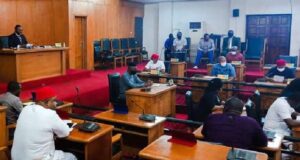
At Wednesday’s plenary, Senator Seriake Dickson (Bayelsa West) argued that INEC, as custodian of election materials and processes, should be required to prove that elections are free, fair and transparent, rather than shifting that responsibility to petitioners.
“We must move away from the principle that he who alleges must prove,” Dickson said.
“INEC should be made to demonstrate that elections were peacefully and transparently conducted.”
He also urged the National Assembly to empower INEC with the legal authority to expand the use of technology in elections and ensure it is adequately funded.
Senator Ekong Samson (Akwa Ibom South) supported the bill but stressed that poor enforcement, not the absence of laws, is the real problem with Nigeria’s electoral system.
He called on politicians to embrace integrity and treat their roles as a public trust.
Senator Muntari Dandutse (Katsina South) advocated for transferring the conduct of local government elections from State Independent Electoral Commissions (SIECs) to INEC.
He also criticized political defections and called for a reduction in the number of registered political parties to no more than ten.
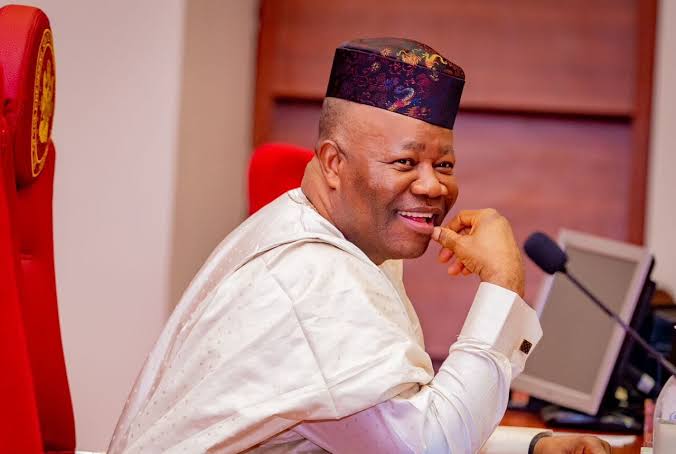
Senate President Godswill Akpabio endorsed the proposed reform, emphasizing that INEC should be held accountable for the elections it oversees.
“They are in charge of logistics and election materials,” he said.
“They must prove that the process complied with the law.”
Key highlights of the electoral bill;
– Burden of proof in election petitions may now fall on INEC.
– Mandatory use of technology, including electronic transmission of results.
– Legal backing for BVAS (Bi-modal Voter Accreditation System).
– Diaspora voting to be introduced for Nigerians living abroad.
– Creation of an Electoral Offences Commission to prosecute vote rigging and related crimes.
– Reforms to INEC’s structure and appointments to enhance independence.
Unlike previous piecemeal amendments, the 2025 bill proposes a full repeal and replacement of the existing electoral law, signaling a bold attempt to restore public confidence in Nigeria’s democratic process.