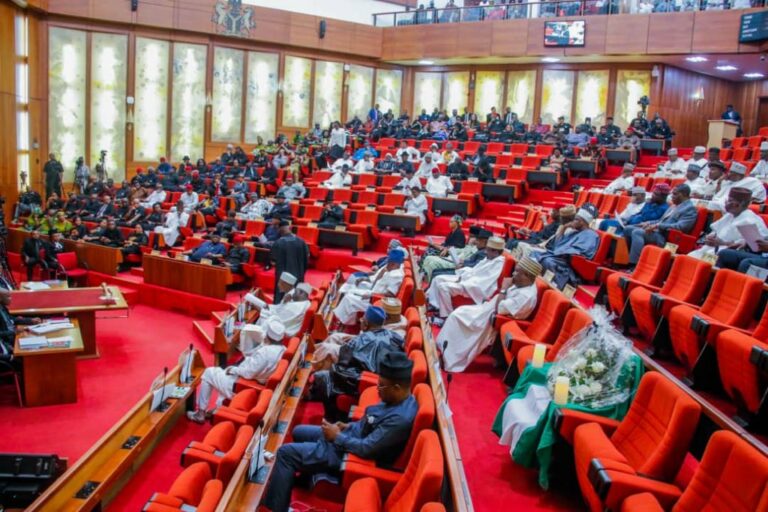

The Nigerian Senate has passed a landmark bill prescribing up to 14 years imprisonment for educators found guilty of sexually harassing students in tertiary institutions.
The legislation, titled Sexual Harassment of Students (Prevention and Prohibition) Bill, 2025 (HB.1597), seeks to curb the persistent problem of “sex-for-grades” and other forms of sexual exploitation within Nigeria’s higher education system.
Presented for concurrence by Senate Leader Opeyemi Bamidele (APC–Ekiti Central), the bill establishes a comprehensive legal framework to prevent sexual misconduct in academic environments and ensure offenders face strict penalties.
According to Senator Bamidele, the bill aims to safeguard students’ dignity and preserve the sanctity of the educator–student relationship.
“This legislation is designed to protect students from any form of sexual abuse or coercion while upholding ethical standards in our tertiary institutions,” he explained.
Under the new law, anyone convicted of offences listed in Clauses 4 (1)–(3) faces between five and 14 years imprisonment, without the option of a fine.
Those guilty of offences in Clauses 4 (4)–(6) risk two to five years in prison, also without an option of a fine.
The bill defines a range of offences including demanding sexual favours, making unwanted advances, inducing others to commit harassment, and unwelcome touching or gestures.
It further clarifies that consent is not a valid defence in cases involving a student–educator relationship, except where the two are legally married.
Victims, relatives, or any concerned individuals may report cases to the Police or Attorney-General, with copies also submitted to the institution’s Independent Sexual Harassment Prohibition Committee.
The bill also allows victims to seek civil redress for breach of fiduciary duty.
During deliberations, some lawmakers urged that the bill’s scope be widened to address harassment in other sectors.
Senator Adams Oshiomhole (APC–Edo North) argued that such protection should extend beyond schools.
“There is no reason to restrict sexual harassment laws to students. We need a framework that applies across all workplaces,” he said.
However, Deputy Senate President Barau Jibrin, who presided over the plenary, clarified that the bill was up for concurrence since it had already been passed by the House of Representatives, and that existing laws already cover workplace-related harassment.
The bill was subsequently adopted and passed for third reading.
The passage follows years of public outrage and investigative reports exposing sexual exploitation by lecturers in Nigerian universities, notably the 2019 sex-for-grades exposé and comes amid renewed advocacy by women’s rights groups for stronger federal action to protect students and end impunity for perpetrators.