
A former Chief of Army Staff and ex-Minister of Interior, Lt. Gen. Abdulrahman Dambazau (retd.), has suggested that the United States may be positioning itself to set up a military base in Nigeria under the guise of addressing religious persecution and insecurity.
Speaking in Abuja on Tuesday at an event organised by the Just Friends Club of Nigeria, Dambazau said recent statements from some U.S. politicians and religious leaders on alleged persecution of Christians in Nigeria may be driven by hidden geopolitical motives.
According to him, claims by certain U.S. congressmen and some Catholic clergymen alleging a “Christian genocide” in Nigeria appear to align with broader American strategic interests in the region.
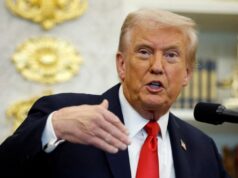
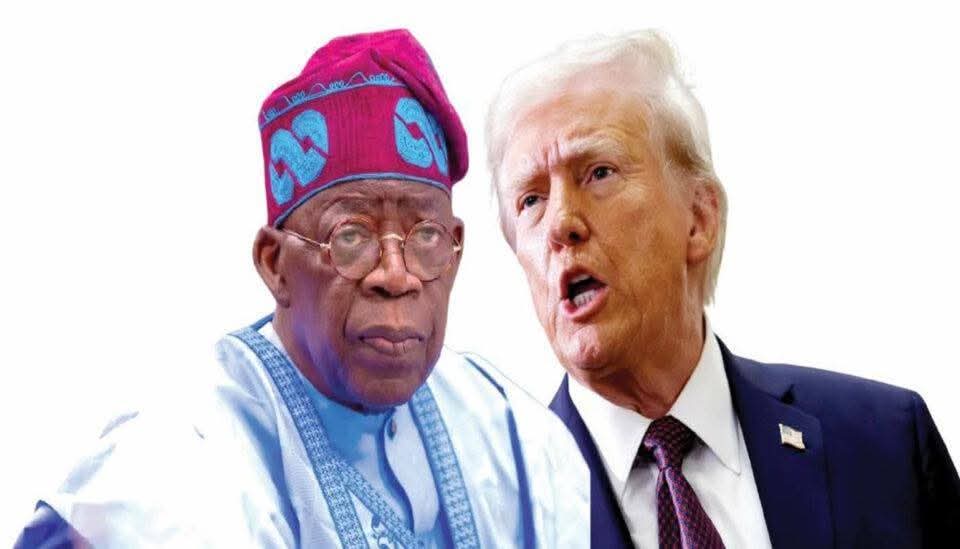
The retired general’s comments follow U.S. President Donald Trump’s warning that he might deploy American troops to Nigeria if attacks against Christians continue.
In a post on his Truth Social account last Saturday, Trump said he had instructed the U.S “Department of War” to prepare for possible military action, and threatened to cut off American aid to Nigeria unless the alleged persecution is stopped.
Dambazau questioned the motives behind such statements, recalling that the U.S. maintained two military bases in Niger Republic for more than a decade but failed to curb insecurity in the Sahel.
“Religious tensions have been heightened by both domestic and foreign actors, sometimes leading to the false framing of general security incidents as attacks on particular faiths,” he said.
“A recent example is the propaganda promoted by some U.S. congressmen and supported by Catholic clergy claiming there is a Christian genocide in Nigeria.”
“President Trump has now designated Nigeria as a ‘Country of Particular Concern’ and has reportedly instructed the U.S Department of War to prepare for possible operations. Whatever that means, time will tell.”
He argued that terrorism and insurgency in Nigeria form part of a wider regional crisis spanning the Sahel and Lake Chad Basin, affecting both Muslims and Christians alike.
“Most of the victims are elderly people, women and children, yet their lives seem to matter only when they are identified as Christians,” Dambazau said.
“In over ten years of U.S. presence in Niger, what did Washington do to prevent the escalation of terrorism and insecurity in the region?”
He alleged that Washington’s recent actions could be part of a strategy to find an alternative military foothold in Nigeria, following setbacks in the Niger Republic.
“At the start of Trump’s second term, some U.S. lawmakers even accused USAID of financing terrorism in Africa.”
“I believe the U.S is now seeking an opportunity to establish another base in Nigeria, a country that America has always engaged with primarily to advance its own interests, even through force if necessary,” he stated.
“Unfortunately, there are Nigerians willing to cooperate with such external agendas. Our biggest challenge remains our lack of unity in confronting terrorism and violent crime.”
Dambazau also referenced attacks on mosques, Islamic clerics, and traditional rulers to underscore that the violence in Nigeria is not confined to any religion.
He lamented the government’s inability to safeguard citizens, citing the March 2022 Abuja–Kaduna train attack and the July 2022 Kuje prison break as glaring examples of security lapses.
“It is obvious that Nigeria lacks the capacity to monitor threats in real time or respond effectively to emergencies,” he said.
“In some states, communities have even resorted to negotiating with bandits for protection.”
“In Zamfara and Katsina, for example, residents have signed agreements with bandits, effectively surrendering their safety to them.”
He further noted that IPOB’s sit-at-home orders in the South-East demonstrate how non-state actors can exercise control in the absence of state protection.
Dambazau urged Nigerians to close ranks and resist foreign interference that could exploit internal divisions.
“We must not allow external powers to use our disunity as an excuse for intervention. National cohesion is essential if we are to end terrorism and insecurity,” he warned.
Diplomatic tensions over alleged plans by foreign powers to build military bases in Nigeria resurfaced last year.
In December 2024, the Nigerian Defence Headquarters denied reports that France was planning to establish a base in the country.
The Federal Government also publicly dismissed claims that it had approved any such arrangement.