
When the drum of silence beats louder than the thunder of guns, a single heartbeat can echo across a nation.
In the heart of the Southeast, where the hills of Enugu once hid whispers of fear, a new chapter is being written.
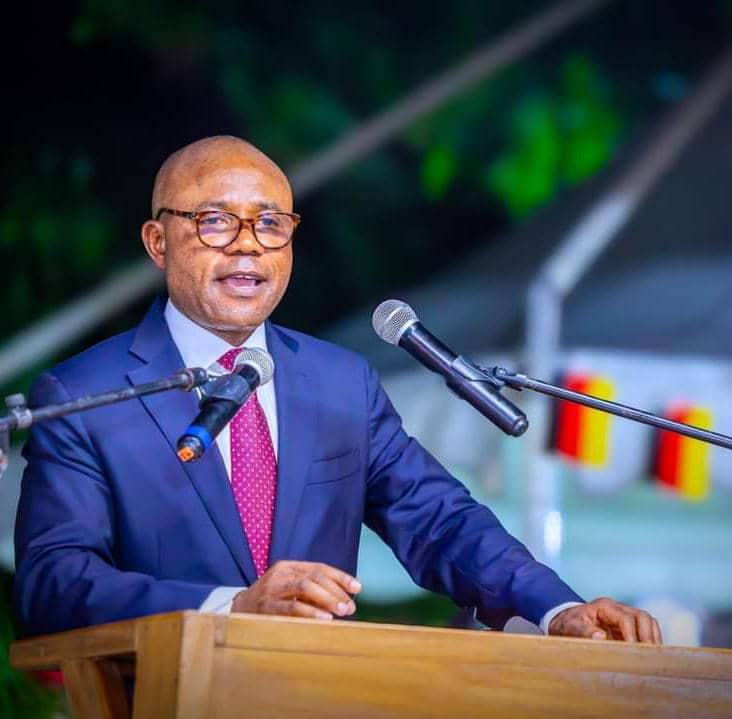
Governor Peter Ndubuisi Mbah—a lawyer who “knows everything about something and something about everything”—has stepped onto the stage of insecurity with a model that is as bold as it is pragmatic.
Appointed chairman of the National Economic Council’s committee on the overhaul of security‑training institutions, Mbah now steers a national effort to reshape how Nigeria’s security forces are prepared for the battles ahead.
What was once a landscape scarred by herdsmen militias, kidnappers and bandits in places such as Uzo‑Uwani, Isi‑Uzo, Igboeze South and North, Udi, Nkanu East and Opi‑Ugwuogo road, has begun to feel the steady hand of change.
The “security gadgets”—a blend of forest guards, neighbourhood watch and police—have become the eyes in the forest, the ears on the hill, and the net that catches those who once thought they could hide in the shadows.
Their coordinated sweep has turned many hideouts into memories, and Enugu is fast earning a reputation as one of Nigeria’s safest states.
The transformation did not happen by accident. Governor Mbah’s administration launched the Enugu State Security Trust Fund, a ₦20 billion war‑chest sourced from the private sector, to finance cutting‑edge infrastructure: CCTV cameras that watch Enugu’s urban city, highways and forests; a central Command and Control Centre that monitors the state in real time; and a Distress Response Squad that rushes to the scene before fear can take root.
These tools have turned the tide, allowing the security formations to “nip the menace in the bud” and to “kill the snake before it strikes.”
In a country where “a stitch in time saves nine,” Mbah’s quiet resolve stands in stark contrast to the noise of complacency that has long plagued Nigeria’s security narrative.
While successive governments at all levels have been accused of turning a blind eye, the governor has silently put his shoulder to the wheel, demonstrating that leadership can be both visible and effective.
The Tinubu administration, recognizing the urgency, appointed him to lead the all‑important security committee—a move that underscores the president’s commitment to restoring dignity and excellence to the nation’s security apparatus.
The international spotlight has not been absent. President Donald Trump’s recent declaration that Nigeria is a “State with Special Concern” over insecurity has added a layer of urgency, but Governor Mbah remains undeterred.
In this state of urgency, the federal government is expected to give Mbah’s committee all the needed support.
Many believe that, with the right resources and sincere purpose from the federal government, the country can drive bandits and criminals out of the bush within six months, no matter how sophisticated the terror groups may be.
Today, the once‑feared “Monday Sit‑At‑Home” is a forgotten relic in Enugu, a testament to a leadership that chose decisive action over empty rhetoric.
The state’s streets are alive again, its markets humming, and its people moving freely—a living proof that when hope is married to strategy, the monster of insecurity can be tamed.
_In the tapestry of Nigeria’s story, Governor Mbah’s security model is a golden thread, weaving together technology, community vigilance, and unwavering resolve. It reminds us that even in the darkest forest, a single lamp—if lit with purpose—can guide an entire nation back to peace._
Onyiba Shepherdman Iyioku, A Griot and Public Affairs Analyst.