The United States chapter of the All Progressives Congress (APC) has asked to appear before the US House Subcommittee on Africa on Thursday as American lawmakers prepare to review former President Donald Trump’s recent redesignation of Nigeria as a Country of Particular Concern (CPC) over alleged religious persecution.
The request was contained in a letter to the Subcommittee Chairman, Rep. Chris Smith. According to APC USA Chairman, Prof. Tai Balofin, the group is ready to send a high-level delegation capable of providing “firsthand intelligence” and verified data on Nigeria’s security realities.
His statement was made available to journalists in Abuja.
Balofin said while the party supports religious liberty for all Nigerians, the global debate often oversimplifies the country’s security challenges.
He argued that Nigeria’s crisis is shaped by banditry, climate pressures, resource conflicts and transnational crime—not merely religious hostility.
He said the delegation is prepared to appear before Congress “at short notice,” adding that APC USA intends to highlight what it sees as key security improvements under President Bola Tinubu.
These include efforts to disrupt terrorist networks, wider community-based early-warning systems, and initiatives supporting interfaith cooperation.
According to him, reductions in attacks across several hotspots have been acknowledged by both Nigerian authorities and independent monitors.
The group also plans to recommend deeper US–Nigeria cooperation in security, intelligence, and humanitarian programs, arguing that inclusive engagement is essential for protecting all religious groups.
Balofin praised Chairman Smith’s record on global religious freedom and appealed for APC USA to be granted an opportunity to contribute “accurate, fair and solution-driven insights.”
The APC USA letter comes shortly after Nigeria criticised the United States for excluding Nigerian officials from a UN event on alleged killings of Christians.
Nigeria’s chargé d’affaires to the UN, Syndoph Endoni, described the exclusion as making decisions about Nigeria “in our absence.”
Endoni said the UN programme, which was backed by the US Mission and attended by American rapper Nicki Minaj, sidelined Nigerian officials even though the allegations directly concern the country.
US officials reportedly said the event was “private” and that organisers feared “reprisals” if Nigerian government representatives were present.
The envoy warned that such unilateral actions could inflame tensions and insisted that Abuja remains committed to working with Washington to address extremist violence.
The US House Subcommittee on Africa is scheduled to convene its hearing at 11:00 am in Room 2172 of the Rayburn House Office Building. The session will also be streamed live.
Two panels of witnesses are expected:
Panel 1:
- Jonathan Pratt, Senior Bureau Official, Bureau of African Affairs
- Jacob McGee, Deputy Assistant Secretary, Bureau of Democracy, Human Rights and Labor
Panel 2:
- Nina Shea, Director, Center for Religious Freedom
- Bishop Wilfred Anagbe of the Makurdi Catholic Diocese
- Oge Onubogu, Center for Strategic & International Studies
The hearing will examine religious freedom in Nigeria, evaluate the scope of reported persecution, and consider potential US policy responses, including sanctions, humanitarian support and security cooperation.
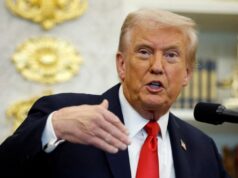
On October 31, 2025, President Donald Trump redesignated Nigeria a Country of Particular Concern, accusing Nigerian authorities of failing to protect Christians from extremist violence.
He claimed Christianity faces an existential threat in Nigeria, alleging thousands of Christians have been killed by “radical Islamists.”
Trump warned that the US is prepared to impose sanctions, halt all assistance, and even consider military action if Nigeria does not act decisively.
He also directed the Department of War to prepare for “possible action.”
President Bola Tinubu has strongly rejected Trump’s claims, describing them as a distortion of Nigeria’s religious situation.
In a statement on his X handle, Tinubu reaffirmed Nigeria’s constitutional protections for religious freedom and insisted the country does not encourage or tolerate religious persecution.
He stressed that Nigeria’s diversity and religious pluralism remain core national values that the government is committed to upholding.