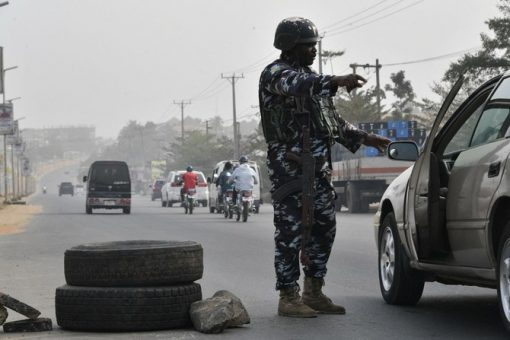

Seeking sustainable answers to Nigeria’s deepening security woes, the Senate on Friday gathered key stakeholders in Lagos for the South-West Zonal Security Summit, where calls for indigenous security structures, enhanced technology, and the creation of state police dominated discussions.
The meeting, organised by the 10th Senate’s Ad-hoc Committee on the National Security Summit, brought together lawmakers, security chiefs, traditional rulers, civil society groups, and religious leaders.
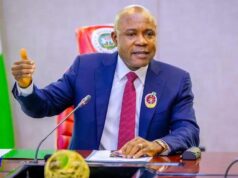
Senator Mukhail Adetokunbo Abiru (Lagos East), who chaired the session, said insecurity must be confronted through shared responsibility and collective action.
“Although the South-West has not witnessed the level of terrorism seen in other regions, the rise in kidnappings, banditry, and violent attacks poses serious threats to our communities and farmlands,” Abiru said.
He highlighted reports of incursions by criminal groups such as Lakurawa into Kwara and Kogi States as an urgent signal for coordinated response.
Abiru also urged the media to avoid narratives that fuel ethnic or religious division, stressing that unity is crucial to defeating insecurity.
Representing Governor Babajide Sanwo-Olu, Dr. Ayodele Ogunsan of the Lagos State Security Trust Fund called for a strengthened regional security architecture.
He proposed a unified, technology-led Amotekun command and deeper involvement of traditional institutions.
“Security is not only about safety, it is tied to the economy. When markets, farms, and transport systems are disrupted, livelihoods crumble. Our approach must rely on intelligence and community participation,” he said.
Lawmakers such as Senators Ibrahim Jimoh (Ondo South) and Gbenga Daniel (Ogun East) advocated for a hybrid strategy that blends military force with civilian-led initiatives.
Traditional leaders, including Oba Olufolarin Ogunsanwo (Alara of Ilara) and Aare Onakankanfo Iba Gani Adams, called for expanded recruitment into security outfits, improved funding, community policing, and youth empowerment as long-term stabilising measures.
Civil society organisations, religious groups, women’s associations, and youth bodies added that the welfare of security operatives must be prioritised for morale and efficiency.
At the end of the summit, attendees agreed that collaboration across all sectors, modern technology, and local involvement are essential for securing the South-West and strengthening national stability.
Meanwhile, in a related development, the Lagos State Government, through the Office of Climate Change and Circular Economy (OCCE), reaffirmed its leadership on the African climate stage following a robust outing at the COP30 conference in São Paulo, Brazil.
The state showcased landmark projects such as the 80 Million Clean Cookstoves Initiative and the LAMATA e-Mobility Programme, using the global platform to attract investments and highlight the potential of subnational governments in climate action.
Special Adviser to the Governor on Climate Change, Mrs. Titi Oshodi, said Lagos demonstrated what “true subnational leadership” looks like.
“We went to COP30 to show that African cities can deliver impactful, bankable climate solutions. The world is demanding climate ambition backed by results, and Lagos is stepping forward with both,” she said, noting that the engagements helped deepen partnerships and bolster investor confidence.