Senator Orji Uzor Kalu, representing Abia North, has lamented the heavy human and economic toll of the secessionist agitation linked to the detained leader of the Indigenous People of Biafra, Nnamdi Kanu.
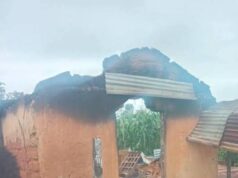
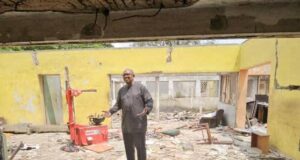
Speaking on Channels Television’s Politics Today on Sunday, Kalu claimed that more than 30,000 people have been killed and thousands of businesses destroyed across the South-East because of the unrest associated with IPOB activities.
His remarks came days after Kanu was convicted on terrorism charges and sentenced to life imprisonment by Justice James Omotosho of the Federal High Court, Abuja, an outcome that has continued to spark intense debate.
Kalu urged political leaders and supporters to avoid inflammatory rhetoric and instead pursue a political pathway to resolving the long-running crisis.
He said,
“I wouldn’t like to talk about this issue. It’s not the time for noise-making or fighting. It’s a time for sober reflection. We have to solve this problem holistically. Do you know that over 30,000 Igbos were killed? People who have shops lost their businesses.”
The former Abia governor noted that public discussions often focus on clashes involving security agents, while the larger civilian casualties and economic losses are ignored.
Drawing from personal experiences, he recalled how the crisis destroyed the livelihoods of ordinary traders:
“My mother’s friend had a rice shop. The woman owed my mother about N4.2m. But they ransacked her shop, and she went bankrupt. Nobody talks about it.”
Kalu further revealed that he has been quietly engaging the Federal Government to find a negotiated settlement.
“Let Igbos stop being emotional. I want us to settle down, go on our knees and find a way that a man can be released. It’s part of my job to do it.”
He also recounted his previous interventions, including persuading the Buhari administration to grant Kanu bail in 2017.
According to him, he resisted pressures to stop his newspaper, The Sun, from publishing stories on Kanu during that period.
He said,
“I know my discussion with Nnamdi Kanu. I was the first to see him in 2016 and the first to meet him when he came from Kenya.
The then federal government wanted The Sun to stop putting Nnamdi Kanu on the front page. But I’m for free press.”
Kalu also defended Justice James Omotosho, who delivered the latest judgment against Kanu, insisting that court decisions should be respected while aggrieved parties seek redress through legal channels.
“Nobody should question the decision of Justice Omotosho. If you are displeased, you go to the appellate court. It’s not to start insulting the man.”
He criticised Kanu’s conduct in court, contrasting it with his own behaviour during his corruption trial.
“If you remember, I was given 12 years (imprisonment), but I never insulted the judge… We must condemn certain behaviours. Justice Omotosho is just a messenger of the court.”
DAILY GAZETTE had reported that Kanu was convicted on all seven terrorism-related counts and sentenced to life imprisonment on five of them.
He also received 20 years for membership of a proscribed group and five years for unlawful importation of a radio transmitter.
The charges stemmed from IPOB’s separatist activities, killings of security personnel, destruction of infrastructure, and Radio Biafra broadcasts.
The court ruled that Kanu’s threats and sit-at-home orders amounted to terrorism under Nigerian law.