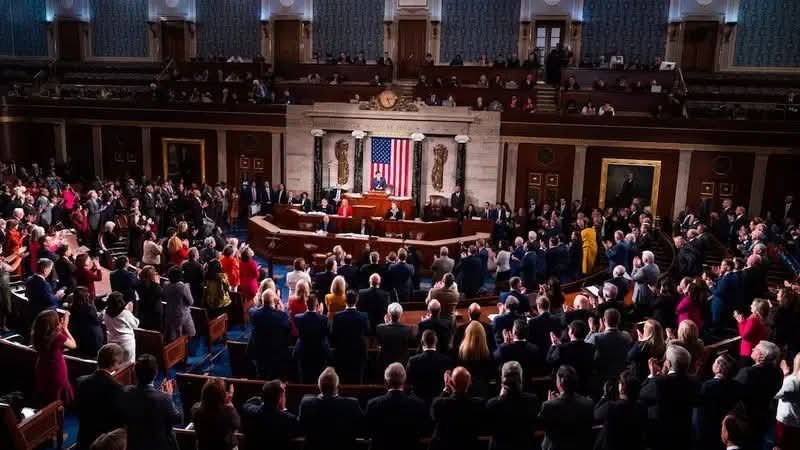

At a joint briefing of the United States Congress on Tuesday, witnesses and lawmakers called for renewed pressure on the Nigerian government to declare Sharia criminal law unconstitutional in northern states and dismantle Hisbah religious-enforcement groups, arguing that these structures have enabled systematic persecution of Christians.
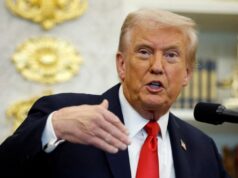
The appeal was made during a bipartisan session convened in response to President Donald Trump’s October directive following Nigeria’s redesignation as a Country of Particular Concern (CPC).
Testifying before lawmakers, Dr. Ebenezer Obadare, Senior Fellow for Africa Studies at the Council on Foreign Relations, asserted that Nigeria’s most violent actors, Boko Haram, ISWAP, and radicalised Fulani militants, frequently exploit Sharia institutions and Hisbah officials to force conversions, entrench extremist ideology, and operate with minimal resistance.
He outlined a two-pronged US policy approach: Support the Nigerian military to decisively neutralise Boko Haram; Pressure President Bola Tinubu to abolish Sharia criminal codes in the 12 northern states that adopted them since 2000 and to disband Hisbah organisations enforcing Islamic law on citizens irrespective of their faith.
Obadare noted that Abuja has taken several steps since the CPC redesignation and Trump’s threat of unilateral military action.
Following Washington’s pressure, he said the Tinubu administration has ordered airstrikes on Boko Haram positions,approved the recruitment of 30,000 police officers, and declared a national security emergency.
Even so, he insisted that “Washington must keep up the pressure” to ensure meaningful reforms.
The joint briefing, led by Appropriations Vice Chair Mario Díaz-Balart with the involvement of the House Foreign Affairs Committee, featured repeated claims that the Nigerian government is failing to stop what witnesses described as “religious cleansing” in the north and Middle Belt.
They cited the November 22 abduction of students and teachers from St Mary’s Catholic School in Niger State, ongoing blasphemy-law imprisonments as well as mass killings that they say contradict claims that the violence is driven mainly by resource competition.
Obadare reiterated that the central driver of instability remains jihadist terrorism, especially Boko Haram’s campaign to topple the Nigerian state and enforce an Islamic caliphate.
House members from both parties backed calls for stronger US action.
Rep. Chris Smith (R-NJ) described Nigeria as “ground zero” for global anti-Christian persecution, while Rep. Brian Mast (R-FL) urged disarmament of militias and prosecution of perpetrators.
Officials including USCIRF Chair Vicky Hartzler and ADF International’s Sean Nelson recommended the use of security-aid conditions, early-warning mechanisms, and targeted sanctions to compel accountability.
Lawmakers announced that the House Appropriations Committee is preparing a formal report to President Trump with actionable recommendations, including possible conditionalities on US assistance to Nigeria.
The hearing follows Nigeria’s re-entry onto the CPC list on October 31, after the designation was removed under former President Biden.
Trump has warned that aid to Nigeria may be halted and that military action is possible, if Abuja does not curb the alleged persecution of Christians.
This was the second congressional briefing on Nigeria in recent weeks.
A similar hearing held on November 20 featured testimony from US State Department officials and Nigerian religious leaders on the implications of the CPC designation.