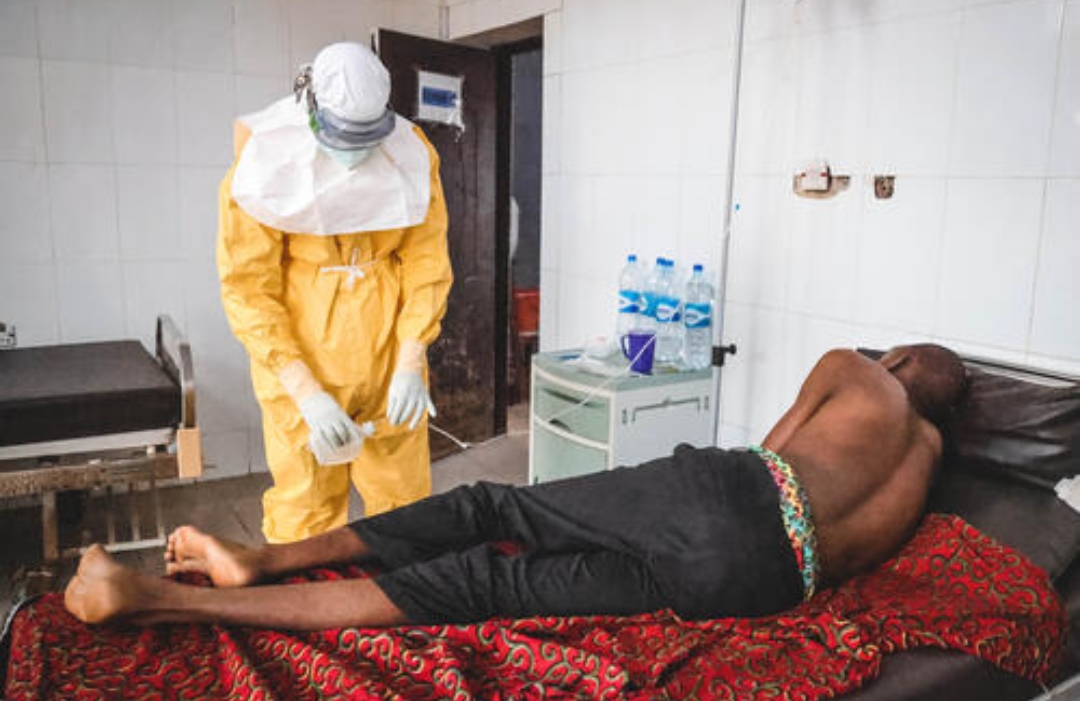

Nigeria has recorded 33 new confirmed cases of Lassa fever in Epidemiological Week 49, with the national case fatality rate increasing to 18.2 per cent, according to the Nigeria Centre for Disease Control and Prevention (NCDC).
The new infections were reported in Bauchi, Ondo, Edo and Taraba states, bringing the total number of confirmed cases in 2025 to 1,069. Eight deaths were recorded during the week under review.
In its Lassa Fever Situation Report covering December 1 to 7, 2025, the NCDC said the eight fatalities represented a weekly case fatality rate of 24.2 per cent.
Nationwide, the agency has received 9,041 suspected cases and seven probable cases this year, with cumulative deaths rising to 195.
This puts the overall fatality rate at 18.2 per cent, higher than the 16.5 per cent recorded during the same period in 2024.
The NCDC noted that 21 states and 103 local government areas have reported at least one confirmed case in 2025.
Ondo, Bauchi, Edo and Taraba states accounted for about 89 per cent of all confirmed infections, with Ondo recording the highest number of cases.
Young adults between the ages of 21 and 30 were identified as the most affected age group, although infections were reported across all ages, from one to 96 years.
The agency added that cases were slightly higher among males than females, while no new infections among healthcare workers were recorded during the week.
The NCDC said it continues to coordinate a multi-partner national response through its Lassa fever Technical Working Group.
Ongoing interventions include behavioural assessments in high-burden states, training of healthcare workers, infection prevention and control audits, community sensitisation, deployment of rapid response teams, and strengthened laboratory and treatment capacity.
Meanwhile, the National Institute for Pharmaceutical Research and Development (NIPRD) has disclosed that Nigeria currently has only one World Health Organisation-prequalified antimalarial product.
The disclosure was made at a four-day technical support and capacity-building workshop for pharmaceutical companies, organised under the National Malaria Elimination Programme with support from the World Bank.
According to NIPRD, the only WHO-prequalified antimalarial product in the country is manufactured by Swiss Pharma Nigeria.
The institute said the workshop was designed to equip local pharmaceutical manufacturers with the technical knowledge required to meet WHO prequalification standards and increase Nigeria’s participation in the global antimalarial market, estimated at 161 million dollars.
Speaking on the objective of the programme, NIPRD Director-General, Dr Obi Adigwe, said the initiative focused on providing hands-on guidance on the WHO prequalification application process, including documentation, bioavailability and bioequivalence studies, and laboratory quality assurance systems.
He identified limited awareness, funding constraints, outdated equipment and weak technical capacity as key challenges hindering local manufacturers from attaining WHO prequalification.
While acknowledging that the process is capital-intensive, he said participants were exposed to available funding platforms and government-backed support options.
Officials and participants at the workshop described the training as timely, noting that WHO prequalification would enable Nigerian pharmaceutical firms to compete more effectively both locally and internationally.