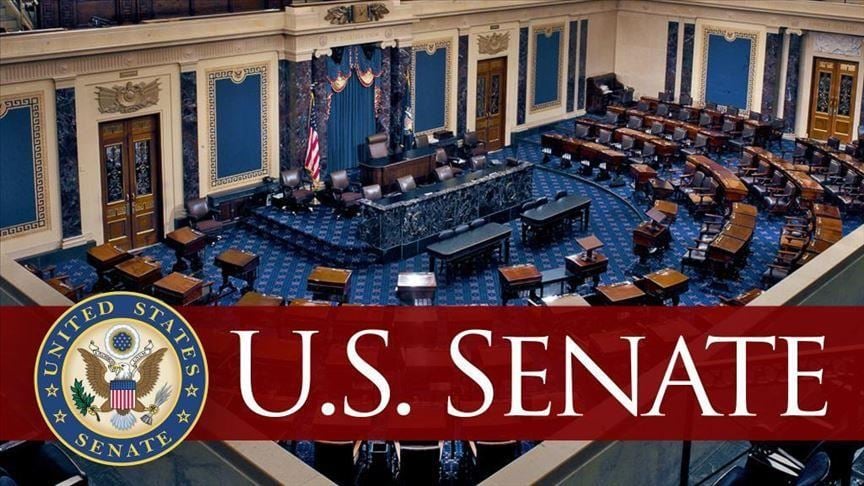

Panels of the United States Congress are holding a new session on Wednesday to examine allegations of genocide and growing threats to religious freedom in Nigeria, with witnesses warning that the country risks sliding into widespread Christian–Muslim violence.
The concerns were outlined in written testimonies released ahead of the joint hearing by the House Foreign Affairs Committee, which is being convened by the Subcommittee on Africa and the Subcommittee on the Western Hemisphere.
The session is titled “Defending Religious Freedom Around the World.”
According to the testimonies, recurring killings, mass displacement and persistent insecurity in Nigeria are early indicators of a broader religious conflict with implications beyond the country’s borders.
Among those scheduled to testify are former US Ambassador-at-Large for International Religious Freedom, Sam Brownback; Principal Adviser for Global Religious Freedom at the US State Department, Mark Walker; Grace Drexel, daughter of detained Chinese pastor Ezra Jin; and former chair of the US Commission on International Religious Freedom, Dr Stephen Schneck.
In his prepared remarks, Brownback described Nigeria as a major global flashpoint, warning that militant Islamist groups are expanding their influence across parts of Africa and the Middle East.
“Radical, militant Islam continues its purification efforts throughout the MENA region and beyond. Syria and Nigeria are key focus areas in their quest for dominance, excluding all other faiths,” Brownback said.
He characterised Nigeria as “the deadliest place on the planet to be a Christian,” arguing that patterns of violence across the country suggest the brewing of a larger religious crisis.
“Early warning signs of a Muslim-on-Christian war are emerging across Africa, and Nigeria sits at the centre of that danger,” he said.
Brownback also raised concerns about the role of foreign actors in Nigeria’s security environment, cautioning that support from countries such as China, Russia, Turkey and Saudi Arabia could aggravate instability if not carefully monitored.
In his testimony, Schneck warned that freedom of religion or belief is facing a historic global crisis driven by authoritarianism, religious nationalism and weak state institutions.
“Nigeria, Syria and Sudan are examples of countries where poor governance and widespread insecurity have created dangerous conditions for communities of faith,” Schneck stated.
He noted that such environments allow insurgent groups and criminal networks to exploit religious identity, leading to killings, displacement and prolonged instability.
Schneck criticised the US government’s implementation of the International Religious Freedom Act, arguing that Washington has failed to translate strong rhetoric into consistent and effective action.
“We have been long on rhetoric and short on substance, consistency and effectiveness,” he said.
He also expressed concern over delays in the release of the US State Department’s International Religious Freedom reports and the absence of updated designations of Countries of Particular Concern and related watch lists.
According to Schneck, Nigeria currently remains the only country designated as a Country of Particular Concern, following a redesignation by President Donald Trump, while no countries are listed under the Special Watch List or as Entities of Particular Concern.
He warned against limiting religious freedom advocacy to the persecution of Christians alone, stressing that international human rights law protects people of all faiths and beliefs.
“Selective advocacy undermines both effectiveness and legitimacy,” Schneck said.
Last year, President Trump redesignated Nigeria as a Country of Particular Concern over alleged religious freedom violations, a move that was followed by US airstrikes on terrorist hideouts in Sokoto on Christmas Day.
The Federal Government has rejected claims of systemic persecution of Christians, insisting that insecurity affects Nigerians across all religious groups.
In November 2025, US Secretary of War Pete Hegseth hosted Nigeria’s National Security Adviser, Nuhu Ribadu, at the Pentagon for talks on counterterrorism cooperation.
Ribadu later confirmed that a US congressional delegation visited Abuja in December as part of ongoing security consultations between both countries.
According to Nigerian officials, discussions focused on counterterrorism, regional stability and strengthening the strategic security partnership between Nigeria and the United States.