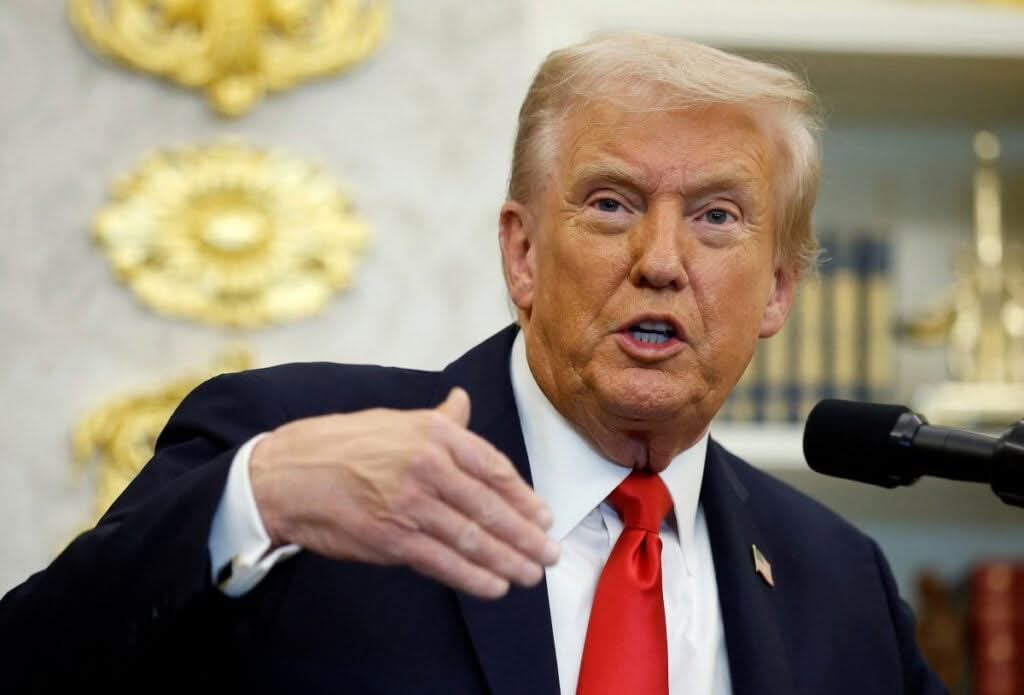

U.S. President Donald Trump has publicly criticised Israel’s attack on Iran’s critical energy infrastructure, warning that further escalation could trigger devastating consequences across the Middle East.
In a statement shared via the White House on X, Mr. Trump distanced the United States from Wednesday’s strike on Iran’s South Pars gas field—the world’s largest—saying Washington played no role in the operation.
He described the Israeli action as a reaction “out of anger” to ongoing tensions in the region but made it clear that such attacks must stop.
According to him, no further strikes on the South Pars facility should occur—unless Iran continues targeting Qatar.
At the same time, Mr. Trump condemned Iran’s retaliation, particularly missile attacks on gas infrastructure in Qatar.
He issued a stark warning that any additional Iranian strikes on Qatar could provoke an overwhelming U.S. response, including the destruction of the entire South Pars gas field.
The situation has rapidly escalated into a broader regional energy crisis.
In Qatar, missiles struck the Ras Laffan Industrial City, a key hub for global liquefied natural gas production, triggering major fires and extensive damage.
The facility had been evacuated ahead of the attack following Iranian threats.
State energy giant QatarEnergy confirmed that multiple LNG installations were hit, forcing a shutdown of operations and a declaration of force majeure—effectively suspending contractual supply obligations to global buyers.
Iran’s retaliation did not stop there. The country also targeted two oil refineries in Saudi Arabia and the Habshan gas facility in Abu Dhabi, prompting authorities in the United Arab Emirates to shut down the site.
Tehran has argued that Gulf countries hosting U.S. operations have made themselves legitimate targets, while also attempting to pressure them into pushing Washington toward a ceasefire.
Despite Mr. Trump’s warning, Iran has yet to indicate whether it will halt further strikes.
Meanwhile, the fallout is already being felt globally.
The attacks have intensified an ongoing energy crisis, with gas and petroleum prices surging sharply since the conflict—sparked by U.S. and Israeli strikes on Iran in late February—began.
The war has now claimed over 1,500 lives, most of them in Iran, raising fears that continued escalation could spiral into a wider and more destructive regional conflict.