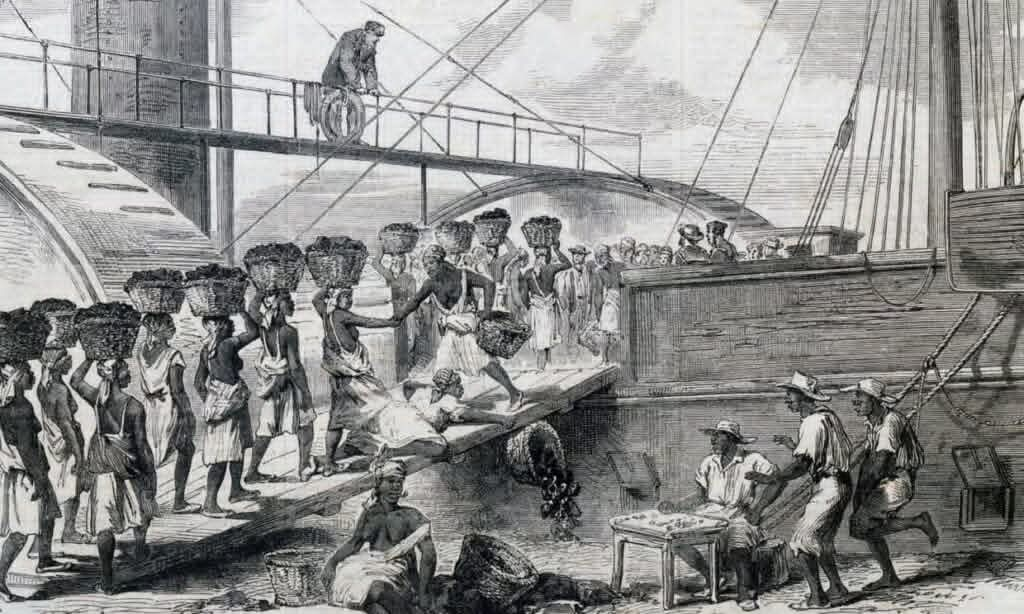

The United Nations General Assembly has adopted a landmark resolution describing the transatlantic slave trade as the “gravest crime against humanity,” in a move aimed at advancing global calls for justice and reparations for people of African descent.
The resolution, spearheaded by Ghana, received overwhelming backing with 123 votes in favour.
However, United States, Israel, and Argentina voted against it, while 52 nations—including the United Kingdom and several European Union member states—abstained.
The resolution calls on UN member states to issue formal apologies for their roles in the slave trade and to support reparations initiatives, including funding for education, skills development, and endowment programmes.
While it stops short of specifying financial compensation, it reinforces the growing global demand for restorative justice.
Speaking ahead of the vote, Ghana’s President, John Mahama, described the move as a moral obligation to honour the millions who suffered under slavery and those still affected by its legacy.
“History demands that we act in remembrance of those who endured the indignity of the slave trade and those who continue to face racial injustice,” he said, noting that the resolution helps guard against historical amnesia while confronting enduring inequalities.
Ghana’s Foreign Minister, Samuel Okudzeto Ablakwa, clarified that the demand is rooted in justice rather than personal gain.
“We are not asking for money for ourselves. We are seeking justice—through support for education, heritage preservation, and empowerment initiatives,” he stated.
The resolution aligns with broader continental and global efforts, as the African Union has already adopted “reparatory justice” as a central theme, while discussions continue within the Commonwealth.
According to UN estimates, more than 15 million Africans were forcibly taken during the transatlantic slave trade, with many perishing during the brutal Middle Passage.
Historical data also shows that hundreds of thousands died aboard British ships alone.
The resolution highlights that the legacy of slavery persists today through systemic racial inequalities and underdevelopment affecting people of African descent worldwide.
Despite the widespread support, some nations raised legal and procedural concerns.
The United Kingdom acknowledged the historical harm but questioned aspects of the resolution’s framing under international law.
Similarly, the United States argued that it does not recognise a legal basis for reparations tied to actions that were not deemed illegal at the time.
In addition, the resolution calls for the repatriation of cultural artefacts taken during the colonial era, underscoring the need to restore cultural identity and heritage.
Although resolutions of the UN General Assembly are not legally binding, they carry significant moral and political influence, signalling a growing international consensus on confronting the legacy of slavery and advancing reparative justice.