
The push for the creation of Anioma State has triggered sharp disagreements among federal lawmakers, particularly over the proposed location of the state capital and its implications for the South-East’s quest for geopolitical balance.
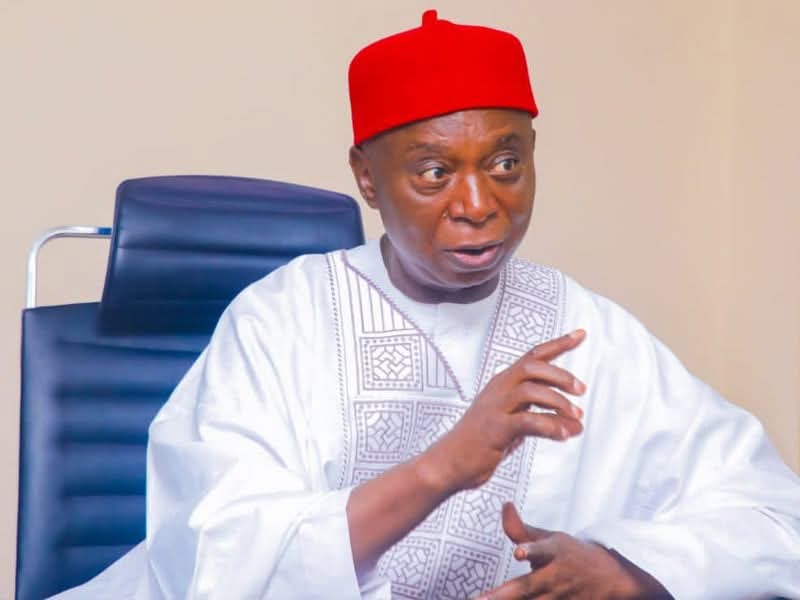
At the heart of the debate are Ned Nwoko and Ikenga Ugochinyere, who hold differing views on both the capital city and the broader political direction of the proposed state.
The controversy follows a statement by Senate President Godswill Akpabio, who in March 2026 reaffirmed the National Assembly’s commitment to the creation of Anioma State, proposing Asaba as its capital.
According to Akpabio, the move is expected to drive development and foster shared prosperity across the affected communities.
He also suggested that Warri could serve as the capital of a restructured Delta State following the creation of Anioma.
Building on this momentum, Nwoko, a leading advocate of the proposal, recently led a delegation of traditional rulers from the Anioma region to meet with the Deputy Speaker of the House of Representatives, Benjamin Kalu, who heads the House Committee on Constitution Review.
During the engagement, Nwoko emphasized the long-standing demand for an additional state in the South-East to address what many describe as a structural imbalance.
He noted that while the North-West has seven states and most other regions have six, the South-East remains with only five—an issue often linked to disparities in federal representation and resource allocation.
However, Ugochinyere countered that support from the South-East would depend on conditions that directly address the region’s core demand.
He maintained that the primary objective remains the creation of an additional state within the South-East itself.
According to him, while the Anioma proposal may have merit, broader acceptance would require alignment with the South-East’s interests, including the location of the capital within the region.
He suggested that a separate proposal—Anim State, to be carved out of parts of Anambra and Imo—better reflects the aspirations of the South-East.