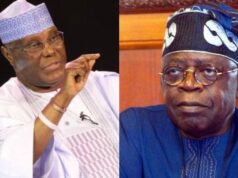
President Bola Tinubu remains a formidable contender in the 2027 presidential election, but his control of the federal machinery does not make him invincible.
Despite the advantages of incumbency, mounting economic discontent, opposition manoeuvres and the possibility of a united opposition could complicate his re-election bid.
One of the mistakes opposition politicians have repeatedly made is underestimating Tinubu’s political resilience.
Rather than relying solely on criticisms of his administration, they must convince Nigerians that they have credible alternatives to his policies, particularly those that have attracted widespread public dissatisfaction.
At present, the All Progressives Congress (APC) appears better positioned organisationally than its rivals, having unveiled its campaign structure while opposition parties continue to grapple with questions of leadership, alliances and strategy.
However, the political equation could change significantly if former Vice President Atiku Abubakar of the African Democratic Congress (ADC) and Peter Obi of the Nigeria Democratic Congress (NDC) agree to work together on a joint presidential ticket.
Such an arrangement could bring together two substantial political constituencies.
Obi commands considerable support in the Southeast, parts of the South-South and among young and urban voters, while Atiku possesses longstanding political networks and influence in sections of Northern Nigeria.
In the 2023 election, opposition votes were divided among the Peoples Democratic Party (PDP), Labour Party (LP) and New Nigeria Peoples Party (NNPP), a fragmentation that helped shape the final outcome.
A credible coalition could reduce that fragmentation and create a more direct contest with Tinubu.
Under Nigeria’s constitutional framework, a presidential candidate must secure the highest number of votes and at least one-quarter of the votes cast in at least two-thirds of the states and the Federal Capital Territory, subject to the applicable constitutional interpretation.
Neither Obi nor Atiku can assume that his existing support base alone will guarantee victory.
The central difficulty, however, would be determining who leads the proposed alliance.
An Atiku-led ticket could alienate some Obi supporters, particularly those who regard the former Anambra governor as the face of political reform and generational change.
Conversely, an Obi-led ticket could encounter resistance from established northern political interests that favour a return of presidential power to the North.
Atiku’s age, political experience and longstanding presidential ambition could further complicate negotiations over a subordinate position.
Meanwhile, New Nigeria Peoples Party leader Rabiu Kwankwaso could find himself marginalised if the leading opposition figures settle on a bilateral arrangement without accommodating his political interests.
Ultimately, political alliances are rarely determined by ideology alone. Personal ambition, regional calculations, bargaining power and the distribution of offices could determine whether the opposition achieves the unity it needs.
The emergence of the G-100 coalition of anti-Tinubu political forces represents another development worth watching.
Although joint committees and other mechanisms may help manage competing interests, persuading influential politicians and their loyalists to accept compromises remains a formidable challenge.
Even if opposition leaders reach an agreement at the national level, translating it into a functioning electoral coalition across the states may prove considerably more difficult.
Political parties that are negotiating together in Abuja often remain fierce competitors in their respective states.
Rivalries over governorship tickets, legislative seats and local party structures could undermine national agreements, particularly where one party is expected to surrender an advantage to accommodate another coalition partner.
Such disagreements can produce resistance from state executives, parallel political arrangements and defections that weaken the coalition before election day.
The defection of former Deputy Senate President Ovie Omo-Agege from the APC to the NDC illustrates how internal party disagreements and ticket calculations can influence political realignments.
Having left the APC in May 2026, Omo-Agege is expected to contest the Delta Central Senatorial District seat under the NDC platform in 2027.
His political movement underscores a broader reality: party loyalty is often tested when personal ambition and the distribution of electoral opportunities collide.
Regional considerations could prove equally decisive in negotiations over a joint presidential ticket.
Some northern political interests may prefer Obi to step aside for Atiku, while many of Obi’s supporters would resist any arrangement that relegates him to the vice-presidential position.
For these supporters, Obi represents more than an individual presidential aspirant; he embodies their demand for a different approach to governance and political leadership.
The political landscape also presents competing regional ambitions.
Tinubu remains a major contender in the Southwest, while Obi commands a significant following in the Southeast.
Atiku retains political networks in the Northeast, and other aspirants are seeking to consolidate their influence in different parts of the country.
The challenge for the opposition is to reconcile these interests without allowing regional calculations to overshadow the broader objective of defeating the incumbent.
Another variable in the 2027 contest is the possibility that regional tensions could be exploited to weaken opposition unity.
Political rhetoric that encourages distrust between the Yoruba and Igbo communities could undermine efforts to build a broad coalition across the South.
If rival political camps become preoccupied with ethnic competition, they could inadvertently strengthen forces that benefit from a divided opposition.
Such manoeuvres, whether deliberate or incidental, would make it more difficult for opposition leaders to mobilise support across regional boundaries.
Nigeria’s political history demonstrates that alliances built around narrow ethnic or regional interests can struggle to produce national consensus.
While regional identity remains an important factor in electoral calculations, the country’s economic and governance challenges require solutions that extend beyond ethnic affiliations.
Northern political and civic leaders also face questions about their response to longstanding social problems, including mass poverty, educational deprivation and the Almajiri system.
These challenges require sustained policy attention rather than becoming convenient talking points during election seasons.
Similarly, inflammatory rhetoric that appears to justify reprisals, ethnic cleansing or the displacement of communities cannot be excused as ordinary political strategy.
Such narratives risk deepening existing divisions and creating consequences that outlast the election itself.
The responsibility rests on political leaders across the country to resist provocations and focus on issues that directly affect citizens’ lives.
The Yoruba and Igbo, like other Nigerian communities, have enduring social, commercial and cultural connections that should not be sacrificed to the ambitions of competing political elites.
Elections will come and go, but Nigerians will continue to share the same country and confront many of the same national challenges.
The outcome of the 2027 presidential election could depend significantly on whether the opposition contests as a collection of separate political forces or succeeds in establishing a credible alliance.
In the first scenario, Tinubu and the APC could benefit from a fragmented opposition.
Even if the president’s popularity declines in some constituencies because of economic hardship, divided opposition votes could give the ruling party a significant advantage, provided it secures the constitutionally required geographical spread.
Incumbency, party organisation, access to established political networks and a coordinated campaign could all work in Tinubu’s favour.
The second scenario would emerge if major opposition figures, including Obi, Atiku and Kwankwaso, or a broader coalition of opposition parties, agreed on a common strategy and presented a ticket capable of attracting support across regional and demographic boundaries.
Such an arrangement could combine Obi’s appeal among younger and urban voters with Atiku’s northern political networks and other coalition partners’ electoral strengths.
However, the outcome would depend on the credibility of the agreement, the willingness of supporters to accept the eventual candidates and the coalition’s ability to translate endorsements into actual votes.
A united opposition would not automatically guarantee victory.
It would still need a coherent policy programme, an effective nationwide campaign and the capacity to meet the constitutional requirements for winning the presidency.
Nevertheless, a credible coalition could transform the election into a much closer contest and increase the possibility of an opposition victory.
Depending on the final distribution of votes and the constitutional requirements, the election could also produce a situation requiring a further ballot.
Tinubu should not be dismissed as an easy opponent. His political experience and the advantages of incumbency make him a formidable candidate. But neither should the opposition assume that his position is unassailable.
The president’s prospects will be influenced by the state of the economy, public perceptions of his administration, the effectiveness of his campaign and the ability of his opponents to present a compelling alternative.
For the opposition, the real test is whether its leaders can put collective electoral interests ahead of personal ambition.
A coalition that cannot resolve the question of who leads it may never progress beyond negotiations and public declarations.
If the opposition remains divided, it could hand Tinubu an advantage without requiring him to win over every dissatisfied voter.
If it unites around a credible candidate and a convincing programme, it could significantly alter the political calculations.
The choice before the opposition is therefore clear: negotiate a workable alliance capable of challenging the incumbent or risk entering the election as separate contenders whose combined support may still prove insufficient to secure victory.