Home Blog Page 100

Tinubu Seeks Repeal, Re-Enactment, Extension Of 2025 Budget
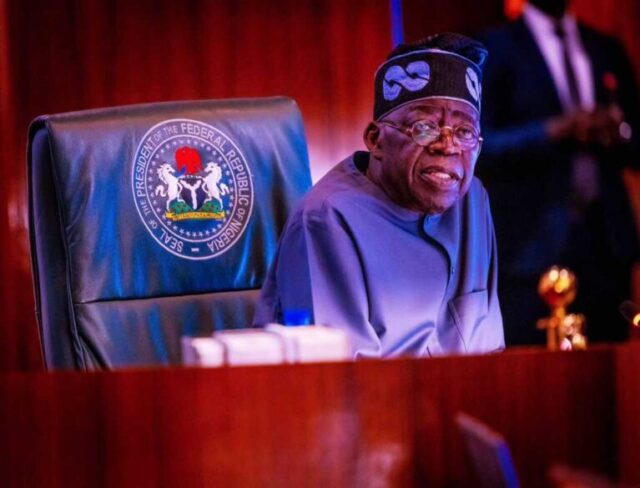
President Bola Ahmed Tinubu has requested the National Assembly to repeal and re-enact the 2024 and 2025 Appropriation Acts, while also extending the implementation of the 2025 budget to March 31, 2026.

The request was contained in a letter dated December 18, 2025, addressed to the Speaker of the House of Representatives, Abbas Tajudeen, and read on the floor of the House on Friday.

In the letter, President Tinubu transmitted the Appropriation (Repeal and Re-Enactment) Bills, 2024 and 2025, for legislative consideration in line with constitutional procedures.

According to the President, the 2024 Appropriation Act of N35.06 trillion is to be repealed and re-enacted at N43.56 trillion.

The revised figure includes N1.74 trillion for statutory transfers, N8.27 trillion for debt service, N11.27 trillion for recurrent (non-debt) expenditure, and N22.28 trillion for capital expenditure and development fund contributions for the year ending December 31, 2025.

For the 2025 budget, Tinubu proposed repealing the existing N54.99 trillion Act and re-enacting it at N48.32 trillion.

The revised budget allocates N3.65 trillion for statutory transfers, N14.32 trillion for debt service, N13.59 trillion for recurrent (non-debt) expenditure, and N16.71 trillion for capital expenditure and development fund contributions.

The re-enacted 2025 budget is expected to run until March 31, 2026.

The President explained that the repeal and re-enactment are intended to account for previously unrecognised budget items and to reflect a revised capital implementation target of 30 per cent.

He said the adjustments align with current fiscal realities and execution capacity while ensuring credible and transparent budget performance.

Tinubu added that the extension would allow for full release of targeted capital funds across all ministries, departments, and agencies (MDAs).

He said the measures form part of broader fiscal reforms to eliminate overlaps in concurrent budgets, improve planning, strengthen execution, and enhance accountability in public expenditure.

Other provisions in the bills include stricter implementation discipline, limiting virement to cases approved by the National Assembly, separate recording of excess revenue, mandatory compliance with due process, and periodic reporting on fund releases and agency-generated revenues.

The President informed lawmakers that the submission supersedes an earlier letter sent to the House on December 16, 2025, and urged prompt consideration and passage of the bills.

Google search engine

Turaki-led PDP NWC Says It Will Continue Duties Pending Court Ruling

The National Working Committee (NWC) of the Peoples Democratic Party (PDP), led by Tanimu Turaki, SAN, has affirmed that it will continue to perform its responsibilities as the party’s authentic leadership while awaiting a court ruling on the ongoing leadership dispute.

The statement came after a meeting with the Independent National Electoral Commission (INEC), which also involved the factional caretaker committee loyal to Minister of the Federal Capital Territory (FCT), Nyesom Wike.

The NWC said the matter is now before the Court of Appeal.

In the statement titled, “We Await Court Judgment on PDP Leadership,” the party’s National Publicity Secretary, Ini Ememobong, noted that several members of the Abdulrahman Muhammed faction had been expelled from the PDP at the Ibadan National Convention and had received official expulsion letters.

Ememobong said, “Earlier today, the INEC Chairman, Prof. Joash Amupitan, SAN, invited the Turaki-led NWC and some former party members claiming leadership positions to find a way to resolve the lingering crisis in the party.”

He explained that both factions presented their positions comprehensively, but the commission emphasized that it is aware of the pending Court of Appeal cases and will await the final judgment before taking any decision.

Concluding the meeting, National Chairman Tanimu Turaki stated, “As the authentic leadership elected at a valid convention, we will continue to execute our duties as an opposition party. While awaiting the court’s pronouncement, we remain committed to holding the government accountable on critical issues such as security, infrastructure, education, healthcare, and other matters of national importance.”

Google search engine

Reconsider Withdrawal Of Police From VIPs, Akpabio Urges Tinubu

Senate President Godswill Akpabio has appealed to President Bola Ahmed Tinubu to review his recent directive to withdraw police personnel assigned to VIPs, cautioning that the move could expose lawmakers to security risks.

President Tinubu had instructed the Inspector-General of Police, Kayode Egbetokun, to pull officers from non-essential duties, including escorts for VIPs.

Speaking during the President’s visit to the National Assembly to present the 2026 budget on Friday, Akpabio raised concerns about the implications of the directive for legislators.

He noted that several lawmakers were worried about returning to their constituencies without adequate security protection.

“As we direct security agencies to withdraw policemen from critical areas, some members of the National Assembly asked me to let you know that they may not be able to go home today.”

“They could be exposed to danger. On that note, we plead with you, Mr. President, to kindly review the decision,” Akpabio said.

Earlier, the Senate President acknowledged that insecurity continues to challenge Nigeria, with many communities still grappling with violence and criminal activities.

He emphasized that national strength depends on unity and cooperation among government institutions.

Drawing lessons from history, Akpabio argued that nations advance when the executive and legislature work together in the national interest but stagnate when rivalry takes precedence.

He assured that the National Assembly remains committed to partnering with the executive to strengthen security frameworks and protect Nigerians.

His appeal comes amid ongoing debate over balancing the need to curb misuse of police personnel with ensuring adequate protection for public officials in a complex security environment.

Google search engine

FG Inspects Moribund Enugu Livestock Facilities, Vows Full Rehabilitation

The Minister of Livestock Development, Idi Mukhtar Maiha, has concluded a comprehensive inspection of major livestock facilities in Enugu State, reaffirming the federal government’s commitment to reviving dormant assets and unlocking new economic opportunities in the sector.

During the tour on Wednesday, the minister visited the Adada Cattle Multiplication Centre, an 847-hectare facility that has remained largely unused.

Assessing the site, including the Adada dam, Mukhtar said the visit provided a clear roadmap for bringing the centre into full operation.

Describing the area as “a paradise yet to be discovered,” the minister highlighted the untapped potential and said the dam would be harnessed to irrigate extensive pasture fields.

He emphasised the importance of practical, field-based engagement, stating, “We must come out to the field, discover the potential, and create the environment for private sector and public-private partnerships to work with us to change the narrative.”

In Uzo-Uwani Local Government Area, Chairman Chijioke Ezeugwu expressed gratitude for the visit and pledged full support toward revamping the centre, stressing its economic benefits for the community.

The minister also visited Mary Agro Farms in Udi, an initiative of the Catholic Diocese of Enugu, and engaged with local livestock stakeholders.

He reiterated the federal government’s determination to fully harness the livestock sector, in line with President Tinubu’s vision for non-oil sectors to contribute significantly to national growth and GDP.

Mukhtar further inspected the Okpuje Pig and Progeny Centre, a 26.2-hectare facility with a 3,000-stock capacity, established 43 years ago but left unused for decades.

He commended the host community for safeguarding the facility and assured that it, along with other abandoned livestock investments in the state, would be revived.

Plans are also underway to establish a modular abattoir to process bacon for domestic and export markets.

Jude Chinedu Asogwa, chairman of Nsukka Local Government Area, thanked the Tinubu administration for prioritising the rehabilitation of these investments, noting that the initiative aligns with the state government’s push to grow agriculture as a driver of economic prosperity.

Google search engine

Court Bars Police From Enforcing Tinted Glass Permit, Restrains IGP From Harassing Motorists In Landmark Ruling


A Delta State High Court has granted an ex-parte injunction preventing the Inspector General of Police (IGP) and the Nigeria Police Force (NPF) from enforcing the tinted glass permit policy across the country.

Justice Joe Egwu, on Wednesday, ordered that the police must not harass, arrest, detain, or extort motorists and citizens over the policy.

The order will remain in effect until the substantive case is heard and determined.

The injunction was issued following a suit filed in Delta State by Mr. Israel Joe, represented by a legal team led by Kunle Edun (SAN).

This comes after the NPF, through its Public Relations Officer Benjamin Hundeyin, announced on Monday that the enforcement of the tinted glass permit policy would resume from January 2, 2026.

The court’s order specifically restrains the IGP, the police, and their officers from interfering with the constitutional rights of citizens, including dignity, privacy, freedom of movement, and property ownership, under the guise of enforcing the tinted glass permit.

The hearing for the substantive motion has been scheduled for December 24, 2025.

Google search engine

2027: Presidential Candidates Can Spend Up To N10bn, Governorship Candidates N3bn – Reps


The House of Representatives has approved a major revision of campaign finance limits, raising the maximum amount presidential candidates can spend from ₦5 billion to ₦10 billion, while increasing the ceiling for governorship candidates from ₦1 billion to ₦3 billion.

The decision followed the passage of the Electoral Act (Amendment) Bill 2025 after clause-by-clause consideration of a report by the House Committee on Electoral Matters, chaired by Adebayo Balogun.

Lawmakers also approved provisions mandating the real-time electronic transmission of election results by the Independent National Electoral Commission, INEC.

Under the amended Clause 93(2), spending limits for National Assembly candidates were significantly increased.

Senators are now permitted to spend up to ₦500 million, up from ₦100 million, while candidates for the House of Representatives can spend up to ₦250 million, compared to the previous ₦70 million.

For state constituencies, the ceiling was raised from ₦30 million to ₦100 million.

Chairmanship candidates can now spend up to ₦60 million, up from ₦30 million, while councillorship candidates’ limits increased from ₦5 million to ₦10 million.

The House also approved a provision capping individual or corporate donations at ₦500 million per candidate.

Reacting to the development, political scientist Prof. Gbade Ojo said the rising cost of politics has fundamentally altered Nigeria’s democratic space, warning that it increasingly excludes ordinary citizens.

According to him, the new limits reinforce a system dominated by wealth, shutting out competent and experienced professionals who lack the financial capacity to compete.

He questioned INEC’s ability to effectively monitor campaign spending, arguing that the absence of reliable tracking mechanisms makes enforcement difficult.

Ojo also warned that widening gaps between registered voters and actual voter turnout point to growing public disengagement, adding that higher campaign spending could further entrench vote buying and undermine electoral credibility.

Similarly, Dr Edun Abdulkareem, Head of the Department of Political Science at the University of Ilorin, described the trend as dangerous, saying it promotes a culture where public office is treated as an investment to be recouped once power is attained.

He cautioned that this could deepen corruption, marginalise communities, and turn democracy into the preserve of a few.

Beyond campaign finance, the House approved amendments mandating INEC to transmit election results electronically and in real time to the IReV portal.

The new Clause 60(3) requires presiding officers to upload results after the prescribed EC8A forms are signed and stamped at polling units.

Lawmakers also strengthened the legal backing for the use of the Bimodal Voter Accreditation System, BVAS, making it the primary accreditation tool.

Where BVAS fails and no replacement is deployed, the election in the affected polling unit will be cancelled and rescheduled within 24 hours if the outcome substantially affects the final result.

The House further approved tougher sanctions for vote buying and selling, introducing a minimum of two years’ imprisonment or a ₦5 million fine, or both, alongside a 10-year ban from contesting elections.

Penalties for multiple voter registration were increased, while presiding officers who deliberately breach procedures on counting, announcement, or transmission of results now face heavier fines or jail terms.

Lawmakers also approved early release of election funds to INEC at least one year before general elections, extended deadlines for submission of candidates’ lists from 180 to 210 days, and permitted the use of electronically generated voter identification, including downloadable voter cards with QR codes.

However, the House rejected a proposal seeking to criminalise inducement of delegates during party primaries, congresses, and conventions.

Lawmakers expressed concerns that the provision could be misused and opted to delete it entirely from the bill.

Civil society groups, including the Civil Society Legislative Advocacy Centre, welcomed the amendments, particularly the mandatory electronic transmission of results.

CISLAC’s Executive Director, Auwal Musa Rafsanjani, described the move as a major step toward restoring transparency and public confidence in elections, though analysts cautioned that challenges such as poor network infrastructure could affect implementation.

The House Committee on Electoral Matters explained that proposals on early voting, inmate voting, changes to election timelines, and replacement of Permanent Voter Cards were dropped due to lack of broad consensus among lawmakers and stakeholders.

The committee said the amendments were designed to strengthen the existing Electoral Act 2022 without destabilising the legal framework.

According to the committee, the approved changes reflect a balance between reform ambitions and legislative consensus, with the aim of improving transparency, accountability, and the integrity of Nigeria’s electoral process.

Google search engine

Avoid Indomie Vegetable Flavour For Your Own Good – NAFDAC Warns Nigerians

The National Agency for Food and Drug Administration and Control (NAFDAC) has announced the recall of Indomie brand noodles, Vegetable Flavour, citing the presence of undeclared allergens.

According to the agency, the product contains milk and eggs that were not indicated on the label, a situation it said could pose serious health risks to consumers who are allergic or intolerant to these substances.

In a statement, NAFDAC said:

“NAFDAC is informing the public that the French authority (Rappel Conso of France) has issued a notice regarding the recall of the Indomie brand Noodles Vegetable Flavour. This recall is due to the presence of undeclared allergens, specifically milk and eggs, which may pose a significant health risk to consumers with allergies or intolerances.”

The agency noted that although the likelihood of the product entering Nigeria through official channels is low because of the Federal Government’s ban on noodle importation, vigilance remains necessary.

“Although the official risk of these products entering Nigeria is low due to the Federal Government’s ban on noodle importation, there remains a need for heightened vigilance to prevent possible illicit entry or circulation of the implicated Indomie brand,” the statement said.

NAFDAC added that it has activated surveillance measures to forestall any possible entry of the recalled product into the country.

“NAFDAC has commenced vigilance actions to guard against possible entry of the brand into the country, as acquisition of the product through online purchase or international travel cannot be excluded,” it stated.

The agency advised distributors, retailers, and consumers to be cautious and to avoid any dealings with the affected product.

“Distributors, retailers, and consumers are hereby advised to exercise caution and vigilance within the supply chain to avoid the distribution, sale, and consumption of the recalled foreign brand of Indomie noodles,” NAFDAC warned.

It further urged members of the public who may come across the product to dispose of it immediately and report any suspected sale.

“Consumers should discard the product and not consume it. Report any suspicion of the sale of the implicated flavour of Indomie noodles to the nearest NAFDAC office or call 0800-162-3322.”

Google search engine

Doctor Accused Of Unlawful Removal Of Patient’s Kidney Sacked


The Ekiti State Government has dismissed a surgeon at the Ekiti State University Teaching Hospital, EKSUTH, following allegations that a patient’s kidney was removed without consent during a surgical procedure.

The decision was announced in a statement issued by the Commissioner for Health, Oyebanji Filani, and made available to journalists on Friday.

According to the statement, the dismissal followed the submission of a detailed report by a seven-member panel of enquiry chaired by Professor Francis Faduyile.

The panel was set up 11 days earlier to investigate a complaint by Mr Joshua Afolayan over a surgery he underwent at EKSUTH.

After reviewing the findings and recommendations of the panel, the state government approved the immediate dismissal of the surgeon who had primary responsibility for the operation.

In addition, all members of the surgical team present in the theatre on the day of the procedure were ordered to proceed on a one-month suspension, pending further administrative review.

The government also announced that it would take full responsibility for Mr Afolayan’s medical care.

This includes bearing the cost of a fresh kidney transplant, as well as post-transplant treatment and transplant-related medical maintenance for a period of two years.

Beyond the disciplinary actions, the Ekiti State Government said it would embark on a comprehensive reorganisation of relevant departments within EKSUTH to strengthen clinical governance, accountability, and patient safety.

While reaffirming its support for the many dedicated health professionals at the teaching hospital, the government stressed that it would not hesitate to act decisively wherever professional ethics and standards are breached.

The statement added that the administration remains committed to protecting patients, upholding ethical medical practices, and restoring public confidence in the state’s health system.

It assured residents that necessary reforms would be implemented to prevent a recurrence of such incidents and to ensure that EKSUTH continues to function as a centre of excellence in patient care.

The government thanked the people of Ekiti State for their patience and trust, and reiterated its commitment to improving healthcare delivery, compassion, and responsible governance.

Google search engine

2027: Elections Are Not Won On Social Media, Tinubu Has No Serious Challenger – Shettima


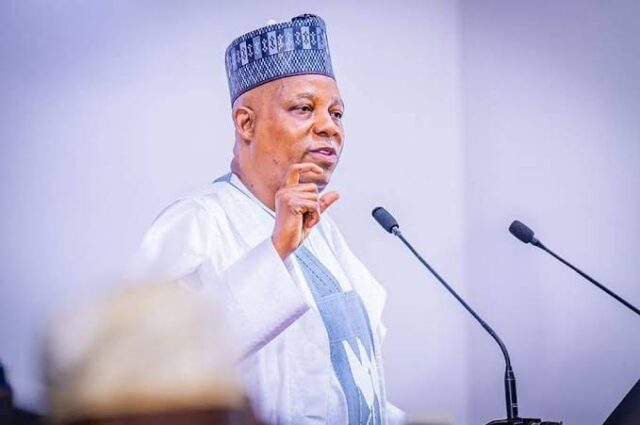
Vice President Kashim Shettima on Friday dismissed speculation about potential challengers to President Bola Ahmed Tinubu ahead of the 2027 general election, saying the president has no credible rival and that elections are not won on social media platforms.

Shettima made the remarks during the 15th meeting of the National Executive Committee of the All Progressives Congress, APC, held at the State House Conference Centre in Abuja.

According to the vice president, only individuals acting without a clear understanding of Nigeria’s political realities would contemplate running against Tinubu in 2027, though he acknowledged that democracy allows anyone to contest.

He stressed that electoral victories are secured through broad coalitions, credibility, and conviction, rather than online popularity or digital noise.

“Elections are not won by noise or nostalgia,” Shettima said, noting that platforms such as Facebook and X, formerly Twitter, do not determine electoral outcomes.

He added that the experience of President Tinubu and the lessons drawn from past elections provide the ruling party with a strong advantage heading into the next poll.

Describing 2027 as a responsibility rather than a gamble, Shettima expressed confidence that the APC would secure another mandate, saying the party was on course for what he called a renewed blessing at the polls.

Google search engine

Supreme Court Throws Out INEC Appeal Against SDP For Lacking In Merit, Awards N2m Cost

The Supreme Court on Friday dismissed an appeal filed by the Independent National Electoral Commission, INEC, challenging the leadership of the Social Democratic Party, SDP, and ordered the electoral body to pay a cost of ₦2 million.

In its decision, the apex court held that the appeal lacked merit and declined to interfere with the concurrent judgments of the lower courts.

The court noted that the matter had become academic, as the disputed by-elections had already been conducted and the winners sworn in.

The dispute arose from INEC’s refusal to recognise candidates fielded by the SDP in by-elections held across 12 states of the federation.

The party had approached the Federal High Court in Abuja, arguing that its candidates emerged from valid primaries monitored by INEC, and that the commission had no basis for excluding them.

On October 17, the Federal High Court ruled in favour of the SDP and ordered INEC to recognise and include the party’s candidates in the elections.

INEC complied with the order but proceeded to challenge the judgment at the Court of Appeal.

In a unanimous decision delivered by a panel led by Justice Adebukola Banjoko, the Court of Appeal dismissed INEC’s appeal and affirmed the judgment of the high court.

Dissatisfied, INEC further appealed to the Supreme Court, seeking to set aside the appellate court’s ruling.

INEC argued that the letters and notices submitted to it by the SDP were invalid because they were signed by the party’s Acting National Chairman, Dr Sadiq Umar Abubakar, and National Secretary, Dr Olu Agunloye, who the commission said had been suspended by the party.

However, in the lead judgment delivered by Justice Mohammed Idris, the Supreme Court held that there was no live issue left for determination.

The court observed that since the elections had already taken place and all elected officials had been sworn in, there was nothing upon which it could exercise its adjudicatory powers.

The five-member panel stressed that courts do not engage in academic or hypothetical questions and declined to delve into issues relating to the interpretation of the Electoral Act in the absence of a live dispute.

Consequently, the apex court dismissed the appeal and awarded a cost of ₦2 million against INEC’s counsel.

Google search engine

MOST COMMENTED

- Advertisement -
Google search engine