Home Blog Page 116

Kano Varsity Expels 60 Students For Examination Malpractice

Bayero University, Kano, has expelled no fewer than 60 students from different faculties over their involvement in examination misconduct, reaffirming its stance on academic discipline and integrity.

The decision was reached during the university’s 43rd statutory Senate meeting held on January 7, 2026, after the consideration of detailed reports and recommendations from relevant academic and disciplinary committees.

The expulsions were formally announced in the institution’s Weekly Bulletin released on Friday, which stated that the affected students were found culpable of breaching the university’s examination rules and regulations.

According to the bulletin, the Senate subjected each case to thorough scrutiny before approving the sanctions in line with existing examination guidelines.

The university reiterated its zero-tolerance policy on examination malpractice, warning that strict penalties would continue to be applied to discourage future infractions.

Management stressed that no student would be shielded from punishment, irrespective of department or status.

Bayero University further pledged its commitment to maintaining high academic standards and sustaining a culture of discipline across the institution.

It will be recalled that in April 2025, the university expelled 62 students and rusticated 17 others for similar offences, a decision ratified at the 42nd Senate meeting held on February 26, 2025.

Google search engine

Rivers LG Crisis Deepens As PDP Stakeholders Sue Party Chair, RSIEC Over Candidate Nominations

The internal crisis rocking the Peoples Democratic Party (PDP) in Rivers State has taken a legal turn, following a suit filed by party stakeholders challenging the nomination of candidates for the last local government elections.

The PDP emerged victorious in three key local government areas—Port Harcourt City, Obio-Akpor and Ogba-Egbema-Ndoni councils—widely regarded as politically strategic in the state.

However, the legitimacy of the party’s candidates in the polls has now been questioned in court.

Three PDP stakeholders, Enyi Uchechukwu, Wisdom Kalio, and Uche Amadi, have dragged the party’s factional state chairman, Aaron Chukwuemeka, alongside the Rivers State Independent Electoral Commission (RSIEC), the PDP, and the Rivers State Government before the Rivers State High Court.

In an originating summons, the claimants asked the court to determine whether Chukwuemeka, whose emergence followed congresses allegedly nullified by a subsisting court judgment, possessed the legal authority to submit a list of candidates to RSIEC for the local government elections held on August 30, 2025.

They contended that the congress which produced Chukwuemeka had earlier been set aside by the Rivers State High Court, thereby rendering any actions taken by him, including the submission of candidates’ names, invalid.

Among other reliefs, the claimants sought a declaration on whether the PDP validly presented candidates through Chukwuemeka for the elections, and whether those candidates were qualified to participate in the polls.

They further urged the court to declare the PDP ward, local government, and state congresses conducted on July 27 and August 10, 2024, null and void, insisting that Chukwuemeka, as a product of the nullified congresses, lacked the capacity to conduct primaries or forward any list of candidates for elective offices.

The stakeholders also prayed for a perpetual injunction restraining the defendants and their agents from further interference in the party’s internal affairs relating to the nomination and presentation of candidates for elections.

At the hearing, counsel to the claimants, Glory Chizim-Chinda, applied for substituted service on the second and third defendants.

The presiding judge, Justice Stephen Jumbo, granted the application and ordered that court processes be served at the PDP state secretariat along Aba Road.

Justice Jumbo adjourned the matter to February 9, 2026, for an application for joinder, and directed that the processes be served on the chairmen, their deputies, and councillors of Port Harcourt City, Obio-Akpor, and Ogba-Egbema-Ndoni local government areas.

Google search engine

Army Thwarts Kidnap Plot In Taraba, Rescues Two Victims

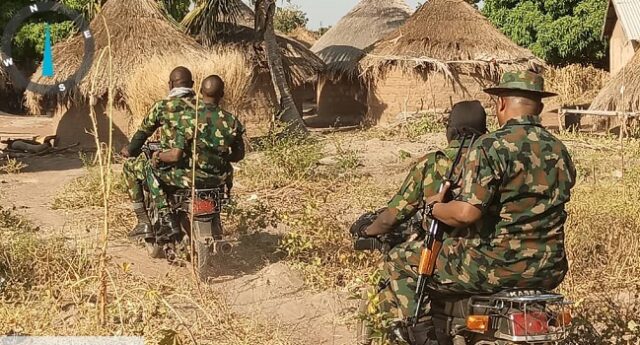
Troops of the 6 Brigade of the Nigerian Army under Sector 3 of Operation Whirl Stroke have foiled a kidnapping attempt along the Wukari–Ikyior Road in Taraba State, rescuing two abducted persons and forcing the assailants to flee.

The development was confirmed in a statement released on Saturday by the Acting Assistant Director, Army Public Relations, 6 Brigade, and shared on the Nigerian Army’s official X platform.

According to the statement, the troops swiftly responded to a distress call indicating that armed criminals had mounted a roadblock and were attacking civilians along the busy route.

“Troops of 6 Brigade Nigerian Army/Sector 3, Operation Whirl Stroke, successfully foiled a kidnapping and robbery incident on January 16, 2026, along the Wukari–Ikyior Road,” the statement said.

It added that soldiers deployed from Forward Operating Base, Wukari, moved promptly to the scene, causing the suspects to flee into nearby bushes upon sighting the troops, abandoning their captives and escaping with a motorcycle.

The rescued victims were identified as Mr Terso Kerso, 48, and Mr Udongu Terbo, 42, both indigenes of Ikyior community in Wukari Local Government Area.

The Army disclosed that the victims were found unconscious and were immediately rushed to the Federal University Teaching Hospital, Wukari, for urgent medical care.

Following the incident, the Army said security had been reinforced in the area, with increased patrols and surveillance to deter further criminal activities and reassure residents and road users.

Commending the soldiers for their swift intervention, the Commander of 6 Brigade Nigerian Army/Sector 3 OPWS, Brigadier General Kingsley Uwa, described their response as professional and timely, noting that it prevented possible loss of lives.

He reaffirmed the Nigerian Army’s commitment to sustaining proactive security operations in the area and urged residents to continue supporting security agencies by providing timely and credible information.

Google search engine

Trump Threatens 10% Tariffs On UK, Denmark, Europe Over Greenland Dispute

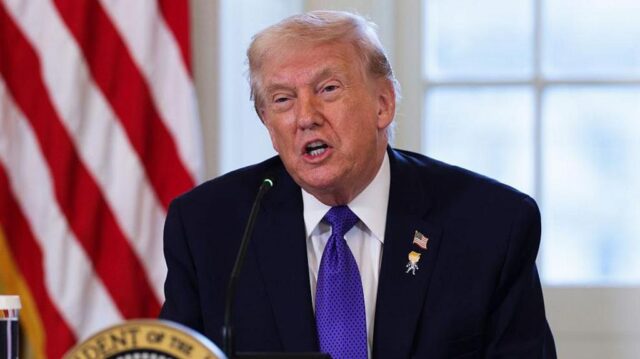
US President Donald Trump has announced plans to impose a 10% tariff on goods imported from the United Kingdom, Denmark, and other European countries starting February 1, citing Greenland as the reason.

The tariffs, announced via Truth Social, are to remain in place “until such time as a deal is reached for the complete and total purchase of Greenland.”

The announcement came as a surprise, injecting urgency into the ongoing debate over Greenland, a self-governing territory under Danish control.

The move has drawn sharp reactions from European leaders and raised concerns about international trade relations.

UK opposition leader Kemi Badenoch criticized the decision on social media, calling it a “terrible idea” and warning that it would raise costs for both UK and US consumers.

She stressed that Greenland’s sovereignty should be decided by its people.

Earlier, the Speaker of the United States House of Representatives, Mike Johnson, emphasized that the US intends to resolve the matter through diplomatic channels, noting that the appointment of a Greenland envoy shows a non-military approach.

The announcement follows widespread protests in Greenland’s capital, Nuuk, and Copenhagen, where demonstrators held placards stating “Greenland not for sale” and “Hands off Greenland.”

Analysts note that Trump’s tariffs escalate tensions over Greenland just days after US and Danish officials had agreed to form a working group, which some had hoped would ease the dispute.

Tariffs are taxes on imported goods, usually calculated as a percentage of the product’s value. For example, a 10% tariff on a $10 product adds $1, which may be passed on to consumers.

Trump defended his stance on Truth Social, claiming that the US has subsidized Denmark and the EU for years by not charging tariffs.

He said it is “time for Denmark to give back” and warned that Greenland faces a “potentially perilous situation,” citing competition from China and other foreign powers.

Google search engine

2027: Unseating Tinubu Only Way To Rescue Nigeria From Crisis – ADC

The African Democratic Congress (ADC) has stated that its main goal is to remove President Bola Tinubu from office, describing it as a necessary step to rescue Nigeria from what the party calls an unprecedented governance crisis.

Speaking on Friday during an interview on Channels Television’s Politics Today, ADC spokesperson Bolaji Abdullahi said, “It’s solely to get Tinubu out of power. That is the agenda. There is no scenario where he remains in power, and we are able to save this country.”

Abdullahi, a former minister, claimed that Nigeria has been “hijacked,” adding, “When people say you can smash it, grab it, and run with it, that is the language of banditry,” which he said reflects the mindset of the current administration.

He also raised concerns over alleged legislative manipulation, particularly around tax laws, describing recent government actions as unprecedented in Nigeria’s democratic history.

Abdullahi accused the government of forging a law that had already been duly passed by the National Assembly, questioning the legality of such an act.

“A government that can forge a duly passed law; what do you call that?” he asked.

On the Federal Government’s reported payment of $9 million to foreign lobbyists in the United States, allegedly to improve Nigeria’s image before American leaders including former President Donald Trump, Abdullahi said the process lacked transparency and legality.

“Is it a bad thing to lobby? No. But how was this contract awarded? Who paid the money? What budget line was it taken from? How was the money transferred out of Nigeria?” he asked, adding that such spending reflects misplaced priorities.

“If you invest nine million dollars in internal security, you will see results. You won’t have to convince another country that your nation is safe,” Abdullahi argued, noting that the government cares more about appearances abroad than the daily insecurity faced by Nigerians.

“They don’t care whether Nigerians are still dying. They just want to look good before Americans,” he said.

Abdullahi also expressed alarm over a recently signed medical Memorandum of Understanding (MOU) between Nigeria and the United States, reportedly signed on December 19, which he said gives the US significant control over how funds are spent, including determining the regions that would benefit.

“No Nigerians have seen the details of this MOU,” he said, describing the terms as “shocking” and raising concerns about sovereignty and accountability.

Google search engine

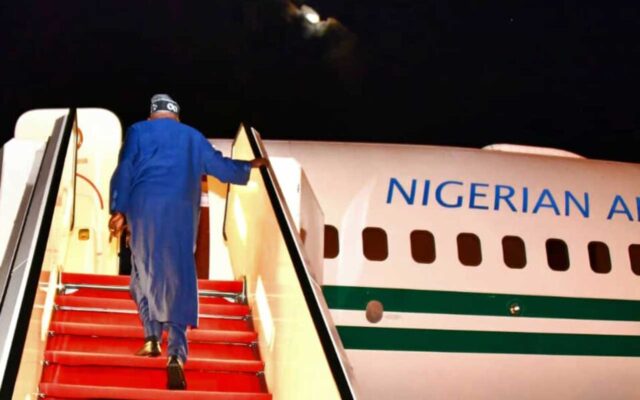
President Tinubu Returns To Abuja After Abu Dhabi Summit

President Bola Ahmed Tinubu has returned to Abuja following his participation in the 2026 Abu Dhabi Sustainability Week and a brief stay in Paris.

The President’s return was confirmed on Saturday by his Special Adviser on Information and Strategy, Bayo Onanuga, in a statement titled “President Tinubu Returns to Nigeria After Abu Dhabi Trip.”

President Tinubu had travelled to Paris on Sunday, December 28, 2025, to complete the remaining part of his annual leave before proceeding to Abu Dhabi for the international summit, which held from January 11 to 15.

During the event, President Tinubu witnessed the signing of a Comprehensive Economic Partnership Agreement between Nigeria and the United Arab Emirates.

The agreement is expected to grant duty-free access for thousands of Nigerian products into the UAE market while strengthening economic cooperation between both countries.

The partnership aims to boost bilateral trade and investment, enhance technology transfer, and expand collaboration across critical sectors such as energy, infrastructure, agriculture, mining, and renewable energy.

Nigeria’s Minister of Industry, Trade and Investment, Dr. Jumoke Oduwole, signed the agreement on behalf of Nigeria, while the UAE Minister of State for Foreign Trade, Thani bin Ahmed Al Zeyoudi, signed for the Emirates.

Both President Tinubu and UAE President Sheikh Mohamed bin Zayed Al Nahyan were present at the signing ceremony.

Speaking on the agreement, Oduwole described it as a major opportunity for Nigerian exporters to access global markets.

She noted that Nigerian businesses would be allowed to establish offices and subsidiaries in the UAE, while business owners could stay in the country for up to 90 days within a 12-month period.

Addressing participants at the summit, President Tinubu announced Nigeria’s plan to mobilise up to $30 billion annually in climate and green industrial financing to fast-track energy transition reforms and expand electricity access nationwide.

He further disclosed that the Climate Investment Platform would mobilise $500 million for climate-resilient infrastructure, while the National Climate Change Fund is targeting a capitalisation of $2 billion.

The President also revealed that a joint Nigeria–UAE Investopia summit is scheduled to take place in Lagos in February, bringing together investors, policymakers, innovators, and business leaders to explore investment opportunities in Nigeria.

The Abu Dhabi Sustainability Week is an annual global platform convened by the UAE to promote dialogue on sustainability, climate action, and energy transition.

The 2026 edition, themed “The Nexus of Next: All Systems Go,” focused on integrating finance, technology, energy, and human capital to achieve sustainable development.

Google search engine

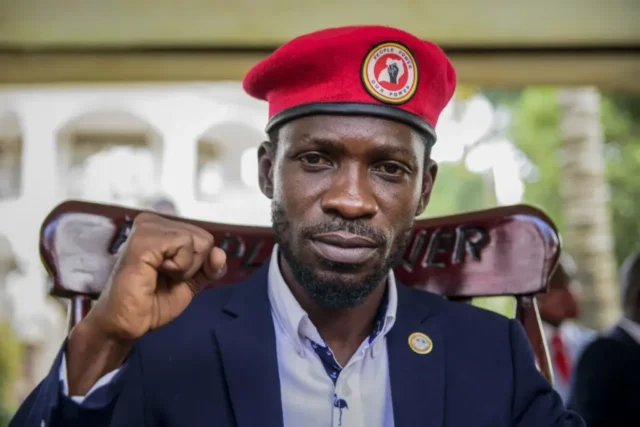
Ugandan Opposition Leader Bobi Wine Claims Escape From Arrest Amid Disputed Polls

Ugandan opposition leader and National Unity Platform presidential candidate, Robert Kyagulanyi Ssentamu, popularly known as Bobi Wine, has said he escaped an alleged security raid on his residence and is currently in hiding, as Uganda awaits the final outcome of a tense and controversial general election.

Wine made the disclosure on Saturday amid conflicting reports over his whereabouts following claims by his party that security forces stormed his home on Friday night, a day after elections held under an internet blackout and marked by reports of violence.

Posting on X, Wine said he narrowly escaped arrest and is no longer at his residence, though members of his family remain under heavy security watch.

“I want to confirm that I managed to escape from them. Currently, I am not at home, although my wife and other family members remain under house arrest,” he wrote.

“I know these criminals are looking for me everywhere, and I am trying my best to keep safe.”

Earlier reports had suggested that the opposition leader was forcibly taken away in an army helicopter, claims that later drew denials from the police.

As of Saturday, President Yoweri Museveni, 81, appeared set to be declared winner of the presidential election, extending his nearly 40-year rule.

Partial results released by the Electoral Commission showed Museveni leading with about 71.9 per cent of the vote, while Wine trailed with 24.5 per cent, with over 90 per cent of ballots counted.

Security was visibly heightened across the capital, Kampala, with armed personnel deployed to major streets.

Journalists observed security forces dispersing civilians as authorities sought to prevent post-election protests similar to those witnessed recently in neighbouring Kenya and Tanzania.

Police spokesperson Kituuma Rusoke said security agencies had merely restricted access to what they described as security hotspots, including Wine’s residence, insisting that the move was to prevent gatherings capable of inciting violence.

“We have not necessarily denied people access to him, but we cannot tolerate situations where his residence is used to mobilise people to incite unrest,” Rusoke said.

Residents around Wine’s home reported a heavy security presence, with one stall owner, Prince Jerard, saying he heard drones and helicopters hovering over the area on Friday night.

“Many people have left the area. There is a lot of fear,” he said.

Wine, a former pop star turned politician, has emerged as Museveni’s strongest challenger in recent years and is widely known as the “ghetto president,” a reference to his upbringing in Kampala’s slum communities.

He has accused the government of widespread ballot stuffing and targeted attacks on his supporters during the internet blackout imposed ahead of the election.

African election observers said they found no direct evidence of ballot manipulation but condemned reports of intimidation, arrests, and abductions involving opposition figures and civil society groups.

Former Nigerian president Goodluck Jonathan, who led observer missions from the African Union, COMESA, and IGAD, said such actions instilled fear and undermined public confidence in the electoral process.

Jonathan also criticised the internet shutdown, noting that it disrupted effective election monitoring and heightened suspicion, although he described voting on election day as largely peaceful.

Analysts have long viewed the election as predictable, citing Museveni’s firm grip on state institutions and the security apparatus since taking power in 1986.

Another prominent opposition figure, Kizza Besigye, remains on trial for treason after being abducted in Kenya in 2024 and returned to Uganda.

There were also reports of election-related violence, with a lawmaker from Wine’s party alleging that security forces killed 10 campaign agents during an operation in central Uganda.

Police disputed the claim, stating that an unspecified number of individuals were neutralised after allegedly attempting to attack a tally centre and police station.

Google search engine

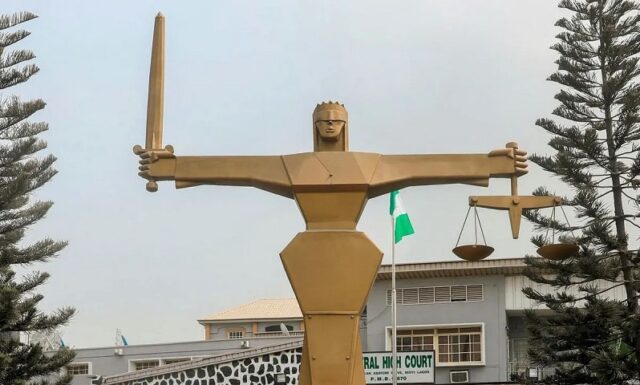
Court Fixes Date For Judgment In Fresh Suit Challenging Tinubu’s Emergency Powers

A Federal High Court sitting in Abuja has fixed March 9, 2026, to deliver judgment in a fresh suit contesting the constitutional authority of President Bola Ahmed Tinubu to remove elected state officials during a state of emergency.

Justice James Omotosho adjourned the matter for judgment on Friday after counsel to the plaintiff and the defendants adopted their final written addresses and presented arguments for and against the suit.

The case was instituted by the Civil Society Observatory for Constitutional and Legal Compliance (CSOCLC), through its counsel, Nnamdi Nwokocha-Ahaaiwe.

The organisation is challenging actions taken by the President following the declaration of a state of emergency in Rivers State last year.

The plaintiff argued that although Section 305 of the 1999 Constitution empowers the President to declare a state of emergency, it does not grant him the authority to suspend or remove elected executive and legislative officials, nor to appoint an interim administrator to govern a state.

Justice Omotosho, however, observed that the suit bears resemblance to earlier cases he had dismissed on grounds of lack of jurisdiction, relying on the Emergency Powers (Jurisdiction) Act of 1962.

He also referenced a Supreme Court ruling of December 15, 2025, which reportedly struck out a similar matter on procedural grounds.

Responding, Ahaaiwe acknowledged the earlier decisions but maintained that they were wrongly decided.

He argued that the 1962 Act had become obsolete and was deliberately excluded from Nigeria’s statute books before the commencement of the 1999 Constitution.

According to him, any presidential order issued in 2025 purporting to modify or rely on the defunct law is unconstitutional, null, and void.

“The Constitution has fully covered the field on emergency powers,” Ahaaiwe submitted, adding that no executive proclamation can amend or override the clear provisions of Section 305 of the Constitution.

Counsel to the first to fifth defendants, including the President and the Attorney-General of the Federation, countered the argument by insisting that the 1962 Act and the subsequent modification order remain valid.

They contended that only the Supreme Court has original jurisdiction to entertain such disputes and urged the court to strike out the suit.

The plaintiffs are seeking 26 reliefs, among them a declaration that Rivers State cannot be administered by an appointed administrator, retired Vice Admiral Ibok-Ete Ekwe Ibas, outside the provisions of the Constitution.


Google search engine

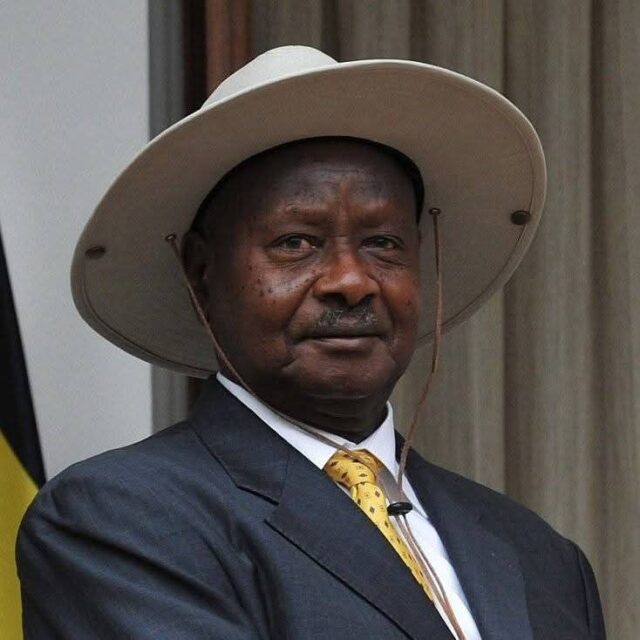
81-Year-Old Museveni Wins Seventh Term, Tightens 40-Year Grip On Ugandan Presidency


Ugandan President Yoweri Museveni has been declared the winner of the country’s presidential election, securing a seventh term in office amid reports of violence, arrests, and an internet shutdown that drew criticism from observers.

The Electoral Commission announced on Saturday that Museveni, 81, polled 71.65 per cent of the votes cast in Thursday’s election, defeating his closest challenger, opposition leader Bobi Wine, who secured 24.72 per cent.

The victory extends Museveni’s rule of the East African nation to nearly 40 years, having first taken power in 1986.

The election was conducted under tense conditions, with reports of at least 10 deaths, intimidation of opposition supporters, and restrictions on civil society.

African election observers said arrests and abductions during the process “instilled fear” and undermined public confidence.

Bobi Wine, a 43-year-old former musician turned politician, rejected the results, describing them as fraudulent.

He said he went into hiding after security forces raided his residence on Friday night.

In a post on X on Saturday, Wine said he narrowly escaped arrest and was no longer at home, although his wife and other family members remained under house arrest.

“I know these criminals are looking for me everywhere and I am trying my best to keep safe,” he wrote.

Security was visibly heightened in and around the capital, Kampala, as authorities sought to prevent protests similar to those seen recently in neighbouring Kenya and Tanzania.

Police denied raiding Wine’s home but admitted restricting access to areas they described as security hotspots.

Police spokesperson Kituuma Rusoke said the measures were necessary to prevent gatherings that could incite violence.

Residents near Wine’s residence told journalists they observed heavy security activity, including drones and helicopters, prompting many people to flee the area out of fear.

Wine, whose real name is Robert Kyagulanyi, has emerged in recent years as Museveni’s strongest political challenger, branding himself the “ghetto president” in reference to his upbringing in Kampala’s slums.

He accused the government of widespread ballot stuffing and attacks on his party officials during the internet blackout imposed ahead of the polls.

While African election observers said they found no evidence of ballot stuffing, they condemned reports of intimidation, arrests, and abductions targeting opposition figures and civil society groups.

Former Nigerian president Goodluck Jonathan, who led observer missions from the African Union, COMESA, and IGAD, said the internet shutdown disrupted effective monitoring of the election and heightened public suspicion.

Jonathan noted, however, that voting on election day was largely peaceful despite the pre- and post-election concerns.

Museveni’s ruling National Resistance Movement also recorded a strong showing in parliamentary elections, according to provisional results, with vote counting still ongoing.

Analysts have widely described the election outcome as predictable, citing Museveni’s firm control of state institutions and the security apparatus. Over the years, his government has consistently suppressed opposition figures.

Another prominent opposition leader, Kizza Besigye, who contested the presidency four times against Museveni, was abducted in Kenya in 2024 and returned to Uganda, where he is currently facing a treason trial before a military court.

There were further reports of election-related violence, with a legislator from Wine’s party alleging that security forces killed several campaign agents during an operation in central Uganda.

Police disputed the claim, saying an unspecified number of individuals were neutralised after allegedly attempting to attack a tally centre and police station.

Google search engine

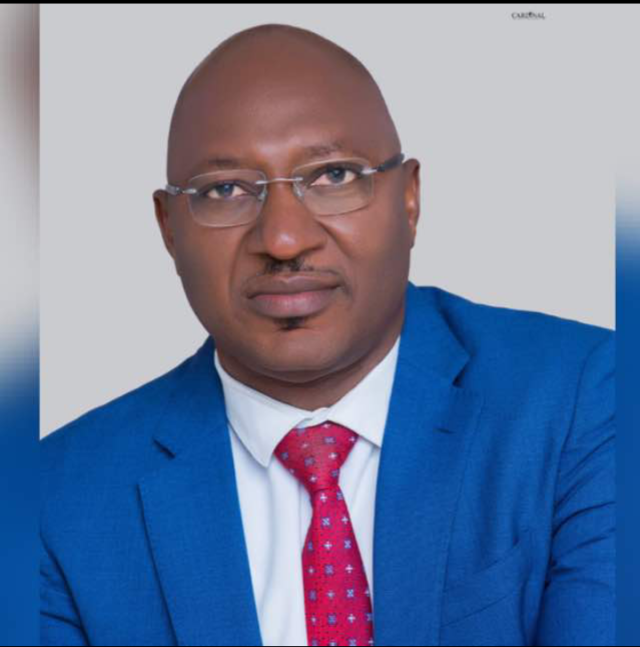
Hon. Prof. Paul Nnamchi: Redefining People-Centred Representation In Enugu East/Isi-Uzo

Opinion of Titus Agbo,

The Member representing the people of Enugu East/Isi-Uzo Federal Constituency in the House of Representatives, Chairman of the Nigerian–Irish Legislative Friendship Committee and Deputy Chairman of the House Committee on the South East Development Commission (SEDC), Hon. Professor Paul Sunday Nnamchi, Oduko N’Mba of Ikem Uno Kingdom, is an accomplished academic-turned-democrat who has risen above detractors to redefine representative politics in the 10th Assembly.

A pioneer Head of the Department of Biomedical Engineering at the University of Nigeria, Nsukka (UNN), Hon. Prof. Nnamchi left no one in doubt about his intentions when he joined the race in 2023 to represent Enugu East and Isi-Uzo in the Green Chambers of the National Assembly.

With the mantra “Let’s Do It Better,” it was clear he came with a different agenda from what was previously regarded as the norm.

Today, he is widely recognised as a beacon of hope for the people of Enugu East/Isi-Uzo Federal Constituency.

The lawmaker, who traversed renowned ivory towers across Europe before returning to his homeland to lecture at UNN, has demonstrated leadership defined by courage, vision, and uncommon commitment to public service.

His unwavering dedication to nation-building and proven record of performance reflect a deep sense of responsibility to his constituents.

Through sustainable development initiatives, youth empowerment programmes, and consistent support for indigent constituents, Professor Nnamchi has continued to demonstrate compassionate, people-centred representation.

Leaders of this calibre are rare in the 21st century, and the people of Enugu East/Isi-Uzo are proud to have him at this defining moment.

His annual computer training programme for secondary school students, which predates his entry into politics, as well as scholarship awards to indigent students across the constituency, further underscore his commitment to grassroots development and investment in the next generation of leaders.

Professor Nnamchi has also championed and delivered impactful projects, including the construction and renovation of classroom blocks in primary and secondary schools, installation of solar-powered streetlights, annual medical outreach programmes, and provision of electricity transformers to several communities across the constituency.

These achievements have rightly positioned him as a true man of the people.

Despite being a first-time legislator, he has displayed remarkable wisdom, integrity, and competence.

Within just two years in office, he has recorded measurable successes as a silent achiever whose works speak louder than words.

He has sponsored fifty-three bills and several impactful motions, with the landmark being the Bill for the establishment of the Federal University of Agriculture, Ako-Nike (FUAA), Enugu State.

As the 2027 election cycle approaches, the direction is clear. Professor Nnamchi’s performance is speaking volumes.

The chorus across Enugu East and Isi-Uzo remains the same: “One good turn deserves another.”

This was vividly demonstrated on January 3, when the people of Ikem Uno Kingdom conferred on him the title “Oduko N’Mba,” a symbol reserved for rare and exceptional individuals.

Earlier, the people of Ako-Nike honoured him with the prestigious title “Enyi One Na Nike,” meaning the first elephant of Nike, further underscoring the depth of appreciation for his legislative accomplishments and people-focused leadership.

Google search engine

MOST COMMENTED

- Advertisement -
Google search engine