Home Blog Page 136

Tinubu Applauds Nigeria’s Return To IMO Council After 14 Years
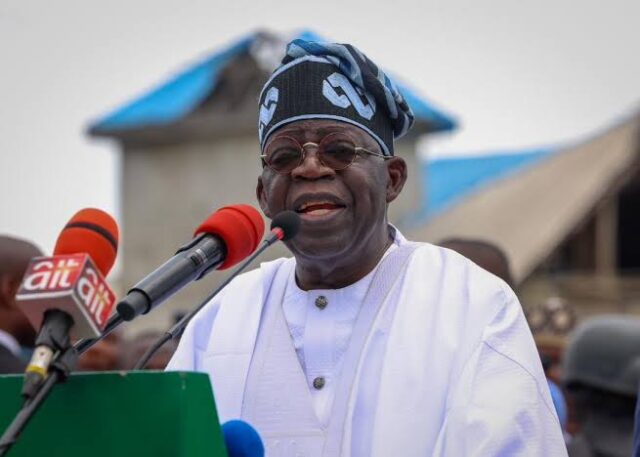
 

President Bola Ahmed Tinubu has welcomed Nigeria’s election to the Council of the International Maritime Organization (IMO) for the 2026–2027 term, describing it as a strong endorsement of the country’s growing maritime influence and commitment to global shipping governance.

Nigeria secured re-election to Category C of the IMO Council during the organization’s General Assembly in London on November 28, marking its return to the council after a 14-year absence.

President Tinubu said the achievement reflects the international community’s confidence in Nigeria’s dedication to maritime safety, security, environmental protection, and adherence to rules-based navigation.

He commended the Minister of Marine and Blue Economy, Dr. Adegboyega Oyetola, officials of the ministry, NIMASA, and Nigeria’s diplomatic corps for their strategic engagement and professionalism during the campaign.

“This new mandate supports our administration’s ambition to harness the blue economy, enhance maritime infrastructure, strengthen anti-piracy measures, and position Nigeria as a regional shipping hub,” Tinubu said.

The President assured the global maritime community of Nigeria’s commitment to safer seas, cleaner oceans, improved transport efficiency, and collaboration on maritime innovation and fair regulation.

He also expressed gratitude to member states for their support and pledged that Nigeria would justify the confidence reposed in it through sustained leadership and meaningful contributions to international maritime objectives.

The IMO Council is the executive organ of the organization, overseeing its operations between Assembly sessions.

It supervises committees, reviews draft budgets and work programmes, appoints the Secretary-General (with Assembly approval), and coordinates relations with other organizations.

The council comprises 40 member states, divided into:

– Category A: 10 states with the largest interest in international shipping services

– Category B: 10 states with the largest interest in bulk cargo trade

– Category C: 20 states with special interests in maritime transport or geographic representation

This structure ensures balanced representation and enables the Council to manage IMO’s regulatory and governance functions in maritime safety, security, and environmental protection.

Google search engine

CBN Rules Out Return To Fiscal Deficit Financing, Says Cardoso


The Central Bank of Nigeria (CBN) Governor, Olayemi Cardoso, has reiterated that the apex bank will not revert to financing the federal government’s fiscal deficit.

The statement was made during the 60th Annual Bankers’ Dinner in Lagos, attended by top bankers, political leaders, and financial regulators.

Fiscal deficit financing allows the government to borrow directly from the CBN to cover budget shortfalls under strict conditions.

During the previous administration, the government reportedly drew N30 trillion in CBN overdrafts, of which about N23 trillion was later converted into a long-term bond.

Cardoso described that period as “reckless ways and means” and confirmed that the CBN has closed the door on such practices.

“Despite provisions in the CBN Act, we will not return to funding fiscal deficits,” Cardoso said.

The governor also highlighted the bank’s commitment to price stability and single-digit inflation, stressing that the current double-digit rate is unacceptable.

Headline inflation has declined from over 34% last November to 16.05% last month, the lowest in recent years, partly due to changes in the Consumer Price Index (CPI) base year and basket.

Looking ahead, CBN models predict continued disinflation into 2026, while the country’s external reserves have grown above $46 billion as of mid-November.

Cardoso noted that recent reforms have laid the groundwork for sustainable economic growth, emphasizing that progress is the result of “difficult choices, courage, and patience.”

Other speakers at the event reinforced the message of resilience and growth. Prof. Pius Olanrewaju, President of the Chartered Institute of Bankers of Nigeria (CIBN), highlighted human capital development and initiatives to retain talent in the financial sector.

Oliver Alawuba, Chairman of the Body of Bank CEOs and Group Managing Director of UBA, emphasized the role of increased credit to the private sector in consolidating economic growth.

He also noted that banks are prepared for cash adequacy and seamless digital transactions during the upcoming festive season.

Google search engine

Bandits, Terrorists In Nigeria Now Using Satellite Communications – NASRDA DG


The National Space Research and Development Agency (NASRDA) has raised concerns about Nigeria’s evolving security threats, revealing that terrorist groups are increasingly moving away from conventional mobile networks to satellite-based communication systems.

NASRDA’s Director General, Dr. Matthew Adepoju, made the disclosure on Friday during an appearance on Channels Television’s Politics Today.

He warned that shutting down mobile networks during security operations no longer disrupts criminal activity, as many armed groups now rely on sophisticated satellite platforms.

“It breaks my heart when state governments shut down communication on mobile phones because most terrorists are not actually using mobile networks. They communicate through satellites,” Adepoju said.

He also clarified widespread misconceptions about the capabilities of Nigeria’s current satellites, stressing that the existing satellites are designed primarily for imaging, not real-time video surveillance.

“The satellites we have, including NigeriaSat-1, NigeriaSat-X, and NigeriaSat-2, are imagers. They don’t record videos and take about three days on average to revisit the same location. That makes rapid response to security threats challenging,” he explained.

Adepoju added that a new satellite constellation approved by President Bola Tinubu would cut revisit times to between four and six hours, depending on orbital placement.

The agency plans to expand this constellation with additional satellites to eventually achieve near real-time monitoring capabilities.

He emphasized the need for continuous investment in research-driven security technologies, noting that NASRDA has secured a deal with a U.S-based technical partner operating nearly 300 satellites capable of advanced signal analytics to strengthen Nigeria’s intelligence.

However, the project remains on hold due to pending funding.

The announcement follows the Federal Executive Council’s approval of four new satellites, three Earth-observation satellites and one radar satellite, aimed at enhancing Nigeria’s ability to monitor criminal activity.

According to Minister of Innovation, Science and Technology Chief Uche Nnaji, the radar satellite will provide imaging day and night, even during adverse weather, significantly supporting military operations in areas like the Sambisa Forest.

Adepoju also addressed reports that Nigeria had “lost” a satellite, clarifying that it was safely decommissioned due to a solar panel malfunction.

Looking ahead, NASRDA is progressing plans for Nigeria’s first astronaut, in collaboration with the Space Exploration and Research Agency (SERA), with the selection process currently underway.

Google search engine

ASUU Renews Demand For Salary Review, Declares Welfare A Fundamental Right


The Academic Staff Union of Universities (ASUU), Enugu State University of Science and Technology (ESUT) chapter, has restated its dedication to strengthening national development through high-quality teaching, impactful research, and meaningful community service.

Speaking during the 2025 ASUU Day celebration held on Thursday at the Governor Peter Mbah Auditorium, ESUT’s Agbani campus, Acting Chairperson Comrade Andrew Apeh encouraged members to remain committed to academic excellence and to the ongoing struggle for improved welfare.

“As academics, we must continue to mentor our students, uphold standards, and contribute to national growth,” he said.

Apeh emphasized the need for unity among staff and a renewed push for the union’s welfare demands, insisting that their wellbeing must not be politicized.

“Our welfare is a fundamental right. It must be addressed squarely and without delay,” he stated.

Invoking Nelson Mandela’s famous quote, “The greatest glory in living lies not in never failing, but in rising every time we fail,” Apeh urged academic staff to persist in asserting their rights.

He expressed deep concern over the wide disparity in salaries between ESUT lecturers and their colleagues in other state and federal institutions.

“It is disheartening that our counterparts have been earning double our salary for nearly a year now. Meanwhile, we continue to struggle as our meagre earnings no longer align with current economic realities,” he lamented.

Apeh demanded the immediate implementation of the 25% and 35% wage award increments, a comprehensive salary review based on national benchmarks, and the settlement of the long-overdue Earned Academic Allowance (EAA) pending since 2008.

“This situation is urgent. ESUT staff have endured enough. We call on the state government and university management to act quickly,” he added.

In his remarks, the Chairperson of ASUU at Nasarawa State University, Keffi, Comrade Zubairu Abdulmumini Loko, commended the union for decades of resilience, describing ASUU as “unbroken, unbent, and unbowed.”

Loko painted a stark picture of the harsh realities faced by Nigerian academics.

“We teach like philosophers but are paid like apprentices. Our research builds nations, yet we work with facilities that should be kept in museums,” he said.

“No serious nation neglects its academics and expects to progress. Empower academics today, and Nigeria will transform tomorrow,” he asserted.

Loko also stressed the importance of wellness, stating that even lions rest.

“You cannot lead a revolution with blood pressure higher than school fees. Wellness is strategy, not weakness.”

He called on ESUT staff to stay united, mentor junior colleagues, strengthen union structures, safeguard their health, and fearlessly oppose injustice.

“If the system refuses to hear us, we will raise our voices even louder,” he declared.

Earlier, National Resource Person Comrade Ofukwu Raphael Agbo criticized Nigerian university professors for their reluctance to challenge wrongdoing. He classified professors into three categories, noting that many remain passive because of fear and political pressure.

“ASUU stands as the last moral firewall protecting Nigerian universities from collapse. Someone must speak truth to power, even when power refuses to listen,” he said.

Google search engine

Air Peace Drags SmartLynx To Court Over Alleged Contract Breach


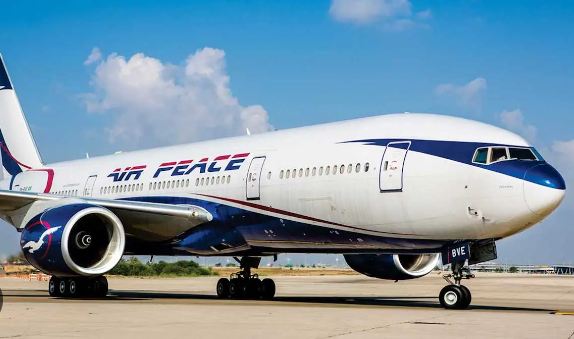
Air Peace, Nigeria’s largest airline, has instituted legal action against Latvia-based ACMI and charter services provider, SmartLynx, accusing the company of violating the terms of their aircraft lease agreement.

The development comes weeks after Air Peace publicly alleged that SmartLynx abruptly withdrew three wet-leased aircraft without prior notice, an action the Nigerian carrier said resulted in significant flight disruptions, including delays and cancellations across its network.

According to a statement from Air Peace management, the airline’s financial losses arising from the incident have now reached $38,042,843.84.

The airline alleged that SmartLynx obtained several advance payments under false pretenses.

The statement reads in part:
“During the lease period, SmartLynx deliberately misled Air Peace, collecting advance payments on the assurance that it would operate the agreed block hours.

“However, SmartLynx knew months before receiving these funds that it had no intention of fulfilling the prepaid block hours. Despite this knowledge, it continued to demand and receive payments fraudulently.”

It added that the situation prompted the airline to begin court proceedings, resulting in a court order issued against SmartLynx on November 12, 2025.

In a related development, SmartLynx Airlines announced on Monday that it has shut down operations.

The company stated that a review by its new management revealed that its financial condition and long-term viability were no longer sustainable.

Google search engine

Catholic Diocese Publishes Updated List Of 265 Pupils, Staff Still Held After Niger School Abduction


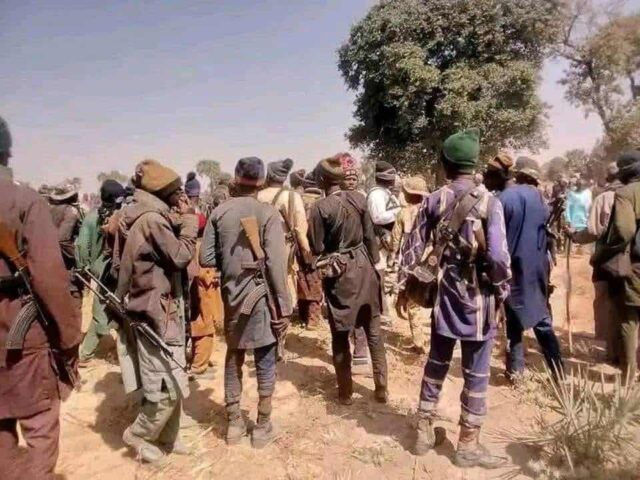
The Catholic Diocese of Kontagora has released an updated list of pupils and staff members still in captivity following the attack on St. Mary’s Catholic Schools, Papiri, in Niger State.

According to the diocese, the revised compilation, completed on November 24, shows that 265 people remain unaccounted for.

The breakdown includes five teachers, seven non-academic staff, 14 secondary school students, and 239 nursery and primary school pupils.

The victims were abducted on Friday, November 21, 2025, when armed bandits overran the school community in yet another major attack targeting schoolchildren.

Earlier, the Christian Association of Nigeria (CAN) reported that 50 abductees had escaped and reunited with their families.

CAN also disclosed that a thorough recount revealed 315 people were initially abducted, a figure higher than early estimates, as some victims thought to have escaped were later discovered to be missing.

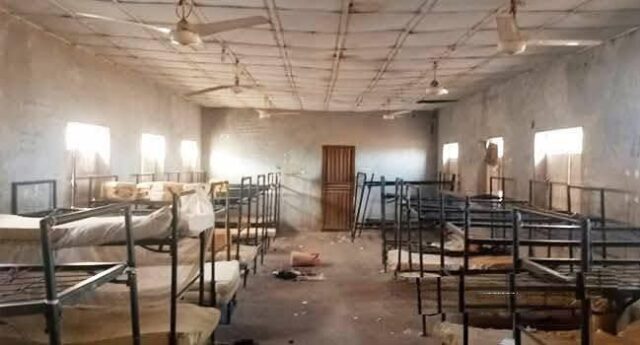
Images shared by CAN Chairman and Catholic Bishop of Kontagora, Bishop Bulus Yohanna, showed empty dormitories with scattered belongings, a grim reminder of the scale of the attack.

Bishop Yohanna appealed for calm and urged Nigerians to remain prayerful, assuring the public that church authorities were collaborating closely with security agencies to facilitate the safe return of the captives.

He debunked claims that the school had been warned ahead of the attack, describing such rumours as baseless.

Meanwhile, President Bola Tinubu has declared a national security emergency, directing security forces to implement a full cordon around forests in Kwara State due to a surge in kidnappings and terrorist activities.

The President also ordered intensified aerial surveillance by the Nigerian Air Force in remote forest zones where the armed groups are believed to be hiding.

Google search engine

DHQ Begins Questioning Of Soldiers Who Left Kebbi School Before Terrorist Attack


The Defence Headquarters (DHQ), Abuja, has begun questioning all soldiers assigned to protect the Government Girls’ Comprehensive Senior Secondary School, Maga, in Kebbi State on the day 26 students were abducted.

A military source confirmed that the troops had been summoned to Abuja as part of efforts to determine who ordered their withdrawal shortly before terrorists stormed the school.

“It’s all part of the investigation to uncover who instructed them to leave. They have been moved to Abuja,” the source said.

The November 17 attack saw armed terrorists invade the school, kill the Vice Principal, Malam Hassan Makuku, and kidnap 26 schoolgirls. Two students later escaped from captivity.

Public outrage followed revelations that the terrorists struck only minutes after the soldiers assigned to the school’s security had departed.

Kebbi State Governor, Nasir Idris, along with many Nigerians, has since demanded a thorough probe into the circumstances leading to the withdrawal.

The incident has revived painful memories of previous mass abductions, most notably the Chibok schoolgirls tragedy.

The District Head of Maga, Muhammad Dantani, recounted how the military presence at the school disappeared shortly before the gunmen arrived.

He explained:
“Around midnight, I called to verify that the soldiers were still on duty, and I was told they were. But unbeknownst to us, they left around 1 am, shortly before the attack. We still don’t know who authorized their withdrawal or why.”

According to him, when the terrorists arrived, the police officers on ground said they had to take cover due to the overwhelming number and firepower of the invaders.

“The police felt that confronting the attackers would have been a death sentence,” he said.

He added that with no military support and police unable to engage, the gunmen operated freely between 1:30 am and 3:30 am.

The abducted girls were eventually released, with the Kebbi State government stating that Governor Nasir Idris played a major role in securing their freedom.

Twenty-four of the schoolgirls were returned safely.

Google search engine

Dollar To Naira Exchange Rate Today – November 29, 2025


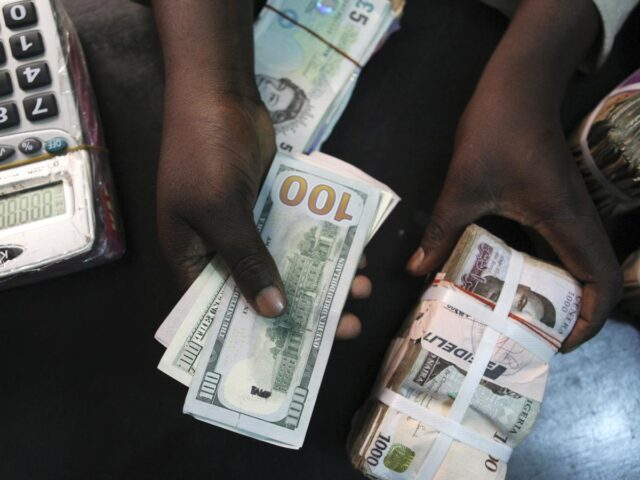
The U.S dollar is trading at ₦1,446.9 today in the official Nigerian Foreign Exchange Market (NFEM).

In the parallel (black) market, however, the dollar is exchanging for approximately ₦1,476.

This leaves a price gap of about ₦29.1 between the two markets, highlighting the ongoing divergence between official and informal forex channels.

Analysts attribute the spread to sustained high demand within the parallel market, coupled with tight dollar liquidity and restricted access for many individuals and small businesses.

The official market, on the other hand, has remained relatively steady, supported by regulatory interventions and formal inflows.

For travellers, import-dependent businesses, and those receiving remittances, the market chosen, official or parallel, still significantly affects the value obtained when converting dollars to naira.

Google search engine

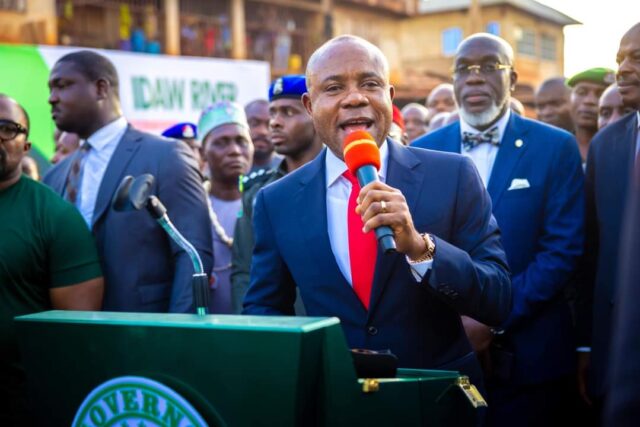
Making Every Naira Count: The Impact Of Gov. Mbah’s Resource Management In Enugu By Dr. Jeff Ejiofor


It was Thomas Edison, a renowned American thinker, who once said that waste is worse than loss.

He further argued that a time would come when every person who lays claim to ability would constantly keep the question of waste before them.

This assertion vividly captures the current situation in Enugu State, where Governor Peter Ndubuisi Mbah’s administration has distinguished itself through a level of prudent financial management that many observers describe as transformative.

At a time when waste, leakages, and the misallocation of public funds have become widespread concerns in governance, Mbah’s disciplined and transparent approach to resource management has set a refreshing standard.

This aligns with the view of another great Chinese philosopher, Confucius, who said that “he who will not economise will have to agonise.”

Governor Mbah’s commitment to accountability has not only reshaped the operations of government but has also created an environment where every naira is made to count.

Without doubt, this has redefined governance in Enugu State and strengthened public confidence in leadership.

Apparently, by reducing waste drastically, the state government has been able to redirect previously lost or misused funds into meaningful developmental projects that directly affect the daily lives of the people.

Under Mbah’s watch, financial decisions are guided by data, needs assessment, and long-term value rather than political considerations.

This has ensured that projects are not only initiated but are also completed and maintained, reflecting a sense of responsibility to both present and future generations.

Projects such as the revitalization of the Presidential Hotel, the completion of the International Conference Centre, the construction of the International Hospital, the comprehensive rehabilitation and reinforcement of Parklane/ESUT Teaching Hospital, the massive road reconstruction efforts across both rural and urban areas, the revitalization of moribund or underperforming industries, the revival of the state transport system, including the establishment of Enugu Air and the construction of modern bus terminals,alongside many other projects across Enugu State that are too numerous to mention, would not have been possible without prudent management of resources.

Undoubtedly, prudent financial management is central to effective administration as it ensures that limited public resources are allocated wisely.

When a government manages its finances efficiently, it can provide critical services without overburdening the public through excessive borrowing or unnecessary multiple taxation.

This kind of stewardship supports continuity, stability, and sustained development. It creates room for strategic planning, timely execution of projects, and the resilience needed to withstand economic shocks.

Obviously, the benefits of such careful management are evident in the provision of basic amenities.

With waste reduced and resources freed up, the government has been able to invest more in improved water supply, road infrastructure, healthcare facilities, education, and security.

These services, which form the backbone of a functioning society, require consistent funding and long-term planning.

Because public funds are now used responsibly, the amenities being provided are not only more reliable but also more sustainable. They are built to last, maintained regularly, and designed to serve communities equitably.

Implicitly, the people of Enugu State have felt the positive impact of this meticulous approach to governance in several ways.

Communities that previously lacked essential services are now experiencing improvements, whether in safer roads, functional schools, cleaner urban environments, or increased job opportunities through government projects.

The transparent and accountable system has also boosted trust between citizens and the government, encouraging greater public participation and cooperation.

In conclusion, Governor Peter Mbah’s prudent management of state resources has become a powerful tool for development in Enugu State.

By eliminating waste and focusing on value-driven governance, he has laid the foundation for a more efficient and people-oriented administration.

The good people of Enugu State are the ultimate beneficiaries of this approach, enjoying better amenities, enhanced services, and a renewed sense of hope in what responsible leadership can achieve.

Indeed Tomorrow is Here.

Google search engine

With Enugu’s CNG Buses, The Journey Becomes The Story – Wordshot Amaechi Ugwele


I had seen them many times, those gleaming CNG buses gliding past my office on their steady run to and from Abakpa.

They moved with a certain quiet authority, a sign of something changing in the rhythm of our public transportation.

I often watched them from afar, curious but unhurried. Until the day I had to make a quick dash to Nsukka.

I set out in my car, mind fixed on the long road ahead, when just before Nowas Junction, one of the buses loomed into view.

It was making that familiar swing toward Abakpa. Something in me stirred, a nudge, a little travel itch, and without thinking too deeply about it, I followed.

At the terminal, I was guided to the public parking bay, where several private cars sat neatly arranged.

The scene looked almost like a small airport, with buses lined up, engines humming softly, passengers milling around with purpose. Everything moved with a calm, collected order.

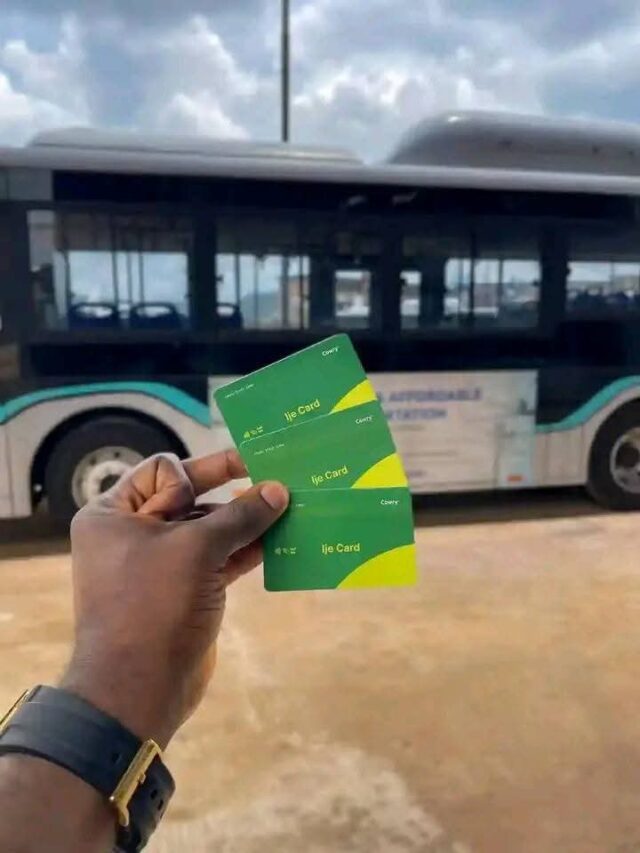
Inside the ticketing point, I was introduced to the now-famous _Ije Card_. Five hundred naira (₦500) for a card that would permanently be mine, and just ₦1,200 for the trip to Nsukka.

I was told I could load only the fare or top up for future trips. The traveler in me chose the latter.

The attendants, security men, ticketing staff, drivers, all carried themselves with a level of courteous patience that felt most refreshing. They managed the varying temperaments of their passengers with practiced grace.

One of the ticketing staff, who later told me her name was Ngozi, took all the time in the world to take one old lady who apparently wasn’t in the best of moods, through the very brief protocol.

The bus filled up quickly. Some passengers opted to stand, preferring the convenience of catching this ride to waiting for the next.

The standing felt intentional too. Secure hand grips lined the ceiling, giving the bus the feel of a well planned transit system.

When we rolled out, the journey unfolded like a scenic documentary. The smoothness of the ride and the gentle hum of the air conditioning created the perfect frame for the scenery rushing past.

I found myself seeing familiar stretches of road in ways I never had from behind the wheel, elevated, unobstructed, almost cinematic. From my seat, the undulating Nike-Opi Agụ terrain stretched like a postcard being peeled open in slow motion.

Our driver kept a steady, safety conscious pace. A new trainee driver rode along, quietly absorbing the route.

Inside the bus, people who had nothing in common but their destination and their government provided comfort suddenly felt like a group of travellers sharing the luxury of a guided tour.

In less than an hour, Nsukka greeted us. The terminal was alive with activity, a sizeable crowd waiting, watching, relieved at the sight of our arrival.

Another bus meant another opportunity to travel quickly, safely, and comfortably. Exactly as the administration of Dr. Peter Ndubisi Mbah had envisioned, as a transportation system that put citizens first, not as an afterthought but as honoured passengers of a state on the rise.

Google search engine

MOST COMMENTED

- Advertisement -
Google search engine