Home Blog Page 144

Kwankwaso Says He’s ‘Not For Sale’, Rallies Supporters After Gov Yusuf’s Exit From NNPP
Kwankwaso Says He’s ‘Not For sale’, Rallies Supporters After Governor Yusuf Left NNPP
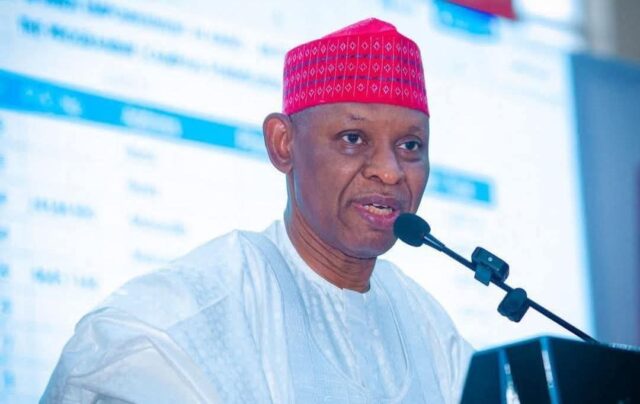
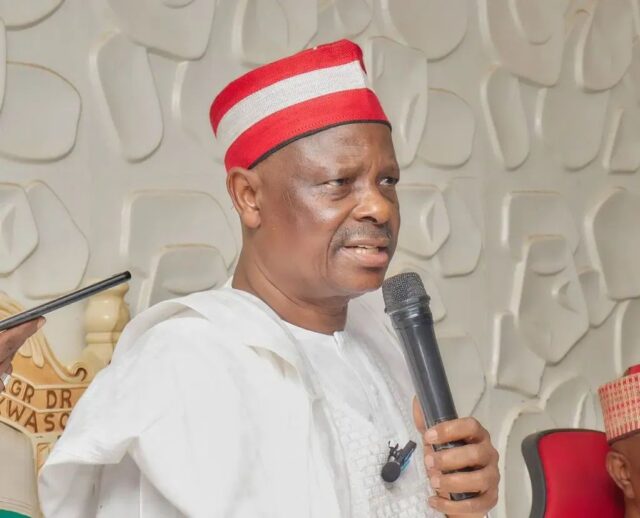
Senator Rabiu Musa Kwankwaso, national leader of the Kwankwasiyya Movement, has dismissed speculation that he could abandon his political ideology following the resignation of Kano State Governor, Abba Kabir Yusuf, from the New Nigeria Peoples Party.

Speaking to supporters at his residence in Kano, Kwankwaso declared that he was “not for sale,” insisting that his political engagement was driven by principles and commitment to the welfare of ordinary Nigerians rather than personal gain.

He cautioned party members, particularly youths, against the lure of money politics, urging them to remain steadfast in defending the ideals of the Kwankwasiyya Movement despite recent defections.

Governor Yusuf’s exit from the NNPP has sparked a wave of resignations within the party’s state structure, with reports indicating that several aides, local government chairmen, and lawmakers have followed suit.

In response to the unfolding developments, Kwankwaso held meetings with Kwankwasiyya groups across the state to reassure loyalists and outline strategies aimed at preserving the party’s grassroots base.

The NNPP leadership has condemned Yusuf’s resignation, describing it as a betrayal of the mandate freely given by Kano voters and the longstanding loyalty of the party’s supporters.

The party also rejected claims that internal crises necessitated the governor’s decision, arguing that such narratives were unfounded.

Kwankwaso used the occasion to call for early mobilisation ahead of the 2027 general elections, stressing the need to consolidate party structures, strengthen internal cohesion, and prepare effectively for future political contests.

Google search engine

Greenland, Denmark Set Aside Troubled History To Face Down Trump


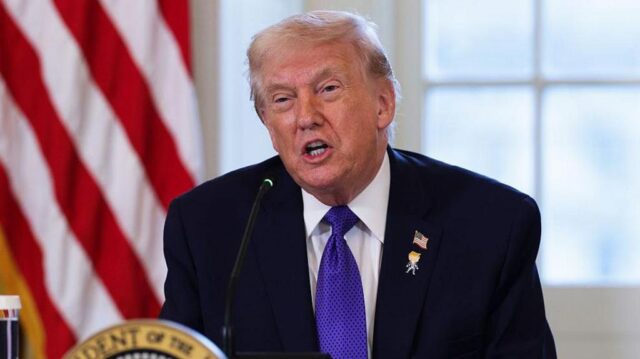
Greenland and Denmark have temporarily set aside decades of unresolved historical grievances to present a united front against renewed pressure from United States President Donald Trump over the strategic Arctic territory.

The vast island, ruled by Denmark as an autonomous territory but home to strong pro-independence sentiments, has found common cause with Copenhagen amid Washington’s renewed interest in its strategic and security significance.

Greenland’s major political parties, which all support independence in principle but differ on the pace and method, formed a coalition government in March 2025 largely in response to Trump’s repeated expressions of interest in taking control of the island.

Only the Naleraq party, which advocates a rapid path to independence, remained outside the coalition.

Last week, Greenland’s leaders firmly rejected Trump’s bid, reiterating that the island was not for sale.

Although Trump later said he had reached a framework agreement on Arctic security with NATO Secretary-General Mark Rutte, Greenland and Denmark stressed that decisions concerning the territory rest solely with them.

At the height of the diplomatic standoff, Greenland’s Prime Minister, Jens-Frederik Nielsen, declared that if forced to choose between the United States and Denmark, Greenland would stand with Denmark.

According to Ulrik Pram Gad of the Danish Institute for International Studies, Trump’s pressure has pushed most of Greenland’s political spectrum to shelve immediate independence preparations in favour of collective resistance.

He said broader European backing had eased long-standing tensions with Denmark, making the relationship feel less restrictive in the face of external pressure.

Over the past month, Greenland and Denmark have coordinated diplomatic engagements, appearing jointly in Washington and Brussels to reinforce their shared position.

Greenland’s Foreign Minister, Vivian Motzfeldt, and Denmark’s Foreign Minister, Lars Lokke Rasmussen, met senior US officials in Washington before holding further talks with NATO leaders in Brussels.

Despite the current unity, analysts note that the relationship is shaped by a painful colonial legacy.

Greenland was a Danish colony for more than three centuries before becoming an autonomous territory in 1979, with expanded self-rule granted in 2009.

Historians and researchers point to a series of injustices, including forced assimilation policies, the removal of Inuit children from their families in the 1950s, and decades-long birth control programmes that saw thousands of Greenlandic women fitted with contraceptive devices without consent.

Denmark has formally apologised for some of these actions and begun compensation processes, but the scars remain.

Experts say the renewed focus on Greenland’s strategic value has, for now, pushed these unresolved issues into the background.

“There is a broad sense that the immediate challenge is external,” said Astrid Andersen, a specialist in Danish-Greenlandic relations.

“For the moment, the common opponent is Trump, and that has created a fragile but significant unity.”

Google search engine

Impeachment: Take Over Rivers Assembly, APC Leaders Urge National Assembly


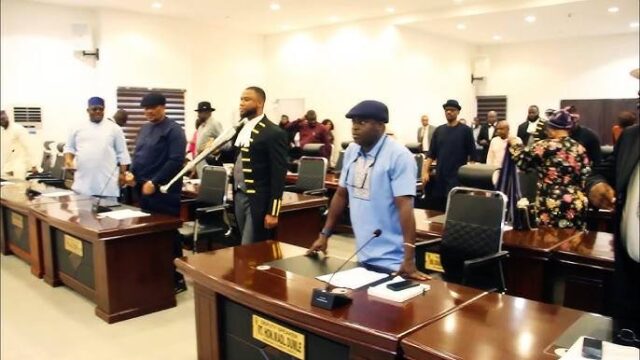
Leaders of the All Progressives Congress have called on the National Assembly to assume the legislative functions of the Rivers State House of Assembly, citing what they described as a worsening constitutional crisis in the state.

The call followed renewed attempts by the Rivers Assembly to impeach Governor Siminalayi Fubara and his deputy, Professor Ngozi Odu, which APC leaders said were politically motivated and amounted to an abuse of legislative powers.

The crisis deepened last Friday when the Assembly wrote to the Chief Judge of Rivers State, Justice Simeon Amadi, requesting the constitution of a seven-member panel to investigate allegations of gross misconduct against the governor and his deputy.

However, the Chief Judge declined the request on Thursday, citing subsisting court orders restraining him from taking further action.

Despite the development, the Speaker of the House, Martin Amaewhule, maintained that the impeachment process should continue, describing it as the only path to resolving the political impasse in the state.

Reacting, the APC Leaders Forum said the House had lost public trust and credibility, accusing it of repeatedly abusing its constitutional mandate.

In a statement jointly signed by the forum’s National Leader, Ibrahim Danjuma, National Secretary, Akpan Ekpeyong, alongside civil society leaders Ifeanyi Okorie, Maryann Douglas, and Collins Akpofure, the group warned that democracy in Rivers State was under serious threat.

The forum described the allegations against Governor Fubara as unsubstantiated, insisting that the impeachment move lacked both legal and factual basis.

It urged the national leadership of the APC and the National Assembly to intervene to safeguard democratic governance in the state.

The group also accused 27 lawmakers allegedly loyal to former governor Nyesom Wike of diverting state resources for personal and political interests.

It further called on President Bola Tinubu to intervene decisively, arguing that extraordinary measures were necessary to prevent a breakdown of constitutional order.

Meanwhile, the High Court of the Oyigbo Division in Port Harcourt adjourned indefinitely the suit filed by Governor Fubara and his deputy challenging the impeachment process.

The presiding judge, Justice Fiberesima, adjourned the matter sine die following confirmation that two separate appeals had been filed before the Court of Appeal.

In a related development, the Rivers State chapter of the APC, led by Chief Emeka Beke, commended the presidency for recognising Governor Fubara as the leader of the party in the state.

The party’s Publicity Secretary, Dalington Nwauju, said President Tinubu’s position aligned with the party’s national convention, which recognises sitting governors as state party leaders.

The Rivers APC also called on Governor Fubara to convene an urgent stakeholders’ meeting to address lingering internal divisions.

The party reiterated its demand for the resignation of the APC National Publicity Secretary, Felix Morka, over comments on the impeachment process and urged the National Working Committee to conduct fresh congresses at ward, local government, and state levels.

The APC in Rivers State is currently divided into two factions, led by Emeka Beke and Tony Okocha, respectively.

Google search engine

FG Orders Free Meter Installation Nationwide, Warns DisCos Against Extortion

The Federal Government has banned electricity distribution companies and their agents from charging consumers for meter installation, warning that any official or installer found demanding payment will face prosecution.

The Minister of Power, Adebayo Adelabu, issued the directive on Thursday during an inspection of newly imported smart meters at APM Terminals, Apapa, Lagos.

He said the meters, procured under the World Bank–funded Distribution Sector Recovery Programme, must be distributed and installed at no cost to electricity consumers.

Adelabu described the collection of money for meter installation as illegal, stressing that neither DisCo officials nor third-party installers were permitted to request payment from customers under any guise.

According to the minister, the Federal Government has imported about 500,000 smart meters in the latest batch, adding to nearly one million meters already received out of the 1.43 million units earmarked for the first phase of the programme.

He said close to 150,000 meters had already been installed nationwide.

He explained that the DISREP initiative would deliver about 3.4 million meters in two phases, noting that the goal was to close Nigeria’s metering gap and improve transparency, billing accuracy, and revenue collection in the power sector.

Adelabu expressed dissatisfaction with the pace of metering but said the government was determined to ensure that every household, business, and institution was fully metered within the next few years.

He warned that any form of extortion during meter installation would attract sanctions, adding that the government would actively monitor the process.

He said regulatory agencies, including the Nigerian Electricity Regulatory Commission and state electricity regulators, would receive and act on complaints from consumers.

The minister also disclosed plans to establish customer complaint desks and a register for unmetered customers to accelerate deployment, noting that clean and reliable customer data was essential to the success of the programme.

He emphasised that the meters would be distributed to all categories of electricity consumers, regardless of service band, describing the current banding system as temporary.

On concerns about enforcement, the Director-General of the Bureau of Public Enterprises, Ayo Gbeleyi, said the bureau was coordinating the implementation of the programme and monitoring compliance by all 11 electricity distribution companies.

Gbeleyi said the Nigerian Electricity Regulatory Commission would soon issue fresh guidelines to ensure unhindered access for meter installations, adding that the meters were configured specifically for each DisCo and fitted with anti-theft technology.

Also speaking, the Chairman of Mojec, Mojisola Abdul, urged consumers not to pay any money for meters, insisting that installations under the programme were genuinely free.

She disclosed that about 150,000 meters had already been installed and announced plans for mobile registration to fast-track deployment.

Adelabu acknowledged public scepticism arising from past experiences but assured Nigerians that the current programme differed from previous initiatives, citing sufficient meter availability and the elimination of payment requirements.

He added that the Tinubu administration was addressing a long-standing liquidity challenge in the power sector and vowed that offenders involved in extortion would be prosecuted and publicly named as a deterrent.

Nigeria currently has over five million electricity customers under estimated billing.

Google search engine

Gov Yusuf’s Exit From NNPP A Betrayal Of Kwankwasiyya, There’ll Be Consequences – Party Declares

The New Nigeria Peoples Party has criticised the resignation of Kano State Governor, Abba Yusuf, describing his decision as a betrayal of the Kwankwasiyya Movement and the trust of the people of the state.

In a statement issued on Friday, the party’s National Publicity Secretary, Oladipo Johnson, said Yusuf’s departure from the NNPP marked a painful setback for a movement built on decades of loyalty, sacrifice, and popular struggle in Kano politics.

The party noted that the governor, who rose to power with the support of former Kano State Governor and Kwankwasiyya leader, Rabiu Kwankwaso, had announced his resignation after weeks of political tension and speculation.

Although Yusuf has not officially declared his next political destination, the NNPP said there were strong indications he may be heading to the All Progressives Congress.

According to the party, the justification offered by the governor, that the NNPP was plagued by an irredeemable crisis, was unfounded and inconsistent with recent developments within the party.

It recalled that the NNPP successfully conducted congresses at all levels, from wards to the national convention, on December 20, 2025, under the supervision of INEC, with Governor Yusuf himself in attendance.

The party also pointed to its victories in the Bagwai/Shanono and Ghari/Tsanyawa supplementary elections held in August 2025 as evidence of its organisational strength.

The NNPP warned that Yusuf’s decision risked returning Kano State to political forces it claimed had historically worked against the state’s development and the aspirations of its people.

“This decision represents a painful betrayal of the sacred trust placed in him by the people of Kano State, who believed in his long-standing commitment to the Kwankwasiyya vision,” the statement said.

Drawing parallels with Kano’s political history, the party referenced the defection of former governor Abubakar Rimi in the early 1980s, noting that despite taking along a majority of elected officials at the time, the electorate ultimately rejected him at the polls.

The NNPP said the episode served as a reminder that political opportunism often attracts consequences, adding that history had consistently shown that loyalty traded for expediency rarely goes unpunished.

The party, however, urged its members and supporters to remain calm and law-abiding, calling for patience and restraint in the face of what it described as a deeply troubling development.

While acknowledging the pain felt by supporters of the Kwankwasiyya Movement, the NNPP expressed confidence that the people of Kano would ultimately uphold principled leadership and hold firm to the ideals that have defined the movement over the years.

Google search engine

Kano Governor Abba Yusuf Resigns From NNPP After Weeks Of Speculation

Kano State Governor, Alhaji Abba Kabir Yusuf, has formally resigned from the New Nigeria People’s Party (NNPP), citing persistent internal crises and the need to protect the interests of the people of Kano State.

The resignation was disclosed by the Governor’s spokesperson, Sunusi Bature Dawakin Tofa, who presented Yusuf’s letter of resignation to the Chairman of Diso-Chiranchi Ward in Gwale Local Government Area, effective January 23, 2026.

In his resignation letter, Governor Yusuf expressed gratitude to the NNPP for the opportunity to serve the party and the people of Kano since 2022.

He explained that his decision was guided solely by public interest, and emphasised that it was made in good faith without any ill will.

“In recent times, the party has faced persistent internal challenges arising from leadership disagreements and ongoing legal processes, many of which are before the courts,” Yusuf noted.

“These disagreements have deepened divisions and weakened unity within the party, creating cracks that appear increasingly irreconcilable.”

He added: “After careful reflection, and without prejudice to the party’s capacity to resolve its internal challenges, I have concluded that my resignation is in the best interest of the people of Kano State. This decision is taken in good faith, with a continued commitment to peace, unity, and the progress of the state.”

Governor Yusuf is reportedly leaving the NNPP alongside 21 members of the Kano State House of Assembly, eight members of the House of Representatives, and 44 local government chairmen across the state.

The NNPP, through the Secretary of Diso-Chiranchi Ward, Hon. Kabiru Zubairu, acknowledged Yusuf’s contributions to governance and described him as one of the party’s most performing governors, noting his achievements in infrastructure, urban renewal, healthcare, education, and economic empowerment.

While Yusuf has not officially announced his next political affiliation, speculation is rife that he may join the ruling All Progressives Congress (APC), following his recent meeting with President Bola Ahmed Tinubu.

Google search engine

Enugu Airport Concession Completed, FG Paves Way For Modernised Operations

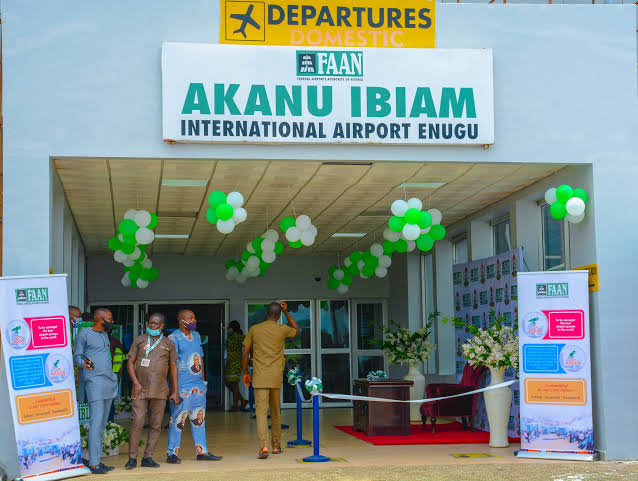
The Federal Government has taken a major step toward modernising Nigeria’s aviation sector with the formal concession of Akanu Ibiam International Airport, Enugu.

The concession agreement was signed by the Minister of Aviation and Aerospace Development, Festus Keyamo, marking a key milestone in the government’s aviation reform agenda.

The signing ceremony, held at the Ministry of Aviation and Aerospace Development in Abuja, brought together officials from the Enugu State Government and representatives of Aero Alliance, the concessionaire.

The Enugu delegation was led by the Commissioner for Transport, Obi Ozor, while the Aero Alliance team included Chuks Aniekwe, Barrister Oyiwodu Okibe-Oga, Onyedikachi Nwachukwu, Kester Enwereonu, and Barrister Michael Nwaechie of Ivy Solicitors.

Top federal aviation officials were also present, including Yakubu Adams Kofarmata, Permanent Secretary of the Ministry; Olubunmi Kuku, Managing Director and CEO of the Federal Airports Authority of Nigeria (FAAN); and FAAN’s Director of Legal Services, Bridget Iwinose Gold.

Minister Keyamo described the event as the culmination of a “painstaking and transparent process” that began in July 2025, when the Federal Executive Council approved the proposal to concession the Enugu Airport.

He emphasised that workers’ welfare was central to the process, noting that aviation staff retained their employment with the Federal Government and FAAN, and their terms and conditions were fully protected.

“The workers have not been short-changed in any way. Their jobs are safe and protected,” Keyamo said.

The Minister also highlighted that two operational matters, security charges and the financial model for airport operations, will be finalised in the coming weeks to ensure smooth implementation.

Keyamo expressed confidence that the concession would enhance efficiency, improve service delivery, and boost passenger satisfaction at the Enugu Airport.

He noted that the move is part of a broader federal initiative to attract private investment, upgrade infrastructure, expand regional connectivity, and strengthen Nigeria’s position in global aviation.

Google search engine

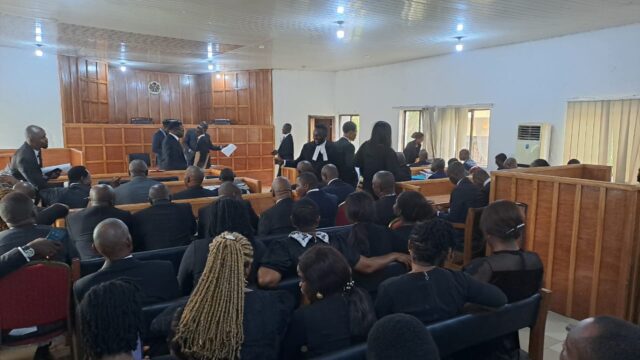
Mbah’s’s Digital Footprint: Enugu Launches Virtual Courts, Sets New Standards

By Barr. Ifeanyi Ogenyi,

Virtual court sitting and hearing of cases will officially commence today Friday, the 23rd January 2026 in the Enugu State High Court.

This initiative is a testament to Governor Peter Ndubuisi Mbah’s unwavering commitment to transforming Enugu State into a Tech- Driven public service.

It is geared towards adopting hybrid virtual court proceedings to enhance efficiency and transparency in justice delivery as well as an integrated case management system and building responsive public service.

The virtual court proceedings will enhance fast tracking of cases, reduce cost of litigation and provide for convenience for both legal practitioners, litigants and judges alike.

With this development, lawyers can conveniently stay in the comforts of their offices to conduct their cases ,likewise litigants can now stay in their homes to give evidence in their cases without necessarily appearing physically in the court.

It is pertinent to note that Enugu state is the first State in the South East to introduce and fully implement virtual court proceedings and unarguably, one of the foremost States in Nigeria that has embraced these digital tools to enhance efficiency, transparency and access to justice, while allowing the traditional courts proceedings to coexist in the mean time.

Nigerian Courts for too long have been operating in an era defined by rising caseloads, evolving public expectations and rapid technological advancement, thus ,the need for modern justice delivery system adapting to these realities.

There is no doubt that technology, when properly deployed, is not a disruption, but an enabler of judicial excellence.

To this end, Enugu State judiciary has fixed 26th January 2026 for the inaugural and unveiling ceremony making the digitalization and automation of the justice sector.

This ceremony will form part of the programmes for making the opening of the legal year.

Obviously, governor Peter Mbah is on the right track with his transformation agenda and he is evidently leveraging technology to drive every sector in Enugu State.

Indeed, Tomorrow Is Here !

Google search engine

Enugu State Recovery Of N1.28bn From Sujimoto: A Triumph Of Leadership, Accountability And Justice

By Dr. Malachy Chuma Ochie,

In a landmark moment that will be etched into the annals of Enugu State’s governance history, the Enugu State Government has successfully recovered ₦1.28 billion from the controversial Sujimoto Smart Schools contract, following a rigorous investigation and prosecution process coordinated with the Economic and Financial Crimes Commission (EFCC).

The recovered funds, representing public money previously paid for unexecuted or abandoned projects, were officially handed over to the state at the EFCC Enugu Zonal Office, marking a decisive victory for transparency and fiscal probity.

This milestone is the culmination of a relentless pursuit of justice and resource recovery initiated and championed by Governor Peter Mbah, whose administration refused to be deterred by distractions, detractors, or the noise that often accompanies processes of accountability.

From the outset, the governor asserted that every kobo of public funds entrusted to the state would be defended, protected, and, where necessary, fully recovered.

The EFCC, acting on a petition submitted by the Enugu State Government, applied its full statutory mandate to trace, recover, and restitute these public funds.

In doing so, the anti-graft agency demonstrated not just procedural diligence but a commitment aligned with the very essence of good governance, which is ensuring that government contracts deliver value, and that breaches of trust do not go unchecked.

This achievement is historic for Enugu in the sense that for the first time in the state’s history, stolen or misapplied public funds have been methodically tracked, legally reclaimed, and restored to the treasury through cooperative, lawful action.

It sends a powerful message to citizens and contractors alike that no amount of money misappropriated through contract breaches or financial impropriety will remain beyond the reach of the rule of law.

For detractors who once went to town to cast aspersions on the administration, deriding efforts to pursue accountability as political theatre or unfounded attacks, the results now speak louder than rhetoric.

What once was cynicism and scepticism has given way to vindication: the people of Enugu now know that their resources matter, that governance under Peter Mbah is not a passive exercise of authority, but a proactive stewardship of public trust.

Governor Mbah’s leadership in this process reflects a broader commitment to prudent maximization of scarce resources, accountability, and probity in public office.

His administration’s insistence on legal process, collaboration with anti-corruption institutions, and firm resolve to hold defaulting contractors accountable sets a new standard for governance in Nigeria.

It is not enough to simply initiate projects; the state must ensure that such projects yield public benefit, and that citizens’ funds are never squandered with impunity.

The recovered funds will now be reinvested into critical infrastructure and development projects that genuinely improve the lives of the people of Enugu State; a testament to the fact that good governance and accountability are cornerstones of sustainable development.

Indeed, Governor Peter Mbah has proven to be an exceptional leader dedicated to the highest ideals of public service: integrity, transparency, and the tireless defence of the public purse.

This victory is not merely financial; it is moral, symbolic, and a clarion call to all public officials that stewardship without accountability is no longer acceptable.

Google search engine

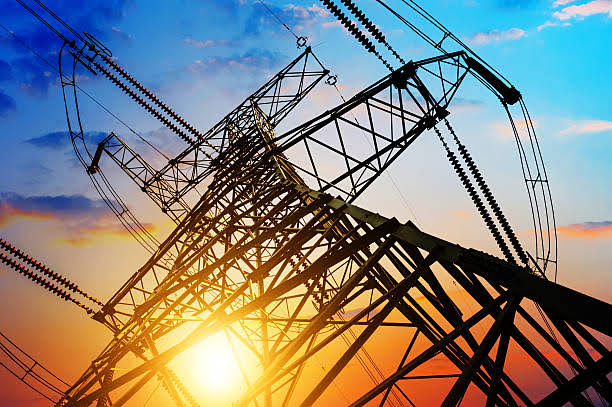
Nigeria Suffers Nationwide Blackout As Power Grid Collapses Again

Nigeria’s national electricity grid collapsed on Friday afternoon, plunging the country into another nationwide blackout after power generation and distribution dropped to zero across all electricity distribution companies.

Data from the Nigerian Independent System Operator showed that the system failure occurred at about 1:00 pm, when electricity allocation to the 11 distribution companies nationwide fell to zero.

Power generation simultaneously crashed to zero megawatts, triggering a complete shutdown of supply.

A review of the national distribution load profile confirmed that all distribution companies, including Abuja, Eko, Benin, Enugu, Ibadan, Ikeja, Jos, Kano, Kaduna, Port Harcourt and Yola, recorded zero load at the time of the collapse.

Prior to the outage, electricity demand had been high in major cities.

Abuja Electricity Distribution Company was receiving about 639 megawatts, while Ikeja Electric had an allocation of approximately 630 megawatts, underscoring the scale of the sudden system failure.

Further checks showed that national power generation plunged sharply from over 4,500 megawatts to about 24 megawatts by 1:30 pm.

All 23 power generation plants connected to the national grid reportedly lost output during the incident, leaving no electricity available for distribution.

As of the time of filing this report, the Transmission Company of Nigeria, which manages the national grid, had not disclosed the cause of the collapse.

Although restoration efforts were said to be underway, there was no clear timeline for the full recovery of power supply.

Repeated attempts to reach officials of the company for immediate comment were unsuccessful.

The latest outage is the first recorded collapse of Nigeria’s national grid in 2026 and comes just weeks after a similar system failure on December 29, 2025, which also resulted in widespread blackouts across the country.

In recent years, recurring grid collapses have been linked to technical faults, poor maintenance of transmission infrastructure and instability in generation capacity.

Power sector stakeholders have continued to urge the Federal Government and industry operators to strengthen contingency measures and invest in grid resilience to prevent repeated nationwide outages.

Google search engine

- Advertisement -
Google search engine

MOST COMMENTED