Home Blog Page 153

Monday Diamond Ani Empowers Widows With Cash To Mark Birthday Anniversary
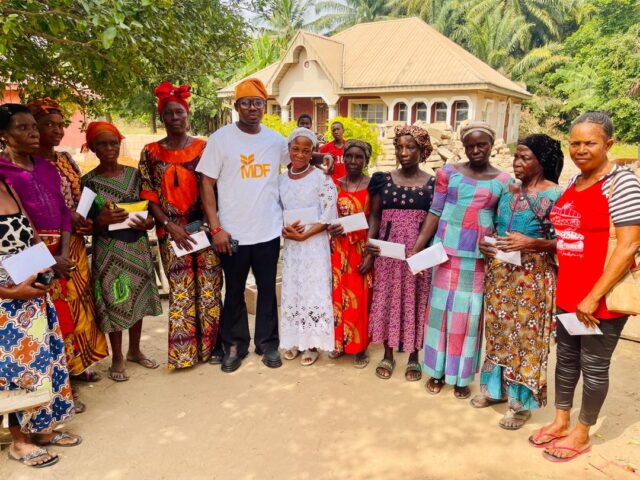
 

To mark his birthday anniversary, philanthropist and community advocate, Hon. Monday Diamond Ani, has empowered 28 widows with cash support across communities in Enugu State, DAILY GAZETTE reports.

The empowerment exercise was carried out through the Monday Diamond Foundation (MDF), a non-governmental organisation established in 2015 to support vulnerable groups and promote youth development.

Beneficiaries of the initiative were drawn from Nkerefi, Mburubu, Nara, and a few other neighbouring communities in Nkanu East Local Government Area.

Our correspondent gathered that One of the beneficiaries was a widow from Burkina Faso, currently residing in Nara community, who was identified during a visit to Orie Nara Market.

The cash support was distributed in two phases, comprising direct cash transfers and physical cash presentations, aimed at easing the financial burden faced by widows.

Speaking during the outreach, Hon. Ani said widows occupy a special place in society and deserve consistent care and compassion.

“Widows are special people in our communities and should always be shown love and support,” he said.

He explained that although he usually avoids publicising his charitable activities, the birthday outreach was shared to acknowledge the contributions of friends who supported the initiative.

“This is the first time the foundation has received external financial support since its establishment. Over the years, MDF has been funded largely through my personal resources,” he noted.

Hon. Ani recalled that the foundation has previously intervened in emergency situations, including the construction of a bungalow in 2021 for a family in Akpugo whose home was destroyed by fire in Iva Valley, Enugu.

He expressed appreciation to individuals who supported the widows’ empowerment, including Dr. Uche Ogah, CON, Mr. Jameson, Mr. John Anaedo Onwubuya, Mr. Luis Holden, Comrade Ejimba Anthony, and Prof. Muna Nweke, among others.

The widows, many of whom were visibly emotional, expressed gratitude for the assistance and offered prayers for Hon. Ani and the continued success of the foundation.

Over the years, the Monday Diamond Foundation has organised and supported several civic and educational programmes, including IMT Debate (2015, 2016, 2018), Coal City Debate (2019), South East Debate (2021), National Debate (2022) and South East Youth Security Summit (2023).

The foundation has also provided scholarships and bursaries to 187 students across different parts of the country.

Google search engine

Gov. Mbah’s Traffic Sanitation Initiative In Enugu By Dr. Jeff Ejiofor

Opinion of Dr. Jeff Ejiofor,

Cities grow, people move, and with progress comes new challenges. Enugu, a city with a warm heartbeat, vibrant markets, and daily human hustle, has, in recent years, struggled under the weight of increasingly chaotic traffic.

Anyone who drives through Ogbete Market, New Haven, Artisan, or the Presidential Road axis understands how congested and stressful movement within the city can become.

It is against this backdrop that Gov. Peter Mbah’s decision to sanitise Enugu’s traffic by restricting tricycles (keke) and mini-buses from major roads should be supported.

The governor’s move is not merely an attempt to ban vehicles, but it is part of a wider effort to restore order, safety, and efficiency to the city’s transport system.

For many years, Enugu’s major roads have served as free-for-all spaces where every kind of vehicle, private cars, heavy-duty trucks, mini-buses, and kekes compete aggressively for limited road space.

The result has been predictable: gridlock, delayed work hours, avoidable accidents, and a general sense of disorganisation that affects the city’s image.

One of the strongest benefits of the governor’s initiative is improved traffic flow.

Tricycles and mini-buses, though extremely useful in short distance transportation, often make abrupt stops, overload passengers, or engage in lane indiscipline.

Their removal from major expressways could significantly ease movement, especially at peak hours. Anyone who has ever sat behind a slow-moving keke during rush hour knows how frustrating it can be.

There is also the argument for road safety. Statistics from traffic officers and hospital emergency units often show that smaller, lighter vehicles suffer the most casualties in collisions.

By diverting tricycles and mini-buses to inner streets and feeder roads where their use is more appropriate, the government aims to reduce traffic accidents on high-speed corridors.

Beyond safety and sanity, the policy hints at a larger vision: modernising the city’s transportation system.

Many global cities have gradually phased out low-capacity, high-frequency vehicles from major routes, replacing them with organised alternatives such as BRT buses, regulated taxis, ride-sharing services, or rail systems.

For Enugu to evolve into a clean, efficient, investor-friendly city, it must adopt similar strategies.

Orderly transportation is often one of the first things visitors notice about a place, and a cleaner transport landscape will strengthen Enugu’s reputation as a rising modern metropolis.

Still, no policy, no matter how well-intentioned, comes without pain. Tricycle operators, mini-bus drivers, and low-income commuters face genuine concerns about livelihood and mobility.

That is why transparent communication, proper alternative routes, support programmes, and gradual implementation remain critical. Urban reform is always a negotiation between aspiration and reality.

Yet, experience shows that cities that successfully modernise do so through shared commitment. When residents understand the long-term benefits of a difficult reform, they often become partners rather than adversaries.

Traffic sanity does not happen by decree alone. It grows through daily cooperation, motorists obeying lanes, pedestrians using designated crossings, and transport unions supporting the transition.

Gov. Mbah’s policy may be challenging for some, but it is rooted in a vision of a more organised, safer, and future-ready Enugu.

As history has shown in many developing cities, meaningful progress usually begins with difficult decisions.

Tomorrow is Here !

Google search engine

Gov Mbah Earmarks N10bn For Phase I Of 135.4km Rail Project, Plans Fleet Expansion For Enugu Air


The Enugu State Government has set aside ₦10 billion in its 2026 budget as equity contribution for the first phase of a 135.4-kilometre standard-gauge rail project aimed at transforming transportation and boosting economic activities in the state.

The rail project, which forms part of Governor Peter Ndubuisi Mbah’s vision for a multimodal transport system, is designed to link major cities within Enugu State and connect the state to neighbouring regions.

The government says the rail line will enhance regional trade, improve export capacity, and stimulate overall economic growth.

According to the state government, a feasibility study for the rail project has already been completed, while discussions are ongoing with the Nigerian Railway Corporation and Chinese construction firms to advance the project.

The initiative also complements other transport plans, including tram services and inland transport infrastructure.

In addition to the rail project, the government revealed plans to expand Enugu Air by adding 14 more aircraft, increasing the airline’s fleet to 20 planes by 2026.

The Akanu Ibiam International Airport concession is also expected to receive ₦10 billion as the state’s equity contribution under the 2026 budget.

Meanwhile, work is underway on a car assembly plant in the state, which is expected to assemble over 2,000 vehicles.

The project is targeted at youth empowerment and will also provide vehicles for taxi services and security agencies, including the police.

Tagged “Renewed Momentum,” the 2026 Enugu State budget has a total size of ₦1.62 trillion, with about 80 per cent allocated to capital expenditure.

The government says the spending plan is designed to accelerate economic growth, strengthen infrastructure, and promote human development across the state.

Google search engine

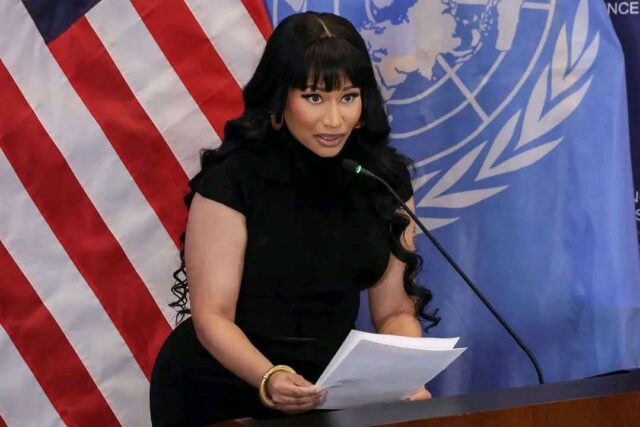
Nicki Minaj Speaks Out Again On killings In Nigeria, Calls For Protection Of Christians


American rapper, Nicki Minaj, has once again raised concerns about ongoing violence in Nigeria, urging an end to the killings and calling for the freedom and protection of Christians in the country.

The award-winning artiste, whose real name is Onika Maraj-Petty, made the appeal in a post shared on X on Friday.

Using a faith-based message, Minaj expressed alarm over the security situation and what she described as the targeting of Christians.

“On Christ the solid rock I stand. All other grounds are sinking sand,” she wrote, before adding emphatically, “FREE THE CHRISTIANS IN NIGERIA!!!!!!!!!! STOP THIS NOW!!!!!!!!!!!!!!”

Her post quickly went viral, sparking renewed debate online about insecurity, religious freedom, and violence in Nigeria.

The latest comments follow Minaj’s earlier remarks in November at a United Nations–related briefing focused on global religious freedom and violence against Christians in Nigeria.

At the event, U.S. official Michael Waltz described the killings as deliberate and systematic, calling them “genocide disguised as chaos.”

He said communities in Nigeria’s Middle Belt and northern regions have suffered repeated attacks, with churches destroyed, pastors killed, and families displaced because of their Christian faith.

Waltz also linked the violence to abductions, citing a recent incident in which schoolgirls were kidnapped.

Quoting figures from the Christian advocacy group Open Doors, he claimed that Nigeria accounts for about 80 percent of violence against Christians worldwide.

Minaj, who also addressed the briefing, echoed those concerns, stating that Christians in Nigeria were being attacked solely because of their beliefs.

She said churches had been burned, families torn apart, and entire communities forced to live in constant fear.

Describing the crisis as part of a broader global problem, the rapper thanked former U.S. President Donald Trump for drawing international attention to the issue.

Meanwhile, the Nigerian government has consistently rejected claims that the violence is religiously motivated, maintaining that the country’s security challenges are driven by criminal activities such as banditry and terrorism.

Despite this position, international personalities and advocacy organisations continue to raise alarms over persistent killings and insecurity across the country.


Google search engine

Peace Corps Boss, Finance Director Arraigned Over Alleged N60m Fraud


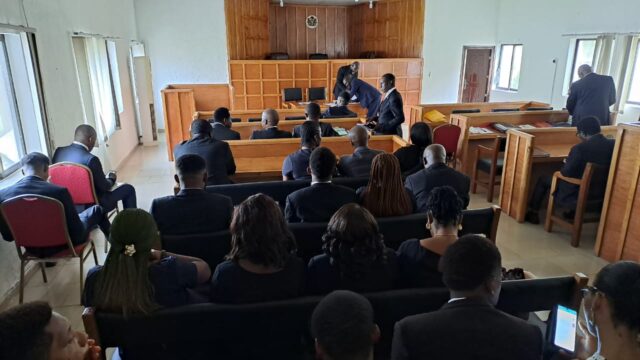
The National Commandant of the Nigeria Peace Corps, Dickson Akoh, and the organisation’s Director of Finance, Omolola Aminat Ahmed, have been arraigned before a Federal Capital Territory (FCT) High Court in Abuja over an alleged ₦60 million fraud.

The two defendants were brought before Justice H. B. Yusuf by the Economic and Financial Crimes Commission (EFCC) on charges relating to the alleged misappropriation of funds allocated to the Peace Corps.

According to the EFCC, the accused persons were docked on a two-count charge bordering on criminal conspiracy and misappropriation of public funds.

Both Akoh and Ahmed pleaded not guilty to the charges when they were read in court.

The EFCC alleged that in 2024, the defendants conspired to illegally divert funds meant for official purposes within the organisation.

One of the charges stated that the duo allegedly converted ₦46 million out of a total ₦60 million earmarked for the procurement of badges for personal use.

Prosecuting counsel, Khalid Sanusi, following the defendants’ not-guilty pleas, requested a trial date from the court.

Justice Yusuf subsequently adjourned the case to February 25, 2026, for the commencement of trial.

The court also granted both defendants bail in the sum of ₦5 million each, with one surety in like amount. The sureties are required to be reputable individuals resident in Abuja.

The EFCC confirmed the development in a statement signed by its spokesperson, Dele Oyewale.

Google search engine

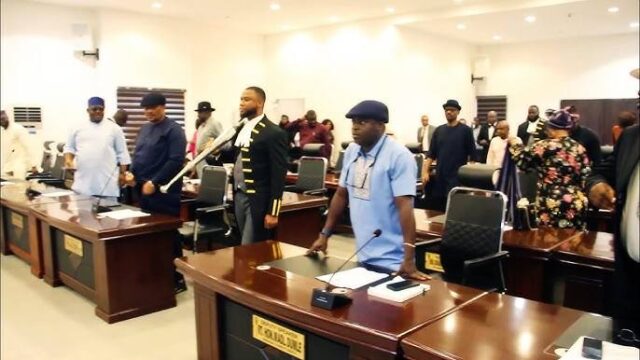
Fresh Crisis Looms In Rivers As Assembly Speaker Accuses Gov. Fubara Of Deceit, Adjourns Plenary To Late January


Political tension may be returning to Rivers State following fresh accusations by the Speaker of the State House of Assembly, Martin Amaewhule, against Governor Siminalayi Fubara, whom he accused of being dishonest about his relationship with lawmakers.

On Wednesday, Governor Fubara denied claims that his administration was at loggerheads with members of the House of Assembly.

He stated that he had not met with the lawmakers since the peace agreement because he was waiting for the Minister of the Federal Capital Territory (FCT), Nyesom Wike, to convene such a meeting as stipulated in the deal.

However, addressing journalists on Thursday evening in Port Harcourt alongside other legislators, Mr Amaewhule disputed the governor’s account, insisting that meetings had already taken place.

According to the Speaker, following President Bola Tinubu’s directive after the period of emergency rule in the state, Mr Wike arranged meetings between the governor and the lawmakers.

“We met with the governor twice, first at the residence of the FCT minister and later at the home of Ferdinand Alabraba,” Mr Amaewhule said.

“It is therefore untrue for the governor to say he has not met with us.”

He alleged that despite these engagements, Governor Fubara failed to honour the agreements reached during the meetings, warning that the governor’s statements and actions could spark another round of political instability in the state.

The Speaker further accused the governor of reckless spending and awarding contracts without legislative approval, claiming that over ₦600 billion was left in the state’s treasury by the former Sole Administrator, Ibok-Ete Ibas, when the emergency rule ended.

Mr Amaewhule also alleged that Governor Fubara was attempting to influence lawmakers financially.

“The members of the Rivers State House of Assembly are not for sale,” he declared.

He criticised the governor for allegedly making disparaging remarks about Mr Wike and urged him to act more responsibly as a leader instead of allowing media aides to attack lawmakers publicly.

Despite the accusations, Mr Amaewhule said the assembly remained committed to the peace process initiated by President Tinubu and to protecting the interests of Rivers residents.

This marks the second time in nine days that the Speaker has openly criticised Governor Fubara. Recently, Mr Amaewhule accused the governor of neglecting public primary and secondary schools, describing the state of education infrastructure as deplorable.

The governor later responded by reaffirming his administration’s commitment to education despite existing challenges.

Rivers State has been embroiled in political turmoil stemming from a power struggle between Governor Fubara and his predecessor, Nyesom Wike, over control of the state’s political machinery.

The conflict split the House of Assembly, with 27 lawmakers aligned with Mr Wike and a minority faction loyal to Governor Fubara.

The crisis led President Tinubu to declare a state of emergency in March, suspending the governor, his deputy, and all elected officials for six months.

A peace agreement brokered by the president in June resulted in the lifting of the emergency rule, and elected officials resumed their duties in September 2025.

Nevertheless, tensions appear unresolved, as the House recently adjourned plenary until January 26, 2026, effectively preventing the governor from presenting the 2026 budget before the end of the year.

Google search engine

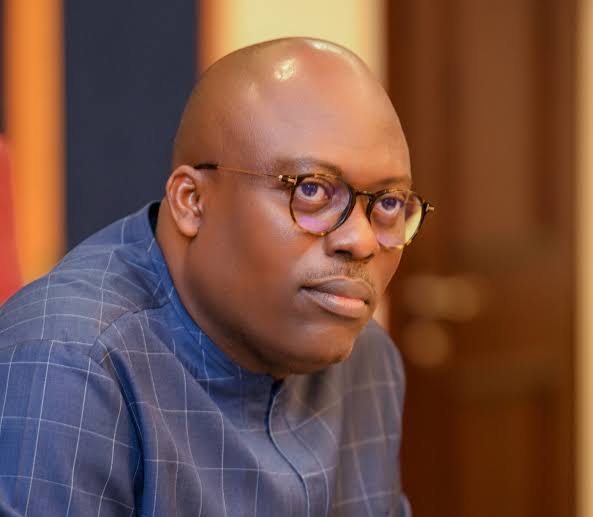
Governor Fubara Officially Registers As APC Member In Rivers


Governor Siminalayi Fubara has formally joined the All Progressives Congress (APC), completing his registration as a member of the party on Friday at the Government House in Port Harcourt.

Photographs shared by Tony Okocha, media aide to the state APC chairman, showed Fubara thumbprinting the party register during the formal procedure.

Governor Fubara had previously announced his decision to defect from the Peoples Democratic Party (PDP) earlier this week, stating that the move was in the best interest of the people of Rivers State.

He also described it as a gesture of appreciation to President Bola Tinubu, whom he credited for enabling him to continue serving as Governor.

Google search engine

‘Stop The Fiscal Rascality’, Obi Slams Tinubu Over Plan To Borrow N17.89 Trillion


Former Labour Party (LP) presidential candidate, Peter Obi, has criticised the Federal Government’s plan to borrow ₦17.89 trillion to fund the 2026 budget, describing it as fiscally irresponsible.

In a post shared on his official X account on Friday, Obi raised concerns over Nigeria’s growing debt burden, noting that nearly half of projected national revenues for 2026 are already expected to go toward debt servicing.

He also questioned why funds from the 2025 budget remain largely unspent despite reported revenue surges.

“Today, Nigerians woke up to troubling news that the Federal Government plans to borrow about ₦20 trillion for the 2026 budget,” Obi wrote.

“This comes at a time when debt servicing alone is projected to consume nearly half of our national revenue, and borrowing requirements have surged by over 72%. How can we discuss trillions in new loans when 70% of 2025 capital projects remain unimplemented?”

Obi warned against what he called “fiscal rascality,” highlighting that uncontrolled borrowing often fuels consumption rather than productive investment.

He stressed that Nigeria cannot achieve prosperity by borrowing its way out of economic challenges.

“We cannot keep mortgaging the future of our children with thoughtless borrowing. Nations develop by producing, exporting, creating value, and building strong institutions that ensure accountability, not by consuming more than they produce,” Obi said.

He added that governance must be rooted in transparency and fiscal responsibility, arguing that misleading revenue figures and historic borrowing levels are undermining the country’s economic potential.

Critics have increasingly questioned the Federal Government’s borrowing strategy, pointing out that non-oil revenues reached ₦20.59 trillion from January to August 2025, yet borrowing needs remain high.

Obi called for policies that prioritise production, infrastructure, and human capital over debt-driven consumption.

Google search engine

Borno Spent N53.6bn On Education Infrastructure, Teacher Training In 2025 – Governor Zulum


Borno State Governor, Prof. Babagana Zulum, has disclosed that his administration invested N53.6 billion in the state’s education sector in 2025, covering large-scale infrastructure, teacher recruitment, and professional development.

He made this known on Thursday while declaring open the 28th Quarterly Meeting of the Universal Basic Education Commission (UBEC) in Maiduguri.

The two-day meeting brings together SUBEB chairmen and management teams from across the federation.

Zulum said education remains central to restoring peace, rebuilding communities affected by insurgency, and driving long-term development in the state.

The governor noted that the state has spent heavily on rebuilding schools destroyed by Boko Haram, including the construction of 104 mega secondary schools and the recruitment of thousands of teachers over the last six years.

According to him, the government has committed N4 billion to teacher training this year alone.

The investment includes a comprehensive verification and professionalisation exercise, recruitment of 4,000 qualified teachers, as well as training for more than 11,000 basic education teachers.

Zulum added that the state has also improved teachers’ welfare by implementing the minimum wage, providing rural posting allowances, building teachers’ quarters across the three senatorial districts, and clearing backlogs of gratuities.

He said N18.99 billion of the 2025 spending went specifically into major education infrastructure projects across all local government areas.

In the tertiary sector, Borno also recorded major improvements through expanded staffing, infrastructure upgrades, and strengthened accreditation.

The governor revealed that N7 billion was used for capital projects in key institutions, including an additional N1 billion approved to support the transition of the College of Education, Bama, into a full-fledged Federal University of Agriculture and Entrepreneurship (FUAE).

Other expenditures covered technical and vocational education upgrades, ICT and digital literacy programmes, scholarships and support for Arabic and Almajiri education.

Minister of Education, Dr. Maruf Olatunji Alausa, urged delegates to ensure meaningful discussions that would translate into practical solutions for persistent challenges like out-of-school children, teacher shortages, and infrastructure gaps.

UBEC Executive Secretary, Aisha Garba, emphasised the importance of the quarterly meeting as a platform for peer review, collaboration, and strategic alignment between federal and state actors.

Before the meeting, the minister, alongside Governor Zulum and Garba, commissioned three newly completed mega schools in Maiduguri.

Google search engine

ADC Expresses Concern Over Atiku-Obi Political Alignment Ahead Of 2027


The African Democratic Congress (ADC) has raised concerns about the political relationship between former Vice President Atiku Abubakar and former Labour Party presidential candidate Peter Obi, as early maneuvering for the 2027 general elections intensifies.

Speaking in an interview on Arise Television’s The Morning Show on Friday, ADC spokesperson Mallam Bolaji Abdullahi described the unresolved dynamic between the two opposition figures as a challenge with potential implications for the wider political landscape.

He said, “I may not describe the situation in superlative terms to say it is the greatest threat to democracy. But is it a conundrum? Yes. Is it a challenge? Yes. Is it something we are concerned about? Yes.”

Abdullahi emphasized that, while the matter has drawn significant public attention, ADC’s current focus is on strengthening its organizational structure nationwide rather than engaging in discussions about presidential candidates.

“Nobody in ADC at this time is having a conversation about who the presidential candidates will be. We have so much work to do to establish our presence and contest elections in all 36 states of the Federation and the FCT. This has preoccupied us,” he said.

According to Abdullahi, ADC is considering various approaches to selecting its 2027 presidential flagbearer.

This includes the possibility of a consensus arrangement among aspirants.

If consensus cannot be reached, the party plans to open the contest to all interested candidates.

“The most important thing is, when we get to that point, we’ll try to engineer a consensus. But if we are not able to reach one, we’ll open it up for everyone to contest. And it’s not just about Atiku and Peter Obi; there are other people interested in the presidential race,” he explained.

He further revealed that ADC is engaging in ongoing discussions with other political parties as part of efforts to form a broader coalition ahead of the elections.

Google search engine

MOST COMMENTED

- Advertisement -
Google search engine