Home Blog Page 187

Ex-Army Chief Reveals Why Trump May Be Eyeing Nigeria
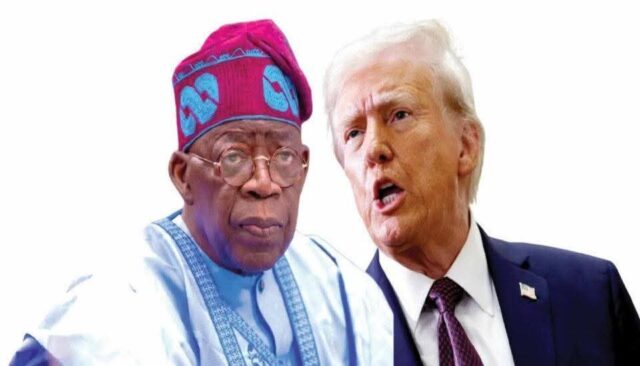
 

A former Chief of Army Staff and ex-Minister of Interior, Lt. Gen. Abdulrahman Dambazau (retd.), has suggested that the United States may be positioning itself to set up a military base in Nigeria under the guise of addressing religious persecution and insecurity.

Speaking in Abuja on Tuesday at an event organised by the Just Friends Club of Nigeria, Dambazau said recent statements from some U.S. politicians and religious leaders on alleged persecution of Christians in Nigeria may be driven by hidden geopolitical motives.

According to him, claims by certain U.S. congressmen and some Catholic clergymen alleging a “Christian genocide” in Nigeria appear to align with broader American strategic interests in the region.

The retired general’s comments follow U.S. President Donald Trump’s warning that he might deploy American troops to Nigeria if attacks against Christians continue.

In a post on his Truth Social account last Saturday, Trump said he had instructed the U.S “Department of War” to prepare for possible military action, and threatened to cut off American aid to Nigeria unless the alleged persecution is stopped.

Dambazau questioned the motives behind such statements, recalling that the U.S. maintained two military bases in Niger Republic for more than a decade but failed to curb insecurity in the Sahel.

“Religious tensions have been heightened by both domestic and foreign actors, sometimes leading to the false framing of general security incidents as attacks on particular faiths,” he said.

“A recent example is the propaganda promoted by some U.S. congressmen and supported by Catholic clergy claiming there is a Christian genocide in Nigeria.”

“President Trump has now designated Nigeria as a ‘Country of Particular Concern’ and has reportedly instructed the U.S Department of War to prepare for possible operations. Whatever that means, time will tell.”

He argued that terrorism and insurgency in Nigeria form part of a wider regional crisis spanning the Sahel and Lake Chad Basin, affecting both Muslims and Christians alike.

“Most of the victims are elderly people, women and children, yet their lives seem to matter only when they are identified as Christians,” Dambazau said.

“In over ten years of U.S. presence in Niger, what did Washington do to prevent the escalation of terrorism and insecurity in the region?”

He alleged that Washington’s recent actions could be part of a strategy to find an alternative military foothold in Nigeria, following setbacks in the Niger Republic.

“At the start of Trump’s second term, some U.S. lawmakers even accused USAID of financing terrorism in Africa.”

“I believe the U.S is now seeking an opportunity to establish another base in Nigeria, a country that America has always engaged with primarily to advance its own interests, even through force if necessary,” he stated.

“Unfortunately, there are Nigerians willing to cooperate with such external agendas. Our biggest challenge remains our lack of unity in confronting terrorism and violent crime.”

Dambazau also referenced attacks on mosques, Islamic clerics, and traditional rulers to underscore that the violence in Nigeria is not confined to any religion.

He lamented the government’s inability to safeguard citizens, citing the March 2022 Abuja–Kaduna train attack and the July 2022 Kuje prison break as glaring examples of security lapses.

“It is obvious that Nigeria lacks the capacity to monitor threats in real time or respond effectively to emergencies,” he said.

“In some states, communities have even resorted to negotiating with bandits for protection.”

“In Zamfara and Katsina, for example, residents have signed agreements with bandits, effectively surrendering their safety to them.”

He further noted that IPOB’s sit-at-home orders in the South-East demonstrate how non-state actors can exercise control in the absence of state protection.

Dambazau urged Nigerians to close ranks and resist foreign interference that could exploit internal divisions.

“We must not allow external powers to use our disunity as an excuse for intervention. National cohesion is essential if we are to end terrorism and insecurity,” he warned.

Diplomatic tensions over alleged plans by foreign powers to build military bases in Nigeria resurfaced last year.

In December 2024, the Nigerian Defence Headquarters denied reports that France was planning to establish a base in the country.

The Federal Government also publicly dismissed claims that it had approved any such arrangement.

Google search engine

Gov Kefas To Officially Dump PDP For APC November 19


Taraba State Governor, Agbu Kefas, is expected to formally defect from the Peoples Democratic Party (PDP) to the All Progressives Congress (APC) on November 19, multiple sources within the ruling party have confirmed.

A senior APC official told DAILY GAZETTE that the party’s National Chairman, Professor Nentawe Yilwatda, will lead top executives to Jalingo to officially welcome the governor into the APC at a planned rally.

According to the source, “All arrangements have been finalised. Governor Kefas’ defection was extensively discussed at the APC leadership meeting held on Wednesday at the national secretariat in Abuja. Everything is set for his formal reception.”

The move follows weeks of speculation and behind-the-scenes negotiations reportedly spearheaded by Yilwatda, who is said to have played a key role in convincing Kefas to switch parties.

Earlier this week, the governor appeared to confirm the rumours during an interaction with APC and PDP stakeholders at the Banquet Hall of TY Danjuma House in Jalingo.

He said, “Yes, a rumour is circulating and I’ve heard it too. Sometimes, when a rumour refuses to die, it may mean something good is coming. I’m working on it to see that it becomes reality. By the grace of God, in a few days after next week, you will hear from me.”

Kefas urged unity among political actors in the state, saying, “Whether you belong to the APC, PDP, or any other party, let us think of how to move Taraba forward.”

In anticipation of his defection, APC stakeholders in Taraba have already pledged their support.

A weekend meeting at the Jalingo residence of Danladi Baido drew together party elders, youth leaders, and local government representatives from across the state’s 16 councils.

The gathering, described as a “show of solidarity,” reaffirmed loyalty to the governor and expressed optimism that his entry into the ruling party would attract greater federal attention, improve infrastructure, and boost economic opportunities in the state.

Meanwhile, APC insiders have revealed that the ruling party is also in advanced discussions with Adamawa State Governor, Ahmadu Umaru Fintiri, over a potential defection.

“The defection of Governor Fintiri is already a done deal. After Taraba, Adamawa is next,” one source told DAILY GAZETTE.

Currently, the APC controls Borno, Gombe, and Yobe States, while the PDP maintains leadership in Bauchi, Taraba and Adamawa.

Google search engine

Bullets, Bombs Know No Religion, Shettima Reacts To Trump’s Threat


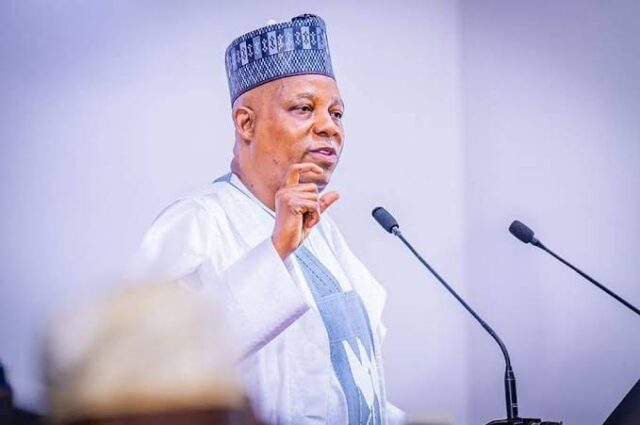
Vice President Kashim Shettima has called for unity in tackling Nigeria’s security challenges, stressing that violence and terrorism do not recognise religion, ethnicity, or social class.

Speaking at a high-level stakeholders’ meeting on regional development organised by the National Counter-Terrorism Centre (NCTC) under the Office of the National Security Adviser in Abuja on Thursday, Shettima said the government is adopting a coordinated strategy aimed at addressing both immediate security threats and the deeper issues undermining peace and stability.

Represented by the Deputy Chief of Staff to the President, Ibrahim Hadejia, the Vice President said all institutions and individuals involved in governance must contribute to rebuilding national unity and trust.

“Every person or organisation engaged in governance must play a part in this mission of national restoration,” Shettima said.

“A bullet or bomb does not recognise ethnicity or religion. When fired by enemies of peace, it kills indiscriminately, the farmer, the trader, the young, and the old. It tears apart the fabric of our multi-ethnic, multi-religious society in devastating ways.”

He warned against allowing divisive narratives to take root, saying that Nigeria’s real challenge lies not only in combating terrorists but also in overcoming the prejudice and sentiments used to divide its people.

“Our task is not only to fight those who commit these acts of violence,” he said, “but also to dismantle the ideas and sentiments that have been weaponised to divide us. We must pay attention to the power of messaging, it must be grounded in empathy and understanding.”

The Vice President noted that insecurity affects all Nigerians equally, regardless of faith or region, and urged leaders to promote messages that unite rather than inflame divisions.

He also emphasised that lasting development can only occur when every part of the country progresses together.

“We cannot claim to have achieved national progress if some parts of the federation are left behind,” Shettima said.

“We need functional institutions that ensure government presence and services in even the most remote communities.”

According to him, the administration’s decision to establish regional development commissions across the six geopolitical zones is part of a broader plan to take governance and growth closer to the people.

These commissions, he explained, are expected to both accelerate regional development and promote shared learning between different parts of the country.

He acknowledged that while previous governments have worked with private sector players and international organisations, many initiatives failed to reflect the unique realities of each region.

He therefore urged the newly created commissions to design solutions tailored to their local needs and priorities.

“Collaboration among these commissions is essential,” he added.

“We must operate with a shared sense of purpose if we are to overcome the longstanding developmental and security challenges facing our country.”

Google search engine

Peru Congress Declares Mexican President ‘Persona Non Grata’


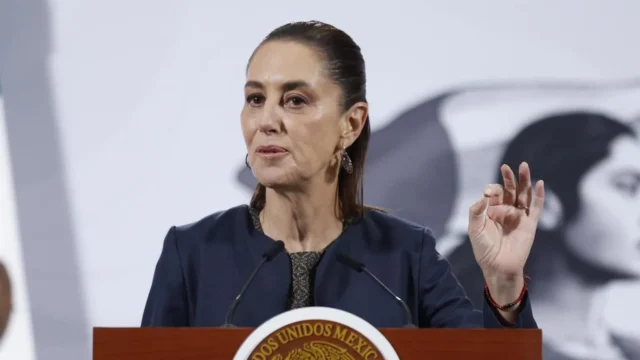
Peru’s Congress has voted to declare Mexican President Claudia Sheinbaum as persona non grata – or unwelcome in the country.

The decision comes days after Peru severed diplomatic ties with Mexico, after the Mexican government granted asylum to a former Peruvian prime minister facing charges for a 2022 coup attempt.

Betssy Chávez denies allegations that she played a role in ousted Peruvian President Pedro Castillo’s plan to dissolve congress.

She has taken refuge in the Mexican embassy in Lima.

Mexico says it has offered Chávez asylum in accordance with international law, and rejected Peru’s accusation that it was an “unfriendly act”.

The declaration – passed in a 63-33 vote in the Peruvian Congress – marks the latest escalation in worsening ties between the two Latin American nations.

During the vote, Peruvian legislators also accused the Mexican leader of having close ties to drug trafficking – a claim they gave no evidence for.

Chávez had been imprisoned in June 2023 over her alleged role in Castillo’s plan to dissolve Peru’s legislative body.

She was released by a judge on bail in September and has denied the charges against her.

Prosecutors are seeking a 25-year sentence for Chávez.

Peruvian Foreign Minister Hugo de Zela told the Reuters news agency that legal experts were reviewing the 1954 Caracas Convention on diplomatic asylum, which Mexico used to justify their offer of asylum.

Earlier this week, de Zela said Mexico had tried to “portray the authors of the coup attempt as victims”.

“In reality, Peruvians live and want to continue living in democracy, as recognised by all countries in the world, with the sole and lonely exception of Mexico,” he added.

Peru also accused Mexico of “repeated instances in which the current and former presidents of that country have interfered in Peru’s internal affairs”.

In 2022, Lima expelled Mexico’s ambassador following its decision to grant asylum to Castillo’s wife and children following his arrest.

Last September, the Foreign Relations Committee of Peru’s Congress proposed declaring Sheinbaum a persona non grata for failing to condemn Castillo’s attempted coup and advocating for his release.

Google search engine

BREAKING: Court Fixes Date For Judgment In Kanu’s Terrorism Case


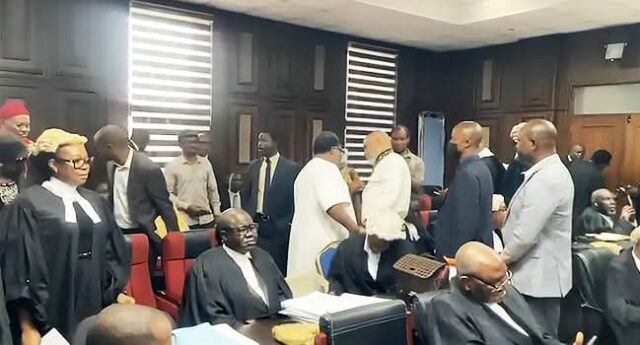
Justice James Omotosho of the Federal High Court in Abuja has scheduled November 20 for the delivery of judgment in the terrorism trial of Nnamdi Kanu, the detained leader of the Indigenous People of Biafra (IPOB).

The ruling came after Kanu failed to present his defence within the six-day period allocated by the court.

Justice Omotosho noted that since Kanu did not make use of the opportunity to conduct his defence, he cannot claim a denial of his constitutionally guaranteed right to a fair hearing.

Google search engine

Avoid Confrontation With Trump – Bafarawa Warns Tinubu


Former Sokoto State Governor Attahiru Bafarawa has urged President Bola Tinubu to steer clear of confrontation and adopt dialogue in managing tensions with US President Donald Trump.

Bafarawa issued the appeal on Tuesday in a statement shared with DAILY GAZETTE, following Trump’s recent threat of military action over alleged persecution of Christians in Nigeria.

The former governor stressed that engagement, rather than confrontation, is in Nigeria’s best interest, noting the long-standing partnership between the two nations.

“I advise President Tinubu to avoid confrontation and reach out to the American government to present Nigeria’s perspective,” Bafarawa said.

“America and Nigeria are strategic partners in international politics and diplomacy. It is crucial for Nigeria to nurture and strengthen this enduring relationship.”

Bafarawa further called on Tinubu to take international concerns over Nigeria’s security seriously and intensify efforts to combat insurgency and criminality nationwide.

He also appealed to Nigerians to support the President in his efforts to stabilize and reposition the country.

“All Nigerians must come together to support President Tinubu, because his success is our success, and his failure is our failure. This support should transcend religion, ethnicity, region, and political affiliations,” he added.

The call comes after Trump labelled Nigeria as “a country of particular concern” and warned of possible military intervention should the alleged violence against Christians continue.

Bafarawa emphasized that stronger national security measures could help prevent situations that trigger such international scrutiny.

Google search engine

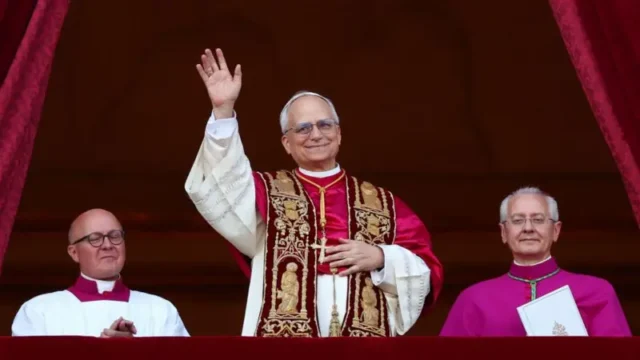
Pope Orders Catholics To Stop Referring To Mary As ‘Co-Redeemer’


The Vatican has issued a new directive instructing Catholics around the world to refrain from calling the Virgin Mary “co-redeemer,” reaffirming that Jesus Christ alone is the Redeemer of humanity.

The guidance, contained in a recent decree approved by Pope Leo, revises several traditional Marian titles, including the popular terms “co-redemptrix” and “mediatrix.”

According to the document, while Mary’s role in salvation history remains deeply revered, it must always be understood as subordinate to Christ’s unique work of redemption.

“Given the need to clarify Mary’s subordinate role to Christ in the work of redemption, it is always inappropriate to use the title ‘Co-redemptrix’ to describe her cooperation,” the decree stated.

“This expression risks overshadowing Christ’s singular salvific mission and may cause confusion within the harmony of Christian truth. It does not serve the faith of the People of God and therefore becomes unhelpful.”

The Vatican stressed that neither Mary nor the Church can add to or complete the redemptive mission of Jesus, who remains the sole mediator between God and humanity.

Addressing the use of “mediatrix,” the decree explained that Scripture explicitly attributes the role of mediator exclusively to Christ.

While acknowledging that Mary acted as a channel of grace by giving birth to the Saviour, the document emphasised that her mediation was “real but clearly secondary.”

The Vatican noted that this clarification is consistent with longstanding Church teaching and not a new doctrine.

It recalled that Pope Francis had, on several occasions, dismissed the use of such titles for Mary.

“Christ is the Mediator, the bridge through which we reach the Father. He is the only Redeemer; there are no co-redeemers with Christ.

He is the Mediator par excellence,” Pope Francis said in 2021.

The new decree thus seeks to affirm traditional Catholic teaching on Mary’s place within salvation history, honouring her as the Mother of God and a model of faith, but not as one who shares Christ’s redemptive power.

Google search engine

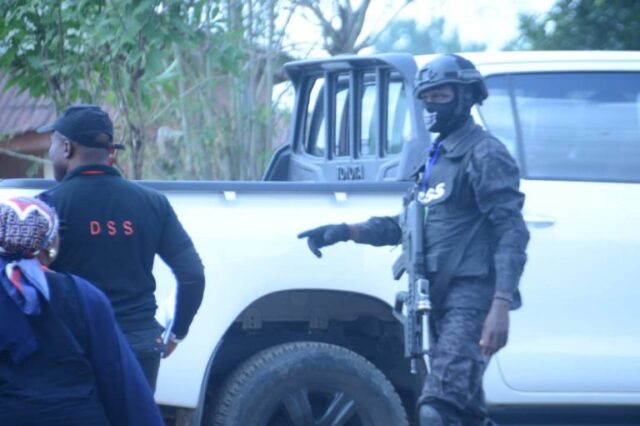
Tight Security As Anambra Elects New Governor Tomorrow


As Anambra State heads to the polls tomorrow to elect a new governor, anxiety and uncertainty grip the state amid heavy security presence, fears of vote buying, and doubts over the credibility of the process.

The election, which will be the first major test for the new Chairman of the Independent National Electoral Commission (INEC), Prof. Joash Ojo Amupitan, comes at a critical time when public confidence in Nigeria’s electoral system remains fragile.

Observers say the poll will not only test INEC’s logistical efficiency and neutrality but also reveal whether Amupitan can distinguish his leadership from that of his predecessor, Prof. Mahmood Yakubu, whose tenure was dogged by complaints of late deployment of materials, malfunctioning BVAS devices, and result transmission failures during the 2023 general elections.

About 60,000 security operatives drawn from the Police, Civil Defence, Army, Navy, and Air Force have been deployed across 5,720 polling units to safeguard voters and electoral materials.

The Commissioner of Police for the election, Abayomi Shogunle, said the massive deployment was meant to guarantee safety and not intimidate voters.

“We want to assure residents that the election will be peaceful, transparent, and free of intimidation. Every eligible voter should come out and exercise their right,” Shogunle said.

However, the exclusion of the state-owned security outfit, Agunechemba, has sparked controversy. Opposition parties accused the Anambra government of using the group to influence past polls.

The International Society for Civil Liberties and Rule of Law (Intersociety) cautioned against the excessive militarisation of the election, warning that the deployment of armed forces and armoured vehicles could discourage voter turnout.

The group’s chairman, Emeka Umeagbalasi, said past “shows of force” had created fear among citizens, turning polling environments into “war zones.”

INEC has announced that 98.8 per cent of registered voters in the state have collected their Permanent Voter Cards (PVCs).

Speaking in Abuja, Amupitan described the figure as one of the most impressive in recent elections, noting that it followed an extension of the collection deadline from October 29 to November 2 across the state’s 326 wards.

“This is a significant achievement. It reflects the enthusiasm of Anambra voters and the Commission’s effort to ensure no one is disenfranchised,” Amupitan said.

He disclosed that the Commission had deployed 6,879 BVAS devices, 24,000 ad hoc staff, and 83 boats to facilitate smooth logistics across the state, including riverine areas.

INEC, he added, had also made special arrangements for voters in Ihiala Local Council, where polling would take place under tight security due to threats of violence.

“Anyone attempting violence, vote-buying, or intimidation will face lawful consequences. Security will protect voters, and INEC is ready to deliver a credible election,” Amupitan assured.

Despite INEC’s assurances, concerns persist over possible irregularities and voter apathy. The CLEEN Foundation listed Ayamelum, Awka South, Onitsha North, Orumba South, and Ekwusigo as high-risk areas due to their history of political violence.

Similarly, the Civil Liberties Organisation (CLO) lamented low voter education and confidence in the process.

CLO chairman, Vincent Ezekwueme, appealed to citizens to participate actively, saying, “Do not assume your vote will not count. INEC has pledged transparency, and we must all play our part.”

With 16 candidates in the race and 2.8 million registered voters, the outcome of tomorrow’s election is expected to have far-reaching implications for Nigeria’s 2027 general elections.

Analysts say it will test the strength of the ruling All Progressives Grand Alliance (APGA) against the Labour Party (LP) and Peoples Democratic Party (PDP), both of which have intensified grassroots campaigns.

Former ADC National Chairman, Ralph Nwosu, warned security agencies and INEC to act responsibly, saying, “The world is watching. Whatever happens in Anambra will shape Nigeria’s democratic reputation.”

While optimism remains that the Amupitan-led INEC can restore credibility, sceptics like Wale Okunniyi of the National Consultative Front doubt significant improvement under the existing electoral framework.

“The same laws and systems that failed in 2023 remain in place. Without reform, little will change,” he said.

INEC’s Resident Electoral Commissioner, Dr. Queen Elizabeth Agwu, confirmed that sensitive materials, including BVAS and result sheets, had been distributed to all Registration Area Centres (RACs) under joint supervision by security agencies and party agents.

She urged voters to come out en masse, assuring them of a peaceful and transparent process.

“Your votes will count. The process is secure, and INEC is fully prepared to conduct a credible election,” Agwu said.

Google search engine

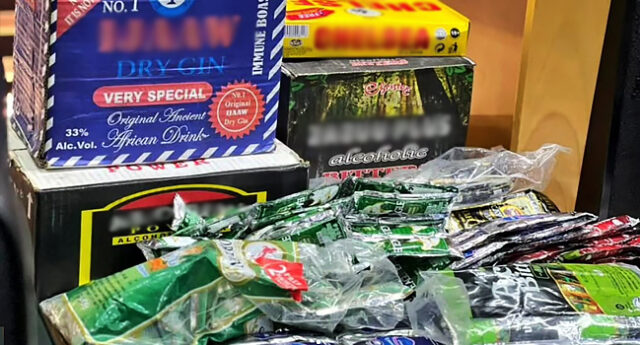
Senate Orders NAFDAC To Enforce Total Ban On Sachet Alcohol By December 31


The Senate has ordered the National Agency for Food and Drug Administration and Control (NAFDAC) to fully enforce the ban on the production and sale of sachet and small bottled alcoholic beverages by December 31, 2025.

Lawmakers said the proliferation of the cheap drinks has become a serious public health concern, fuelling addiction, violence, and road accidents, particularly among young Nigerians.

The directive followed a motion sponsored by Senator Asuquo Ekpenyong (Cross River South), who decried what he called the “repeated delays” by NAFDAC in implementing the phase-out agreement.

He stressed that any further extension would “betray public trust and undermine Nigeria’s commitment to protecting its citizens.”

“Packaging alcohol in sachets makes it as easy to consume as sweets, even for children,” Ekpenyong warned.

“It destroys futures, fuels domestic violence, and endangers lives daily on our roads.”

The motion received overwhelming bipartisan support, with senators describing sachet alcohol as a “silent epidemic” spreading across schools, markets, and motor parks.

Senator Anthony Ani (Ebonyi South) likened the products to “a slow poison destroying the youth,” while others criticized manufacturers for lobbying against regulatory deadlines.

Nigeria had, in 2018, signed a five-year Memorandum of Understanding (MoU) involving NAFDAC, the Federal Ministry of Health, and industry associations to phase out sachet alcohol by 2023.

The deadline was later extended to 2025 to give producers time to modify their production lines.

However, senators expressed disappointment that some companies continue to resist compliance, describing such actions as a challenge to national authority and a threat to the nation’s social stability.

In his closing remarks, Senate President Godswill Akpabio commended the unanimous decision, calling it “a moral and patriotic stand to safeguard Nigeria’s future.”

“This is about protecting our children and restoring sanity to our streets,” Akpabio said.

Google search engine

ESWAMA And The Mbah Touch: When Order Blossomed From Chaos

By Nnamdi Anigbo Roosevelt

There was a time when Enugu groaned under the weight of its own waste.

The Coal City, once proud and radiant, seemed to choke on the indiscipline of its neglect. The Enugu State Waste Management Authority (ESWAMA) had become a byword for disorder.

Mountains of refuse rose like unwanted monuments at street corners. Fetid air hung heavy over once vibrant communities. The people’s patience, already stretched thin, began to snap.

Households lived under siege, not by bandits, but by their own trash. Offices descended into confusion rather than coordination. The city, once known for its grace, had become a landscape of decay and disarray.

Then came Dr. Peter Ndubuisi Mbah — the Governor whose name has swiftly become synonymous with transformation. His arrival was not just political; it was philosophical — the awakening of a new ethos in governance.

Where others saw waste, he saw an opportunity for rebirth.
Where others saw filth, he envisioned fertile ground for reform.

Mbah’s transformative initiative, Waste-to-Wealth, embodies this vision — lofty, not mean; practical, yet deeply purposeful.

With the Mbah Touch, ESWAMA did not merely change its face; it rediscovered its soul.
The once-rowdy offices became centers of discipline and direction. The chaotic refuse heaps vanished, replaced by the rhythm of an organized system.

Clean streets now hum with the melody of a city reborn.

The introduction of house-to-house waste collection restored order, as only authorized personnel now handle refuse disposal. Consequently, indiscriminate dumping by unscrupulous residents has been drastically reduced.

Governor Mbah’s leadership philosophy mirrors the wisdom of the ancients:

“Order is the first law of heaven, and cleanliness, the visible sign of order on earth.”

He understands that governance is not merely the art of policy, but the poetry of purpose, that true leadership is not loud but transformative; not performative, but productive.

Today, Ndi Enugu walk their streets with renewed pride.

The air smells fresher, the environment looks brighter, and the city’s heartbeat is calm yet confident. ESWAMA has become a mirror of the Governor’s vision, a reflection of discipline, structure, and care for the people’s welfare.

Dr. Peter Mbah has proven that good governance is not a distant dream but a daily discipline, that when vision meets action, even refuse can become renewal.

Under his watch, Enugu is not just cleaner; it is clearer in vision, brighter in purpose, and stronger in spirit.

And as the city rises, one truth resounds:

When leadership acts with sincerity, even the dirtiest corners of society can blossom into gardens of hope.

Google search engine

MOST COMMENTED

- Advertisement -
Google search engine