Home Blog Page 196

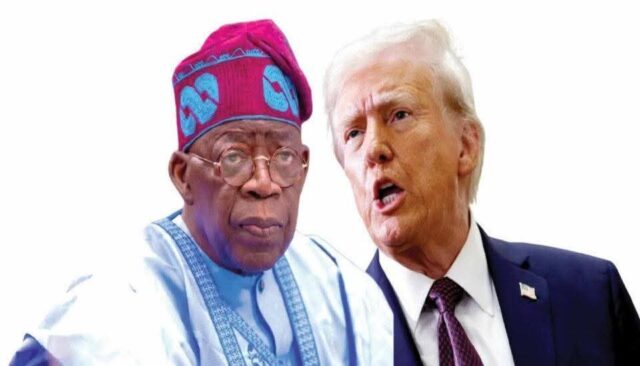
U.S Doesn’t Want You In 2027 – Apostle Ayodele Warns Tinubu


Primate Elijah Ayodele, leader of INRI Evangelical Spiritual Church, has urged President Bola Tinubu to remain vigilant amid growing tensions between Nigeria and the United States over reported attacks on Christians.

Ayodele’s warning follows accusations from the U.S. government that Nigeria has failed to prevent violence against Christian communities, with former U.S President Donald Trump allegedly threatening possible military action.

Speaking through his media aide, Osho Oluwatosin, Ayodele described the escalating rhetoric from Washington as part of a broader plan to destabilize Tinubu’s administration ahead of the 2027 elections.

“I have warned about America targeting Tinubu’s government, but it was ignored. When I spoke about a coup, some commentators dismissed it, yet events are unfolding as I predicted,” Ayodele said.

He alleged that the opposition has secured support from international allies to remove Tinubu from office.

“Whether Tinubu likes it or not, this is an orchestrated plan to weaken his government and pave the way for the opposition. The president must take this seriously,” he said.

Ayodele urged Tinubu to seek divine guidance and strengthen his administration’s internal cohesion.

“It’s a gang-up to remove you from office. Don’t sleep on this. More is coming. The American government does not want Tinubu in 2027,” he warned.

DAILY GAZETTE reports that Trump recently threatened Nigeria with military action, directing the Pentagon to prepare contingency plans over alleged failures to stop attacks on Christians.

In social media posts, Trump said Washington could withhold aid and “go in guns-a-blazing” if killings continue.

He instructed the “Department of War” to prepare for a rapid and decisive response.

This follows Trump’s designation of Nigeria as a “Country of Particular Concern” over alleged persecution of Christians, a move that drew immediate criticism from President Tinubu.

Google search engine

SERAP Drags Akpabio, Abbas To Court Over Alleged N3m ‘Bribe-for-Bills’ Scandal


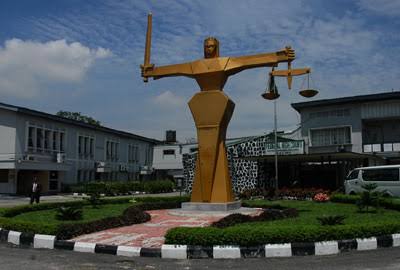
The Socio-Economic Rights and Accountability Project (SERAP) has filed a lawsuit against Senate President Godswill Akpabio and House Speaker Tajudeen Abbas at the Federal High Court in Abuja.

The suit challenges their alleged failure to investigate claims that lawmakers pay between ₦1 million and ₦3 million to sponsor or present bills, motions, and petitions at the National Assembly.

SERAP is pursuing the case on behalf of all members of the National Assembly.

The suit follows allegations by APC House member Ibrahim Auyo of Jigawa, who went public in a viral video in Hausa, claiming that lawmakers routinely pay bribes to sponsor bills and motions.

In its suit (FHC/L/CS/2214/2025), SERAP is seeking a court order of mandamus directing Akpabio and Abbas to refer the allegations to the appropriate anti-corruption agencies for investigation and prosecution.

The organisation is also asking the court to compel the duo to take measures to protect Auyo, the whistleblower.

SERAP described the bribery allegations as a serious violation of public trust and lawmakers’ constitutional oath.

According to the organisation, the claims, if true, undermine Nigerians’ democratic rights and make a mockery of legislative powers under Section 4 of the Constitution.

The lawsuit, filed by SERAP lawyers Kolawole Oluwadare, Kehinde Oyewumi, and Andrew Nwankwo, emphasises that the allegations reveal a troubling abuse of entrusted power, denying citizens their constitutional and democratic rights.

SERAP further stated that ensuring a thorough investigation would strengthen public trust in democratic institutions and reinforce the rule of law.

“Auyo is a whistleblower protected under Article 33 of the UN Convention against Corruption, to which Nigeria is a signatory.”

“He has raised public interest concerns regarding the alleged ₦3 million Bribe-for-Bills at the National Assembly,” SERAP said.

“Addressing these persistent allegations of corruption and the culture of impunity in the legislature is crucial for the rule of law and public accountability.”

No hearing date for the suit has been set.

Google search engine

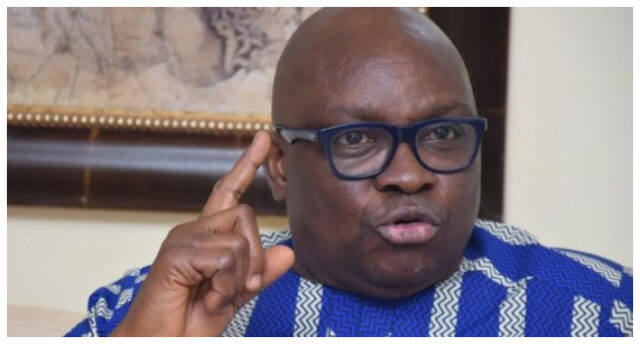
PDP Crisis: Damagun Will Go Like Ayu, Says Fayose


Former Ekiti State Governor Ayodele Fayose has voiced support for the suspension of Peoples Democratic Party (PDP) National Chairman Umar Damagun, predicting that Damagun will leave office as abruptly as his predecessor, Senator Iyorchia Ayu.

Fayose spoke on Sunday in Ado Ekiti, following the announcement by the faction aligned with Minister of the Federal Capital Territory, Nyesom Wike, led by PDP National Secretary Sam Anyanwu, which counter-suspended Damagun along with five other National Working Committee members.

Describing Damagun as incompetent, Fayose said he lacked the capacity to lead the party and “manipulated his way into office,” creating confusion within the PDP.

“You will recall this is the same way the Ayu crisis started, and Damagun will go the way of Ayu. His last service to the party was before the suspension,” he said.

Fayose also endorsed the new acting national chairman, Alhaji Mohammed Abdurrahman, praising him for emerging through a process of confidence following Damagun’s suspension.

“Damagun only represented an interregnum. Abdurrahman will now reposition the party, make necessary corrections in state chapters, and prepare for the convention. We assure him of the cooperation of all party members,” Fayose said.

He further warned that any legal challenges to Abdurrahman’s appointment would be handled properly through the courts.

Fayose emphasized the need for a leader who can unite the party, particularly amid ongoing crises in the South West, where he said governors were interfering in state chapters and blocking congresses.

Google search engine

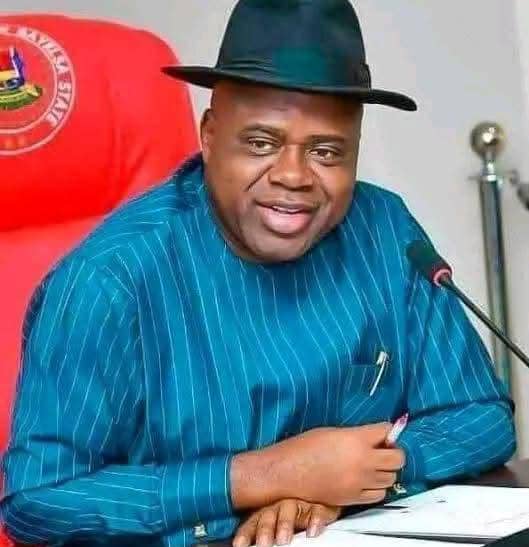
Gov Diri Says Joining APC Is In Bayelsa’s Best Interest


Bayelsa State Governor, Senator Douye Diri, has defended his decision to leave the Peoples Democratic Party (PDP) and join the ruling All Progressives Congress (APC), describing it as a move in the state’s best interest.

Speaking on Sunday during the 14th Bayelsa Thanksgiving Day at the Ecumenical Centre in Igbogene, Yenagoa, Diri said someone had to take the bold step for Bayelsa, and he did so on behalf of its citizens.

This marked his first public comments on the matter since resigning from the PDP on October 15, 2025.

Diri acknowledged that some people might not immediately understand his decision, but he insisted that with time, the rationale would become clear.

He emphasized that politics should focus on development and unity rather than conflict, and stressed the importance of the ongoing peace, security, and progress in Bayelsa.

“We prioritized completing uncompleted projects and initiated new ones, which is reason enough to thank God. The peace and security we are enjoying are further reasons for gratitude. Politics should be about development, not harming your fellow citizen,” Diri said.

Representing Delta State Governor Sheriff Oborevwori, Senior Policy Adviser Funkekeme Solomon highlighted that Bayelsa’s growth depends on unity, urging residents to continue supporting the Diri administration.

Minister of State for Petroleum, Senator Heineken Lokpobiri, described Diri as a unifier and said his move to APC was timely, noting that Bayelsa could no longer afford to remain in opposition as key national developmental decisions are being made.

Lokpobiri also issued a veiled warning against disloyalty to the governor, hinting at tensions with the Deputy Governor, who chose to stay with the PDP.

Niger Delta Development Commission Managing Director Dr. Samuel Ogbuku praised Diri’s administration, calling him a “godsend” due to the visible developmental strides in the state.

Google search engine

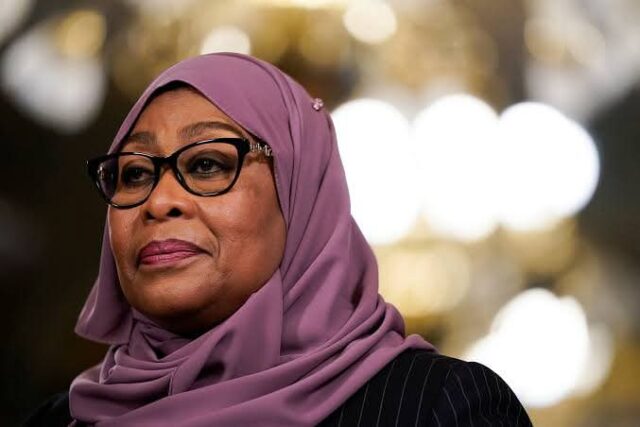
Tanzania’s Samia Suluhu Hassan Sworn In Amid Internet Blackout


Tanzanian President Samia Suluhu Hassan was inaugurated on Monday, amid a nationwide internet blackout following violent election protests in which opposition parties allege hundreds were killed by security forces.

The Electoral Commission announced that Hassan secured 98 percent of the vote, a result rejected by the main opposition party, Chadema, which had been barred from participating.

The party has called for new elections, describing last Wednesday’s vote as a “sham.”

State television showed officials and foreign dignitaries attending the swearing-in at parade grounds in the State House in Dodoma, rather than at a stadium as is customary.

The public was barred from attending the ceremony.

A total internet shutdown has restricted the flow of information from the country. A diplomatic source cited credible reports of hundreds, possibly thousands, of deaths recorded in hospitals and clinics across Tanzania.

Chadema told AFP it had documented at least 800 deaths by Saturday, though these figures could not be independently verified. The government has denied using excessive force and has not commented on the reported fatalities.

Schools and colleges remained closed on Monday, public transport was largely halted, and some church services were canceled.

The diplomatic source suggested that authorities may be using the internet blackout to identify and apprehend opposition members and protesters who may have documented post-election violence.

In major cities including Dar es Salaam, a near-total lockdown was observed over the weekend.

AFP reporters noted police checking IDs and bags, while shops were allowed to open only in the afternoon.

In Zanzibar, where political freedoms are greater, masked armed men without visible identification were seen patrolling days after the election.

A Kenyan rights group released footage purportedly from Tanzania showing bodies piled in the streets, though this could not be independently verified.

Pope Leo XIV called for prayers and urged Tanzanians to pursue dialogue and avoid violence.

Hassan, who became president following the sudden death of John Magufuli in 2021, sought a decisive victory to solidify her leadership and silence critics within her party.

Human rights organizations have accused her government of a “wave of terror” before the vote, including abductions in the final campaign days.

Election day saw widespread unrest, with crowds destroying campaign materials, attacking police, and targeting polling stations, prompting the internet shutdown and a curfew.

Observers noted low voter turnout prior to the outbreak of violence, though the Electoral Commission later reported an 87 percent turnout.

UN Secretary-General Antonio Guterres expressed “deep concern” over reports of deaths and injuries during demonstrations.

Regional leaders, including Kenyan President William Ruto and DRC President Felix Tshisekedi, congratulated Hassan while urging peace and adherence to the rule of law.

Google search engine

Top 2023 Presidential Candidate Declared Wanted


The Lagos State Police Command on Monday declared Nigerian activist Omoyele Sowore wanted for allegedly planning a protest aimed at disrupting public order.

Commissioner of Police Moshood Jimoh made the announcement at Iyana-Oworo on the Third Mainland Bridge, accusing Sowore of instigating unrest during demonstrations against government demolitions in the Oworonshoki area.

“As Commissioner of Police, I hereby declare Omoyele Sowore wanted for acts likely to cause public disorder,” Jimoh told reporters.

In response to the protest threat, police deployed armoured vehicles and hundreds of officers across Lagos, sealing off access to Oworonshoki and dispersing protesters with tear gas.

Sowore, who had earlier arrived at the site, accused security forces of operating under “shoot-to-kill” orders before leaving the area.

The protest was sparked by the demolition of homes built along a pipeline corridor, with residents claiming that compensation from authorities was inadequate.

The police commissioner described the alleged plan as criminal, warning it could cause severe traffic congestion and endanger lives.

“It is only someone who needs examination that would attempt to block such a vital route used by thousands daily,” Jimoh said.

Police confirmed that 13 suspects had been arrested in connection with the planned protest, while Sowore reportedly fled. Investigations are ongoing to identify other collaborators and sponsors.

Sowore, recently released from detention in Abuja after the #FreeNnamdiKanu protest, has faced multiple charges including treason and cyberstalking, and has repeatedly clashed with authorities over his activism.

In January, he was questioned over a viral video showing officers allegedly extorting motorists near Lagos airport; those officers were later disciplined.

On October 27, Jimoh had warned Sowore against entering Lagos, citing intelligence suggesting planned disturbances.

Police maintained a heavy presence at major points including Ojota, Maryland, Lekki Toll Gate, and Bariga.

Sowore, dismissing the police warning as a “badge of honour,” shared live footage of the protest and the deployment of tear gas on social media.

Meanwhile, the Lagos State government defended the demolitions, citing a 1990s urban master plan and safety concerns over illegal constructions along gas pipelines.

Jimoh added that eligible residents had already received compensation.

“The government compensated those affected, and the media witnessed it. There is no justification to provoke a crisis under the guise of protest,” the commissioner said.

Google search engine

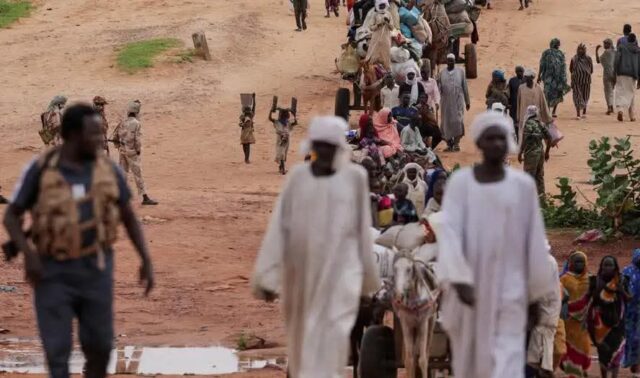
Over 36,000 Flee As Sudan Conflict Moves East From Darfur


Tens of thousands of civilians have fled towns in Sudan’s Kordofan region, east of Darfur, as fighting between the army and the paramilitary Rapid Support Forces (RSF) intensifies, the United Nations reported.

According to the UN, more than 36,825 people left five localities in North Kordofan between October 26 and 31, following the RSF’s takeover of El-Fasher just over a week earlier.

Residents have also reported a marked increase in both RSF and army activity across towns and villages in the area.

North Kordofan, a strategic corridor linking Darfur to the Khartoum-Riverine heartland, has become the latest flashpoint in Sudan’s brutal conflict, which has raged since April 2023.

Both forces are now vying for El-Obeid, the state capital, which serves as a major logistics hub and hosts an airport.

“Today, all our forces have converged on the Bara front,” an RSF member said in a video last Sunday, referring to a city north of El-Obeid.

The RSF had claimed control of Bara the previous week.

Local residents described the growing danger on the ground. Suleiman Babiker, who lives in Um Smeima west of El-Obeid, said the number of RSF vehicles increased significantly after El-Fasher fell.

“We stopped going to our farms, afraid of clashes,” he told AFP.

Another resident, who spoke on condition of anonymity, reported a rise in army vehicles and weapons west and south of El-Obeid over the past two weeks.

Martha Pobee, assistant UN secretary-general for Africa, warned last week of “large-scale atrocities” and “ethnically motivated reprisals” by RSF forces in Bara, echoing patterns seen in Darfur, where fighters have been accused of mass killings, sexual violence, and abductions against non-Arab communities.

The conflict in Sudan has already killed tens of thousands, displaced nearly 12 million people, and created what the UN calls the world’s largest humanitarian crisis in terms of displacement and hunger.

Google search engine

How Gov Mbah Is Restoring The Ancient Trademark Of Enugu – John Agbo


In my last write-up titled “Re- With Enugu’s Fall, All Eyes on Umuahia” which was a rejoinder to an article bearing such a headline written by one Vitus Ozoke, I hinted that Enugu State played many pioneering roles in the development of what was known as colonial Nigeria, and both pre- and post-independence Nigeria.

The piece was an effort to establish that Enugu State had been an important city from the beginning, contrary to what some people thought it was.

Today we are going to further discuss such lofty heights upon which Enugu kicked off its adventure, how it was sustained or declined, as the case may be, by the previous administrations, and the effort towards rebuilding it by Governor Barr. Dr. Peter Ndubuisi Mbah.

Yes, Gov. Mbah is making palpably frantic efforts to return Enugu to a status quite synchronous to the traditional lofty height it always maintained in the distant past.

Quoting from the aforementioned work, “It is a well-documented history that the city called Enugu was once the administrative capital of the whole of Southern Nigeria.

Between 1929 and 1939, people from Ibadan, Abeokuta, Akure, Calaba, and indeed all southern Nigeria states of today did come to Enugu to process documents for landed properties purchased in their respective domains.

Apart from this, it is significant to recall that Enugu’s historical significance and development had gone far before the rise of Igbo political consciousness and the artificial creation of the defunct Eastern region of Nigeria.

“By 1911/1912, Enugu had been connected to the rest of the world by a functional railway line from Enugu all the way to Port Harcourt, from where Enugu’s coal resources were shipped to the rest of the world. This was a time when most of the European cities of today did not yet have a rail system”.

In furtherance of the above, Enugu’s spectacular position in the committee of towns and cities in Africa and the rest of the world was boosted by the discovery of ‘Coal’ by a British mining Engineer, Albert Kitson in 1909.

And by 1912, the colonial Government had built a brand new port city known as Port Harcourt solely for the transportation of Enugu’s natural resources to European countries.

It is not debatable at this junction to say that without Enugu, there would have been no city known as Port Harcourt today.

Of course, the significance later attached to the city of Port Harcourt since the discovery of crude oil to date should be credited to the trailblazing role of Enugu State in fairness.

By 1917, Enugu was officially declared a modern township by the British government, second only to cities like Lagos.

Thus, Enugu saw the first of so many aspects of development before most of the other cities of Nigeria and Africa.

In those days, it was common to see people move into Enugu in search of greener pastures. The coal mining industry took the lead in absorbing such an influx of people from different parts of Nigeria.

It was an all-around land of opportunities for everyone. While neighboring cities like Onitsha and Aba boasted of their commercial prowess, Enugu took the lead in providing high-skilled job opportunities to the educated members of the public through the industrial revolution that took place in the city.

It is no wonder the choice of Enugu came first when it was time to site government institutions preparatory to Nigeria’s independence.

By 1938, Enugu had already had an Airport known as ‘Seawell Airport_, but now called _’Akanuibiam International Airport’._ Enugu State hosts the first autonomous university in Nigeria, known as the _University of Nigeria, Nsukka, UNN_ established in 1955.

And in fact, the university’s faculty of law in its Enugu Campus, was the first faculty of law in Nigeria.

And for so many decades after its establishment, the _University of Nigeria, Enugu Campus_ was the only campus of a university that hosts entirely professional courses in the whole of South of the Sahara.

Enugu has so many firsts and indeed established itself in the annals of history as a city that led while others followed.

The first State University in Nigeria was built in Enugu in 1980. It was then known as _Anambra State University of Technology, ANATECH,_ but is now called _Enugu State University of Science and Technology, ESUT_

Regrettably, Enugu faced downward trends in many indices of development for some decades now until the coming of the current Governor Barr. Peter Ndubuisi Mbah.

For instance, while our sister states of Anambra and Abia maintained and even upgraded their status as commercial nerve centres in the entire West African subregion, Enugu virtually lagged in its area of strength- industrial evolution.

But with the current administration in the state, numerous happenings inspired by the executive governor, Peter Mbah, indicate the state is back on track.

Peter Mbah seems to have taken his time to notice the palpable downward trend and has initiated projects that will not just leapfrog Enugu to catch up with the rest of the world in terms of innovative technology, artificial intelligence etc, the state has initiated such projects such as improved and revamped learning environment, modern healthcare services, four global tourism sites, 4 International Hotels currently ongoing, world class _Enugu International Hospital_ currently on going, _International Conference Center_ already completed, 260 Smart Green School, 260 type 2 Primary health care centres, brand new Enugu Smart City, and numerous other projects scattered across all corners of the state all in a bid to restore the former glory of the state.

One significant aspect of all these is that, with Mbah, Enugu is not just trying to catch up and recover all the years lost to stagnation; the state is already poised to overtake and set a precedent for new indicators of development.

For instance, the _Enugu International Hospital,_ which is rapidly under construction, is almost the first of its kind in Nigeria. In fact, it is only rivaled by the Abuja-based _African Medical Centre of Excellence._ Do we talk of the upcoming _Zip Line_ in Okpatu, Udi LGA? It will be the first of its kind in the whole of West Africa and the longest Zip Line in Africa, measuring up to 300m.

Even the ‘ _Cross of Hope’_ that will be sited at Awhum for religious tourism will be the first of its kind in Nigeria and beyond.

Already, the _Smart Green School_ model has never been seen anywhere in Nigeria.

In fact, it’s modelled to imitate the Chinese education model, which equips kids with the technical education needed to champion discovery and innovations in the modern world of _Artificial Intelligence AI_. By the coming year, 2026, Enugu will be hosting the subregional _Economic Community of West African States, ECOWAS,_ for the first time in history.

The _ECOWAS_ summit has always taken place in cities like Abuja and Lagos whenever it is The turn of Nigeria to host it.

But today, Enugu under Peter Mbah has returned to the league of such important cities that set the pace while others struggle to catch up.

It is from the foregoing that we are adequately inclined to believe without any equivocation that our dear Governor, Peter Ndubuisi Mbah, has resurrected and restored the ancient trademark of Enugu State, which was hitherto punctured, blurred, erased, and abandoned by those who should guard and protect it in the recent past.

And we are convinced that just as was the case in the past, Enugu has already started witnessing the influx of people from all parts of the world even as it plans to host 300,000 visitors by 2026.

Agbo is an investigative reporter, writer, public affairs analyst, and political Commentator.

Google search engine

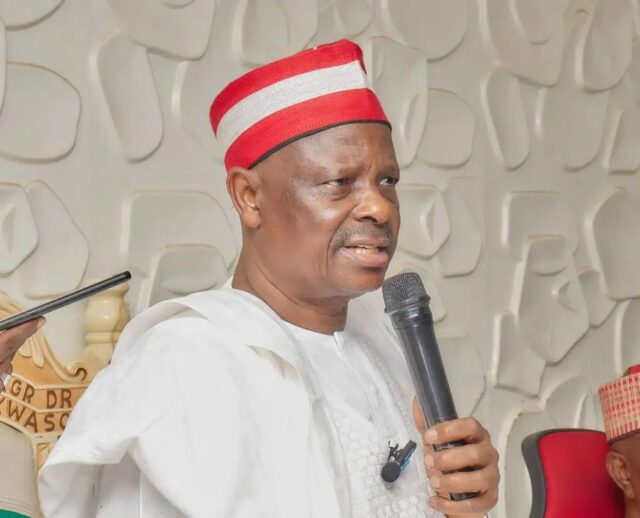
Kwankwaso Sends Strong Message To Trump Over Alleged Christian Genocide


Rabiu Kwankwaso, former governor of Kano State and 2023 presidential candidate of the New Nigeria Peoples Party (NNPP), has called on the United States to assist Nigeria with advanced technologies to combat insecurity, rather than threatening military action.

In a post on his X account on Sunday evening, Kwankwaso said, “The United States should assist Nigerian authorities with better cutting-edge technology to tackle these problems, rather than posing a threat that could further polarise our country.”

His remarks followed U.S. President Donald Trump’s declaration of Nigeria as a “country of particular concern” over alleged killings of Christians.

Trump, in a post on his Truth Social platform on Friday, claimed, “Christianity is facing an existential threat in Nigeria. Thousands of Christians are being killed. Radical Islamists are responsible for this mass slaughter.”

Trump later threatened potential military intervention if the Nigerian government failed to act, warning that US forces could enter Nigeria “guns-a-blazing” to eliminate the perpetrators.

Kwankwaso emphasized the importance of diplomacy, noting that insecurity in Nigeria affects all citizens, regardless of religion, ethnicity, or political affiliation.

“It is important to emphasise that our country is a sovereign nation whose people face different threats from outlaws across the country. The insecurity we face does not distinguish based on religious, ethnic, or political beliefs,” he wrote.

He further advised the Nigerian government to appoint special envoys to engage the U.S administration and ensure Nigeria’s interests are represented on the international stage. Kwankwaso also urged Nigerians to prioritize unity over division during this critical moment.

Meanwhile, President Bola Ahmed Tinubu’s administration has dismissed the claim of a Christian genocide, reaffirming Nigeria’s commitment to religious freedom.

In a statement, Tinubu said, “The characterisation of Nigeria as religiously intolerant does not reflect our national reality, nor does it recognise government efforts to safeguard freedom of religion and belief. Nigeria stands firmly as a democracy governed by constitutional guarantees of religious liberty.”

Google search engine

Ground Operation, Air Strikes Could Be Part Of US Attack In Nigeria – Trump


U.S President Donald Trump on Sunday reiterated his warning of potential military intervention in Nigeria, citing the killings of Christians in the country, even as the Nigerian presidency suggested diplomatic talks to address the issue.

Speaking to AFP aboard Air Force One, Trump was asked if U.S. forces could be deployed on the ground in Nigeria or if airstrikes were being considered.

He replied, “Could be, I mean, a lot of things, I envisage a lot of things,”

“They’re killing the Christians and killing them in very large numbers. We’re not going to allow that to happen.”

On Saturday, in a post on his Truth Social platform, Trump said he had requested the Pentagon to develop a potential plan of attack in Nigeria.

He warned that if the killings were not stopped, the United States might act, describing any action as “fast, vicious, and sweet, just like the terrorist thugs attack our CHERISHED Christians.”

Daniel Bwala, spokesman for Nigerian President Bola Ahmed Tinubu, told AFP that Nigeria welcomes U.S support in combating terrorism, provided it respects the country’s sovereignty.

He stressed that Trump’s post should not be taken literally, suggesting it could be a tactic to prompt a meeting between the two leaders.

“We know that Donald Trump has his own style of communication,” Bwala said.

He noted that any differences regarding whether terrorists target only Christians or people of all faiths in Nigeria could be resolved in a direct discussion between the presidents, either at the State House in Abuja or the White House in Washington.

Earlier, Trump had claimed that “thousands of Christians are being killed” in Nigeria and blamed radical Islamist groups for the attacks.

Nigerian authorities, however, have disputed the claim, stating that Christians are not disproportionately targeted and that the characterization of the country as religiously intolerant does not reflect reality.

President Tinubu echoed this position on social media Saturday, reaffirming Nigeria’s commitment to fighting terrorism while maintaining religious harmony.

Google search engine

MOST COMMENTED

- Advertisement -
Google search engine