Home Blog Page 199

U.S Military May Strike Islamist Militants In Nigeria Over Christian Killings, Trump Warns


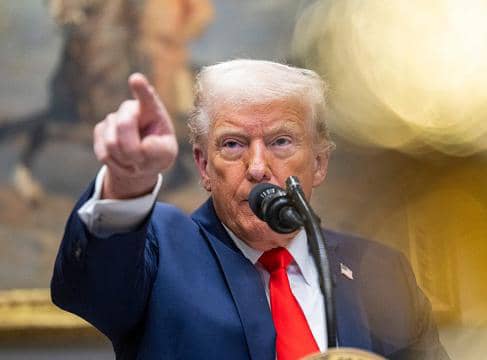
U.S President Donald Trump has warned that Washington may consider military intervention in Nigeria if the government fails to halt what he described as the “killing of Christians” by Islamist militants.

In a fiery post on his Truth Social platform, the former Republican president said he had instructed the Pentagon to begin drafting possible plans for action. The comments came a day after he claimed that Christianity was “facing an existential threat in Nigeria.”

“If the Nigerian Government continues to allow the killing of Christians, the United States will immediately suspend all aid and assistance to Nigeria,” Trump wrote.

“We may very well go into that now disgraced country, ‘guns-a-blazing,’ to wipe out the Islamic terrorists committing these horrible atrocities.”

He added: “I have directed our Department of War to prepare for possible action. If we strike, it will be fast, decisive, and powerful, just like the thugs who attack our cherished Christians.”

Trump concluded his post with a direct warning: “THE NIGERIAN GOVERNMENT BETTER MOVE FAST!”

Nigeria, Africa’s most populous nation, has been battling multiple security crises over the years. Experts note that violence in the country has claimed both Christian and Muslim lives, often rooted in complex ethnic, religious, and political tensions.

On Friday, Trump had earlier posted, without offering evidence, that “thousands of Christians are being killed” by “radical Islamists.”

While claims of anti-Christian persecution have circulated widely, analysts caution that Nigeria’s conflicts are multifaceted and not solely defined by religion.

The nation remains nearly evenly divided between a Muslim-majority north and a largely Christian south.

Google search engine

Police Arrest Masquerade Leader For Extortion, Public Disturbance


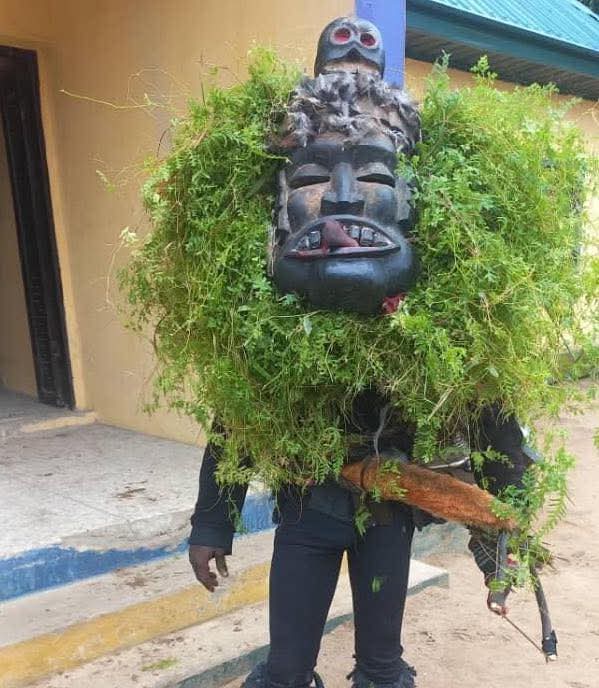
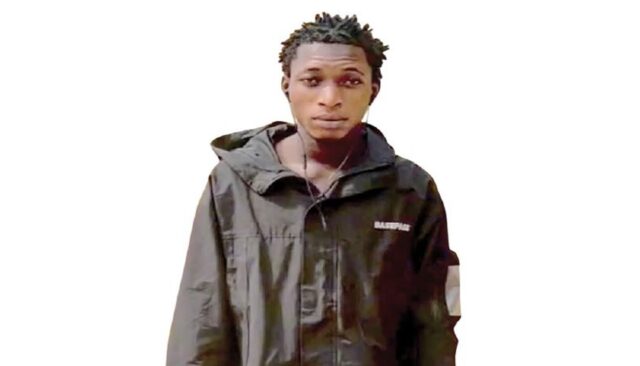
The Akwa Ibom State Police Command has arrested the leader of a masquerade group, identified as Uwem Umanah, over alleged criminal activities, including public disturbance, extortion, and illegal assembly.

A statement issued in Uyo on Saturday by the Command’s Public Relations Officer, DSP Timfon John, said the arrest followed a distress call from a concerned citizen, who reported that members of a masquerade group, known locally as Ekpo, were attacking residents, blocking a public highway, and extorting money from passersby.

According to the statement, police operatives swiftly responded to the call and arrested Umanah, 45, said to be the leader of the Ekpo masquerade in the village.

“The suspects were reportedly armed with spears, arrows, machetes, sticks, and other dangerous weapons, which they used to intimidate and assault members of the public, including National Youth Service Corps members,” the statement added.

Investigations revealed that Umanah had authorised members of his group to parade in masquerade costumes in public despite an existing ban on such activities in the state.

In a related operation, police also arrested one David Michael, 34, of Ikot Obong Edong village, who was found at Ukana Onuk village in full masquerade attire, allegedly preparing to invade the area.

The police said both suspects had been charged to court following the conclusion of investigations.

Commissioner of Police, CP Baba Mohammad Azare, reaffirmed the command’s commitment to maintaining public safety, stressing that law enforcement would not tolerate any acts of lawlessness or violence under the guise of cultural practices.

He urged residents to continue to provide useful information to the police to help prevent crime and ensure the safety of all communities in the state.

Google search engine

BREAKING: Fresh Crisis Hits PDP As NWC Suspends Anyanwu, Legal Adviser, Others


The National Working Committee (NWC) of the Peoples Democratic Party (PDP) has suspended four top national officers following a court ruling that stopped the party’s planned national convention.

Those affected include the National Secretary, Senator Samuel Anyanwu; National Legal Adviser, Kamaldeen Ajibade (SAN); Deputy Legal Adviser, Okechukwu Osuoha; and National Organising Secretary, Umaru Bature.

The PDP’s National Publicity Secretary, Debo Ologunagba, announced their suspension after an emergency NWC meeting held on Saturday at the party’s Legacy House office in Maitama, Abuja.

According to Ologunagba, the decision was taken in line with the provisions of the PDP constitution.

He said the affected officials have been suspended for one month and referred to the party’s Disciplinary Committee for further action.

The suspensions come amid heightened tension within the opposition party following conflicting court judgments over its forthcoming national convention.

Details shortly…

Google search engine

Protests, Violence As President Hassan Wins Tanzania’s Election In Landslide


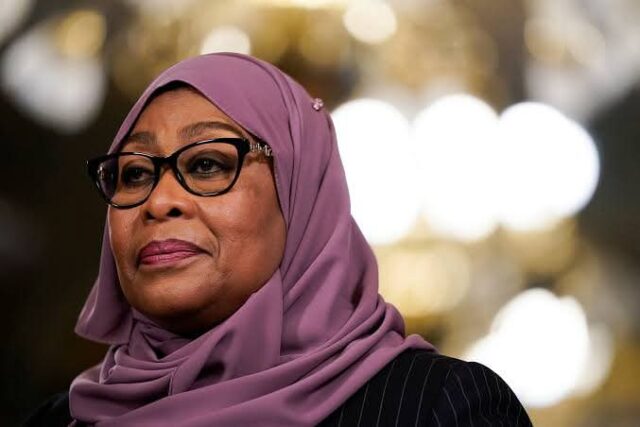
Tanzanian President Samia Suluhu Hassan has won a landslide re-election, according to official results announced Saturday, following an election marred by the imprisonment or disqualification of key opposition candidates and days of violent protests.

The electoral commission reported that Hassan received 97.66% of the vote, sweeping every constituency.

A swift swearing-in ceremony was scheduled for Saturday, state television confirmed.

The main opposition party, Chadema, claims that hundreds of people have been killed by security forces since protests erupted on election day last Wednesday.

Chadema was barred from participating in the elections, and its leader is facing treason charges.

Hassan first became president in 2021 after the sudden death of her predecessor, John Magufuli, and has since faced resistance from factions within the military and Magufuli loyalists.

Analysts say her decisive electoral win was intended to solidify her hold on power.

Human rights organizations have accused Hassan’s administration of overseeing a “wave of terror” in the lead-up to the vote, including high-profile abductions and crackdowns in the final days.

Despite a significant security presence, election day descended into chaos, with protesters tearing down posters, clashing with police, and attacking polling stations.

The government responded with an internet shutdown and a nationwide curfew.

A Chadema spokesperson told AFP that approximately 700 people have died, citing information collected from hospitals and clinics across the country.

A security source and a diplomat in Dar es Salaam confirmed that fatalities likely number in the hundreds.

President Hassan has not publicly commented on the unrest.

Her administration denies allegations of excessive force, but the internet blackout and strict lockdown measures have made independent reporting extremely difficult.

UN Secretary-General Antonio Guterres expressed deep concern over the situation, including reports of deaths and injuries during the demonstrations.

Public anger has largely been directed at Hassan’s son, Abdul Halim Hafidh Ameir, who is accused of playing a role in the crackdown.

While there have been unverified reports that some army units sided with protesters, army chief Jacob Mkunda publicly reaffirmed loyalty to Hassan, labeling protesters as “criminals.”

Foreign Minister Mahmoud Thabit Kombo stated Friday that the government has “no figures” on casualties, insisting that “currently, no excessive force has been used.”

Google search engine

Defections To APC Driven By Fear Of Losing 2027 Elections – Prof. Onuoha


A wave of political defections to the ruling All Progressives Congress (APC) is largely motivated by fear of losing the 2027 general elections and a desire to avoid anti-corruption scrutiny, according to Professor Jonah Onuoha of Taraba State University, Jalingo.

Onuoha, who is also Director of the Centre for American Studies at the University of Nigeria, Nsukka (UNN), described the defections as evidence that many Nigerian politicians prioritize personal interests over ideology.

“These politicians are seeking a platform where they can win in 2027 and escape scrutiny from agencies like the EFCC. Joining the ruling party is seen as a survival strategy, a way to protect their interests and escape accountability,” he said.

The political scientist expressed concern that the trend could further weaken the opposition Peoples Democratic Party (PDP).

“While the PDP faces internal challenges, dedicated members could resolve these issues before 2027.”

“However, the ongoing exodus to the APC will undoubtedly impact the party’s chances in presidential, governorship, and legislative elections,” Onuoha warned.

He cited the recent defection of Enugu State Governor Peter Mbah and the entire PDP structure in the state as a significant blow to the opposition.

Dr. Chinedu Ejezie, Senior Lecturer in Political Science at UNN, also criticized the reasoning behind the defections.

He argued that good governance and electoral success are not dependent on being in the ruling party.

“Some governors claim they join the APC to ‘connect to the centre,’ but all 36 states have continued receiving federal allocations since President Bola Tinubu took office in May 2023. There is no evidence of discrimination against opposition-led states,” he said.

Ejezie highlighted opposition governors like Alex Otti of Abia State (Labour Party), Charles Soludo of Anambra State (APGA), and Seyi Makinde of Oyo State (PDP) as examples of leaders performing well without switching to the ruling party.

“Even some APC governors are struggling, showing that political alignment with the centre does not guarantee good governance.”

“What truly matters is effective management of resources and judicious use of federal allocations,” he concluded.

Google search engine

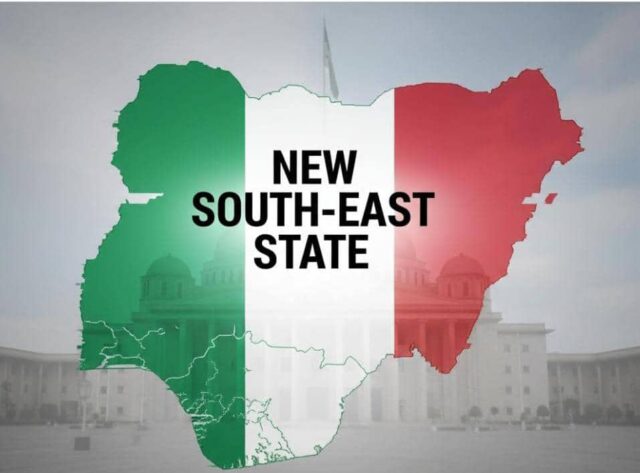
How Location, Name, Politics Could Stall New State Creation In South East


Following the National Assembly’s Joint Committee on Constitution Review approval for a new state in the Southeast, questions are emerging over its feasibility, location, and name.

The Southeast, currently the region with the fewest states, only five, has long agitated for equal representation and resources.

Since Ebonyi State’s creation in 1996 under military rule, Southeast communities have consistently pressed for more states to match other regions in resource allocation.

The National Assembly’s move, if ratified, would increase the region’s states from five to six, aligning it with regions like South-South, South-West, and North-Central.

The proposal has reignited demands for several new states:

Adada State: From Enugu North, strongly supported by community leaders and recognized in past constitutional recommendations.

Aba State: To be carved from Abia’s Ngwa axis.

Njaba, Orashi, and Etiti States: Proposed from various parts of Imo, Abia, Ebonyi, and Anambra.

Anim State: Covering parts of Anambra, Imo, and Rivers.

Anioma State: From Delta and Anambra, seeking to unify Igbo communities separated by state boundaries.

Experts warn that internal disagreements among Southeast communities, combined with political and constitutional hurdles, could slow or block the process.

Lawyer James Oko explained that creating a state requires Submission of a bill to the National Assembly, Approval by two-thirds of the House of Representatives and Senate members representing the affected areas, Presidential assent as well as Ratification by at least 24 state assemblies and a local referendum.

Civil Liberties Organisation executive, Ibuchukwu Ezike added that ethnic, political, and personal interests complicate the process, with no single agitating group willing to compromise on their proposal.

Additionally, political realities may affect the initiative.

The Southeast’s support is key in upcoming elections, and some analysts view the National Assembly’s move as a potential political strategy rather than purely a response to regional demands.

Supporters like APC founding member, Osita Okechukwu, argue a new state could promote national cohesion and heal historical marginalization.

Skeptics like elder statesman Chekwas Okorie and Rev. Okechukwu Obioha warn that constitutional obstacles and political motives may hinder implementation, noting that past civilian governments have struggled to create new states.

Despite hurdles, the current political landscape, with the APC controlling 24 of 36 states and holding a two-thirds Senate majority, could increase the chances of approval.

However, questions around the exact location, name and community consensus remain critical to whether the Southeast will finally gain its sixth state.

Google search engine

Confusion In PDP As Two Abuja Courts Deliver Conflicting Judgments On Convention


Members of the Peoples Democratic Party (PDP) have been thrown into confusion after two Federal High Court rulings in Abuja issued opposing directives regarding the party’s planned national convention.

In one case, Justice James Omotosho restrained the Independent National Electoral Commission (INEC) from recognising the outcome of the convention.

The court held that the PDP had not complied with legal requirements, noting that congresses were not held in some states, notices of meetings were improperly signed, and the mandatory 21-day notification to INEC was not observed.

The judge warned that the convention could not proceed legally and advised the party to meet all legal obligations before conducting elections.

The suit, marked FHC/ABJ/CS/2120/2025, was filed by three PDP members; Austin Nwachukwu (Imo PDP chairman), Amah Abraham Nnanna (Abia PDP chairman), and Turnah Alabh George (PDP Secretary, South-South)  through their lawyer, Joseph Daudu (SAN).

The nine defendants included INEC, PDP, key party officials, and NWC and NEC members.

Daudu argued that the case was not merely an internal party matter but a constitutional requirement under the 1999 Constitution, the Electoral Act 2022, and the PDP Constitution.

He stressed that INEC is mandated to monitor political party congresses before any convention is valid.

Meanwhile, in a separate case, former Jigawa State Governor Sule Lamido filed a motion seeking to restrain the PDP from holding its national convention.

Justice Lifu ordered the PDP and INEC to appear in court to show cause why Lamido’s requested interim orders should not be granted.

The suit, filed as FHC/ABJ/CS/2299/2025, gives the defendants 72 hours to respond, with the next hearing scheduled for November 6.

Lamido seeks court orders barring the PDP from conducting the convention and preventing INEC from supervising, monitoring, or recognising it.

Representing the PDP, senior lawyers Paul Erokoro (SAN) and Eyitayo Jegede (SAN) argued that the courts should not interfere in the party’s internal affairs, emphasizing that matters relating to conventions and congresses fall within the party’s jurisdiction.

The conflicting court decisions have left PDP members uncertain about the legality of proceeding with the convention scheduled for November 15–16 in Ibadan.

Google search engine

My Father Murdered My Mother, I’m Fine If He’s killed Too – Son


Twenty-four-year-old Lagos resident, Paul Odu, tells BIODUN BUSARI how his mother, Temitope, died a day after his father allegedly subjected her to severe physical and verbal assault shortly after she returned from her call-to-bar ceremony in Abuja What led to your mum’s death?

My father beat my mum a few days after she returned from Abuja, where she had gone for her call-to-bar ceremony. While she was away, he also beat me up.

He called my mum all sorts of despicable names, including a prostitute and worse. He kept cursing her out.

I confronted him, telling him to stop insulting her, and that angered him even more, so he turned on me.

He started beating me with plywood, chasing me all over the house. I called my mum on the phone while he was attacking me. She told me to find a way to escape, but I couldn’t because he had locked the door.

When I managed to run into my room, he broke down the door and continued the assault. This happened on Monday, October 13.

I cried for help, but the neighbours didn’t intervene because they already knew him as a violent man and habitual wife-beater.

When my mother returned from Abuja, he immediately started insulting her, accusing her of sleeping with men during her stay in Abuja. She ignored him.

Later that day, my elder brother came to visit. Before he arrived, my father had already called him, saying, “Come and carry your mother now if you don’t want her to die.”

Where does your brother live? He lives close by, in Banana Estate, while we live in Liberty Estate, Ikorodu. Are you the only child living with your parents? Yes. I’m the last of three male children.

My two elder brothers are married. How long did your mum stay in Abuja? She stayed for about a month. My father didn’t want her to travel at all. He was uncomfortable with her going to Abuja in the first place.

But he didn’t beat her the day she returned? No, he beat her the next day.

He deliberately took some of her belongings into his room, probably to provoke her and start an argument. When my mum went to collect them, he started cursing and insulting her again.

At first, he refused to open the door, but when she asked, “Why can’t I access any room in my own house?” he opened it and began hitting her with his hands.

He even struck her in the eye. I rushed to the nearest police station to report the assault.

When the police invited him, he denied everything and was released. Afterwards, he went around the neighbourhood telling some cult boys that I had beaten him.

Later that day, those boys confronted me, asking why I had assaulted my father. It didn’t surprise me because he had often told his brother that I “beat” him whenever I tried to defend my mum from his abuse.

Why did he tell those guys you beat him? He said that to paint me as the aggressor.

In reality, I was only trying to protect my mum from his attacks. Even the guys he told knew the truth; they were well aware that he had been beating my mother for years.

How did your mum die? She died on a Wednesday. She had complained of body pain and called her friend, a nurse, who came to treat her at home.

The nurse promised to return the next day, but that was the day my mother passed away.

That Wednesday morning, she called me into her room and said the beating from the previous day had left her in severe pain.

I asked how she felt, and she told me to get her some pap and warm the rice she had cooked the previous day.

She also asked me to make zobo for her because she had high blood sugar levels; she was diabetic.

Those were the last things she asked me to do. Before then, she told me to go back to my room, saying she wasn’t ready to eat yet. I went to sleep for about an hour.

When I woke up from a disturbing dream, I rushed to her room and found her unresponsive. I touched her and realised she was cold.

Where was your dad when this happened? He was at home the entire time. Everything happened early in the morning, around 7 am. Earlier, my mum had called a friend to send scent leaves for soup.

The woman sent her son to deliver them, and it was my father who opened the door and collected the leaves. That must have been around the time my mum died.

When I discovered her lifeless body, I knocked on my father’s door and told him, but he neither responded nor opened the door.

I ran out to call for help. My mum’s friend followed me home, checked her, and confirmed she was dead.

Temitope Odu You earlier mentioned that your dad had the habit of beating your mum. Yes. Anytime my mother went out, he would get angry and accuse her of sleeping around.

That had always been his excuse. There was a time my friend came to our house to charge his phone, and my father accused him of having an affair with my mother.

That was the worst of it all. I was furious that my father could think that way, especially since my friend was only about 26 or 27 years old.

He even went as far as reporting to the police that my friend was sleeping with my mum, and the police began looking for the boy at that time. When did this happen? It was last year, 2024.

There was a time when my dad fasted and prayed that my mum should die.

He didn’t eat for three days but prayed aloud every morning that his wife should die. What was your mum’s reaction to this?

She wouldn’t say anything. She would just tell him that what he was doing was not good and that she didn’t offend him. Who owns the house you live in? My mum built the house. What did your mum do for a living before becoming a lawyer?

She was a civil servant. She worked with the Ministry of Agriculture. Which school did your mum attend to study law? She studied law at the National Open University.

Everybody knew about this among family and friends. Did your dad support her when she was going to school? Support? He never supported my mum in anything.

That had been the problem in the family. What does your dad do for a living? He is a printer. Did he go to school? I don’t think so. There has never been any discussion about that in the family. Whenever your father maltreated your mother, what did the family or neighbours do to intervene?

No effort had yielded any result. When we reported to the police station, they would come to settle the matter amicably between them, and everybody would move on.

My dad was notorious for denying that he assaulted my mum. My dad’s family would support him.

He would report to my uncle that my brothers and I were beating him to support our mother. The challenging issue about this is that my mum’s siblings don’t live nearby. Where is your dad now? He is in police detention at Yaba.

He was first arrested by the police station close to our area. I was even surprised to see him at home the next morning after my mother’s death.

He came home, saying the police didn’t have evidence that he killed his wife.

He said it was a false allegation. My mum’s family ensured he was re-arrested a few days after he was released. My maternal aunt in the United States called her brother in Ijebu-Mushin, Ogun State, and reported the case at another police station.

So, they came to arrest my dad. What do you want the government to do to get justice for your late mum? I can not decide for the government, but whatever punishment is meted out on him is fine with me.

He should be punished. What if the government condemns or jails him? Whatever penalty the court pronounces on him is okay with me. What is the family’s decision on this matter?

My family’s decision will align with the government’s ruling on the case. My mum’s elder sister in the US took up the case, and so the family wants justice.

I regret not telling my sister to leave her abusive marriage – Brother

The deceased’s elder brother, Mr Gbeyi Olorunfunmi, says he regrets not advising his sister to leave her husband after all efforts to restore peace between the couple failed Are you aware that your late sister’s husband was abusive?

Felicia, my younger sister, often complained about the domestic violence she faced in her husband’s home. He beat her several times. We tried to intervene, but he never listened.

What types of interventions did your family make? I spoke to him many times, as an elder brother, advising him that it was wrong for a man to abuse his wife.

But he never changed. One thing I deeply regret now is not urging my sister to leave her matrimonial home.

It was difficult to say those words then, but looking back, if I had known it would lead to her death, I would have told her to leave. Was there any misunderstanding before their marriage?

No. There was no conflict between them or between our families before they got married. Are you taking legal action? Yes. He is currently in detention at the State Criminal Investigation Department, Panti, Lagos.

The family intends to charge him to court. Do you know if your brother-in-law drinks or smokes? I can’t say for sure. It’s their last child, Paul, who lives with them.

He can answer that better. How well did your family know him before the marriage? Honestly, I didn’t know him before they got married. That was a long time ago.

I didn’t attend their wedding because I was unwell at the time. My sister’s husband is from Delta State, while my sister was from Ijebu, Ogun State.

Google search engine

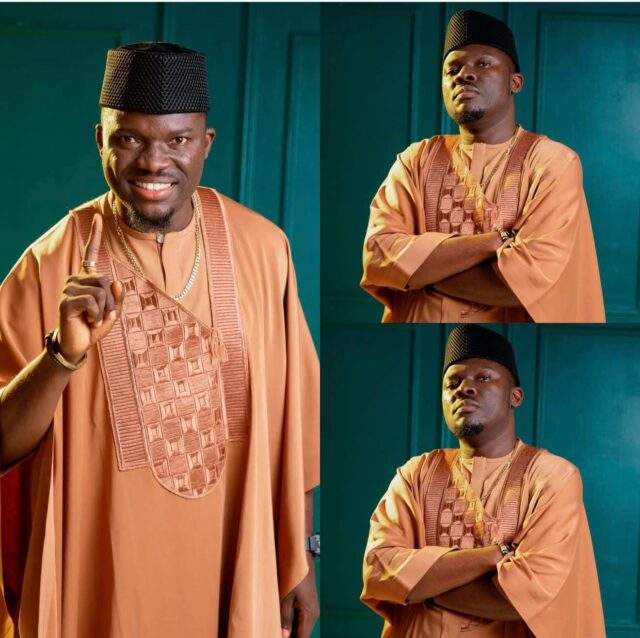
I Use Comedy To Expose What Government Hides – Content Creator, Gov Amuneke


Kevin Arua, popularly known for his comic persona Governor Amuneke, has amassed 433,000 followers on Instagram.

In this interview, he shares his journey into content creation, the inspiration behind his work, and how he uses comedy to highlight social issues.

Arua attended Christ the King Primary School in Ovoko, Enugu State, and later Ovoko Boys Secondary School, completing his secondary education at UNICEF Secondary School.

He earned a National Diploma in Science Laboratory Technology and a Higher National Diploma in Physics Electronics from the Institute of Management and Technology, Enugu.

Early Interests and Start in Social Media
Arua says he was always drawn to science, invention, and performance.

In secondary school, he enjoyed acting and entertaining at school assemblies, later becoming Director of Socials at IMT.

During his studies, he sold his paintings on the streets to support himself.

After NYSC in Ibadan, he joined a cinematography and video editing programme and secured his first media job in Lagos.

There, he honed skills in camerawork, editing, and scriptwriting, while creating the comedy series Oga Landlord on YouTube.

When company funding ended, he focused on his own projects, balancing weekend shoots with a 9–5 job.

The Birth of Governor Amuneke
Arua’s first major comic character was Chief Amuneke, created in 2018–2019.

He initially grew his Facebook page before transitioning to Instagram.

A viral repost by Tunde Ednut marked a turning point, convincing him to pursue content creation seriously.

During the COVID-19 pandemic, he fully committed to online content, monetizing his platforms by 2021.

Arua describes his motivation as partly divine. A personal experience at his wedding in Nsukka, where friends couldn’t attend due to insecurity, made him rethink his platform’s purpose.

He realized comedy could not only entertain but also raise awareness.

“I started creating skits where leaders downplay serious issues, like confusing citizens for ‘senior citizens’, to mirror real situations in Nigeria and Africa,” he explains.

His rebranded persona, Governor Amuneke, uses humor to highlight leadership failures, corruption, and governance challenges.

Audience Engagement and Challenges
Political and governance-related content resonates most with his audience.

He says he has faced minimal challenges thanks to his self-taught production skills and supportive team. Collaboration, he adds, is crucial for reaching new audiences and amplifying messages.

“My goal is to open people’s eyes to what’s really happening in government; to act as a kind of watchdog,” Arua says.

He emphasizes that his content highlights accountability, empathy, and real-life issues while keeping humor at the forefront.

Family, Recognition, and Career Growth
Arua’s family supports his career, appreciating his responsible approach to comedy.

He finds the greatest reward in audience feedback rather than monetary gain.

Looking ahead, he hopes to expand internationally, producing films for platforms like Netflix and collaborating with global creators.

“Start with what you have and stay original. Don’t wait for perfection. Build relationships, maintain a clean reputation, and remain consistent.”

Outside of content creation, Arua enjoys spending time with family and friends, gaming, and brainstorming ideas. Despite growing popularity, he maintains a grounded approach, valuing authenticity over fame.

Google search engine

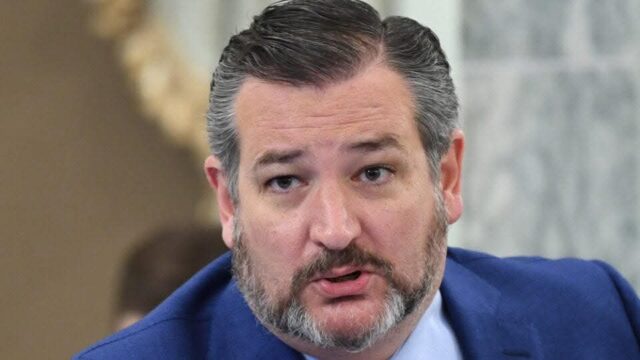
US Senator Cruz Applauds Trump For Labeling Nigeria ‘Country Of Particular Concern’


United States Senator Ted Cruz has praised former President Donald Trump for re-designating Nigeria as a “Country of Particular Concern” (CPC), commending the move as a decisive step toward confronting what he described as the ongoing persecution of Christians in the West African nation.

Trump had earlier announced the decision on his Truth Social platform, claiming that Christianity faced an “existential threat” in Nigeria due to widespread attacks allegedly carried out by radical Islamist groups.

“Thousands of Christians are being killed,” Trump wrote. “Radical Islamists are responsible for this mass slaughter. I am hereby making Nigeria a ‘country of particular concern.’ The United States cannot stand by while such atrocities happen. We will stand ready and able to protect Christians around the world.”

Reacting through a statement on his official website, Senator Cruz lauded Trump’s action, saying it reflected a commitment to religious freedom and human rights.

“I am deeply gratified to President Trump for making this determination,” Cruz said.

“I have fought for years to counter the slaughter and persecution of Christians in Nigeria, and this year introduced legislation that will lock in the designation made today.”

The Texas senator emphasized that the re-designation marked a crucial step toward holding Nigerian officials accountable for enabling or ignoring attacks on religious minorities.

“Today’s designation is a critical step in holding accountable and changing the behaviour of Nigerian officials who have created or tolerated an environment conducive to such outrages,” he added.

Cruz also revealed that his proposed Nigeria Religious Freedom Accountability Act of 2025 would impose targeted sanctions on individuals responsible for enforcing blasphemy or sharia-based laws that violate basic human rights.

“I am committed to working with the administration and my colleagues to advance my bill and implement these necessary measures,” he said.

“President Trump’s decision is a great one, and I thank him for his strong leadership.”

In response, Nigeria’s Minister of Information and National Orientation, Mohammed Idris, rejected Trump’s claims and Cruz’s assertions, describing them as “misleading and based on inaccurate data.”

Speaking in an interview with CNN on Tuesday, Idris maintained that Nigeria remains committed to religious freedom, human rights, and the rule of law, stressing that violence in the country is not driven by religion.

“Some of the claims made by US officials are based on faulty assumptions that victims of violence are largely Christians,” Idris said.

“Yes, Christians have been attacked, but so have Muslims, these criminals target everyone, especially in the northern parts of the country.”

The minister warned that such narratives could embolden criminal and extremist groups seeking to inflame religious tension between Christians and Muslims.

“Promoting these inaccurate stories only fuels division and strengthens those who want to destabilize Nigeria,” Idris added.

Senator Cruz’s proposed legislation, the Nigeria Religious Freedom Accountability Act, seeks to formalize the CPC designation and compel US diplomatic action against Nigerian officials accused of facilitating jihadist violence or enforcing blasphemy laws.

According to Cruz, the bill aims to protect Christians and other religious minorities from persecution and ensure that perpetrators face tangible consequences.

“It is long past time to impose real costs on the Nigerian officials who enable these abuses,” he said.

“My bill uses both new and existing tools to do exactly that, and I urge my colleagues to advance it quickly.”

The move, however, has been met with mixed reactions among international observers, with some viewing it as a necessary human rights measure and others criticizing it as politically motivated and disconnected from Nigeria’s complex security situation.

Google search engine

MOST COMMENTED

- Advertisement -
Google search engine