Home Blog Page 20

APC Writes INEC, Demands Enforcement Of Supreme Court Ruling On Party Membership Registers
The All Progressives Congress (APC) has called on the Independent National Electoral Commission (INEC) to enforce a Supreme Court judgment mandating political parties to use duly submitted membership registers for primaries, congresses and conventions ahead of the 2027 general elections.

The ruling party made the demand in a letter dated October 9, 2026, addressed to the INEC Chairman and jointly signed by its National Chairman, Prof. Nentawe Yilwatda, and National Secretary, Senator Ajibola Basiru.

The party’s request followed a Supreme Court judgment delivered on September 24, 2026, in INEC v. Zenith Labour Party, Suit No. SC/CV/495/2026, which upheld Section 77 of the Electoral Act 2026 and overturned an earlier Court of Appeal decision that had invalidated parts of the provision.

In the letter, the APC urged INEC to ascertain whether political parties had complied with the statutory requirement to submit their digital membership registers within the stipulated timeframe and apply the appropriate sanctions against defaulters.

The party cited Section 77(4) of the Electoral Act 2026, which requires political parties to submit their membership registers to INEC at least 21 days before their scheduled primaries, congresses or conventions.

It also referenced Section 77(5), which restricts eligibility to vote or be voted for in such internal elections to members whose names appear in the submitted register.

Similarly, Section 77(6) prohibits parties from using any membership register other than the one officially submitted to the electoral commission.

According to the APC, the Supreme Court’s interpretation established that compliance with these provisions was mandatory and not subject to the discretion of party officials.

The party further argued that Section 77(7) could prevent a political party that failed to submit its digital membership register within the prescribed period from fielding candidates in the general election, where the statutory conditions for that consequence were met.

It maintained that the provisions were designed to strengthen internal democracy, promote transparency and ensure that party primaries and other internal electoral processes could be verified.

The APC also invoked Section 228(a) of the 1999 Constitution, which empowers the National Assembly to enact laws prescribing guidelines for ensuring internal democracy within political parties.

Citing the Supreme Court’s reliance on Ardo v. Nyako (2014) 10 NWLR (Pt. 1416) 591, the party argued that although political parties retain the authority to nominate candidates, the process must comply with applicable legal requirements rather than be left entirely to the discretion of party officials.

The ruling party further relied on Section 287(1) of the Constitution, which requires the enforcement of Supreme Court decisions throughout the country.

It argued that INEC had a particular obligation to implement the judgment because the commission was a party to the case.

Consequently, the APC asked the electoral body to verify compliance by all political parties, enforce the use of officially submitted membership registers and apply the penalties prescribed by law against parties found to have breached the requirements.

It also urged INEC to prevent political parties from substituting their submitted registers with alternative records or recognising members and candidates who did not satisfy the statutory eligibility requirements.

The party warned that failure to enforce the provisions could undermine internal party democracy, electoral transparency and respect for the rule of law.

“Compliance with Section 77 of the Electoral Act 2026 is not a matter of discretion but a statutory obligation whose interpretation has been authoritatively addressed by the Supreme Court,” the APC said.

It urged INEC to act promptly and decisively in implementing the judgment as political parties intensify preparations for the 2027 general elections.

Google search engine

Trump Rules Out Fresh Iran Strikes Before US Midterm Elections

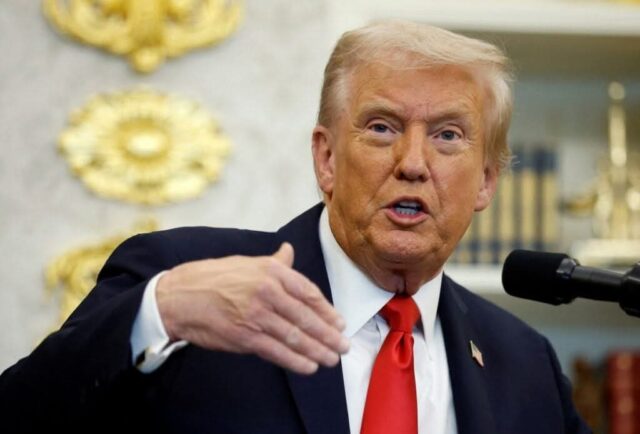
US President Donald Trump has ruled out launching fresh military strikes against Iran before the November 3 midterm elections, citing what he described as productive discussions between Washington and Tehran.

Trump made the announcement on Thursday through his Truth Social platform amid rising global oil prices and reports that the White House had asked the Pentagon to prepare options for potential attacks on Iranian targets.

“While Iran is in very bad condition, both Economically and Militarily, and while the Blockade will remain in full force and effect…we will not be attacking Iran at any time prior to the Midterm Elections,” Trump wrote.

He added that the United States was holding “productive discussions with the Islamic Republic of Iran.”

The announcement came after reports by The Atlantic and The New York Times indicated that the US military was considering possible strike options, although the latter noted Trump’s uncertainty over the plans.

Oil prices have climbed amid concerns about a possible escalation of the conflict, persistent tensions in the Strait of Hormuz and hostilities involving Yemen’s Iran-backed Houthi rebels and Saudi Arabia.

Brent crude, the international oil benchmark, rose to $105.88 per barrel on Thursday before easing to $104.28.

The surge has added to concerns over fuel costs in the United States, where voters have expressed dissatisfaction with rising petrol prices following US-Israeli strikes against Iran on February 28.

Meanwhile, Russian President Vladimir Putin has pledged to do everything within Moscow’s power to help end the Middle East conflict.

Putin made the commitment on Thursday during a meeting with Iranian President Masoud Pezeshkian in Turkmenistan, ahead of a summit of the Commonwealth of Independent States scheduled to begin on Friday.

“We are ready to do everything that is in our power to contribute to the settlement of this situation,” Putin said, according to Russian media reports.

He also said Iran had made genuine efforts to bring the conflict to an end.

Russia and Iran have strengthened their diplomatic and military ties since Moscow launched its invasion of Ukraine in February 2022.

However, Pezeshkian expressed doubts about Washington’s commitment to negotiations, accusing the United States of repeatedly attacking Iran during periods of dialogue.

“We are engaged in dialogue, but every time we negotiate with the United States, they attack again,” Iranian state media quoted him as saying.

The Iranian president said Tehran wanted a final framework for ending the war but warned that a resolution would remain elusive if Washington continued to impose its policies unilaterally.

Midterm Elections Raise Political Stakes
Trump’s announcement comes as the November 3 midterm elections approach, with his Republican Party facing the possibility of losing control of Congress.

Although the president is not personally on the ballot, he has embarked on a series of campaign rallies aimed at protecting his party’s congressional majority.

Trump has warned that Democrats could pursue a third impeachment if they regain control of the House of Representatives, while the White House is reportedly preparing for investigations into alleged corruption and abuse of power.

The president also sought to clarify remarks he made at a rally earlier in the week concerning the possibility of Iranian attacks on Los Angeles and San Diego.

Blaming what he described as “fake and artificial news” for misrepresenting his comments, Trump argued that Americans should view a temporary rise in petrol prices as a small sacrifice compared with the potential consequences of Iran acquiring a nuclear weapon.

His latest statement appears aimed at easing fears of an imminent military escalation as the administration navigates both the conflict with Iran and mounting domestic political pressure.

Google search engine

Court Dismisses El-Rufai’s Suit Seeking To Stop EFCC, ICPC From Freezing Assets

A Federal High Court in Abuja has dismissed a suit filed by former Kaduna State Governor Nasir El-Rufai seeking to restrain the Independent Corrupt Practices and Other Related Offences Commission (ICPC) and other security agencies from freezing his bank accounts and interfering with his properties.

Justice Joyce Abdulmalik, who delivered the judgment on Thursday, held that the suit amounted to an abuse of court process, noting that El-Rufai had instituted a similar action before the Federal Capital Territory High Court.

The court also ruled that the suit was speculative and failed to disclose any reasonable cause of action against the Economic and Financial Crimes Commission (EFCC), the Department of State Services (DSS) and the Attorney-General of the Federation (AGF).

Consequently, the court struck out the names of the three respondents from the suit.

El-Rufai had approached the court in a suit dated February 23 and filed on February 24, 2026, seeking an interim injunction directing the respondents to maintain the status quo pending the determination of the matter.

The former governor argued that his severance benefits, which he received after completing his tenure between 2015 and 2023, could not reasonably be suspected to be proceeds of unlawful activities.

He also sought a declaration that properties acquired with the funds were lawfully obtained and belonged to him.

The suit named several bank accounts operated by El-Rufai with Zenith Bank, Guaranty Trust Bank and Access Bank, including naira and domiciliary accounts.

He further asked the court to restrain the respondents from applying for or executing interim or final forfeiture orders, freezing his accounts or seizing his properties without first establishing reasonable suspicion supported by credible evidence as required by law.

Citing Section 17(1) of the Advance Fee Fraud and Other Related Offences Act, 2006, and the Supreme Court decision in Melrose General Services Ltd v. EFCC, El-Rufai argued that he was entitled to the presumption of innocence and the protection of his fundamental rights.

He maintained that attempts to obtain forfeiture or freezing orders through ex-parte applications that concealed material facts would violate his constitutional right to fair hearing under Section 36(5) of the Constitution.

The former governor consequently sought a perpetual injunction preventing the respondents from freezing, attaching, seizing or forfeiting his assets and bank accounts.

He also demanded N1 billion in general, exemplary and aggravated damages, alleging that the threatened actions could cause psychological distress, anxiety and reputational damage.

Additionally, he sought N100 million as costs of the action, including legal fees and related expenses.

However, the ICPC challenged the suit through a preliminary objection filed by its counsel, Abdul Mohammed, a Senior Advocate of Nigeria, asking the court to dismiss the case for being incompetent and an abuse of court process.

The commission argued that El-Rufai’s arrest, the search of his residence and the investigation into his assets arose from a single, ongoing criminal investigation.

It accused the former governor of fragmenting his grievances by filing three related suits across two court hierarchies within 12 days, rather than consolidating his claims into one action.

According to the commission, El-Rufai had also filed suit No. FHC/ABJ/CS/345/2026 at the Federal High Court on February 20, 2026, challenging the search warrant and alleging violations of his fundamental rights.

It further identified suit No. FCT/HC/CV/950/2026, filed at the FCT High Court on March 3, 2026, in which the former governor challenged his remand order and raised issues relating to his fundamental rights.

The ICPC argued that the multiple suits sought overlapping monetary and injunctive reliefs against the same law enforcement agency, creating the risk of conflicting judgments.

The DSS, through its counsel, Ayodeji Adedipe, also a Senior Advocate of Nigeria, urged the court to strike out the suit for being incompetent and for failing to establish a reasonable cause of action against the service.

Similarly, the Attorney-General of the Federation, represented by the Director of Civil Litigation and Public Law, Maimuna Lami-Shiru, argued that the allegations in El-Rufai’s affidavit were speculative.

The AGF’s representative maintained that interim forfeiture orders were investigative measures and did not amount to final forfeiture or automatically violate the former governor’s rights.

She further argued that law enforcement agencies were legally empowered to approach courts for forfeiture orders in the course of their investigations.

The respondents urged the court to dismiss the suit, citing the related proceedings already instituted by El-Rufai before other courts.

In her judgment, Justice Abdulmalik agreed with the respondents that the suit constituted an abuse of court process because of the similar action pending before the FCT High Court.

The judge also held that courts could not be used to prevent law enforcement agencies from carrying out their statutory responsibilities.

Google search engine

2027: Only Mad People Will Vote For Tinubu – Amaechi

Former Minister of Transportation and African Democratic Congress (ADC) vice-presidential candidate, Rotimi Amaechi, has urged Nigerians to reject President Bola Tinubu in the 2027 general election, declaring that anyone who votes for the president would be acting irrationally.

Amaechi made the remarks on Thursday during a town hall meeting in Edo State, where he called on residents to support the ADC and oppose Tinubu’s re-election bid.

The former Rivers State governor, who criticised the president’s administration, used strong language to challenge supporters of the All Progressives Congress (APC) ahead of the next presidential election.

“They are going about saying, ‘Vote Tinubu! Vote Tinubu!’ Only thieves can vote for Tinubu,” Amaechi said.

He added that the 2027 election would reveal the number of Nigerians willing to support the president, insisting that Edo State should not vote for Tinubu if its residents wanted a change in government.

Amaechi also accused the Tinubu administration of prioritising projects allegedly driven by financial interests over initiatives that would directly address the country’s economic needs.

He particularly questioned the plan to develop another seaport in Ogun State, asking whether the volume of goods produced in the state justified the proposed investment in additional port infrastructure.

According to him, the project raised questions about the government’s priorities and whether the decision was motivated by the potential financial benefits associated with its construction.

“So, Tinubu just hates you. No, I’m not joking. If Tinubu does not hate you, why is he building another seaport? In Ogun, what are the goods we are producing?” he asked.

The ADC chieftain argued that Nigerians should examine the economic justification for major infrastructure projects rather than accept government decisions without scrutiny.

He also urged opposition supporters living outside the country or staying away from the electoral process to return home and participate in efforts to change the government through the ballot.

“If you want Tinubu to go, please go home. Go home. Go home,” he said.

On fuel pricing, Amaechi advocated a production-based subsidy model that would link government policy to crude oil supplied to domestic refineries.

He argued that the proposed arrangement would reduce petrol prices without requiring direct government expenditure on conventional fuel subsidies.

Under his proposal, crude oil would be sold to domestic refiners at a lower price than the prevailing international market rate, with the difference forming the basis of support for locally refined petroleum products.

Amaechi illustrated the proposal with an example in which crude oil sold internationally for N15,000 would be supplied to the Dangote Refinery at N10,000, leaving a N5,000 difference.

He said the arrangement would involve discussions between the government and domestic refiners, including modular refinery operators, to ensure that the benefit translated into lower fuel prices.

According to him, restricting the arrangement to refineries operating in Nigeria would encourage local refining and ensure that the benefits were tied to domestic production.

Amaechi maintained that a reduction in petrol prices would also ease transportation costs and trigger a decline in the prices of goods and services across the country.

Google search engine

Tinubu’s 30-Day Petrol Discount An Election Bait – Atiku

Former Vice-President Atiku Abubakar has criticised the Federal Government’s planned 30-day petrol discount at Nigerian National Petroleum Company Limited (NNPCL) retail outlets, describing the initiative as a political manoeuvre that offers Nigerians only temporary relief from rising living costs.

Atiku, through Phrank Shaibu, Director of Strategic Communication of the African Democratic Congress (ADC) Presidential Campaign Council, accused President Bola Tinubu’s administration of attempting to use a short-term fuel price reduction to win public approval ahead of the next election.

The former vice-president argued that the intervention was inadequate to address the economic hardship Nigerians had endured since the removal of petrol subsidy in May 2023.

In a statement issued on Thursday, Atiku said the government had allowed households and businesses to grapple with soaring fuel prices and their effects on transportation, food prices and other essential goods before introducing the temporary relief measure.

He described the initiative as an election-driven gesture, questioning why the administration had waited until now to introduce the intervention.

Atiku said Nigerians should not be expected to overlook years of economic hardship because of a discount that would last only 30 days.

He also questioned what would happen after the expiration of the initiative, arguing that motorists and businesses could return to facing the same high fuel prices and rising operating costs.

According to him, the government’s proposal does not constitute a comprehensive economic recovery plan but merely provides temporary relief without addressing the underlying causes of the cost-of-living crisis.

The former vice-president further faulted the limited scope of the initiative, noting that the proposed discount would be available at NNPCL retail stations.

He also questioned the absence of clear information on the amount motorists would save per litre and whether transport operators would pass any savings on to passengers through reduced fares.

Atiku argued that the government’s decision to introduce the intervention demonstrated that alternative measures could be adopted to ease the burden on consumers, despite previous arguments against such policies.

He maintained that his proposal for production support linked to locally refined petroleum products offered a more sustainable approach to reducing fuel costs.

The ADC chieftain advocated a capped and budgeted production-support framework with safeguards to ensure that the benefits reached consumers while strengthening domestic refining capacity.

He said the government should prioritise lasting economic relief rather than measures that would expire after a short period.

Atiku also insisted that Nigerians needed practical solutions capable of making transportation, food and other basic necessities more affordable.

He reiterated his commitment to reducing the cost of living, declaring: “Tinubu made life expensive. I will make life affordable again.”

Google search engine

FG’s 30-Day Fuel Discount Is Not Subsidy – Presidency

The Presidency has dismissed suggestions that the Federal Government’s decision to offer a 30-day petrol price relief arrangement amounts to a return to fuel subsidy, insisting that the initiative is designed to cushion Nigerians against rising global oil prices.

The Federal Government had announced on Thursday that the Nigerian National Petroleum Company Limited (NNPCL) would temporarily forgo its retail profit margin and sell petrol at cost as part of efforts to ease the financial pressure on households and businesses.

The arrangement, backed by President Bola Tinubu, was among several measures unveiled by the Minister of Finance and Coordinating Minister of the Economy, Taiwo Oyedele, to mitigate the impact of rising crude oil and petrol prices.

In a statement issued on Thursday by the President’s Special Adviser on Information and Strategy, Bayo Onanuga, the Presidency said NNPC Retail would implement the initiative within 30 days.

Under the arrangement, the national oil company would sell petrol at its landing cost without adding its retail profit margin.

The statement explained that if NNPCL’s landing cost for petrol stood at N1,300 per litre, the company would sell the product at the same price, particularly to support commercial transport operators.

The Presidency said the initiative was intended to provide temporary relief to Nigerians amid fluctuations in the international oil market, rather than reinstate the petrol subsidy regime abolished on May 29, 2023.

Oyedele, while briefing journalists, expressed the government’s expectation that other fuel marketers would adopt a similar approach, noting that the current surge in crude oil and petrol prices was not expected to persist indefinitely.

The Federal Government is also negotiating a price ceiling of N1,350 per litre on petrol’s ex-gantry or landing cost as part of efforts to moderate pump price fluctuations.

According to the government, refiners and importers would bear costs exceeding the agreed ceiling and recover the difference later when crude oil prices or foreign exchange conditions improve.

Oyedele said the arrangement was neither a subsidy nor a price control mechanism, but an attempt to smooth out price fluctuations and provide greater predictability for consumers and businesses.

He explained that maintaining relatively stable prices over time would be preferable to sharp increases and subsequent reductions, particularly because transport fares often rise quickly when fuel prices increase but are slow to fall when prices decline.

The proposed ceiling would be reviewed monthly, with adjustments made according to prevailing costs and the figures published to promote transparency.

As part of the broader intervention, the Federal Government also plans to sell crude oil to domestic refineries through forward contracts, a move expected to reduce their exposure to global price volatility as local production increases.

The government said it was working with state governments and security agencies to curb road taxes and other levies that contribute to rising transport fares and logistics costs.

It also plans to increase funding for cash transfers to vulnerable households and provide subsidised credit to small businesses and consumers.

Other measures include expanding the deployment of compressed natural gas (CNG) as a cheaper alternative to petrol.

The Presidency said CNG was between 60 and 70 per cent cheaper than petrol and expressed the expectation that transport operators would pass the resulting savings on to passengers through lower fares.

The government is also considering an excess-profit tax on operators found to be taking undue advantage of consumers across the energy value chain.

According to the statement, proceeds from the proposed measure would be used exclusively to cushion fuel costs through transport support or vouchers for urban minimum-wage earners.

The Federal Government further disclosed plans to work with the National Assembly on additional tax relief for low-income earners under the 2027 Finance Bill.

Other interventions include reducing regulatory costs that contribute to the cost of doing business and investing in a reserve of refined petroleum products that could be released into the market when global disruptions or hoarding threaten supply and price stability.

The government also plans to improve traffic management in major cities to reduce fuel consumption and leverage the Nigerian Postal Service’s newly introduced address codes to make logistics operations more efficient.

Reiterating its position, the Presidency maintained that the measures would not reverse the removal of petrol subsidy or introduce blanket price controls.

It argued that reinstating the subsidy would create long-term economic difficulties despite offering temporary relief to consumers.

The Presidency acknowledged that subsidy removal had imposed significant hardship on Nigerians but maintained that returning to the previous system could revive fuel scarcity, smuggling, currency instability and fiscal pressures.

It said the government remained committed to ensuring that the benefits of its economic reforms reached more Nigerians through practical interventions.

The statement added that the Federal Government was developing a comprehensive fiscal package aimed at sustainably reducing inflation to single digits in the near term.

Google search engine

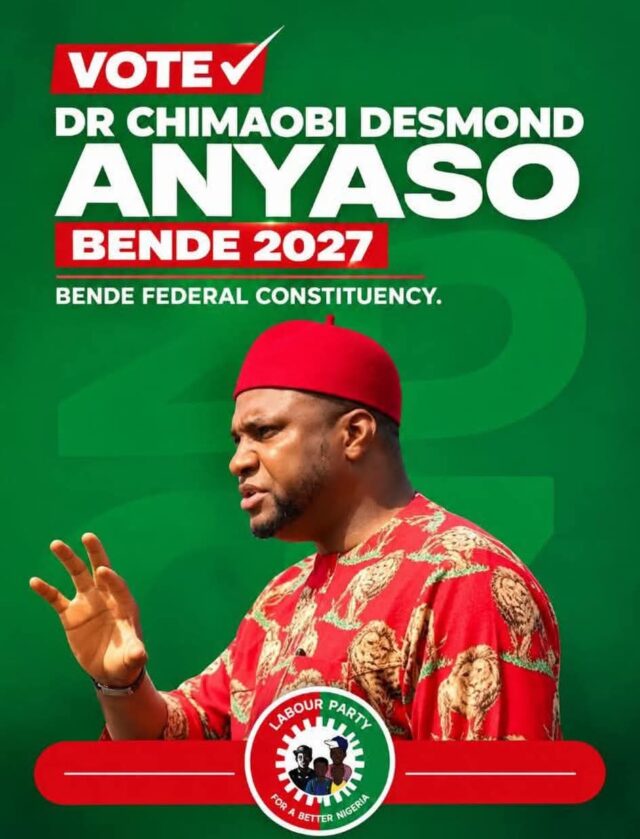
2027: Anyaso Takes On Deputy Speaker Kalu, Signs ‘Prosperity Contract’ For Bende Residents


The Labour Party candidate for Bende Federal Constituency in Abia State, Dr Chimaobi Desmond Anyaso, has intensified his campaign to unseat the incumbent Deputy Speaker of the House of Representatives, Benjamin Kalu, ahead of the 2027 general elections.

Anyaso, who is challenging Kalu, the All Progressives Congress (APC) candidate seeking a third term in the National Assembly, made the move by signing what he described as the “Bende Prosperity Contract” with his constituents.

The contract, signed on Wednesday at the Community Town Hall in Uzuakoli, attracted representatives of more than 33 groups from across the constituency.

Anyaso said the document was designed to establish a clear understanding between him and the people, stressing that it was not another political manifesto filled with lofty promises.

According to him, the agreement was written in simple language to enable constituents to understand its provisions and hold him accountable if elected.

He said the initiative reflected his commitment to responsible leadership, transparency and effective representation.

Speaking on the qualities expected of elected public officials, Anyaso argued that character and integrity should form the foundation of leadership, insisting that public office holders must remain accountable to the people they represent.

“Anyone who devalues his own people does not deserve to carry their name, much less carry their voice to Abuja,” he said.

The LP candidate added that the values required for good leadership were cultivated at home and within communities, rather than acquired after assuming public office.

He also criticised the practice of politicians taking personal credit for projects executed with public funds, describing it as a form of deception that undermines the dignity of constituents.

According to him, elected representatives should not portray publicly funded projects as personal favours to the people.

“Bende people are not beggars,” he declared, arguing that constituents deserve quality infrastructure and effective representation rather than political patronage.

Outlining his priorities if elected, Anyaso said he would focus on attracting development projects, including roads, hospitals and schools, as well as skills acquisition opportunities for young people.

He maintained that such projects should be regarded as the people’s entitlements rather than personal gifts from politicians.

On the conduct of the 2027 elections, the LP candidate urged residents, particularly youths, to reject political violence and avoid being used to advance the ambitions of politicians.

He warned that no election was worth the loss of human lives or the destruction of the future of young people.

Anyaso also appealed to his supporters not to be intimidated or discouraged by claims that the outcome of the election had already been determined.

He insisted that the people had the power to determine who represented them and called for credible elections in which their votes would count.

The candidate, however, cautioned against electoral malpractice and intimidation, saying his peaceful disposition should not be mistaken for weakness.

He pledged to defend the rights of Bende residents to freely choose their representative and ensure that their mandate was respected.

Addressing the longstanding political rotation arrangement between the Umunna and Ikwuishi blocs in the constituency, Anyaso promised to uphold the understanding.

He said that, if elected, he would support an Ikwuishi candidate to represent the constituency at the appropriate time, stressing that political power should not become the permanent possession of any individual or group.

According to him, leadership should create opportunities for future generations rather than shut them out of public service.

Anyaso subsequently urged constituents to study the prosperity contract, scrutinise its provisions and hold him accountable for his commitments.

He said he was prepared to build relationships, negotiate for development projects, report back to the people, collaborate with relevant stakeholders and pursue legitimate opportunities for the constituency.

Some constituents who spoke at the event expressed dissatisfaction with the quality of representation in the National Assembly and described Anyaso as a promising alternative.

They praised his accessibility and philanthropic activities, expressing confidence that his contributions outside public office could translate into improved representation if he secured the mandate.

They specifically cited the nursery school established by his Chima Anyaso Foundation in Igbere in 2006, which they said had grown into a modern primary school.

According to them, the institution had graduated more than 600 pupils, with Anyaso bearing the costs of teachers’ salaries and other operational expenses.

The supporters said his record of philanthropy had strengthened their belief that he could make a greater contribution to the development of Bende if elected into the House of Representatives.

Google search engine

Tinubu’s Reforms Pushed More Nigerians Into Poverty, But Progress Made – Bwala

The Special Adviser to President Bola Tinubu on Policy Communication, Daniel Bwala, has admitted that the Federal Government’s economic reforms increased the number of Nigerians living in poverty, insisting, however, that the country has recorded significant progress since the policies were introduced.

Bwala made the admission on Wednesday while appearing on Channels Television’s Politics Today, where he defended the economic policies implemented by the Tinubu administration since assuming office in May 2023.

The reforms, which include the removal of petrol subsidy and the unification of the foreign exchange market, have been accompanied by rising living costs, placing considerable financial pressure on households and businesses.

The government has repeatedly defended the measures as necessary to correct longstanding economic imbalances, improve public finances and establish a more sustainable economic foundation.

Acknowledging the hardship associated with the policies, Bwala argued that the increase in poverty was a consequence of the reforms, adding that such difficulties were not unusual when countries undertake major economic adjustments.

“Please let it be clear even to the opposition, the reason why you have this number of poor people and some of these doomsday analytics that people are giving is because we undertook a reform,” he said.

He added that economic reforms often come with temporary discomfort, maintaining that the administration had made considerable progress despite the challenges confronting many Nigerians.

“There is no part of the world where you start a reform like that there will not be discomfort. More people went down to poverty, acknowledged, but since when the reform started to today, we have made marked progress,” Bwala stated.

He insisted that the existence of widespread poverty should not overshadow what he described as the gains recorded since the government embarked on its reform agenda.

“So, you cannot discount that even though there are quite a number of our population that are poor which we admit, but we have made progress so far,” he added.

President Tinubu has also defended his administration’s economic policies, citing improvements in key economic indicators, including inflation, foreign reserves and foreign exchange market stability, in his October 1 Independence Day address.

Beyond defending the administration’s economic record, Bwala expressed confidence that Tinubu would secure a stronger electoral mandate in the 2027 presidential election.

The presidential adviser predicted that the President would defeat his opponents by a wider margin than he achieved in the 2023 election.

“Let me tell you and let me say it categorically and I will be happy to come back. The margin of gap that President Bola Tinubu will give each and everyone of these candidates will be so much that you won’t believe it,” he said.

In the 2023 presidential election, Tinubu defeated Atiku Abubakar and Peter Obi to emerge as Nigeria’s president.

Bwala attributed his optimism about the next election partly to the growing number of governors who have defected from opposition parties to the ruling All Progressives Congress (APC) since the last general election.

He expressed confidence that more governors would support Tinubu in 2027 than backed him during the 2023 presidential contest.

Google search engine

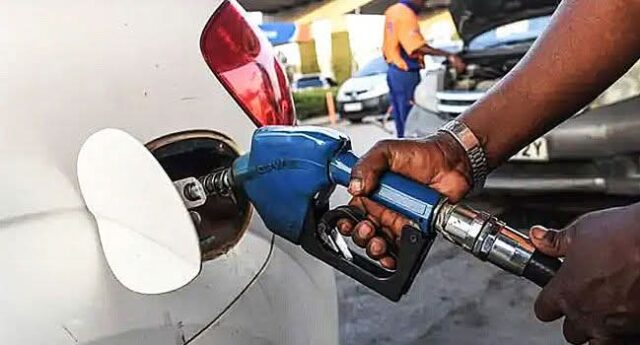
FG Offers 30-Day Petrol Discount Through NNPC, Targets N1,350 Cost Ceiling

The Federal Government has announced a 30-day petrol discount on products sold by the Nigerian National Petroleum Company Limited (NNPCL) as part of fresh measures to ease the burden of rising fuel prices on Nigerians.

The Minister of Finance and Coordinating Minister of the Economy, Taiwo Oyedele, disclosed this on Thursday during a press briefing on petrol prices and subsidy-related issues in Abuja.

Oyedele explained that the initiative was not a return to fuel subsidy but an arrangement through which the government would sell petrol at cost for an initial period of 30 days.

He added that public transport operators across the country would receive priority under the scheme.

“We are offering a discount on petrol dispensed by NNPC Limited for the next 30 days in the first instance, with priority for public transporters nationwide. So, it’s not a subsidy; government is just saying we sell to you at cost,” the minister said.

As part of the broader intervention, the government is also negotiating a ceiling of ₦1,350 per litre on the ex-gantry or landing cost of petrol to reduce price volatility and provide greater stability in the domestic market.

According to Oyedele, the proposed ceiling would be subject to monthly reviews and is intended to shield consumers and businesses from sudden increases in petrol prices triggered by fluctuations in global crude oil prices and foreign exchange rates.

He clarified, however, that the ₦1,350 benchmark does not represent a fixed pump price at filling stations.

Rather, the mechanism is designed to moderate changes in the underlying cost of petrol before they translate into sharp increases in retail prices.

“Pump prices should not have to follow every swing in global crude or the exchange rate. The government is negotiating a ceiling of ₦1,350 a litre on the ex-gantry or landing cost of petrol to keep pump prices stable,” he said.

The minister explained that under the proposed arrangement, refiners and importers would initially absorb any shortfall if the actual cost of petrol exceeded the agreed ceiling.

Such losses, he said, could subsequently be recovered when market conditions improve.
Oyedele maintained that the initiative was neither a fuel subsidy nor a price-control policy but a mechanism for moderating price fluctuations over time.

He argued that maintaining relatively stable petrol prices would offer households and businesses greater certainty in planning their expenses, particularly amid rising transportation and operating costs.

“The reasoning is simple: ₦1,400 a litre today and ₦1,400 a litre tomorrow is better than ₦1,500 a litre today and ₦1,300 a litre tomorrow,” he said.

According to him, sudden increases in fuel prices create additional uncertainty and costs, while reductions often take longer to reflect in the market.

Oyedele added that the proposed price ceiling would be reviewed every month, with the relevant figures published to promote transparency.

The measures come as the Federal Government seeks to address the continued pressure of high fuel and transportation costs on households and businesses without formally reinstating the petrol subsidy regime.

Google search engine

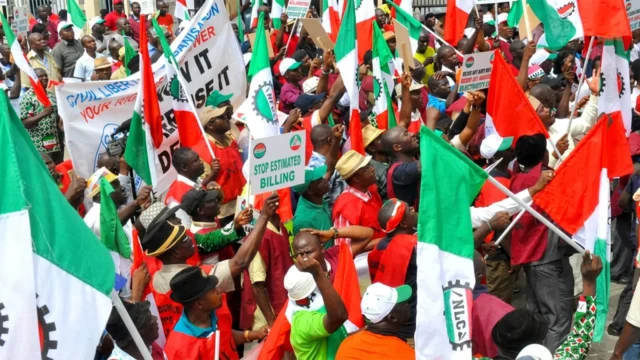
NLC Declares Indefinite Strike In Abuja Over Teachers’ Promotion Policy

The Nigeria Labour Congress (NLC), Federal Capital Territory (FCT) Council, has declared an indefinite strike across the territory over the Federal Capital Territory Administration’s (FCTA) handling of teachers’ promotion and other labour-related demands.

The industrial action commenced on Wednesday, October 7, following the expiration of a seven-day ultimatum issued to the FCTA to address the union’s grievances.

The council directed workers in both the public and private sectors to shut down schools, hospitals, government offices and other establishments across the FCT.

At the centre of the dispute is the FCTA’s requirement that vacancies must exist before teachers can be promoted, a policy the NLC says has hindered career progression and left many teachers stagnating in their positions for years.

In resolutions signed by its chairman, Comrade Knabayi Adalo, the labour council argued that teachers employed by the FCT Universal Basic Education Board (UBEB) and the FCT Secondary Education Board (SEB) should not be subjected to a vacancy-based promotion system.

According to the union, teachers are recruited specifically to teach and should be promoted when due, irrespective of whether vacancies exist.

The council also demanded that teachers who became eligible for promotion in 2025 be allowed to take their promotion examinations before or alongside candidates eligible in 2026.

Other demands include the withdrawal of redeployment and demotion letters issued to directors who benefited from the Harmonised Retirement Age for Teachers Act, 2022.

The NLC further called for the immediate reinstatement of the dissolved management teams of the FCT UBEB and SEB.

The decision to embark on the strike was reached at the council’s State Executive Council meeting held on Tuesday, October 6, at the NLC FCT Secretariat.

At the meeting, the union rejected the FCTA’s response to its ultimatum, describing it as inadequate and lacking a genuine commitment to resolving the dispute.

The council maintained that the administration’s response failed to address the vacancy requirement, which it identified as the primary cause of teachers’ career stagnation.
It also faulted the FCTA for failing to adequately address the alleged illegal redeployment of directors.

“The response of the FCTA is ambiguous and totally unacceptable,” the council stated.

The labour body warned that it would no longer tolerate policies it considers detrimental to the welfare and professional advancement of teachers in the territory.

The strike is expected to disrupt activities in affected public institutions across the FCT until the union’s demands are addressed.

Google search engine

MOST COMMENTED

- Advertisement -
Google search engine