Home Blog Page 207

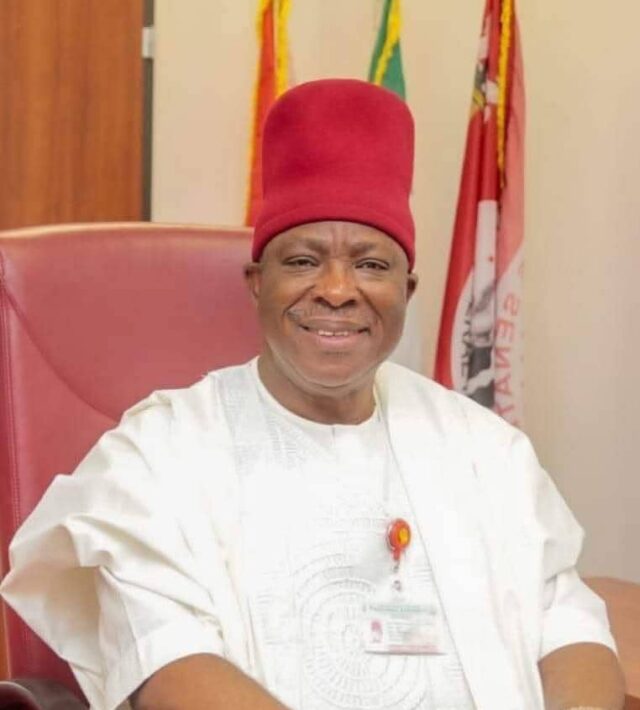
Only Southeast Will Decide Location Of Proposed New State – Senator Victor Umeh


Senator Victor Umeh, representing Anambra Central under the Labour Party, has said that although the National Assembly’s approval of an additional state for the Southeast is a significant breakthrough, the process is still far from concluded.

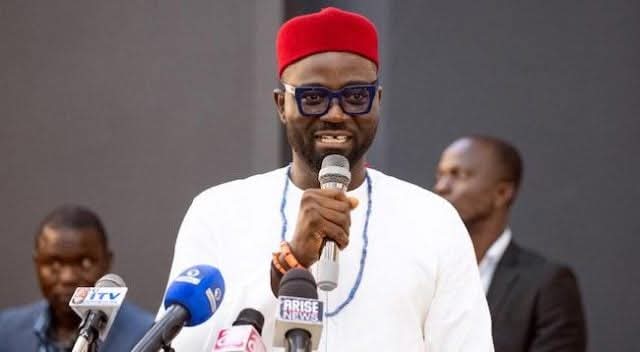
Speaking in an interview shared by Arise News, Umeh described the decision by the Joint Committee of the National Assembly on the Review of the 1999 Constitution as a long-overdue step toward equity and national balance.

He noted that the Southeast has, for decades, remained the only geopolitical zone in Nigeria with just five states, a situation that has placed the region at a disadvantage in representation, political influence, and resource allocation.

However, Umeh explained that more consultations are needed within the region to determine where the proposed new state will be created.

“We still have to go back to the Southeast to decide where the new state will come from,” he said.

“This next stage will involve dialogue and consensus among our people.”

The senator emphasized that the final decision must be guided by fairness, inclusion, and unity, warning that the process should not breed new divisions within the region.

He described the committee’s approval as a critical milestone in Nigeria’s constitutional development, but noted that its successful implementation would depend on broad-based consultation and agreement among all stakeholders in the Southeast.

Google search engine

All Enugu Rep Members Dump PDP, Labour Party For APC


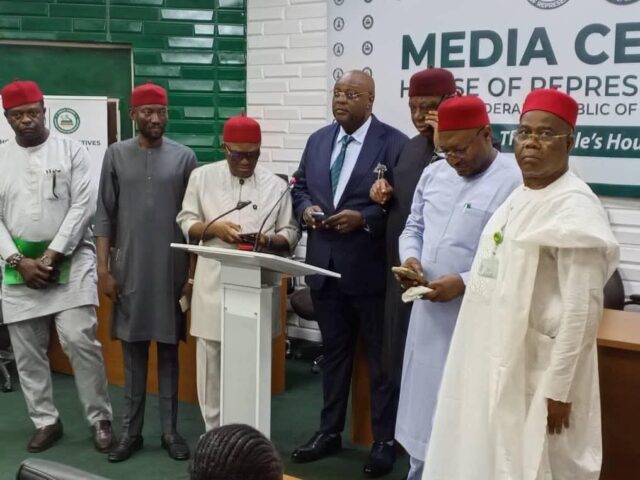
Every member of the Enugu State caucus in the House of Representatives has officially defected to the ruling All Progressives Congress (APC).

The announcement came during Thursday’s plenary session, where Speaker Tajudeen Abbas read the lawmakers’ letters of resignation from the Peoples Democratic Party (PDP) and the Labour Party (LP).

The defection, witnessed by Governor Peter Mbah of Enugu State, marks a clean sweep for the APC in the state’s representation at the lower chamber of the National Assembly.

According to the defectors, their move was driven by unresolved internal wrangling within their former parties, which they said had destabilized the opposition and hindered effective representation.

Following the 2023 elections, the Labour Party had held seven of Enugu’s eight federal constituencies, with the PDP taking one.

With this latest development, the APC now controls all eight.

Speaking on behalf of the group, Hon. Nnolim Nnaji, who represents Nkanu East/Nkanu West Federal Constituency, said their decision was inspired by Governor Mbah’s developmental strides and the desire to align Enugu with the federal government’s agenda.

“Just visit Enugu and see the transformation taking place,” Nnaji said.

“We want to bring our state into the mainstream of national politics and ensure our people are not left behind. This isn’t just politics, it’s about progress and partnership.”

He described the defection as “a courageous step toward the future,” emphasizing that it would open doors to more federal projects, job opportunities, and infrastructure development across the state.

“For too long, Enugu has remained in the opposition, watching from the sidelines. That era is over,” he added.

“By joining the APC, we’re connecting our people to the centre of national development.”

The lawmakers who defected include Martins Oke, Anayo Onwuegbu, Nnamdi Agbo, Nnolim Nnaji, and Mark Obetta.

In a separate move, Daniel Asama, who represents Bassa/Jos North Federal Constituency in Plateau State, also announced his defection from the Labour Party to the APC.

Google search engine

Enugu Rep Member, Hon. Nnolim Nnaji To Officially Announce His Defection Today


Rt. Hon. Nnolim Nnaji, the member representing Nkanu East and West Federal Constituency in Enugu State, has informed his constituents of his plan to formally defect from the People’s Democratic Party (PDP) to the All Progressives Congress (APC).

In a heartfelt message to his people, Hon. Nnaji said, “My dear brothers and sisters of Nkanu East and West, with your blessings and in line with our collective vision to support our dynamic Governor, Dr. Barrister Peter Ndubisi Mbah, I will today, Thursday, October 30, 2025, formally announce my defection to the APC during plenary at the House of Representatives.”

He described the move as more than a political shift, calling it “a decisive step towards progress, rooted in courage, clarity, and our shared commitment to reposition Nkanu East and West for lasting development.”

Hon. Nnaji highlighted that for too long, Enugu State has remained in opposition, missing out on opportunities that could have transformed the lives of its people.

“That era is over. We will no longer be spectators; we are ready to be active participants in shaping Nigeria’s future,” he said.

Explaining the rationale for joining the APC, he stated, “By aligning with the party leading national transformation, we are connecting our constituency to the pulse of national development.”

“This alignment will deliver more projects, employment opportunities, improved infrastructure, and empowerment programs for our youth, women, and communities.”

He reassured his constituents of his continued dedication, saying he would remain their voice in the National Assembly, advocating for development, attracting federal projects, and ensuring that every part of Nkanu East and West benefits from good governance.

Expressing gratitude for the support he has received over the years, Hon. Nnaji urged his constituents to embrace the change, saying,

“Today, we open the doors to a new dawn, a dawn of hope, inclusion, and prosperity. Together, we will ensure that Nkanu East and West takes its rightful place in Nigeria’s progress.”

“Let us rise, believe, and build together. The best days for our people are not behind us; they are just beginning.”

Google search engine

Ex-Edo Deputy Gov Omobayo Insists Only Court Can Decide Legitimacy Of His Tenure


Former Edo State Deputy Governor, Marvellous Omobayo, has declared that only a court of competent jurisdiction can determine whether his tenure in office was legal or not.

Omobayo stated this in a letter dated October 28, 2025, addressed to the Edo State Commissioner of Police, the Director-General of the Department of State Services, and the National Security Adviser.

A copy of the letter, obtained by DAILY GAZETTE in Benin City on Wednesday, urged security agencies to refrain from actions that could amount to contempt of court.

The former deputy governor said he remained entitled to all benefits and privileges of his former office pending the determination of his appeal challenging his removal.

The Edo State Government had earlier issued a one-week ultimatum to Omobayo, asking him to return all government assets in his possession.

The directive, issued by the Chief Press Secretary to Governor Monday Okpebholo, Fred Itua, described Omobayo’s stay in office under former Governor Godwin Obaseki as “illegal.”

However, Omobayo argued that the matter was sub judice, as it was already before the Court of Appeal, Abuja.

“It is only the court (in this instance, the Court of Appeal) that can validly pronounce on the legitimacy or otherwise of my tenure as deputy governor of Edo State,” Omobayo wrote.

“All concerned are advised to await the outcome of the matter before taking any action that could amount to contempt of court.”

Omobayo was appointed deputy governor on April 8, 2024, following the impeachment of Philip Shaibu by the Edo State House of Assembly after his fallout with then-Governor Obaseki.

But a Federal High Court in Abuja, in a judgment delivered on July 17, 2024, nullified Omobayo’s appointment and reinstated Shaibu, ruling that the impeachment process violated Section 188 (1–9) of the 1999 Constitution.

Omobayo subsequently appealed the decision (Appeal No. CA/ABJ/CV/856/2024) and filed an application for stay of execution pending the determination of the case.

He attached copies of the notice of appeal, the record of appeal, and the appellant’s brief to his letter to security agencies, noting that the Inspector-General of Police was a listed party in the suit.

Omobayo cautioned against any attempt by government officials or political actors to use security agencies or hired thugs to enforce actions on a matter already before the court.

“It will be unlawful for any party to a pending appeal to resort to self-help or to instigate the police to act in a manner capable of interfering with the constitutional functions of the judiciary,” he warned.

“Such conduct would be contemptuous and could attract serious legal consequences.”

He maintained that no court order had been issued affecting his entitlements, adding,

“For the avoidance of doubt, I remain entitled to all benefits I currently enjoy as a former Deputy Governor of Edo State, pending the determination of my appeal.”

Omobayo served as Obaseki’s deputy from April to November 2024, following Shaibu’s impeachment.

However, despite the court’s ruling reinstating Shaibu, the decision was not implemented by the state government before Obaseki left office, leaving the succession issue unresolved.

Google search engine

Anambra 2025: Stop Judging Women By Looks, AAC Tells Critics Of Ifemeludike’s Campaign Photos


The African Action Congress (AAC) has strongly condemned sexist remarks and coded language directed at its Anambra governorship candidate, Chioma Ifemeludike, following the circulation of her recent campaign photos and videos on social media.

In a statement released on Wednesday by the party’s National Publicity Secretary, Femi Adeyeye, the AAC described the online attacks as “a distraction from substantive political conversations” and an example of the persistent sexism that women in Nigerian politics continue to face.

“Our National Working Committee has observed how our candidate, a vibrant and ideologically clear woman, is being judged by her choice of outfit and physical features rather than by the strength of her ideas,” the statement read.

The party said the reactions to Ifemeludike’s campaign materials reveal the deep-rooted patriarchy that still shapes political discourse in Nigeria.

It noted that rather than engaging with her message of inclusive governance, some critics have resorted to making sexist jokes and mocking her appearance.

“The sexist jokes are condemned but not surprising,” the statement added.

“Even the National Assembly, which should model responsible representation, has often been a space where sexist comments go unchallenged.”

The AAC cited past examples of discrimination against women in politics, referencing Bianca Ojukwu’s experience during her ministerial confirmation and Senator Natasha Akpoti’s mistreatment in the Senate as evidence of systemic bias.

The party lamented that female politicians are often subjected to double scrutiny, forced to prove their competence while meeting society’s shifting standards of “acceptable” femininity.

“It is an unfortunate reality that women in politics are evaluated twice, first for their abilities and then for their appearance. This is unjust and distracts from the real issues that affect citizens,” the AAC said.

Calling for a shift in public perception, the party urged Nigerians to focus on ideas and leadership qualities rather than looks or attire.

“When we reduce women in politics to their bodies or clothing, we silence their vision and reinforce the belief that a woman’s worth is tied to her appearance, not her intellect or competence. Nigeria deserves better,” the statement continued.

The AAC appealed to voters to reject sexism in all forms and embrace a new kind of politics built on substance and inclusivity.

“The future we seek is one where leaders are judged by their policies, not their looks; their work ethic, not their wardrobe. Supporting women in politics is not charity, it’s democracy in its purest form,” the party emphasized.

The statement concluded by reaffirming the AAC’s support for Ifemeludike’s candidacy in the upcoming Anambra governorship election, urging citizens to back her vision for “good governance beyond theatrics.”

“Support the AAC. Vote for Chioma Ifemeludike, for progress, equity, and genuine change,” the party added.

Google search engine

Onitsha Won’t Endorse Any Candidate In Anambra Governorship Race – Obi-In-Council


The Obi-in-Council of Onitsha, Anambra State, has announced that the kingdom will remain politically neutral in the forthcoming Anambra governorship election scheduled for November 8, 2025.

In a statement issued on Tuesday in Onitsha by the council’s Chief of Staff, Osita Anionwu, the body emphasized that the historic commercial city would not endorse or support any candidate, stressing its commitment to peace and unity above partisan politics.

Anionwu explained that while individual indigenes of Onitsha have every constitutional right to support any political party or candidate of their choice, such participation must be done strictly in their personal capacity and not on behalf of the community or any constituent group.

Some Onitsha indigenes, including titled chiefs and group leaders, have been invited to attend political campaign rallies. It must be made clear that they do so as private citizens, not as representatives of the community,” the statement read in part.

The council reaffirmed that Onitsha’s foremost priority remains communal peace and cohesion, noting that all constituent groups within the kingdom would maintain a non-partisan stance while continuing to cooperate with duly elected governments at all levels.

It added that in a multi-party democracy like Nigeria’s, every citizen enjoys the freedom to belong to any political association or attend campaign events without fear, coercion, or discrimination.

“Our people are mindful of their rights under the constitution,” the council stated.

“They are free to support any party of their choosing, but the community as an entity will not be drawn into partisan alignments.”

The council further urged eligible voters in Onitsha to participate actively in the election by registering and voting for candidates of their choice, emphasizing that no individual has the authority to speak or act politically on behalf of the entire community.

It also called on the Independent National Electoral Commission (INEC) and security agencies to guarantee a peaceful, credible, and transparent election in the state.

“For communal harmony and the collective well-being of our people, all Onitsha constituent groups will remain politically neutral but will continue to support and cooperate with legitimate governments at all levels,” the council concluded.

Google search engine

Senate Approves Tinubu’s $2.8bn Loan Request, $500m Sukuk For 2025 Projects


The Senate on Wednesday approved President Bola Tinubu’s request to secure $2.847 billion in new foreign loans, including a $500 million debut Sovereign Sukuk, to finance part of the 2025 budget deficit and refinance Nigeria’s maturing Eurobonds.

The approval followed the adoption of a report presented by the Senate Committee on Local and Foreign Debts, chaired by Senator Wamakko Magatarkada Aliyu (APC, Sokoto North), which reviewed the president’s proposal titled “New External Borrowing and Refinancing.”

According to the committee, $2.347 billion will be sourced from the international capital market to help fund the 2025 budget, while $500 million will be raised through the Sukuk bond to finance major infrastructure projects across the country.

The approval comes amid widespread concern over Nigeria’s growing debt, which has reportedly surpassed ₦97 trillion as of mid-2025, according to data from the Debt Management Office (DMO).

While critics have warned that increased borrowing could deepen fiscal strain, government officials maintain that carefully managed loans are vital for sustaining growth, completing ongoing projects, and maintaining investor confidence.

Presenting the committee’s report, Senator Wamakko said the borrowing plan was necessary to ensure economic stability and prevent disruptions to ongoing national projects.

“The borrowing plan will enable the federal government to meet its 2025 funding needs and fulfill its financial obligations without derailing ongoing commitments,” Wamakko stated.

Supporting the motion, Senator Sani Musa (APC, Niger East), who chairs the Senate Committee on Finance, said the loan request was crucial to the smooth implementation of the 2025 Appropriation Bill.

“We must give approval to this request so that the 2025 budget can be properly funded,” Musa added.

Also speaking, Senator Adetokunbo Abiru (APC, Lagos East), Chairman of the Committee on Banking, Insurance and Other Financial Institutions, clarified that the new loans would not significantly increase Nigeria’s debt burden.

“This is primarily a compliance issue. The 2025 Appropriation Act already captured the borrowing as part of deficit financing. The second component is a refinancing arrangement to ensure that Nigeria does not default on its Eurobond obligations,” Abiru explained.

Similarly, Senator Adams Oshiomhole (APC, Edo North), Chairman of the Senate Committee on Interior, defended the plan, arguing that borrowing is not inherently negative if funds are channeled toward productive and job-creating sectors.

“There’s nothing wrong with borrowing when it is properly structured and directed at addressing unemployment and infrastructural decay,” Oshiomhole said.

Google search engine

JUST IN: FG Releases N2.3bn To Clear Lecturers’ Arrears, Promises Sustainable Reforms


The Federal Government on Wednesday announced the release of ₦2.3 billion for the payment of salary and promotion arrears owed to university lecturers across the country.

The disclosure was made by the Minister of Education, Dr. Tunji Alausa, who reaffirmed the government’s commitment to revitalising the nation’s tertiary education system through fiscal interventions, policy reforms, and sustained dialogue with academic unions.

According to a statement issued by the Director of Press, Folasade Boriowo, the minister said President Bola Ahmed Tinubu remained determined to resolve all outstanding welfare and funding issues in a fair and transparent manner.

“A total of ₦2.311 billion, representing Batch 8 salary and promotion arrears, has been released through the Office of the Accountant-General of the Federation to universities nationwide,” Alausa said.

“Benefiting institutions should begin to receive payment alerts anytime from now.”

The minister added that the Federal Government, working with the Ministry of Finance and the Accountant-General’s Office, was finalising the release of pending third-party deductions and pension remittances, which are expected to be completed in the coming days.

He also announced that the Earned Academic Allowance (EAA) would be fully integrated into university salary structures beginning from 2026, ensuring predictable and timely payments.

Alausa noted that additional funds had been released under the Needs Assessment of Nigerian Universities (NANU) programme, with fresh budgetary provisions made to sustain the initiative.

“While the government remains committed to improving staff welfare, it will only enter into agreements that are realistic and financially sustainable,” the minister said.

He further explained that the Yayale Ahmed Committee continues to serve as a bridge between the Federal Government and the tertiary institution unions, facilitating “honest and mutually respectful negotiations.”

However, some university lecturers told Punch that, as of Wednesday night, their October 2025 salaries had not been paid despite the ministry’s announcement.

A lecturer at Nnamdi Azikiwe University, Awka, said,

“I can confirm that October salaries have not been paid. We’re surprised at the ministry’s statement.”

Similarly, an academic at the Federal University of Technology, Minna, expressed frustration over what he described as “a growing trend” of salary delays.

“The government now feels comfortable delaying our salaries without explanation,” he said.

Efforts to reach ASUU President, Prof. Chris Piwuna, were unsuccessful, but a branch chairman of the union in northern Nigeria confirmed that no payments had been received.

“We have not received a dime, not even our regular salaries,” he said.

The Academic Staff Union of Universities (ASUU) has been in a prolonged standoff with the Federal Government over issues including withheld salaries, promotion arrears, and implementation of the renegotiated 2009 ASUU-FGN Agreement.

The union, representing thousands of university lecturers, argues that poor government funding has crippled public universities, triggered frequent strikes, and eroded academic standards.

Earlier this month, ASUU suspended a two-week warning strike following interventions from the Nigeria Labour Congress (NLC) and the National Assembly.

The union’s key demands include the payment of withheld three-and-a-half months’ salaries, implementation of 25–35% salary arrears, release of cooperative deductions, and full execution of the Yayale Ahmed Committee’s recommendations, which have been pending since the report’s submission in December 2024.

“Our priority remains the revitalisation of Nigeria’s public universities,” the union leader said. “Until the government takes concrete action, these disputes will continue.”

Google search engine

After Public Outcry, Tinubu Revises Clemency List, Excludes High-Risk Offenders, Orders Secretariat Relocation


President Bola Tinubu has formally exercised his constitutional prerogative of mercy, granting pardons and clemency to selected individuals convicted of various offenses, after a careful review process.

Following consultations with the Council of State and public feedback, the President directed a further examination of the initial list under his discretionary powers in Section 175(1) & (2) of the 1999 Constitution (as amended).

The review resulted in the removal of individuals convicted of serious crimes such as kidnapping, drug trafficking, human trafficking, fraud, and unlawful possession or dealing in firearms.

Some other offenders on the initial list had their sentences commuted rather than receiving full pardons.

The Presidency emphasized that the decisions were guided by the severity of the crimes, potential security risks, the interests of victims, the need to maintain law enforcement morale, and Nigeria’s international obligations.

The process reflected the principle that justice should serve not only the accused but also the victims and the state.

The approved list of beneficiaries has been forwarded to the Nigerian Correctional Service for implementation in line with the executed release instruments.

In addition, President Tinubu ordered the relocation of the Secretariat of the Presidential Advisory Committee on Prerogative of Mercy from the Federal Ministry of Special Duties to the Federal Ministry of Justice, as part of reforms to strengthen due process.

He also instructed the Attorney-General of the Federation to issue new guidelines for future exercises of presidential clemency, including mandatory consultations with relevant prosecuting agencies, ensuring that only those who fully meet legal and procedural requirements benefit.

The President commended the constructive engagement of stakeholders and the public and reiterated his administration’s commitment to judicial reforms and improving the administration of justice in Nigeria.

The initial release of the clemency list in early October had drawn widespread criticism. Political figures, human rights organizations, and concerned citizens condemned the inclusion of individuals convicted of serious crimes.

Among the critics were former Vice President Atiku Abubakar and the Human Rights Writers Association of Nigeria (HURIWA), who warned that hasty pardons could undermine the justice system.

Out of 175 beneficiaries, according to Bayo Onanuga, Special Adviser to the President on Media and Public Information, 41 were illegal miners, 28 drug traffickers, and 22 murderers.

The list also included foreigners, coup plotters, corrupt politicians, capital offenders such as Maryam Sanda, and posthumous pardons for figures like Major General Mamman Vatsa, Major Akubo, Professor Magaji Garba, late Ken Saro-Wiwa, and other members of the Ogoni Eight.

Google search engine

MOST COMMENTED

- Advertisement -
Google search engine