Home Blog Page 229

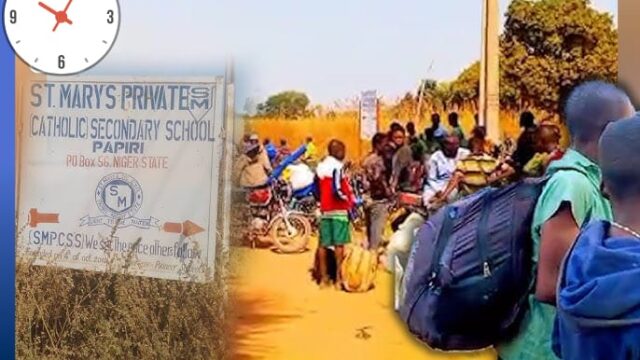
88 More Students Reported Missing After Attack On Catholic School


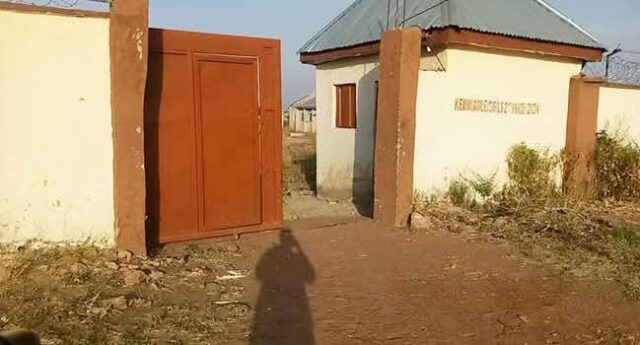
The Catholic Diocese of Kontagora has reported that 88 additional students are missing following the attack on St. Mary Secondary School, Papiri, in Agwara Local Government Area, Niger State.

According to reports, many parents rushed to the school in an attempt to evacuate their children, but were unable to locate them after the raid.

The initial attack, which occurred in the early hours of Friday, saw terrorists abduct both students and staff members.

In a statement on Saturday morning, Most Rev. Bulus Dauwa Yohanna, Bishop of the Kontagora Diocese, confirmed that the total number of missing students has now risen to 303.

Previously, 215 students were reported missing, alongside four female and eight male teachers who were also kidnapped during the incident.

The school, Bishop Yohanna noted, had a total enrollment of 430 primary pupils and 199 secondary students.

Addressing claims from the Secretary to the State Government that warnings were issued prior to the attack, the Bishop categorically denied receiving any notification from either government authorities or security agencies.

He said through his aide, Daniel Atori:

“We asked the Education Secretary if he received any circular, he said no. We asked if he was verbally informed, he said no. We also checked with the National Association of Private Schools; they too did not receive any such notice. Claims that the school was shut down and recently reopened are not true. We are law-abiding, and this misinformation must be corrected.”

The Bishop’s office continues to appeal for urgent government intervention to ensure the safe return of the kidnapped students and staff.

Google search engine

Universities Shut Down As Mass School Closures Take Over Northern Nigeria


A wave of mass school closures has swept across northern Nigeria as state governments scramble to contain escalating attacks on educational institutions.

Yobe, Kwara, Kano, Kebbi, Kaduna, Plateau, Sokoto, Katsina, Niger, and Taraba states have announced sweeping shutdowns or heightened security measures following a series of violent incidents and kidnappings.

Governor Mai Mala Buni ordered the immediate shutdown of all boarding secondary schools after a state security meeting reviewed threats across all 17 LGAs.

Mohammed Mamman, the governor’s spokesperson, said the action followed a formal notice from the Ministry of Basic and Secondary Education.

He quoted the Permanent Secretary, Dr. Bukar Aji Bukar, saying all secondary schools must remain closed until the security situation improves.

Buni urged residents to pray for President Bola Ahmed Tinubu and security agencies as efforts to stabilise the state continue.

In Kwara, Governor AbdulRahman AbdulRazaq introduced enhanced security around schools and worship centres following an attack at Christ Apostolic Church, Oke Isegun, in Eruku, where six worshippers were killed and 30 abducted.

A senior government official revealed that some measures remain confidential due to their sensitivity.

The Nigeria Union of Teachers confirmed that schools in Isin, Irepodun, Ifelodun, and Ekiti LGAs were instructed to close immediately.

State NUT Chairman, Yusuf Agboola said schools were ordered to treat the directive with utmost urgency.

In Kano, Governor Abba Yusuf approved the deployment of 1,600 watchmen across public secondary schools.

The move followed the abduction of 25 girls and the killing of a vice-principal in neighbouring Kebbi State.

Yusuf’s spokesperson, Sunusi Bature, said the new recruits would help restore discipline and ensure daily school activities run safely.

Kebbi State closed schools in communities affected by recent attacks.

Special Adviser Abdullahi Idris Zuru said the government inherited serious banditry challenges but has since assisted military operations with improved logistics.

Schools in both urban and rural areas are now under continuous joint surveillance by the army, police, vigilantes, and DSS operatives.

Kaduna State sustained its implementation of the Safe Schools Policy, which includes risk mapping, community engagement, and improved coordination with security agencies.

Patrols around vulnerable communities have been enhanced, and emergency response mechanisms activated.

The Plateau State Universal Basic Education Board ordered the closure of basic schools after intelligence reports indicated potential threats.

Affected schools are to remain shut pending strengthened security arrangements.

A parent in Shendam said students were dismissed following threat reports, though local police claimed they had not received such intel.

Sokoto State reaffirmed its policy of relocating all boarding schools to urban centres.

Commissioner for Basic and Secondary Education, Prof. Ibrahim Alhassan, said the recent Kebbi abduction stalled earlier plans to return schools to their original rural locations.

Katsina State, which has recorded hundreds of abductions since 2020, has intensified physical security through community-based child protection committees.

Some schools now have fencing, guards, and trained dogs. Psychosocial support programmes and teacher training are ongoing.

Niger State shut boarding schools in insecure areas after receiving credible intelligence of impending attacks.

Secretary to the State Government, Abubakar Usman, disclosed that St. Mary’s Secondary School reopened without official clearance before Friday’s kidnapping incident, leaving pupils vulnerable.

Security agencies have launched rescue operations.

In Taraba, Governor Agbu Kefas directed all secondary schools, public and private, to close their boarding facilities due to rising abductions.

Commissioner for Education, Dr. Augustina Godwin, said the security trend has made boarding students especially vulnerable.

At the national level, the Federal Ministry of Education ordered the temporary closure of 44 Unity Colleges due to mounting security concerns.

Minister Tunji Alausa approved the directive, and a revised list corrected duplicated entries.

The shutdowns follow a series of mass abductions in Kebbi and Niger States, where dozens of students were taken in separate attacks.

The Chief of Army Staff, Lt-Gen Waidi Shaibu, has appealed for public cooperation as military operations intensify across affected regions.


Google search engine

Police Nab Pastor For Allegedly Raping Three Church Members


Delta State Police operatives have arrested a pastor from Omega Prophetic Prayer Ministry in Sapele over allegations of defilement, rape, and sexual assault.

The pastor, identified as Daniel Ololo, is accused of sexually assaulting three sisters, all members of his church.

Police spokesperson Bright Edafe confirmed that a petition was filed against Ololo, prompting an investigation.

Edafe stated that on November 17, the pastor was apprehended at his church premises.

Investigations revealed that Ololo allegedly used false prophecies to manipulate vulnerable church members, coercing them into believing that sexual relations with him were necessary for their “deliverance.”

The investigation further showed that his victims include three sisters of the same mother, with the youngest being 17 years old.

Ololo remains in police custody as the investigation continues.

Google search engine

Senate, South-West Leaders Push For Local Security Models, State Police


Seeking sustainable answers to Nigeria’s deepening security woes, the Senate on Friday gathered key stakeholders in Lagos for the South-West Zonal Security Summit, where calls for indigenous security structures, enhanced technology, and the creation of state police dominated discussions.

The meeting, organised by the 10th Senate’s Ad-hoc Committee on the National Security Summit, brought together lawmakers, security chiefs, traditional rulers, civil society groups, and religious leaders.

Senator Mukhail Adetokunbo Abiru (Lagos East), who chaired the session, said insecurity must be confronted through shared responsibility and collective action.

“Although the South-West has not witnessed the level of terrorism seen in other regions, the rise in kidnappings, banditry, and violent attacks poses serious threats to our communities and farmlands,” Abiru said.

He highlighted reports of incursions by criminal groups such as Lakurawa into Kwara and Kogi States as an urgent signal for coordinated response.

Abiru also urged the media to avoid narratives that fuel ethnic or religious division, stressing that unity is crucial to defeating insecurity.

Representing Governor Babajide Sanwo-Olu, Dr. Ayodele Ogunsan of the Lagos State Security Trust Fund called for a strengthened regional security architecture.

He proposed a unified, technology-led Amotekun command and deeper involvement of traditional institutions.

“Security is not only about safety, it is tied to the economy. When markets, farms, and transport systems are disrupted, livelihoods crumble. Our approach must rely on intelligence and community participation,” he said.

Lawmakers such as Senators Ibrahim Jimoh (Ondo South) and Gbenga Daniel (Ogun East) advocated for a hybrid strategy that blends military force with civilian-led initiatives.

Traditional leaders, including Oba Olufolarin Ogunsanwo (Alara of Ilara) and Aare Onakankanfo Iba Gani Adams, called for expanded recruitment into security outfits, improved funding, community policing, and youth empowerment as long-term stabilising measures.

Civil society organisations, religious groups, women’s associations, and youth bodies added that the welfare of security operatives must be prioritised for morale and efficiency.

At the end of the summit, attendees agreed that collaboration across all sectors, modern technology, and local involvement are essential for securing the South-West and strengthening national stability.

Meanwhile, in a related development, the Lagos State Government, through the Office of Climate Change and Circular Economy (OCCE), reaffirmed its leadership on the African climate stage following a robust outing at the COP30 conference in São Paulo, Brazil.

The state showcased landmark projects such as the 80 Million Clean Cookstoves Initiative and the LAMATA e-Mobility Programme, using the global platform to attract investments and highlight the potential of subnational governments in climate action.

Special Adviser to the Governor on Climate Change, Mrs. Titi Oshodi, said Lagos demonstrated what “true subnational leadership” looks like.

“We went to COP30 to show that African cities can deliver impactful, bankable climate solutions. The world is demanding climate ambition backed by results, and Lagos is stepping forward with both,” she said, noting that the engagements helped deepen partnerships and bolster investor confidence.

Google search engine

Police, DSS Nab Gun Technician, Food Suppliers To Bandits


In the wake of last Tuesday’s deadly bandit attack on church worshippers in Eruku, Ekiti Local Government Area of Kwara State, security agencies have arrested several individuals allegedly linked to aiding bandit operations across the state.

Among those apprehended is a man from Makurdi, Benue State, who reportedly specialised in repairing and preparing weapons for bandit groups.

The Commissioner of Police in Kwara State, Adekimi Ojo, revealed these developments while briefing journalists at the police headquarters in Ilorin.

His address followed a State Security Council meeting held at the Government House.

According to Ojo, intelligence gathered after the Eruku attack prompted intensified joint operations involving the Police, Military, and Department of State Services (DSS).

These efforts, he said, align with directives issued by President Bola Ahmed Tinubu to strengthen security across vulnerable regions.

He commended the Inspector General of Police, Kayode Egbetokun, for deploying four specialised tactical units, SWAT, the Intelligence Response Team (IRT), the Special Intervention Squad (SIS), and the Special Tactical Squads (STS), to combat further threats in the state.

Ojo disclosed that the recent meeting “harvested valuable insights from field commanders on ongoing rescue efforts, intelligence gathering, and the pursuit of those responsible for the Eruku attack.”

He added that increased air surveillance and interdictions had forced bandits out of several hideouts, particularly in Ifelodun.

The council called for continued aerial raids on locations identified as criminal camps.

“The Police and DSS have recorded several arrests, including individuals supplying food and fuel to the bandits, as well as the Makurdi man who confessed to servicing the criminals’ weapons,” he said.

The State Security Council also endorsed the government’s recent security measures around schools, especially in communities considered high-risk.

It encouraged citizens to remain vigilant and report suspicious movements promptly.

Ojo further warned about the destabilising role of social media, accusing some users of circulating unverified information that compromises security operations.

For public safety, he urged residents to avoid late-night farming or social activities that could leave them vulnerable to attacks.

Traditional rulers and community leaders were also encouraged to support intelligence sharing with security agencies.

The meeting observed a minute of silence in honour of victims of the Eruku Christ Apostolic Church attack and extended condolences to affected families.

Google search engine

Niger State Shuts All Schools Indefinitely After Fresh Kidnapping Incident


The Niger State Government has ordered the immediate closure of all public and private schools across the state following a renewed wave of insecurity involving schoolchildren in Agwara Local Government Area.

The directive, issued through a circular from the Ministry of Basic and Secondary Education on November 22, 2025, comes in response to the kidnapping of students of St. Mary Catholic Church, Papiri, in Agwara.

The circular, signed by the Permanent Secretary of the ministry, Hajiya Aishetu Nuhu, was addressed to Area Directors, Education Secretaries, principals, head teachers, and proprietors of all categories of schools, including missionary, Islamic, and private institutions, as well as Federal Government Colleges operating within the state.

According to the ministry, Governor Mohammed Umaru Bago ordered the shutdown as a precautionary measure to prevent further attacks on schools and safeguard the lives of children.

“The closure is to protect schoolchildren from being exposed to additional security breaches until the situation is brought under control,” the statement read.

The directive affects all primary and secondary schools, and the ministry emphasized that compliance is compulsory.

It further stated that no school is allowed to reopen in any form until an official clearance is issued by the state government.

The government described the measure as necessary, citing the rising cases of abductions targeting educational institutions in the region.

The latest incident has heightened fear among parents and increased pressure on the government to act decisively.

While reassuring stakeholders of its commitment to restoring safety, the Ministry of Basic and Secondary Education encouraged cooperation from school authorities as security operations continue in the affected areas.

Google search engine

Gov Alia Makes U-turn, Denies Comment On Genocide In Benue


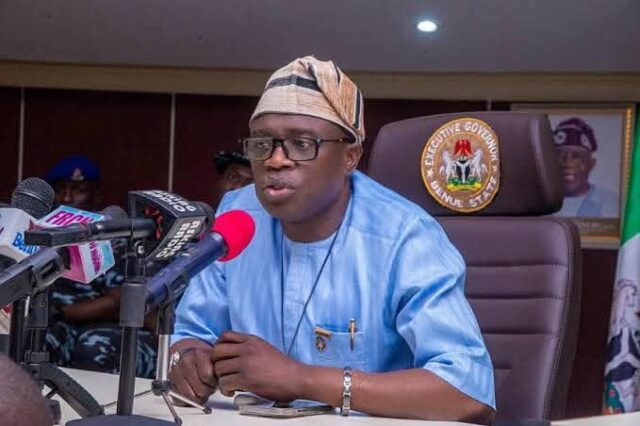
Benue State Governor, Rev. Fr. Hyacinth Alia, has clarified that he never denied the killing of residents in the state, insisting that his earlier remarks on genocide were taken out of context.

Speaking on Friday after a closed-door discussion with Nobel Laureate Prof. Wole Soyinka at the Government House, Alia explained that his statement was misunderstood because many people did not grasp the global and historical meaning of the term “genocide.”

According to him, discussions about genocide must align with the United Nations’ definition, which outlines specific criteria, adding that the term is often loosely applied without regard for its proper interpretation.

The governor said the misrepresentation of his remarks had led to avoidable controversy and confusion.

“I have never denied the killings of our people,” he said.

“I have repeatedly stated that we are dealing with bandits and terrorists who come in a well-organised manner to destroy, maim, and kill. Their agenda has always been land grabbing. This crisis did not start as a religious issue.”

Alia noted that the conflict originated as a farmer–herder dispute before escalating into widespread banditry and terrorism.

He stressed that victims cut across various religious groups, cautioning against attempts to portray the violence as faith-based.

On Thursday in Abuja, while speaking at a consultative forum on the protection of Internally Displaced Persons and Forcibly Displaced Persons hosted by the National Human Rights Commission, the governor had said the situation in Benue should not be categorised as genocide.

“As a Reverend Father, that identity remains with me even in government. In Benue, we do not have any religious, ethnic, racial, national, or state-sponsored genocide. That is simply not the case,” he said.

His earlier comment sparked strong reactions, including criticism from Catholic priests under the Nigerian Catholic Diocesan Priests Association, Makurdi Diocese.

Alia urged journalists to avoid politicising the crisis, advising them to seek clarification before publishing interpretations that could heighten tensions.

He emphasised that every life lost weighs heavily on him and appealed to the public to refrain from trivialising the experiences of displaced families.

The governor also warned against framing the violence as a religious conflict.

“The situation involves multiple factors. Don’t narrow it down to religion. Both Christians and Muslims have been killed. Benue is the most populous Christian state in Northern Nigeria, and with that comes certain expectations. But we must not politicise people’s suffering.”

Prof. Wole Soyinka, who also spoke, cautioned Nigerian leaders to be wary of seeking assistance from foreign nations, noting that such interventions could complicate the country’s security challenges.

Google search engine

Nigeria Is A Disgrace; It’s Genocide And I’m Really Angry – Trump Threatens To Cut Off All Aid


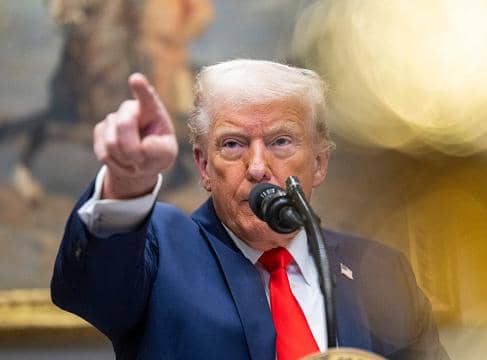
US President, Donald Trump, has renewed his sharp criticism of the Nigerian government, accusing it of failing to stop widespread killings of Christians and describing the situation as nothing short of “genocide.”

Trump made the remarks during a conservative radio interview on Friday, comments later replayed by Fox News.

He alleged that extremist groups were killing Christians “by the thousands” and claimed the Nigerian authorities were not doing enough to confront the violence.

The president referenced his administration’s previous decision to list Nigeria as a “Country of Particular Concern” for alleged religious persecution, warning that Washington could escalate its response if conditions do not improve.

“Nigeria is a disgrace. The whole thing is a disgrace,” Trump said during the programme.

“They’re killing people by the thousands. It’s a genocide, and I’m really angry about it.”

He also suggested that the United States may cut off financial assistance to Nigeria.

“We give a lot of subsidies to Nigeria. We’re going to end up stopping,” he added.

Trump went further, repeating an earlier threat that the US could pursue military action against Islamist militant groups if Nigeria “does not do more” to safeguard Christian communities.

On Friday, DAILY GAZETTE reported that the United States War Department said it was already working closely with Nigerian officials to address what it labelled “jihadists terrorists” attacks on Christians.

In a message posted on X, the US Secretary of the War Department said:

“Yesterday, I met with Nigeria’s National Security Advisor and his team to discuss the horrific violence against Christians in their country.”

“Under @POTUS leadership, DOW is working aggressively with Nigeria to end the persecution of Christians by jihadist terrorists,” he posted on Friday.

The announcement followed a Wednesday meeting in Washington, D.C., between Congressman Riley M. Moore and a high-level Nigerian delegation led by National Security Adviser Nuhu Ribadu.

Members of the delegation included Bianca Ojukwu, Minister of State for Foreign Affairs; Inspector General of Police Kayode Egbetokun; Attorney General of the Federation Chief Lateef Olasunkami Fagbemi, SAN; Chief of Defence Staff General Olufemi Olatunbosun Oluyede; Chief of Defence Intelligence Lt. Gen. EAP Undiendeye; Special Adviser to ONSA Idayat Hassan; Ambassador Ibrahim Babani, Director of Foreign Relations at ONSA; Acting Chargé d’Affaires Ambassador Nuru Biu; and Paul Alabi of the Embassy’s Political and Economic Section.

According to the War Department’s statement, the engagement “allowed for a frank, honest, and productive discussion about the ongoing persecution of Christians and ongoing terrorist threats in Nigeria and opportunities for strengthened cooperation and coordination between the United States and Nigeria to end the bloodshed.”

It also noted that the Nigerian delegation outlined their concerns regarding counterterrorism efforts, the protection of vulnerable groups, and broader security challenges across the country.

The release said Congressman Moore “clearly stated that the United States stands ready to coordinate and cooperate with Nigeria,” and emphasised that “as President Trump made abundantly clear, the United States will not tolerate continued violence against Christians or other forms of religious persecution.”

It added pointedly that “President Trump does not make idle threats.”

The statement further noted that Moore “will continue monitoring new developments and pushing the Nigerian government to accept the open hand of cooperation to stop the ongoing persecution and violence against Christians and combat the threat terrorist groups pose to the Nigerian population.”

Moore also issued his own statement after the meeting.

“Today, I had a frank, honest, and productive discussion with senior members of the Nigerian government regarding the horrific violence and persecution Christians face and the ongoing threat terrorism poses across Nigeria,” he said.

Google search engine

Obi Rejects Kanu’s Life Sentence, Urges Government To Pursue Dialogue


Labour Party’s 2023 presidential candidate, Peter Obi, has condemned the life imprisonment imposed on Indigenous People of Biafra (IPOB) leader Nnamdi Kanu, calling instead for a political and dialogue-driven approach to resolve the issues surrounding his case.

In a statement shared on his X (formerly Twitter) account, Obi argued that Kanu’s arrest, prolonged detention, and eventual conviction were symptoms of deeper leadership failures.

He said that meaningful political engagement was never fully explored before the government opted for prosecution.

The verdict, Obi noted, comes at a time when Nigerians are facing severe economic hardship and widespread insecurity, conditions he believes should compel the government to seek reconciliation rather than escalate tensions.

According to him, Kanu’s grievances were not beyond resolution and could have been addressed through consultations, policy changes, and institutional reforms.

“The concerns Kanu raised were not unheard of. The issues for which he demanded solutions were not insoluble. They only required wisdom, empathy, and a willingness to listen. In any functioning society, such grievances are met with dialogue and reforms aimed at strengthening unity,” Obi stated.

He referenced international examples where governments have used political settlements to address internal conflicts when strict legal measures failed.

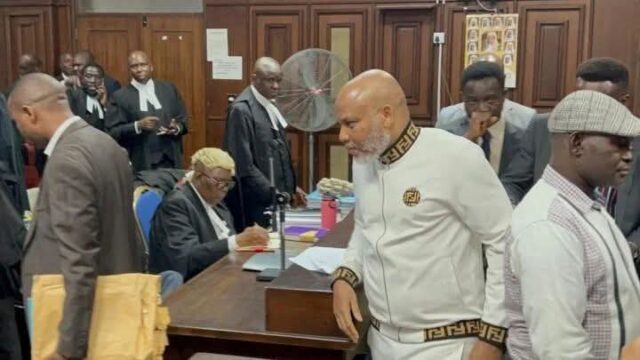
Kanu was sentenced to life imprisonment this week by the Federal High Court in Abuja on terrorism charges.

He has been in custody since 2021 after his controversial transfer from Kenya, a move his legal team insists was an illegal extraordinary rendition, though the Federal Government maintains otherwise.

Since IPOB’s designation as a terrorist organisation in 2017, security tensions have intensified across the Southeast.

Earlier this month, security forces reported clashes with armed groups suspected of separatist ties in rural Anambra, prompting temporary roadblocks that disrupted transportation and school activities.

Obi linked Kanu’s case with what he described as larger governance problems, particularly a lack of inclusion and cohesive national leadership.

He urged President Bola Tinubu, the Council of State, and influential national leaders to intervene and prevent further escalation.

He ended his message by advocating peace and reconciliation as the only viable long-term solution.

“My ultimate call at this time, without prejudice to how anyone feels about the court’s decision, is for us to remain optimistic for peace and reconciliation. The Presidency, the Council of State, and credible statesmen who care about cohesion and inclusivity should rise to the occasion for a lasting solution,”
he said.

Google search engine

Life Sentence Not The End For Nnamdi Kanu – Shehu Sani


Former Kaduna Central Senator, Shehu Sani, has urged dialogue and peaceful resolution following the life imprisonment sentence handed to Indigenous People of Biafra (IPOB) leader, Nnamdi Kanu, on terrorism charges.

In a post on X on Friday, Sani reflected on his own experience of imprisonment under a military regime, emphasizing that life imprisonment can be endured and is not necessarily the end of one’s life.

Sani, who was convicted and sentenced by the late Gen. Sani Abacha military regime, served time in Aba Correctional Centre from 1995 to 1998, having previously spent a year in Kiri Kiri and Port Harcourt prisons.

He recalled being treated well by most inmates and warders, despite facing some challenges with “a few tough guys.”

He wrote, “Sentencing a man to life imprisonment is not the end of his life. Some of us have been through life imprisonment and we survived it… There is still room for dialogue to resolve the issue in the interest of peace. Life imprisonment is a phase and not the end.”

Sani’s comments come amid renewed attention on Kanu’s detention, following reports that he has been moved to a correctional facility in Sokoto.

Kanu’s former lawyer and consultant, Aloy Ejimakor, expressed concern over the transfer, noting that it places Kanu far from his legal team, family, and supporters.

He compared the situation to the 1963 conviction of Obafemi Awolowo, who was sent to a neutral zone, and suggested that President Tinubu could intervene to prevent further complications.

As of Friday evening, PUNCH Online could not independently confirm Kanu’s relocation.

Kanu was sentenced by the Federal High Court in Abuja on Thursday for seven terrorism-related charges.

Justice James Omotosho handed life terms for five counts, 20 years for one, and five years for another, all without the option of a fine.

The judge also noted that Kuje Correctional Centre might not be suitable for Kanu due to security concerns, recommending a more secure facility.

Google search engine

- Advertisement -
Google search engine

MOST COMMENTED