Home Blog Page 25

BREAKING: INEC Announces Dates For 2027 General Elections, Releases Timetable

The Independent National Electoral Commission has fixed February 20, 2027, for the conduct of Nigeria’s next presidential and National Assembly elections.

INEC Chairman, Joash Amupitan, unveiled the timetable on Friday during a press briefing in Abuja, confirming that governorship and State Houses of Assembly elections will follow on March 6, 2027.

The announcement comes amid ongoing debate over the delayed passage of amendments to the Electoral Act currently before the National Assembly.

Earlier this month, the commission indicated that it had concluded work on the election timetable and schedule of activities despite uncertainties surrounding the legislative process.

INEC said it had already submitted the schedule to lawmakers but warned that certain aspects could be adjusted depending on when the amended Electoral Act is finalised.

The commission’s disclosure is expected to shape preparations by political parties, candidates and stakeholders as the country begins early planning for the 2027 general elections.

Stay tuned…

Google search engine

Little Things That Matter: The Governor Mbah Example

Opinion of Dr. Justice Chidi,

True leadership is not only about loud speeches and grandstandings. It is sometimes about the little things that matter: those practical, everyday improvements that touch the pulse of the ordinary, common people.

In the arithmetic of the ordinary lives, destinies are transformed by quiet, thoughtful mercies of leadership. It is about the little things that ease the weight of our daily bread.

It is about the repaired road that saves a motorcyclist the cost of repairing his bruised head in the hospital. It is about the street lights that keep dwellers safe from attack as they walk home at night. It is about the less money spent on transport. These may not constitute headlines, but they are lifelines.

Consider the CNG buses now gliding between Enugu and Nsukka. Once, travelling between Enugu and Nsukka by road, especially on commercial vehicles, was characterised by cramped vehicles and complexion-changing heat. The fares tore the modest pockets of traders, civil servants, and students alike.

Today, commuters step into fully air-conditioned buses powered by compressed natural gas. Busses that are cleaner, safer, and clearly more affordable. With just the sum of N3,000, one could travel to Enugu from Nsukka, conduct his business, and travel back to Nsukka.

What appears to be a mere change of vehicle is, in truth, a recalibration of dignity. Mbah has introduced some level of dignity into our transport system.

Our journeys are no longer like ordeals; with Mbah’s CNG busses, they are like poetry in motion. This explains why even private car owners now leave their cars at home and join the CNG buses.

By reducing transportation costs through CNG-powered systems, the government has eased the silent burdens families carry. A mother travelling to see her child in Nsukka, a trader heading to Ogbete, a lecturer commuting for a morning class—all now experience relief that accumulates in subtle but meaningful ways.

The savings on transport become school fees, books bought, extra foodstuff, or reinvested capital. In governance, these increments of relief are the building blocks of prosperity. Like I already pointed out, they do not make headlines, but they are the real lifelines.

Equally transformative is the CNG bus service running between Enugu and Agbani, conveying students and teachers with order and comfort. Agbani, home to the Enugu State University of Science and Technology (ESUT), hums daily with academic pursuit.

By ensuring reliable, air-conditioned, and cost-effective transportation for both students and lecturers, the Mbah administration has bridged the gap between knowledge and access.

Education thrives not only in lecture halls but also in the certainty that one can arrive there safely, punctually, and without humiliation. These are the little things that matter.

Worthy of emphasis here is the renewed sense of dignity in our transportation system. Public transport in Enugu and many other cities in Nigeria has a long-standing relationship with chaos: pushing crowds, blaring horns, and vehicles gasping under mechanical fatigue.

The new CNG buses signal a cultural shift. In Enugu, order is replacing disorder and comfort displacing irritation.

Citizens no longer feel like cargo being ferried, but like valued stakeholders in a state that recognises their humanity. Dignity, though intangible, is one of the most powerful currencies of good governance. It is part of those minute realities that really matter.

Environmental consciousness is yet another silent triumph embedded in these buses. By embracing compressed natural gas, Enugu State is aligning economic pragmatism with ecological responsibility. Cleaner emissions mean cleaner air for our markets, campuses, and communities.

It is a subtle testament and declaration that development needs not come at the expense of the environment and healthy living.

In the final analysis, Governor Peter Mbah’s transportation reforms reveal a governing philosophy rooted in attentive details. The air-conditioned buses, the reduced fare, the smooth ride to Nsukka, the assured trip to Agbani are all little threads of governance, but woven together, they form a tapestry of progress.

Google search engine

Tinubu To Take Final Position On Electronic Transmission Of Results

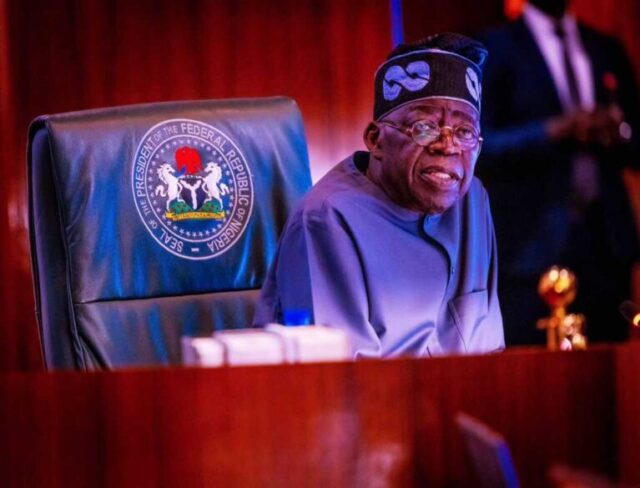
The presidency has said President Bola Ahmed Tinubu will make a careful decision on whether electronic transmission of election results should be fully implemented, taking into account the country’s present realities.

Presidential spokesperson Sunday Dare explained that the president would be guided by national interest and practical considerations, especially infrastructure limitations, before assenting to any amendment on the matter.

The Senate recently passed an amendment to the Electoral Act approving electronic transmission of results from polling units to the portal of the Independent National Electoral Commission, with provisions allowing manual transmission where network challenges occur.

The move followed sustained pressure from civil society groups calling for mandatory real-time electronic transmission.

Speaking during a television interview, Dare described Tinubu as a committed democrat who would act responsibly, stressing that no country operates a flawless electronic system.
Opposition parties react

The Peoples Democratic Party criticised the stance, arguing that the administration appears reluctant to guarantee real-time electronic transmission.

The party said the All Progressives Congress had previously supported electronic voting before assuming power and questioned why it now appears hesitant.

Similarly, the African Democratic Congress accused the federal government of making excuses for the electoral body, suggesting that resistance to electronic transmission reflects fears about transparency and the credibility of elections.

Political analyst Jide Ojo maintained that the fate of electronic transmission should not depend solely on the president, noting that electoral laws fall under the authority of the National Assembly.

He argued that the legislative provision allowing electronic transmission as a backup remains a practical compromise.

Samson Itodo of Yiaga Africa said opposition to electronic transmission often stems from concerns about transparency, adding that both manual and electronic systems are vulnerable if not managed with integrity.

He also clarified that once the National Assembly passes an amendment, it is forwarded to the president for assent, and lawmakers retain the constitutional power to override a refusal.

Addressing infrastructure concerns, Itodo referenced findings from a joint committee of INEC and the Nigerian Communications Commission which indicated that most polling units already have some level of network coverage.

He added that electronic transmission was deployed in parts of the 2023 general elections, suggesting the current debate is more political than technical.

Google search engine

Electoral Amendment Bill: NASS To Begin Harmonisation Monday

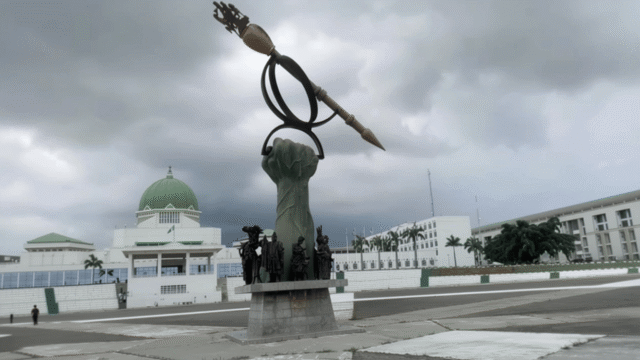
Lawmakers at the National Assembly are set to begin harmonisation of the Electoral Amendment Bill on Monday as efforts intensify to forward a unified version of the legislation to President Bola Ahmed Tinubu for assent.

Members of the joint conference committee drawn from the Senate and the House of Representatives have been given a one-week window to resolve differences in the versions earlier passed by both chambers.

Central to the deliberations are provisions relating to the electronic transmission of election results and the broader role of technology in collation.

The reconciliation process follows legislative procedure, which requires both chambers to produce a single agreed text when separate versions of a bill are adopted before it is transmitted to the president.

Public interest in the amendment has grown since controversies surrounding the 2023 general elections, particularly the failure of the Independent National Electoral Commission to upload presidential election results to its Result Viewing Portal in real time.

The Senate had earlier passed the Electoral Act (Repeal and Enactment) Bill, 2026 after reviewing all 155 clauses, making adjustments to several sections while retaining the bulk of the original provisions.

One of the notable changes was the reduction of the timeframe for INEC to issue a notice of election from 360 days to 180 days.

The proposal was championed by Senator Tahir Monguno, who argued that the earlier timeline had become impractical and could hinder preparations for future elections.

The ongoing amendment process comes amid mounting pressure on lawmakers to finalise the legal framework guiding Nigeria’s electoral system ahead of upcoming polls, with debates continuing over transparency, credibility and public trust in the process.

Google search engine

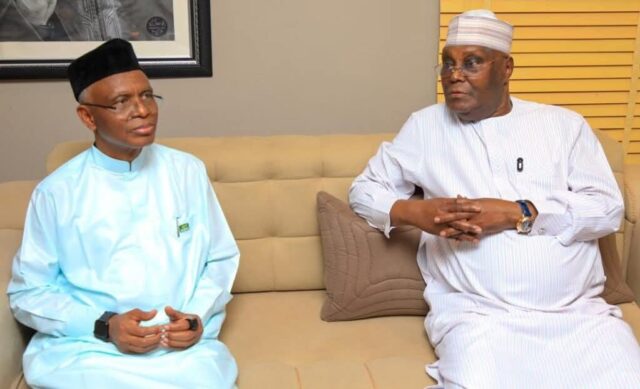
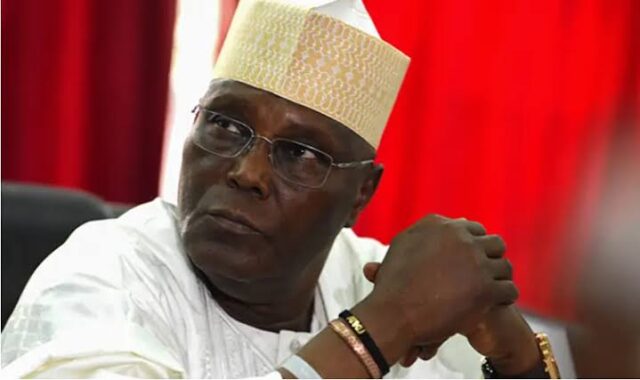
Airport Drama: Atiku Blasts ‘Partisan’ ICPC Over Alleged Move To Arrest El-Rufai

Former Vice-President Atiku Abubakar has criticised the Independent Corrupt Practices and Other Related Offences Commission, accusing the agency of acting in a partisan manner after what he described as a failed attempt to arrest former Kaduna State governor Nasir El-Rufai at an airport.

In a statement shared on social media, Atiku said he visited El-Rufai in solidarity following the incident, which reportedly occurred when the former governor returned to Nigeria.

He described El-Rufai as a key figure within the African Democratic Congress and condemned what he termed an unjustified move against him.

Photos posted online showed Atiku meeting privately with El-Rufai at his residence after the development.

The anti-corruption agency has yet to issue an official response to the allegation.
Rising political tension

The incident comes amid heightened political activity surrounding El-Rufai’s recent alignment with the ADC and his public criticism of federal authorities.

In recent weeks, the former governor had expressed concerns about possible actions by security agencies, citing his growing involvement in opposition politics.

Reports indicated that operatives attempted to stop him at the airport upon arrival, though no arrest was eventually made.

His aides claimed the officials did not present a warrant during the encounter, leading to a brief confrontation before he was allowed to leave the terminal.

As of the time of reporting, neither the ICPC nor any other security agency has formally confirmed the incident.

Google search engine

Quiet Reforms, Loud Results: Understanding Peter Mbah’s Governance Philosophy

By Dr. Malachy Chuma Ochie,

In public life, there are leaders who govern by spectacle, and there are leaders who govern by substance.

The former dominate headlines; the latter transform history. Governor Peter Mbah belongs, unmistakably, to the second category. His governance philosophy is not anchored on noise, but on measurable outcomes.

It is a philosophy of quiet reforms that inevitably produce loud results. From the very onset of his administration, Governor Mbah made a deliberate choice to move governance away from ceremonial politics to performance-driven administration.

He understood that the true test of leadership is not how frequently a governor speaks, but how profoundly his policies touch the daily lives of citizens. In Enugu State today, the evidence is visible to both the discerning critic and the ordinary trader in Ogbete market.

His approach rests on three enduring pillars, namely: vision, systems, and execution.

First, vision. Governor Mbah has consistently articulated a bold economic ambition for Enugu State and that is to grow the state’s economy to unprecedented levels and reposition it as a premier destination for investment, enterprise, and innovation.

But unlike rhetorical blueprints of the past, this vision is supported by clearly defined sectoral strategies covering agriculture, technology, infrastructure, education, and healthcare. Each of these sectors is treated, not as political slogans, but as economic engines.

Second, systems. Sustainable governance is not built on personalities; it is built on institutions.

One of the quiet revolutions of the Mbah administration is the emphasis on institutional reforms; with emphasis on strengthening public finance management, digitizing processes, insisting on data-driven planning, and enforcing accountability.

These reforms may not trend on social media, yet they are the invisible scaffolding upon which durable development stands.

Third, execution. Many leaders promise; few deliver at scale and speed. Governor Mbah has demonstrated an uncommon intolerance for inertia. Projects are not merely announced, they are tracked. Targets are not decorative; they are monitored. Timelines are not elastic; they are respected.

This culture of execution has restored a sense of urgency and discipline within the machinery of government. Investors, development partners, and civil servants alike now operate within a framework where results are expected, not optional.

The outcome of this philosophy is already resonating. Infrastructure renewal is not an abstract policy, it is visible in roads, schools, and public facilities.

Economic revitalization is not a campaign phrase, it is reflected in renewed investor interest and expanding opportunities. Governance has gradually shifted from patronage to productivity.

Perhaps most importantly, Governor Mbah has reintroduced dignity to public administration. He governs with the quiet confidence of a man focused on legacy rather than applause. He understands that history is kinder to builders than to performers.

As 2027 approaches, the question before Ndi Enugu is not whether reforms have been noisy enough. The real question is whether the results have been meaningful enough. In an era where politics often rewards theatrics, Enugu State has been privileged to experience leadership anchored on discipline, foresight, and measurable progress.

And for a state determined to rise beyond mediocrity, it is a doctrine worth sustaining.

Google search engine

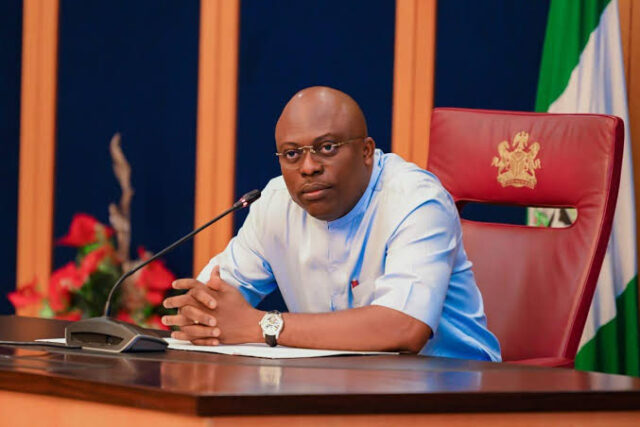
JUST IN: Governor Fubara Dissolves Cabinet


Rivers State Governor, Siminalayi Fubara, has dissolved the State Executive Council, directing all commissioners and special advisers to hand over to permanent secretaries or the most senior officials in their ministries with immediate effect.

The decision was conveyed in a statement issued on Thursday by the Chief Press Secretary to the governor, Onwuka Nzeshi.

Fubara expressed appreciation to the outgoing council members for their service and wished them success in their future pursuits.

The move comes barely 48 hours after the Minister of the Federal Capital Territory, Nyesom Wike, confirmed renewed reconciliation efforts aimed at resolving the prolonged political crisis in the state.

Wike had disclosed that President Bola Tinubu recently met with key political stakeholders from Rivers, including Governor Fubara and his predecessor, in a bid to ease tensions stemming from the power struggle in the state.

The closed-door meeting at the Presidential Villa also involved other prominent leaders from Rivers.

The intervention followed an ongoing impeachment process initiated against the governor by lawmakers believed to be loyal to Wike — the third notice served so far — which has now become the subject of litigation.

Speaking after inspecting projects in Abuja earlier in the week, Wike said the peace meeting was convened at the instance of the President, expressing optimism that it would bring a lasting resolution to the crisis.

He urged both the state assembly and the governor to cooperate with the reconciliation process.

Observers had also noted that Fubara accompanied Wike to his Abuja residence after the Villa meeting, a development interpreted by some as a possible sign of easing tensions.

It remains uncertain, however, whether the pro-Wike lawmakers will withdraw the impeachment notice or if the ongoing talks will lead to a durable political settlement in the oil-rich state.

Google search engine

Again, Judge Recuses Self From Malami’s N213bn Asset Forfeiture Suit

Justice Obiora Egwatu on Thursday stepped down from presiding over the Federal High Court’s asset forfeiture suit involving former Attorney-General of the Federation, Abubakar Malami, SAN, and two others, citing personal reasons.

Addressing the court shortly after counsel for the parties made their appearances, Justice Egwatu said, “For personal reasons and in the interest of justice, I will recuse myself from this case.”

He directed that the case file be forwarded to the Chief Judge of the Federal High Court for reassignment.

The recusal comes amid a high-stakes legal battle over 57 properties valued at approximately ₦213.2 billion, which Justice Emeka Nwite had temporarily ordered forfeited to the Federal Government last month.

The interim forfeiture, granted on January 6, followed an ex parte application by the Economic and Financial Crimes Commission (EFCC), which claims the assets are suspected proceeds of unlawful activity linked to Malami and his sons.

The portfolio includes university buildings, hotels, plazas, filling stations, residential estates, and large tracts of land across Abuja, Kebbi, Kano, and Kaduna states.

Justice Nwite’s interim order also directed the EFCC to publish the notice in a national newspaper and invite interested parties to show cause within 14 days why the properties should not be permanently forfeited.

Malami, however, has challenged the forfeiture order, insisting that his wealth was lawfully acquired and fully declared to the relevant authorities.

He urged the court to dismiss the proceedings, warning against what he described as “conflicting outcomes” and “duplicative litigation,” while asserting that the action violates his rights to property, presumption of innocence, and family life.

He also sought to restrain the EFCC from interfering with his ownership, possession, and control of three specific properties listed in the EFCC’s application, noting that one property is held in trust for the estate of his late father, Kadi Malami.

Google search engine

2027 Presidency: Atiku Denies Secret VP Deal With Gov Makinde, Dismisses Fayose’s N10 Billion Claims As ‘Beer Parlour Tales’

Former Vice President Atiku Abubakar has dismissed claims by ex-Ekiti State Governor Peter Ayodele Fayose, describing him as a “serial political gossip” and urging the public to disregard his so-called stories about vice-presidential arrangements.

Atiku clarified that during his recent visit to the residence of former Head of State Ibrahim Babangida, there were no discussions or negotiations regarding vice-presidential tickets.

Fayose had alleged that Oyo State Governor Seyi Makinde agreed to run as Atiku’s running mate in exchange for a ₦10 billion contribution, a claim Atiku’s camp calls entirely false.

In a statement issued in Abuja on Thursday, Phrank Shaibu, Senior Special Assistant on Public Communication to Atiku, said, “Our attention has been drawn to a reckless fabrication titled ‘Between Atiku and Makinde, Untold Story of What Happened in Minna Yesterday,’ attributed to Peter Fayose.”

“Let it be stated clearly: the entire publication is a shameless concoction—a tissue of lies stitched together by a serial purveyor of political gossip.”

Shaibu added that there were no secret deals, zoning manipulations, or financial arrangements as alleged.

“His Excellency Atiku Abubakar’s political engagements are broad-based, principled, and national in scope—not the narrow, transactional theatrics invented in that publication.”

“Falsehood may trend briefly, but it collapses under the weight of truth,” the statement read.

The statement advised the public to treat Fayose’s claims with contempt and reiterated that Atiku conducts politics transparently, without secret deals, bribery, or transactional desperation.

Google search engine

ADC Begins Nationwide Membership Drive, Promises To Take Power In 2027

The African Democratic Congress (ADC) has kicked off a nationwide membership drive aimed at strengthening its grassroots presence and positioning itself as a formidable contender in Nigeria’s 2027 general elections.

Speaking at the launch event in Abuja on Thursday, ADC National Chairman, Senator David Mark, expressed confidence that the party would form the government in 2027.

He urged party officials to register all interested Nigerians, emphasizing that membership cards would be issued to anyone willing to abide by ADC’s rules.

“ADC is a new bride in town. Everywhere you go, people want to join ADC. The cards are out now, and this is the foundation we are laying for 2027,” Mark said.

The launch featured other key party leaders, including Registration Committee Chairman Kashim Imam, Deputy Chairperson and Head of Digital Platform Aisha Yesufu, and National Secretary Ogbeni Rauf Aregbesola.

They outlined the party’s approach to building a credible, transparent, and verifiable membership register.

In a keynote titled ‘A Register of Conviction, Not Convenience,’ Aregbesola warned against inflating membership figures with fake or duplicate entries.

“A party of ghosts cannot win elections, govern effectively, or hold its leaders accountable. Every member must be real, documented, and verified,” he said.

Yesufu highlighted the party’s digital registration platform, describing it as fast, secure, and accessible, including features like passport photos, QR codes, and verification via voters’ identification numbers.

Imam explained that membership cards would be issued on demand to avoid hoarding and that registration would be both manual and online to ensure wide accessibility.

“The ADC does not merely seek to participate in Nigeria’s democracy; we aim to redefine it,” Aregbesola said.

“We will govern ourselves with integrity first, ensuring transparency, accountability, and respect for all members. Only then can we expect Nigerians to trust us with their government.”

The party emphasized that this membership drive is the foundation for a disciplined, credible, and robust organization ready to challenge established political forces in 2027.

Google search engine

MOST COMMENTED

- Advertisement -
Google search engine