Home Blog Page 256

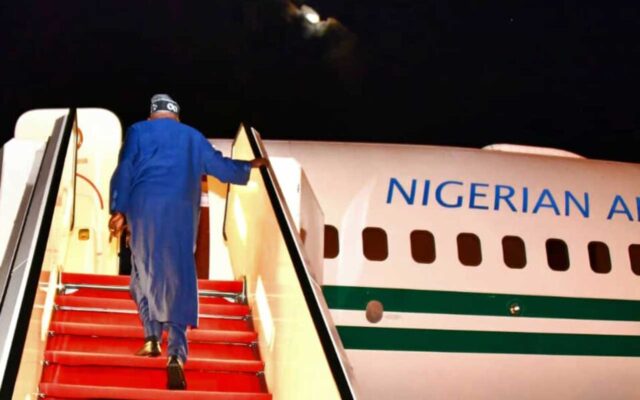
Tinubu Heads To Rome For High-Level Aqaba Security Summit


President Bola Ahmed Tinubu is set to depart Abuja today, Sunday, October 12, for Rome, Italy, where he will participate in the Aqaba Process Heads of State and Government Meeting, scheduled to begin on October 14.

The meeting, co-chaired by the Hashemite Kingdom of Jordan and the Italian Government, focuses on strengthening global and regional responses to security threats, particularly in West Africa.

According to a statement by Bayo Onanuga, the President’s Special Adviser on Information and Strategy, the summit will bring together Heads of State, senior military and intelligence officials, and representatives from inter-governmental and non-governmental organisations.

The Aqaba Process, launched in 2015 by King Abdullah II of Jordan, aims to tackle emerging and complex security threats.

This year’s discussions will centre on the spread of terrorist networks across West Africa, the crime-terrorism nexus, the link between Sahel-based terrorism and maritime piracy in the Gulf of Guinea and online radicalisation and digital propaganda used by extremist groups.

“Participants will exchange insights on the current security situation in West Africa and work towards coordinated strategies to combat both land-based and maritime threats,” the statement read.

The summit will also address ways to disrupt online recruitment by terrorist organisations.

Beyond the main sessions, President Tinubu is expected to hold bilateral meetings with other world leaders to explore collaborative solutions to the security challenges facing Nigeria and the broader subregion.

Accompanying the President on the trip are Ambassador Bianca Odumegwu–Ojukwu, Minister of State for Foreign Affairs, Mohammed Badaru Abubakar, Minister of Defence, Nuhu Ribadu, National Security Adviser, Ambassador Mohammed Mohammed, Director-General of the National Intelligence Agency (NIA) as well as other top government officials.

Google search engine

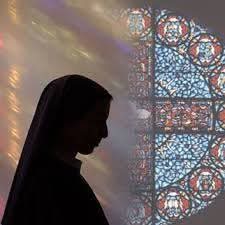
I Was Dismissed For Refusing To Be A Temple Prostitute – Ex-Catholic Sister Speaks Out


Annastasia Kinse, the first Catholic reverend sister from her village in Plateau State, has shared her story of alleged harassment, cover-up, and dismissal from the Congregation of Mother of Perpetual Help of the Archangels Sisters (MOPHAS).

In an exclusive interview, she speaks openly about what led to her dismissal after 10 years of religious life, including her claims of sexual harassment, institutional intimidation, and spiritual betrayal.

Kinse joined the convent in July 2015 and made her perpetual profession in 2023. She was also a Graduate Assistant at Veritas University, Abuja, while pursuing a master’s degree before her dismissal.

“Religious life was a deep calling. I was proud to be the first sister from my village. I joined to serve God completely, in sincerity and truth.”

She said the crisis began after she reported her Head of Department at Veritas University for sexual harassment, providing what she claims were video and voice recordings as evidence.

“I wrote a confidential complaint, asking for anonymity. But they refused and told me to defend the claims publicly. The panel made me feel like I was the one on trial.”

She said she forfeited an exam to appear before the panel, only to face intimidating questions like, “If you knew he would harass you, why did you go to his office?”

“I was pressured, mentally distressed, and had even written to the school requesting counselling. No support was given.”

Afterward, she says priests and staff arrived at her home uninvited, attempting to confront her with a nurse in tow.

Veritas University is owned by the Catholic Bishops’ Conference of Nigeria, and her congregation was founded by the Bishop of Auchi Diocese.

“They told me that speaking out would damage the university’s image. They were more interested in protecting the institution than the victim.”

On July 12, she posted on Facebook claiming she had converted to Islam, a statement widely cited by the Church to justify her dismissal.

“That post was made in frustration. My aunt was a Muslim, and I used her name out of despair. It wasn’t a conversion. I still love the Church and remain Christian.”

She was handed a letter dated July 21, but said she only received it September 24. The letter accused her of apostasy and renouncing her faith.

“When I got back to the central house, my belongings had been thrown outside. My habit had already been taken. I was shattered.”

“Ten years of sacrifice dismissed like I meant nothing.”

She said the university and congregation contacted her parents without her consent, claiming she needed psychiatric help.

“They sent ₦50,000 to my father so my mother could come to Abuja. I warned them: if you come believing them, you won’t find me here.”

She voluntarily underwent psychological and psychiatric evaluation at a university teaching hospital, and is still waiting for the official report.

Kinse revealed she is battling health issues stemming from a motorcycle accident in February 2024, leading to a spinal disc bulge.

“I’ve been living with pain and managing it alone. I live with my cousin now, and I’ve refused to take help from the same people who mistreated me.”

She alleges that another priest made sexual advances toward her.

“He told me he wanted to be the first man to sleep with me. I rejected him. That’s when I became labelled as ‘difficult’ and ‘uncooperative.’”

She also claims a priest who had earlier made advances was later sent to “counsel” her.

“The same man who harassed me was sent to counsel me. That’s not help, that’s punishment.”

In their final meeting, she says the bishop dismissed her case outright.

“I told him the accusation of renouncing Christianity was false. He said, ‘What do you want me to do now that you’re no longer one of us?’ I walked away quietly.”

Despite the dismissal, she stands by her vows.

“Perpetual vows are meant to last until death. You can’t undo that with a letter full of lies. They accused me of burning my habit — completely false.”

She insists the narrative about her mental health is fabricated.

“If they say I needed help, where’s the medical proof? Where’s the counselling record? There is none.”

“This experience opened my eyes. There’s rot in the system. Institutions will protect their own and silence victims.”

To aspiring sisters:

“Religious life is beautiful but tough. Not everyone is there for God. Speak up if you face injustice. Don’t let fear silence you.”

Kinse credits her family with helping her survive emotionally.

“My family believed in me when everything else collapsed. That gave me strength.”

Despite the trials, she says her faith in God remains unbroken.

“I may have lost my job, my home, and my health. But not my voice. If my story gives courage to one other woman, it won’t be in vain.”

“God is still writing my story, even the chapters that broke me will one day make sense.”

 

Google search engine

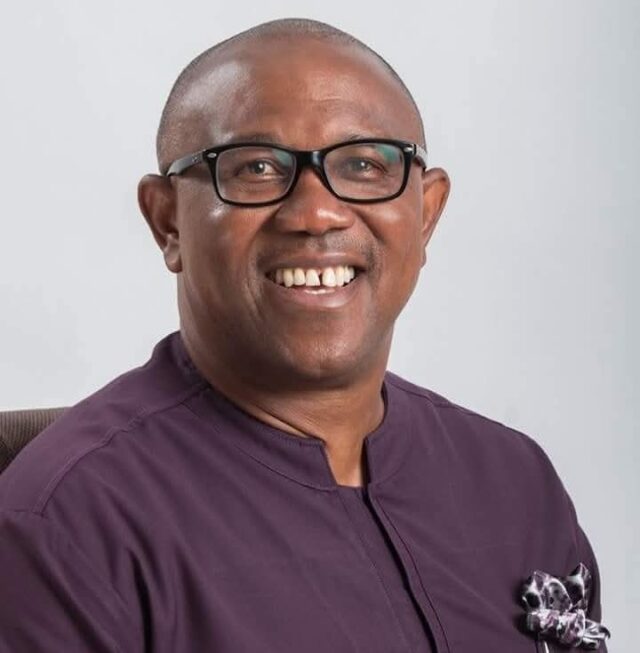
Peter Obi Owns Over 200 Shops In Demolished Lagos Trade Fair Complex – Senator Umeh Alleges


Senator Victor Umeh, who represents Anambra Central, has revealed that Peter Obi, the former governor of Anambra State and 2023 Labour Party presidential candidate, owns more than 200 shops in the recently demolished Trade Fair Complex in Lagos.

The Lagos State Government had earlier justified the demolition exercise, citing violations of urban planning and development regulations.

However, speaking during an interview on Channels Television’s Sunrise programme, Senator Umeh strongly condemned the action, describing it as unlawful and unjust, particularly towards traders from the Southeast.

“More than 70 percent of the business owners in that complex are of Igbo origin,” Umeh noted.

“You can’t just move in and destroy people’s means of livelihood without due process. Peter Obi is not just a stakeholder, he’s one of the original developers of that complex. He owns a plaza with over 200 shops there, which he has held since 1995. He’s also a patron of the traders’ associations in the area.”

Umeh explained that Obi was compelled to respond publicly because displaced traders had reached out to him, seeking help over what they believed was an act of injustice.

“People called him because their properties were being destroyed and they had no one else to turn to. It’s wrong to claim he’s being provocative when the real provocation came from the state authorities acting unlawfully,” Umeh said.

The senator further challenged the legitimacy of the demolition, alleging that the land does not belong to the Lagos State Government, and suggesting that the action was carried out illegally and with ulterior motives.

Google search engine

Rights Groups Clash With Enugu Govt Over Alleged N50,000 Justice Review Fee


Two prominent human rights organisations, the Rule of Law and Accountability Advocacy Centre (RULAAC) and the Civil Rights Realisation and Advancement Network (CRRAN), have accused the Enugu State Ministry of Justice of demanding a ₦50,000 payment before accepting a petition to review a criminal case, an allegation the state government has firmly denied.

In a joint petition dated October 7, 2025, and addressed to Governor Peter Ndubuisi Mbah, the groups described the demand as “a disturbing example of official misconduct” that threatens public confidence in the state’s legal system.

The petition, signed by Okechukwu Nwanguma, Executive Director of RULAAC, and Barrister Olu Omotayo, President of CRRAN, centers around the case of Godwin Odey, a 27-year-old OND graduate from Benue State.

Odey is currently facing charges of murder and unlawful possession of Indian hemp (under Charge Nos. MEN/566C/2025 and MEN/565C/2025), stemming from his arrest in Obollo-Afor, Udenu LGA, on September 20, 2025.

According to the groups, Odey was returning from a traditional wedding when he was arrested, allegedly after the police claimed cannabis was found in the vehicle he was riding.

However, witnesses maintain he was at the wedding throughout and suggest his arrest was an attempt at extortion gone wrong.

The rights bodies said that when their legal representatives attempted to submit a petition requesting a review of the case to the Attorney-General’s office, they were told a ₦50,000 “review fee” must be paid first, a condition they view as unlawful and unjust.

RULAAC and CRRAN are now urging Governor Mbah to launch an independent investigation into the allegation, discipline any officials found culpable, and order an immediate review of Odey’s case to avoid what they fear could be a grave miscarriage of justice.

“A justice ministry demanding money before accepting a petition involving a possible wrongful prosecution is deeply troubling and unacceptable,” they said.

In response, the Enugu State Government has categorically denied the allegations, describing them as “false, malicious, and misleading.”

In a statement issued Friday by Chukwuemeka Nebo, Director of Information at the Ministry of Information and Communication, the government stated that the Ministry of Justice does not charge any fee for receiving or processing petitions related to criminal cases.

“The only payments required are standard administrative fees for services such as certified true copies or legal fiats, not for the submission or review of complaints, especially from victims or lawyers offering pro bono support,” Nebo clarified.

He added that these fees are paid into government accounts and are part of long-standing public service protocols, not illegal charges.

The statement further defended Attorney-General Dr. Kingsley Udeh, SAN, describing him as a figure of “impeccable integrity,” and highlighted the Mbah administration’s ongoing justice reforms, including Digitization of court systems, Establishment of citizen rights and mediation centres across LGAs as well as Creation of a Witness Support Fund.

“This is nothing more than a smear campaign from those opposed to the government’s transparent and reform-driven justice agenda,” the statement said.

The government reaffirmed its commitment to a fair, accessible, and corruption-free justice system, insisting that all petitions are processed free of charge.


Google search engine

Ebonyi Man Arrested For Selling His 5-Day-Old Baby For N1.5 Million


The Ebonyi State Police Command has arrested a man, Chukwuma Onwe, for allegedly selling his five-day-old baby boy for ₦1.5 million.

Onwe, who hails from Nwezenyi-Igbeagu community in Izzi Local Government Area, was taken into custody after his partner, Philomena Iroko, raised the alarm when she discovered the child was missing.

According to reports, Iroko had initially been told by Onwe that the baby was handed over to his sister for care.

However, a concerned neighbour, sensing foul play, alerted the police, leading to Onwe’s arrest.

The baby was reportedly sold to Chinyere Ugochukwu, a woman who has also been arrested in connection with the incident.

The transaction and handover allegedly took place in the Azugwu area of Abakaliki.

SP Joshua Ukandu, the Police Public Relations Officer (PPRO) for Ebonyi State, confirmed the arrest to the News Agency of Nigeria (NAN) on Saturday. He said:

“Yes, Onwe is in custody, along with the alleged buyer. The child has been recovered safely, and investigations are underway.”

Speaking to reporters, Philomena Iroko, the child’s mother, expressed shock and betrayal:

“He told me he gave our baby to his sister to help with care. I had no idea he had sold our child for money.”

Iroko said she was misled by promises of marriage and stability, unaware that her partner had other plans.

“He kept telling me he would marry me. I didn’t know he was lying all along.”

Now left alone with her infant, Iroko has appealed to the public and the Ebonyi State Government for assistance:

“I have no husband, no job, and no means to care for my child. I’m pleading for support—anyone who can help, please do.”

The Ebonyi State Police Command has assured the public that justice will be served and that those involved in child trafficking will face the full weight of the law.

Google search engine

Madagascar Soldiers Join Protesters, Defy Orders Amid Growing Unrest

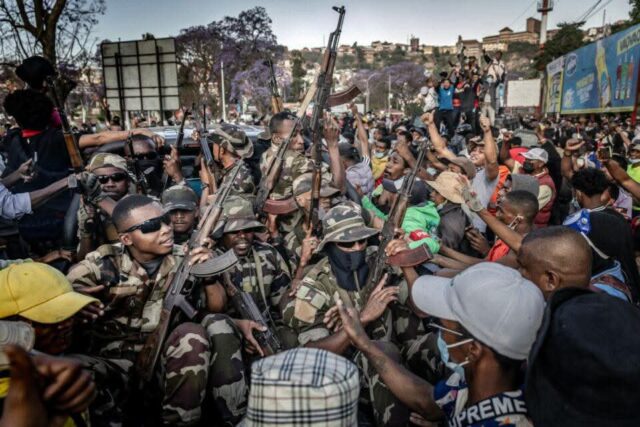
Members of a section of the Malagasy army ride on a pickup truck to secure the area around Lake Anosy as protesters celebrate their arrival following clashes between demonstrators and security forces during protests calling for the resignation of President Andry Rajoelina in Antananarivo, on October 11, 2025. Groups of Madagascar soldiers joined thousands of protestors in the capital on October 11, 2025, after announcing they would refuse any orders to shoot demonstrators. Fresh youth-led demonstrations in


Tensions in Madagascar reached a new peak on Saturday as groups of soldiers defied government orders and joined thousands of demonstrators in the capital, Antananarivo, in one of the largest anti-government protests seen since unrest broke out last month.

According to AFP reporters on the ground, soldiers arrived near Lake Anosy, where protesters had gathered, just after police attempted to disperse the crowds with tear gas and stun grenades.

The soldiers were met with loud cheers, with demonstrators chanting “Thank you!” and waving the national flag alongside uniformed personnel.

Earlier in the day, soldiers at a military base in Soanierana district released a video publicly declaring their refusal to act against fellow citizens. In the video, they said:

“Let us unite, military, gendarmes and police, and refuse to be paid to shoot our friends, brothers, and sisters.”

They urged military personnel across the country to reject any orders to use force and told soldiers stationed at the airport to block any aircraft from departing.

Calling on fellow troops to defy superiors who command violence, they added:

“Point your weapons at those who order you to fire. They won’t care for your families if you die.”

The extent of the military’s defection remains unclear, but their presence significantly boosted the morale of the demonstrators and marked a major shift in the balance of power.

The unrest began on September 25, driven by widespread frustration over persistent power outages and water shortages.

What began as economic protests have since evolved into a broader youth-led political movement demanding the resignation of President Andry Rajoelina.

Saturday’s mass demonstration, largely driven by youth, was the largest yet, indicating growing momentum against the government.

In 2009, it was a mutiny at the same Soanierana military base that played a pivotal role in bringing Rajoelina to power during a similar wave of popular discontent.

In a press conference on Saturday, the newly appointed Minister of Armed Forces, General Deramasinjaka Manantsoa Rakotoarivelo, urged restraint:

“We call on our brothers who disagree with us to prioritise dialogue. The Malagasy army remains a mediator and the last line of defence for the nation.”

Despite these calls, the government has taken a harder line in recent days.

Following the initial wave of protests, President Rajoelina dissolved his cabinet, but has since pivoted by appointing military officers to key positions, including naming a soldier as Prime Minister on October 6.

He declared that Madagascar “no longer needs disturbances,” signaling a firm stance against further unrest.

In the lead-up to Saturday’s protests, security forces had used aggressive tactics, including rubber bullets and tear gas. Videos of violent police actions, such as a protester being chased and beaten unconscious, went viral, prompting widespread outrage.

The United Nations condemned the use of excessive force and urged authorities to respect fundamental rights, including freedom of assembly and peaceful protest.

The UN also reported at least 22 deaths in the initial days of protests. President Rajoelina, however, contested the figure, claiming only 12 deaths, all of whom he alleged were “looters and vandals.”

Madagascar, one of the poorest nations globally, has a history of political instability since gaining independence in 1960.

Mass protests in 2009 ousted then-president Marc Ravalomanana, and brought Rajoelina to power for the first time.

He returned to office after winning controversial elections in 2018 and again in 2023, though the latter was marred by a widespread opposition boycott and allegations of electoral malpractice.

Google search engine

Ebonyi Indigenes Disown Protest Against Arise TV’s Rufai Oseni Over Clash With Umahi


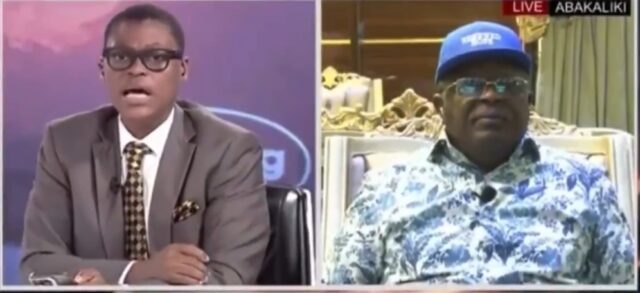
A group of Ebonyi State indigenes in the Diaspora has distanced itself from a planned protest against Arise TV anchor Rufai Oseni, following his on-air clash with Minister of Works, David Umahi.

In a statement released on Saturday and made available to Daily Post, Ambassador Pascal Oluchukwu, speaking on behalf of the concerned indigenes, condemned the planned demonstration, stressing that the group behind it does not represent the true voice or values of Ebonyi youths.

This development comes shortly after some self-identified “Ebonyi youths” threatened to stage a protest demanding an apology from Rufai over the altercation during a live broadcast.

Recall that Umahi and Oseni were involved in a heated exchange during a live interview on Arise TV, where the minister made dismissive remarks, telling the journalist to “keep quiet” and claiming he was “too small” to question him.

The incident quickly drew public attention and widespread commentary on press freedom and government accountability.

Reacting to the fallout, Oluchukwu said:

“The individuals planning a protest against Rufai Oseni do not reflect the will of Ebonyi youths or the true character of our people. Their actions are a throwback to the culture of sycophancy and intolerance that defined Umahi’s autocratic eight years in office.”

He called on young people from Ebonyi to resist being used as tools to intimidate journalists or silence media platforms committed to transparency.

“Real Ebonyi youths must focus on their future and reject manipulation. Attacking journalists only serves those who want to evade public scrutiny.”

Oluchukwu further urged public officials to act with accountability and humility, stating:

“Transparency demands that no leader, past or present, be treated as untouchable. We call on Senator Umahi to carry himself with the dignity befitting his role as Minister and to respond to public questions with facts, not arrogance.”

He appealed to Arise News, the National Broadcasting Commission (NBC), the Broadcasting Organisations of Nigeria (BON), and the general public to disregard the so-called protest, which he described as an attempt to shield power from legitimate inquiry.

“Senator Umahi’s recent conduct risks further tarnishing the image of Ebonyi State. We urge him to rise above personal ego and engage with the media constructively, as is expected of a public servant.”

Google search engine

Yahaya Bello Will Come Out Stronger From EFCC Allegations – Rep Member


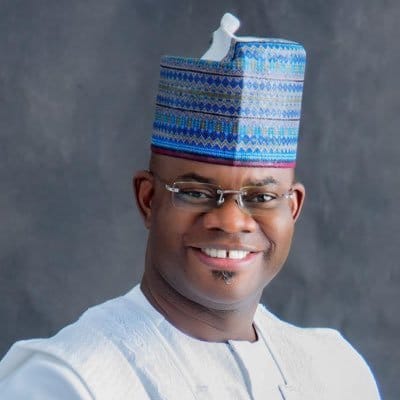
Deputy Spokesman of the House of Representatives, Hon. Philip Agbese, has expressed strong support for former Kogi State Governor, Yahaya Bello, amid ongoing money laundering allegations brought against him by the Economic and Financial Crimes Commission (EFCC).

Speaking outside the Federal Capital Territory (FCT) High Court in Maitama, Abuja, following Thursday’s proceedings, Agbese described the allegations as politically motivated and expressed confidence that Bello would emerge from the trial with his integrity intact.

“Yahaya Bello is one Nigerian who cannot and will never steal a dime from public funds,” Agbese stated.

“I have known him for over two decades. He is a patriot, a nationalist, and a selfless public servant dedicated to the development of his people.”

Agbese characterized the legal process as more of a test of character than an indication of wrongdoing, insisting that the former governor left office “poorer than he entered,” having invested his personal and public resources in the transformation of Kogi State.

“When he assumed office in 2016, Kogi was struggling with insecurity, poor infrastructure, and economic stagnation,” the lawmaker said.

“Bello introduced bold reforms, empowered young people, improved infrastructure, and prioritized education and healthcare.”

He cited several of Bello’s achievements, including the Muhammadu Buhari Civic Centre, the Kogi State University Teaching Hospital in Anyigba, and various youth and women empowerment programs.

Agbese dismissed the EFCC’s allegations as part of a “politically orchestrated effort” to discredit Bello, whom he described as a rising star in Nigerian politics.

“This is not about accountability; this is about political vendetta,” Agbese claimed.

“Why is a man who left office without a mansion or offshore account being targeted? Because he dared to do things differently.”

He added that Bello’s record of fiscal discipline and transparency should be a model for other leaders rather than a reason for persecution.

The lawmaker called on Nigerians to support Bello and examine the broader implications of the charges being pursued.

“This trial is not just about Yahaya Bello; it is about the kind of leadership we want in Nigeria,” he said.

“He represents a generation of leaders who put service above self. Standing by him is standing for patriotic governance.”

Agbese concluded by expressing optimism about the eventual outcome:

“When this is over, I believe Yahaya Bello will not only be vindicated but will come out even stronger, with his credibility intact and his commitment to public service reaffirmed.”

Google search engine

“I’m Your Senior In Engineering And Governance”, Umahi Carpets Gov Makinde


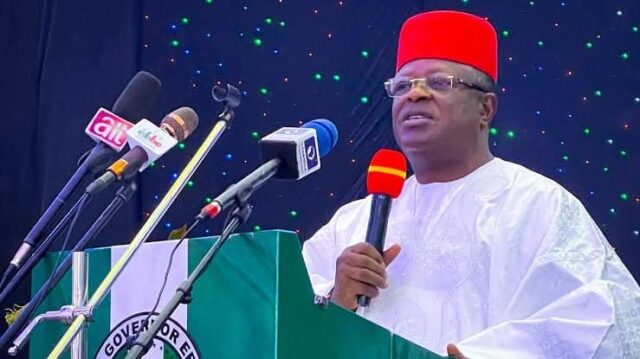
The Minister of Works, Engineer David Umahi, has hit back at Oyo State Governor, Seyi Makinde, over comments regarding the cost of federal road projects, insisting that he is more experienced both as an engineer and in governance.

Umahi, who was inspecting the Abuja–Mararaba–Keffi road project alongside Nasarawa State Governor Abdullahi Sule on Saturday, addressed the growing public debate about the cost per kilometre of federal road projects, a discussion sparked by Makinde’s recent remarks.

“I have great respect for governors and the Governors’ Forum, but when someone who is clearly my junior in both engineering and governance speaks out of turn, I won’t keep quiet,” Umahi said.

“I’m an ‘A’ student in mathematics, and that’s one of my strengths.”

The minister explained that cost per kilometre for road construction varies based on multiple factors, including terrain, materials used, and scope of work involved.

He said the Keffi section of the road project was originally 43 km but had been extended to 45 km to utilise the ₦73 billion allocated by the previous administration.

“You can’t put one flat cost per kilometre,” he said.

“Using asphalt on shoulders is different from using concrete. When you add things like medians, site conditions, and scope, costs naturally vary.”

Umahi stressed that estimated project cost includes contingency provisions and Variations of Price (VOP), which may not even be used by the end of the project. Only after completion can the actual average cost per kilometre be accurately calculated.

“When the project is done, and unused contingency and VOP are removed, that’s when you can calculate a true average cost,” he added.

“Trying to oversimplify it is just mischievous.”

In what appeared to be a direct response to Governor Makinde, Umahi said:

“I understand that my brother and friend, Governor Makinde, made some comments. I respect him, but he studied electrical electronics engineering, this is civil engineering and road construction.
I am his senior both in engineering practice and in governance. If there’s anything he doesn’t understand, he should call and ask me.”

He continued, “I don’t want to join issues with him, but he should withdraw the claim that I’m ‘dancing around’ the issue. I don’t dance around anything. And if he insists, I invite him to a public debate on the subject.”

The minister also ridiculed what he called uninformed commentary, referencing AI searches and media reports:

“When people go around asking AI about the difference between average cost and estimated cost per kilometre, and AI ends up confirming what I said, that tells you something.
Even the NUC’s programme on professors agrees with me. In the field of practical engineering, God has made me a professor.”

Switching focus to the inspection, Umahi addressed the persistent traffic congestion along the Abuja–Mararaba–Keffi axis, saying a lasting solution would require cooperation from the Nasarawa State Government.

He said illegal roadside trading, shanties, and congestion have made expansion work difficult.

“We discovered that markets and traders have taken over the roadside in many areas. If the Governor agrees to remove those structures, we will add additional carriageways to ease the traffic,” Umahi stated.

He confirmed that the Federal Government is ready to carry out the expansion once the state clears the right of way, noting that such collaboration is crucial to resolving bottlenecks in the area.

Google search engine

FULL LIST: Tinubu Grants Clemency To 175 Convicts, Including Saro-Wiwa, Vatsa, Maryam Sanda


The Presidency has released the full list of 175 convicts and former convicts granted pardon or clemency by President Bola Ahmed Tinubu, in a sweeping move aimed at addressing historical injustices, promoting rehabilitation, and giving second chances.

The comprehensive list, made public on Saturday through a statement by presidential spokesman Bayo Onanuga, features a mix of high-profile individuals, death row inmates, non-violent offenders, and wrongly convicted historical figures.

According to the statement, the recommendations came from the Presidential Advisory Committee on the Prerogative of Mercy, chaired by Attorney-General and Minister of Justice, Prince Lateef Fagbemi (SAN).

Breakdown of the Clemency List

2 inmates released outright

15 former convicts pardoned – 11 of them posthumously

82 inmates granted clemency

65 had their sentences commuted

7 death row inmates had their sentences reduced to life imprisonment

Among the most symbolic decisions was the posthumous pardon of Major General Mamman Jiya Vatsa, executed in 1986 over an alleged coup plot, and Ken Saro-Wiwa along with the Ogoni Eight, hanged in 1995 under controversial circumstances.

Also included was Sir Herbert Macaulay, the Nigerian nationalist convicted in 1913 by British colonial authorities on charges of misappropriation.

The Presidency said the gesture corrects “historic injustices” and honours their legacy in Nigeria’s fight for freedom and justice.

“This move reflects the Tinubu administration’s resolve to correct long-standing wrongs and promote national healing,” the statement noted.

Clemency for Maryam Sanda, Farouk Lawan

The list also includes Maryam Sanda, who was sentenced to death in 2020 for the killing of her husband.

She was granted clemency based on demonstrated remorse and good behaviour during her time at Suleja Medium Security Custodial Centre, as well as emotional appeals from her family regarding the welfare of her two young children.

Former House of Representatives member Farouk Lawan, convicted for corruption, also benefited, as did Dr. Nwogu Peters, jailed for fraud. Both reportedly met the criteria of reform and good conduct.

A majority of the clemency recipients were inmates convicted of drug-related crimes, fraud, or illegal mining. Many had shown remorse and undertaken rehabilitation programmes, including vocational training and university studies via the National Open University of Nigeria (NOUN).

For instance: Abiodun Elemero, serving a life term for cocaine trafficking, and Aluagwu Lawrence, jailed for Indian hemp possession, received clemency due to their reformation behind bars.

Also pardoned were 36 illegal miners, convicted in 2024, with Senator Ikra Aliyu Bilbis reportedly pledging to support their post-release reintegration.

Seven death row inmates, including Emmanuel Baba and Moses Ayodele Olurunfemi, had their sentences reduced to life imprisonment.

Their clemency was granted based on factors like remorse, advanced age, ill health, or educational achievements in prison.

Others who benefited from sentence reductions included Professor Magaji Garba and Major S.A. Akubo.

Presidential adviser Bayo Onanuga said the action underscores President Tinubu’s belief in second chances and a justice system grounded in fairness, rehabilitation, and compassion.

“This gesture reflects the administration’s commitment to justice tempered with mercy, especially for those who have shown genuine remorse and a willingness to reform,” Onanuga stated.

The pardons were approved during a recent Council of State meeting chaired by President Tinubu and are already being hailed as a bold step toward national reconciliation and restorative justice.

The move also honours the memory of victims such as Chief Albert Badey and others associated with the Ogoni Nine case, acknowledging their place in Nigeria’s complex history of activism, resistance, and struggle.

Google search engine

MOST COMMENTED

- Advertisement -
Google search engine