Home Blog Page 271

Senate To Screen INEC Chair Nominee, Prof. Joash Amupitan Thursday


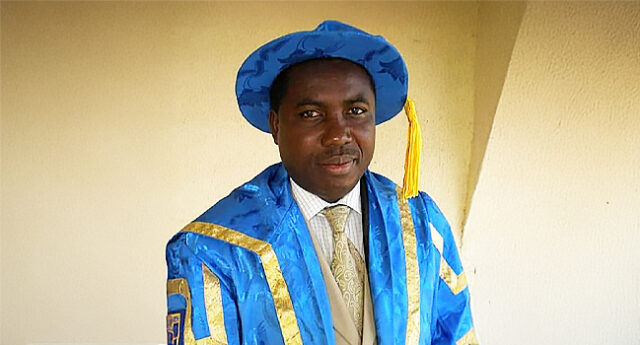
The Nigerian Senate is set to screen Professor Joash Amupitan, the nominee of President Bola Tinubu for the position of Chairman of the Independent National Electoral Commission (INEC), on Thursday, October 16, 2025.

This was confirmed in a circular issued on Wednesday by Bullah Audu Bi-Allah, Director of Information at the Senate, and shared with journalists in Abuja.

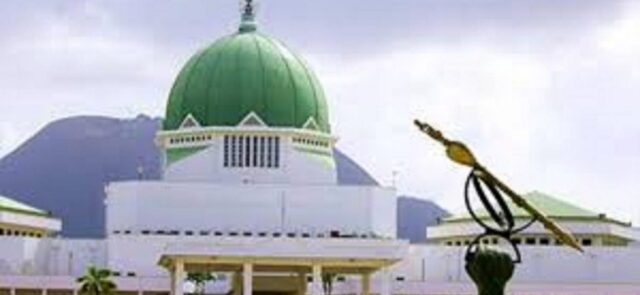
The screening will take place at the Senate Chamber of the National Assembly Complex.

The announcement comes less than 24 hours after Senate President Godswill Akpabio read President Tinubu’s letter formally requesting Amupitan’s confirmation on the Senate floor.

“The Senate will on Thursday conduct the screening of Prof. Joash Ojo Amupitan, the nominee of President Bola Tinubu, as Chairman of the Independent National Electoral Commission,” the statement read.

Media houses, particularly television stations, were encouraged to provide live coverage of the proceedings, while members of the Senate Press Corps were also asked to ensure full media dissemination of the event.

Amupitan’s nomination comes in the wake of Prof. Mahmood Yakubu’s departure, marking the end of a decade-long tenure as INEC chairman.

The nomination was approved last week by the National Council of State, signaling the beginning of a leadership transition within the electoral body.

In his letter to the Senate, President Tinubu cited Section 154(1) of the 1999 Constitution (as amended) as the legal basis for the appointment, and appealed for a swift confirmation.

“I am pleased to present for confirmation by the Senate the appointment of Professor Joash Amupitan, Senior Advocate of Nigeria, as Chairman of the Independent National Electoral Commission,” Tinubu stated.

The nomination of Amupitan, described by the presidency as “an apolitical figure of impeccable integrity”, comes amid heightened public scrutiny of INEC’s independence following the 2023 general elections, which were marred by controversies over logistics and transparency.

Opposition parties and civil society groups have since called for a thorough and transparent confirmation process, urging the Senate to ensure the nominee is capable of steering electoral reforms ahead of the 2027 general elections.

Google search engine

PDP Governors Who Criticised Me Are Now In APC – Wike


Minister of the Federal Capital Territory, Nyesom Wike, has taken a swipe at his former colleagues in the Peoples Democratic Party (PDP), declaring that many of those who once accused him of undermining the party have now defected to the All Progressives Congress (APC).

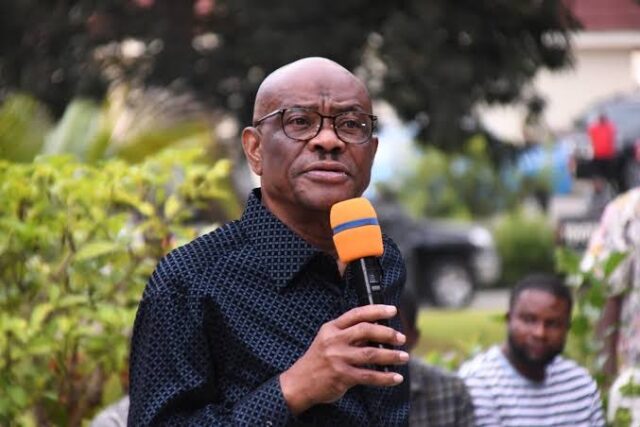
Speaking during the flag-off of the construction of the main carriageways on the Outer Southern Expressway in Abuja on Wednesday, Wike said the wave of defections from the PDP to the APC was vindication of his earlier stance.

“I have been watching on daily television and social media, people who said I wanted to destabilise the party, that I was working for the APC. All of them are now in the APC.

So, if it is true that I was working for the APC, they should commend me for doing a good job, paving the way for them,” Wike stated.

In recent days, two prominent PDP governors, Peter Mbah of Enugu State and Douye Diri of Bayelsa State, announced their defection to the APC.

Governor Diri’s move came alongside the defection of 19 members of the Bayelsa State House of Assembly, making him the fourth PDP governor to leave the party in the buildup to the 2027 general elections.

This development has reduced the PDP’s governorship tally from 11 (as of October 2024) to just 8.

Wike, who served as governor of Rivers State for eight years before his appointment as FCT Minister, praised President Bola Tinubu’s economic leadership, stating that under Tinubu, all states, including the FCT, now have access to enough funds to pay salaries, deliver infrastructure, and avoid the financial struggles that plagued governors during his own tenure.

“When I was governor, I had to run around banks every month just to pay salaries or fund projects. Today, it’s different. Now, banks are the ones chasing states.

Somebody has made that possible, a leader whose decisive economic policies have changed the game,” he said.

Wike added that under the current administration, the issue of governors leaving debts for their successors would become a thing of the past, thanks to improved revenue allocation and sound fiscal management.

“No governor will now talk about leaving debts for his successor. That used to be the norm. But with visionary leadership, that’s changing.

We now have a President who takes tough but necessary decisions, decisions others ran away from when they had the chance.”

Wike noted that recent defections and growing support for President Tinubu among opposition figures were signs that Nigerians recognise the need for strong, purposeful leadership to drive reform and national development.

Google search engine

Ben Murray-Bruce Joins APC, Applauds Tinubu’s Economic Reforms


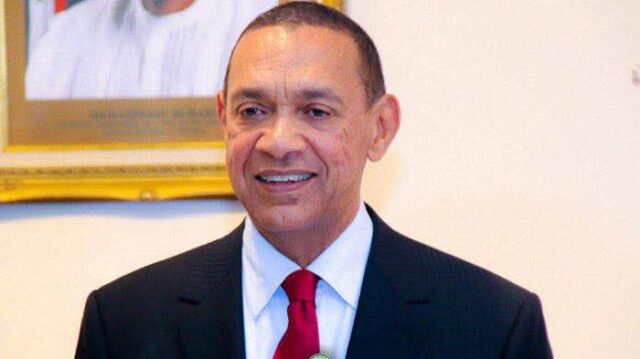
Former Bayelsa East Senator and media mogul, Ben Murray-Bruce, has formally defected to the All Progressives Congress (APC), citing his admiration for President Bola Ahmed Tinubu’s economic policies and leadership style.

In a statement posted on his official X (formerly Twitter) account on Wednesday, Murray-Bruce described his move as one driven not by political ambition, but by a shared vision for Nigeria’s economic transformation.

“I have known President Asiwaju Bola Ahmed Tinubu since 1998. I know the man’s mind, his courage, and his conviction. He is not driven by applause, he is driven by results,” Murray-Bruce stated.

The founder of Silverbird Group hailed President Tinubu as a leader who understands the complexities of the Nigerian economy and is taking bold steps to address them.

“For the first time in our nation’s history, we have a President who truly understands finance, who sees the economy not as a political slogan, but as a living organism that must be disciplined, deregulated, and allowed to breathe,” he said.

Announcing his official entry into the APC, Murray-Bruce declared:

“That is why today, I am joining the All Progressives Congress (APC), not for politics, but for progress.”

He expressed confidence that under Tinubu’s leadership, Nigeria would undergo significant economic and infrastructural development, positioning the country for long-term prosperity and global relevance.

“I choose to stand with that vision. I choose to stand with reform. I choose to stand with the future,” he added.

Murray-Bruce also commended the administration’s ongoing reforms, including the deregulation of the petroleum industry and restructuring of the Central Bank of Nigeria. He said these policies were restoring investor confidence and stabilising the naira.

“The painful reforms we face today are the very foundation of tomorrow’s prosperity. We are moving into a free-market economy that rewards hard work and innovation instead of dependency and distortion,” he said.

Highlighting the government’s infrastructural strides, Murray-Bruce pointed to ongoing developments in roads, airports, ports, and housing as evidence of what he called “unprecedented progress.”

He acknowledged that many Nigerians are still facing economic hardship but insisted that the short-term pain is necessary for long-term gain.

“Reform is never painless. Yet, it is in these moments of sacrifice that nations are reborn,” he concluded.

Earlier in May 2025, Murray-Bruce had praised President Tinubu’s decision to begin construction of the 700km Lagos-Calabar Coastal Highway, calling it a symbol of “visionary leadership.”

Google search engine

US Revokes Visas Of Six Foreign Nationals Over Posts Celebrating Charlie Kirk’s Assassination


The United States has revoked the visas of six foreign nationals after they posted messages on social media that appeared to celebrate or justify the assassination of conservative commentator Charlie Kirk.

In a statement released Tuesday evening on X (formerly Twitter), the U.S. Department of State declared:

“The United States has no obligation to host foreigners who wish death on Americans.”

According to the department, individuals from South Africa, Mexico, Brazil, Paraguay, Germany, and Argentina had their visas cancelled due to offensive posts related to Kirk’s death.

Screenshots of the posts were made public, with the State Department labeling the remarks as “celebratory, hateful and dehumanizing.”

Some of the cited examples include:

– An Argentine citizen who said Kirk “deserves to burn in hell.”

– A South African who mocked Americans mourning Kirk and accused him of enabling white nationalism.

– A Mexican user who wrote, “There are people who deserve to die.”

– A Brazilian who claimed Kirk was behind a Nazi rally and said he “died too late.”

– A German who stated, “When fascists die, democrats don’t complain.”

– A Paraguayan who called Kirk a vulgar slur and said he “died by his own rules.”

The visa revocations come days after former President Donald Trump posthumously awarded Kirk the Presidential Medal of Freedom, describing him as a “martyr for truth” during a White House ceremony attended by Kirk’s widow, Erika.

Kirk, co-founder of Turning Point USA, was a polarizing figure known for mobilizing young conservative voters and his vocal support of Trump-era policies.

Secretary of State Marco Rubio and Deputy Secretary Christopher Landau had previously warned that the U.S would take action against foreign nationals who glorify or justify violence against Americans.

Landau urged Americans to report such content, tweeting in September:

“I have been disgusted to see some on social media praising or rationalizing this event. Appropriate action will be taken.”

The crackdown is part of a broader shift in U.S. immigration and visa policy under the Trump administration.

Since June, visa applicants have been required to make their social media accounts public for screening.

According to a State Department official, over 6,000 visas have been revoked this year, many tied to online activity considered threatening or extremist.

Google search engine

Okpebholo Orders Edo Commissioners To Wear Tinubu-Branded Outfits


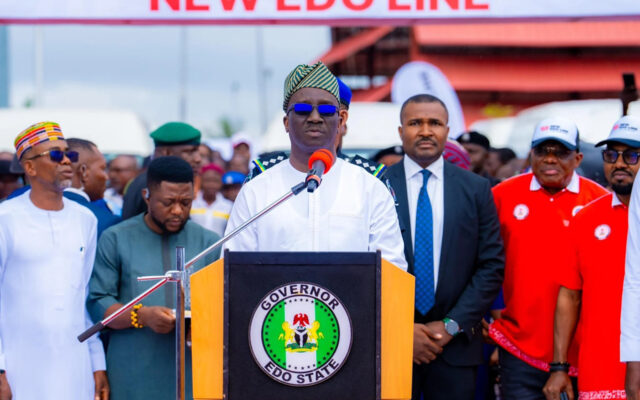
Edo State Governor, Senator Monday Okpebholo, has instructed all members of his cabinet to visibly demonstrate their loyalty to President Bola Tinubu by wearing outfits bearing the president’s insignia, including the signature “Asiwaju cap”, during official functions.

The governor issued the directive on Tuesday during the swearing-in ceremony of newly appointed commissioners and the inauguration of various commissions and boards in Benin City.

Governor Okpebholo, who attributed his election victory to Tinubu’s backing, emphasized the importance of openly supporting the president, saying such loyalty should not only be expressed in words but reflected in public appearance.

“This victory wouldn’t have been possible without the support of a responsible president. In the past, our major challenge during elections was not having the president on our side, but today we say thank you,” he said.

“I won’t forgive any commissioner who doesn’t wear this cap. At executive meetings, anyone not in a suit and without the Asiwaju cap will be sent back,” the governor warned.

Governor Okpebholo urged his commissioners to treat their appointments as a call to public service, not an opportunity for personal gain.

“You were thoroughly screened and confirmed based on merit, not as a reward or political patronage,” he noted.

He stressed that the administration is focused on “practical governance,” not image-building or propaganda, and reminded the newly inaugurated officials that their performance will be judged by visible, measurable impact across Edo State.

“Your success will be evaluated based on how you improve services and create opportunities for our people,” he added.

Reiterating his stance against corruption, the governor made it clear that any form of misconduct would not be tolerated under his watch.

You are not here for money-making. You’re here for service, for sacrifice, and to contribute to a better life for Edo people,” he said.

 “Discipline, teamwork, and a shared sense of purpose must guide your actions. Above all, your loyalty must lie with the people of Edo State. History will judge us not by our intentions, but by our actions.”

The event was attended by several dignitaries, including the Attorney-General of the Federation and Minister of Justice, Lateef Fagbemi (SAN).

Google search engine

Taraba Governor Agbu Kefas To Dump PDP For APC


Barring any last-minute change, Taraba State Governor Agbu Kefas is on the verge of defecting from the Peoples Democratic Party (PDP) to the ruling All Progressives Congress (APC), a move that could make him the first opposition governor from northern Nigeria to switch allegiance under the Tinubu administration.

This development follows Enugu State Governor Peter Mbah’s formal defection to the APC earlier this week, with most of his political allies and structures crossing over with him.

Sources close to Governor Kefas say a committee led by former Senator Dahiru Bako has begun statewide consultations to gauge public sentiment.

Bako confirmed that the governor is seeking public input before making any political decisions.

“He won’t move without the people’s blessing. These consultations are proof,” Bako said.

Meanwhile, rallies supporting Kefas’ defection have already taken place in Jalingo, with youth groups urging him to join the APC.

Party leaders in Taraba have signaled their readiness to welcome him, but the possible shift is also stirring tension among APC aspirants concerned about losing influence or party tickets in the 2027 elections.

Efforts to reach Kefas’ advisers were unsuccessful, while the PDP state chairman dismissed the rally as an APC-organised event and refused to comment further.

Kefas’ rumored defection is part of a growing trend. Earlier in the year, Governors Umo Eno (Akwa Ibom) and Sheriff Oborevwori (Delta) also left the PDP for the APC, further eroding the PDP’s presence in the South South and South East.

Now, only Bayelsa and Rivers remain under PDP control in the South South. In Bayelsa, Governor Douye Diri, currently entangled in a party leadership tussle with a faction loyal to FCT Minister Nyesom Wike, is reportedly weighing his options.

In Rivers, Governor Siminalayi Fubara, recently reinstated, is also rumored to be considering a shift to the APC.

In the South East, the APC now controls three out of five states; Imo, Ebonyi and Enugu.

The remaining states, Anambra (APGA-led) and Abia (Labour Party), have shown strong support for President Bola Tinubu.

Senator Adolphus Wabara, Chairman of the PDP’s Board of Trustees, described the defections as part of the APC’s strategy to establish a one-party state, warning that it could “erode Nigeria’s democratic gains.”

“These defections aren’t about ideology. They’re driven by fear, pressure, and political survival. This is not democracy, it’s manipulation,” Wabara said.

The African Democratic Congress (ADC) echoed similar concerns.

Its spokesperson, Bolaji Abdullahi, accused the APC of coercing governors and warned of a coordinated effort to undermine the opposition.

“Those switching sides aren’t convinced of APC’s vision; they’re desperate and afraid,” Abdullahi stated.

Despite the wave of defections, the Obidient Movement, a youth-driven support group aligned with the Labour Party, remained unfazed.

“It shows our leaders care more about power than people. This only fuels Nigerians’ desire for real change,” said Dr. Yunusa Tanko, the group’s national coordinator.

Labour Party spokesperson Obiora Ifoh added that the party is currently focused on healing internal rifts and strengthening its structure ahead of 2027.

At a reception event in Enugu, Vice President Kashim Shettima, who represented President Tinubu, hailed the defections as an endorsement of the APC’s inclusive vision.

“These moves expose cracks in the opposition, but show the APC’s growing strength and unity,” he said.

APC National Chairman Prof. Nentawe Yilwatda also praised Governor Mbah’s achievements and welcomed him “into the family of progressives.”

Political experts believe the defections highlight the fragile ideological foundation of Nigeria’s major parties.

Prof. Hassan Saliu, President of the Nigerian Political Science Association, said:

“Nigerian politics is about self-preservation, not ideology. Politicians go where the power lies, not where values align.”

Similarly, Prof. Gbade Ojo warned that Nigeria is moving toward a de facto one-party state, which could undermine democratic accountability.

“The PDP is losing its grip due to internal disunity and lack of discipline. It’s not APC’s strength but PDP’s weakness fueling this wave,” he added.

The APC now holds a two-thirds majority in the Senate, following the defection of Senator Samaila Kaila (Bauchi North) from the PDP. This brings the APC’s Senate seats to 73 out of 109.

In the House of Representatives, the APC now has 236 members, just four short of the two-thirds threshold, after three PDP lawmakers from Kaduna State defected to the ruling party.

Despite the surge, Minority Leader Kingsley Chinda challenged the legitimacy of these moves, urging the Speaker to declare the defectors’ seats vacant in line with constitutional provisions.

Google search engine

BREAKING: Bayelsa Governor Douye Diri Resigns From PDP


Bayelsa State Governor, Douye Diri, has officially left the Peoples Democratic Party (PDP).

The announcement was made on Wednesday during a briefing at the Executive Council Chambers of the Bayelsa State Government House.

Although Governor Diri did not disclose his next political move, his departure marks a significant shift in the state’s political landscape.

The governor’s decision is strongly backed by 23 members of the Bayelsa State House of Assembly, including the Speaker, indicating a possible realignment of political forces in the state.

This development follows closely on the heels of a similar move by Governor Peter Mbah of Enugu State, who defected from the PDP to the All Progressives Congress (APC) just a day earlier.

The back-to-back resignations raise questions about the future of the PDP in the South-South and South-East regions ahead of upcoming elections.

Google search engine

National Assembly To Finalise Electoral Act Amendment By December, Says Bamidele


The Senate Leader, Senator Opeyemi Bamidele, has revealed that the National Assembly is working towards completing the amendment of the Electoral Act 2022 by December 2025, well ahead of the 2027 general elections.

Bamidele, who represents Ekiti Central Senatorial District, made the disclosure in a statement issued Tuesday.

The announcement followed the Senate’s receipt of President Bola Tinubu’s nomination of Professor Joash Amupitan (SAN) as the new INEC Chairman, succeeding Professor Mahmood Yakubu.

According to the Senate Leader’s media office, Professor Amupitan’s nomination, a legal scholar and senior advocate, was unanimously approved by the Council of State last week before being forwarded to the Senate for confirmation.

Senator Bamidele emphasized that the timeline is designed to avoid the legislative delays that marred previous electoral reforms. Reflecting on the 2022 amendment process, he noted:

“The last administration failed to sign the final version of the bill in 2022 because it was transmitted too close to the elections.”

“Although initial proposals were approved, amendments aimed at restoring the rights of statutory delegates came late, and former President Buhari hesitated to act so close to election time.”

He assured Nigerians that the current amendment process would be concluded in time to prevent any similar issues:

“We are determined to wrap up the process by December 2025, giving enough time before the 2027 elections.”

Bamidele, who also serves as Vice Chairman of the Senate Committee on the Review of the 1999 Constitution, said the constitutional amendment process is progressing smoothly.

He highlighted ongoing engagements with key stakeholders, including the Nigerian Governors’ Forum and the Conference of Speakers of State Legislatures, as essential to achieving meaningful reform.

“I do not foresee resistance. The institutions are cooperating with us. This review will also reflect global best practices, especially regarding the implementation of international treaties.”

Responding to recent criticisms from opposition parties, Bamidele dismissed them as part of the democratic process:

“Regardless of government performance, the opposition will always find faults, it’s part of politics. They are strategising for a return to power, and discrediting the ruling party is part of that plan.”

Despite the political noise, he stressed that the 10th National Assembly remains focused on its legislative goals.

“Our third legislative year will prioritize issues of national importance, including the Electoral Act amendment and constitutional review, as we continue to stabilise governance and grow the economy.”

Google search engine

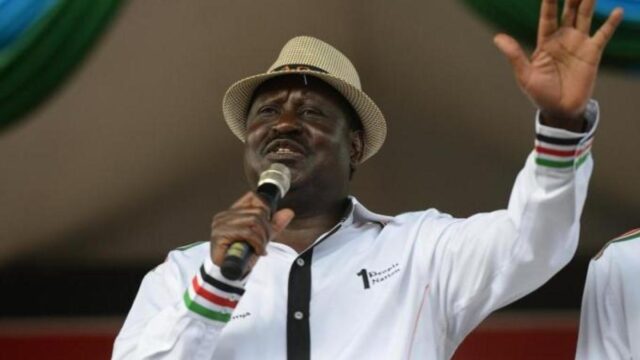
JUST IN: Kenyan Opposition Leader Raila Odinga Dies At 80 In India


Kenyan opposition leader and political titan Raila Odinga has died at the age of 80 while on a health-related visit to India, in a development that has stunned the East African political landscape.

Indian authorities confirmed that Odinga collapsed suddenly on Wednesday while walking with his sister, daughter, and personal doctor in Kerala.

According to police reports, both Indian and Kenyan security personnel were present when the incident occurred.

“He was rushed to a nearby private hospital, but despite medical intervention, he was declared dead,” a senior Indian police officer told AFP.

A representative from the Sreedhareeyam Ayurvedic Eye Hospital and Research Centre, where Odinga had been receiving treatment, also confirmed his death.

According to the spokesperson, the former Kenyan prime minister experienced breathing difficulties and collapsed.

He was administered CPR and briefly showed signs of response before his condition worsened and ultimately proved fatal.

Though his passing has been verified by a member of his political team, an official statement from his party is still awaited.

Born on January 7, 1945, Raila Odinga was a towering figure in Kenyan politics for over four decades.

Despite never clinching the presidency, he ran for office five times, in 1997, 2007, 2013, 2017, and 2022, and remained the leading voice of Kenya’s opposition.

A member of the Luo ethnic group, Odinga was the son of Jaramogi Oginga Odinga, Kenya’s first vice president.

He entered parliament in 1992 and was imprisoned multiple times during the autocratic rule of President Daniel arap Moi, earning a reputation as a defender of democracy and civil liberties.

Odinga built a broad support base across Kenya, particularly in the western region, and was known for his ability to galvanize mass movements.

Even in the face of electoral defeat, he maintained his political relevance, becoming a symbol of resistance and reform.

Reactions to Odinga’s death were swift and heartfelt. Kenyan presidential hopeful and former Chief Justice David Maraga expressed deep sorrow, calling Odinga:

“A patriot, a pan-Africanist, and a leader who made significant contributions to democracy in Kenya and in Africa.”

He added,

“Kenya has lost one of its most formidable leaders. Africa has lost a leading voice for peace and development. The world has lost a statesman.”

Ethiopian Prime Minister Abiy Ahmed also extended condolences on social media:

“On behalf of the Government of Ethiopia, I extend my sincere condolences on the passing of former Kenyan Prime Minister Raila Odinga. May he rest in peace.”

Odinga’s passing leaves a massive leadership gap within Kenya’s opposition at a critical moment.

With general elections looming in 2027, analysts say it is unclear who can step into his shoes and command the same level of influence and mobilisation across the political spectrum.

His ability to unite divided factions and challenge entrenched power structures made him a rare figure in African politics, a lifelong opposition leader who remained a national force without ever holding the country’s top office.

Google search engine

Anambra YPP Gov’ship Candidate, Paul Chukwuma Begins Palliative Repairs On Abandoned Otuocha–Anyamelum Road


In a bold move ahead of the November 8 governorship election in Anambra State, the Young Progressives Party (YPP) candidate, Sir Paul Chukwuma, has kick-started rehabilitation work on the long-neglected Otuocha–Anyamelum Road in Anambra East Local Government Area.

The road, which has been abandoned by motorists for years due to its deteriorated condition, serves as a critical transport corridor, linking farming communities to urban markets and connecting Onitsha, Anyamelum and parts of northern Enugu State. It is also key to the movement of agricultural produce from the region’s farmlands.

Chukwuma, while inspecting the site on Monday, said the palliative work marks the beginning of his broader commitment to infrastructure renewal if elected governor.

“I was personally concerned about the condition of this road. During our campaign visit to Anyamelum, I made a firm promise to act and we are now responding,” Chukwuma stated.

“This is just a palliative effort, but it sends a strong signal of what we are capable of and what lies ahead.”

The YPP candidate assured residents that, under his administration, strategic infrastructure, especially in underdeveloped LGAs, would receive “accelerated attention” for the benefit of all.

“The Otuocha–Anyamelum Road is not just a local access route. It is an economic lifeline for the people. Its abandonment has stifled agricultural trade and economic mobility in this axis of Anambra State. Our intervention reflects our broader agenda to align governance with the needs of the people,” he added.

Chukwuma also pledged to support Anyamelum LGA’s agricultural potential, saying the area deserves significant investment in rural roads and farming logistics.

“This road had been left in such a terrible state that it became impassable. That should not happen in a state like Anambra. What we are doing now is not a campaign gimmick, it’s a taste of the leadership model we intend to bring.”


Google search engine

MOST COMMENTED

- Advertisement -
Google search engine