Home Blog Page 310

Dangote Refinery Stops Petrol Sales In Naira
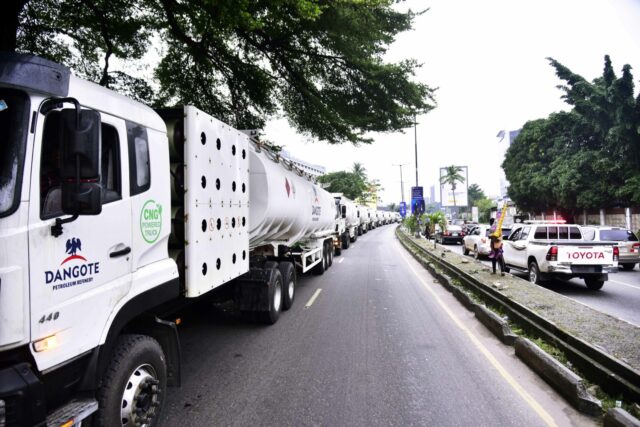
 

The Dangote Petroleum Refinery has announced the suspension of petrol (PMS) sales in naira, a development that has sparked concern among marketers and raised new questions about fuel pricing and foreign exchange stability.

In a notice sent to customers at 6:42 pm on Friday, the refinery stated that the suspension would take effect from Sunday, September 28, 2025, due to the exhaustion of its crude-for-naira allocation.

The notification, issued by the Group Commercial Operations of Dangote Petroleum Refinery & Petrochemicals, was titled:

“Suspension of DPRP PMS Naira Sales, Effective 28th September 2025.”

According to the statement, the refinery has exceeded its naira-based crude allocation and can no longer continue petrol sales in the local currency.

“We write to inform you that Dangote Petroleum Refinery & Petrochemicals has been selling petroleum products in excess of our Naira-Crude allocations and, consequently, we are unable to sustain PMS sales in Naira going forward,” the statement read.

“Kindly note that this suspension of Naira sales for PMS will be effective from Sunday, 28th of September, 2025. We will provide further updates regarding the resumption of supply once the situation has been resolved.”

The company also advised customers with ongoing naira-based transactions to request refunds:

“All customers with PMS transactions in Naira who would like a refund of their current payments should formally request the processing of their refund.”

The announcement comes amid escalating tensions at the refinery over alleged labour rights violations.

Over 800 Nigerian workers were reportedly laid off, drawing sharp criticism from labour unions and prompting calls for urgent government intervention.

The Petroleum and Natural Gas Senior Staff Association of Nigeria (PENGASSAN) on Friday accused the company of engaging in anti-labour practices, describing the mass sackings as both “unjust and insensitive.”

Union leaders have vowed to resist the move and are threatening nationwide protests if the issue is not addressed promptly.

This is not the first time Dangote Refinery has suspended local currency transactions. A similar move occurred in March 2025, when the refinery halted naira-based sales due to insufficient crude supply under the crude-for-naira programme.

That decision pushed petrol prices toward ₦1,000 per litre, triggering fears of increased dollarisation in the fuel market.

With the current suspension, industry analysts are warning of another possible spike in pump prices if the trend continues.

According to Jeremiah Olatide, CEO of Petroleumprice.ng, “Petrol prices could rise above ₦900 per litre if naira-based sales remain suspended. The Dangote Refinery has played a key role in keeping prices relatively stable. Any prolonged shift to dollar-denominated sales could create serious volatility in the downstream sector.”

The twin crises, suspension of naira sales and labour unrest, pose a threat to the government’s ongoing fuel market reform agenda.

The refinery, considered a cornerstone of Nigeria’s energy security strategy, is now under increased scrutiny from stakeholders.

Observers warn that unless swift action is taken to resolve the issues, both fuel pricing and industrial relations in the oil sector may face prolonged instability.

Google search engine

Suck-and-Die: The Cheap Street Drug Devastating Nigeria’s Youth


A cheap and deadly substance known on the streets as “suck-and-die” is spreading like wildfire among young Nigerians.

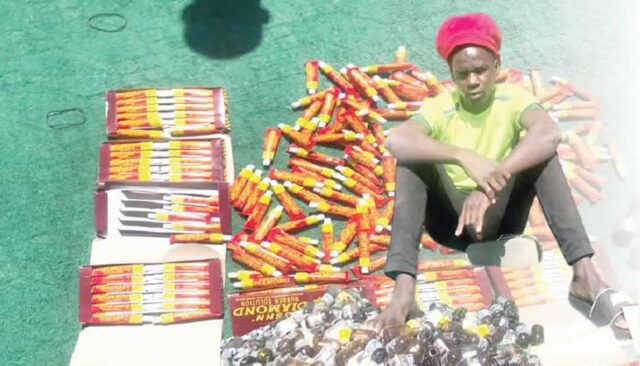
Sold for as little as ₦250 to ₦300, this chemical, methylene chloride, is being inhaled by teenagers and young adults in a desperate search for escape, euphoria, or simply a numbing calm.

Once used industrially as a paint stripper and solvent, it is now being misused as a recreational drug.

Its side effects? Hallucinations, unconsciousness, brain damage, and in many cases, death.

Jacob, a 19-year-old from Alapere, Lagos, first tried suck-and-die before his birthday.

Academic struggles and emotional neglect at home made him vulnerable. He didn’t just stumble into drug use, he walked into it, guided by despair and the absence of support.

“It’s like a slow wind blowing inside your head,” he said.

“You just feel alright. Your body just begins to see better, clearer.”

Jacob began inhaling the substance in secret hangouts called “bunkers” with friends. Using a method called bagging, he would trap the chemical fumes in a plastic bag and inhale deeply.

It was cheap, accessible, and invisible to unsuspecting adults, even in their presence.

Street names like Suck & Die, Dead Man, Gelato, and Rubber Solution are now part of the growing catalogue of non-conventional narcotics used by youth.

The National Drug Law Enforcement Agency (NDLEA) has warned about these dangerous trends, linking them to the rise in youth addiction and psychiatric disorders.

In November 2024, NDLEA Director of Media & Advocacy, Femi Babafemi, sounded the alarm after confiscating large quantities of these substances in Lagos and Kano.

“Parents, shine your eyes,” he wrote on X (formerly Twitter). “These drugs are destroying lives in silence.”

Scientifically known as methylene chloride (CH₂Cl₂), this clear, sweet-smelling liquid is highly toxic, even in small doses.

The Agency for Toxic Substances and Disease Registry (ATSDR) warns that inhalation of its vapours can cause Dizziness and confusion, hallucinations, slowed breathing, loss of consciousness, cardiac arrest, brain damage from oxygen deprivation and death.

Methylene chloride also converts into carbon monoxide in the body, reducing blood oxygen levels and placing extreme stress on the brain and heart. Children and teens are particularly vulnerable.

Junior, now in his early 20s, tried suck-and-die in 2021. He describes his experience as terrifying:

“The world just froze, and everything started spinning. I vomited all night. My uncle was high. I thought I was going to die.”

No one warned him of the danger. He believed it was just “another herb” like marijuana.

In Bauchi, police arrested Kabiru Adamu, who admitted to distributing bottles of suck-and-die for ₦300 each.

In Kano, NDLEA arrested 49 suspects and raided notorious hotspots in August 2025, seizing methylene chloride and other illicit drugs.

In Adamawa, customs officials intercepted industrial drums of the chemical during anti-smuggling operations, valued at over ₦33.9 million.

Health experts say the drug’s effect on the brain is similar to other hard narcotics. It triggers dopamine release, the “feel-good” hormone, creating a cycle of craving and compulsive use.

“You need more each time to get the same high,” explained Dr. Chimeremeze Odu, a clinical psychologist.

“And when the high fades, withdrawal kicks in hard.”

The danger is amplified because users often don’t even know what they’re inhaling—or how much.

Public health researchers say suck-and-die represents a shift in Nigeria’s drug crisis, from traditional narcotics like cannabis and codeine to non-conventional chemical abuse.

According to a 2016 neuropsychiatric study in Maiduguri, most substance abusers were in their twenties, with a sharp drop after age 30.

The most vulnerable groups were students, artisans, and the unemployed.

Doctors say methylene chloride poisoning affects nearly every system in the body:

Metabolic: Converts into carbon monoxide

Cardiovascular: Triggers irregular heartbeat, heart attacks

Respiratory: Causes lung inflammation, breathing difficulties

Neurological: Memory loss, seizures, coma

Dermal/Ocular: Burns, blisters, vision problems

Long-term: Permanent brain injury, incontinence, even death

Experts argue that addiction isn’t just a legal issue, it’s a mental health crisis.

“We need structured rehab, early intervention in schools, and long-term community support,” said psychologist Odu. “Punishment alone won’t solve this.”

Dr. Olabiyi Olaniran, a Harvard-trained toxicologist, warned that survivors of methylene chloride exposure often suffer lifelong complications, including mental deterioration and loss of motor function.

Google search engine

Abia Holds Tremendous Opportunities For American Investors – US Ambassador


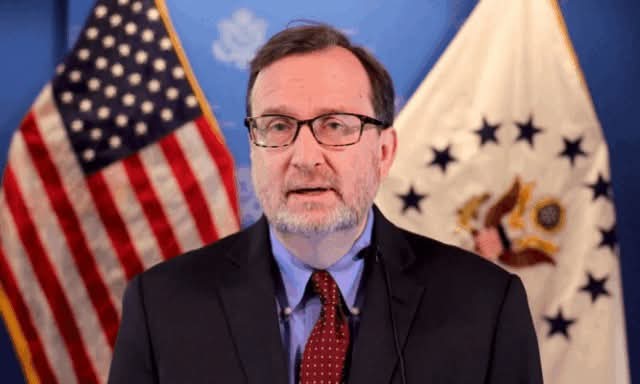
The United States Ambassador to Nigeria, Richard Mills, has identified Abia State as a promising destination for American businesses, citing the state’s reforms and investment-friendly policies.

Speaking during a visit to Governor Alex Otti at his Nvosi country home in Isiala Ngwa South on Friday, Mills commended the state’s progress under Otti’s leadership and highlighted areas of potential collaboration.

“There are tremendous opportunities here for our businesses and commercial interests. Your administration’s focus on economic growth, youth empowerment, and transparency aligns with what U.S. investors need to see,” Mills said.

He praised Otti’s governance style as a strong example of effective leadership, especially in infrastructure development and security improvements across Abia and the South-East region.

The Ambassador noted that his visit aimed to deepen engagement and explore how the U.S and Abia could partner to achieve shared objectives.

In response, Governor Otti welcomed the Ambassador’s remarks, calling the visit a significant endorsement of his administration’s efforts.

“We see this visit as a vote of confidence. We’re not just looking for grants or aid—we want true partnerships. Abia is arguably Nigeria’s SME capital, and we believe there’s immense value in collaboration,” the governor said.

He outlined his administration’s reforms across healthcare, education, waste management, digital technology, and support for small businesses, reaffirming his commitment to attracting foreign investment through transparency and strategic infrastructure renewal.

Elected under the Labour Party in March 2023, Otti has consistently worked to position Abia as an economic hub.

His government has welcomed delegations from global agencies and development partners, reinforcing the state’s ambition to diversify its economy and reduce dependence on federal funding.

The United States remains one of Nigeria’s key economic partners, with bilateral trade valued at $11–13 billion in 2023, according to U.S government data.

Google search engine

Tinubu Arrives In Lagos Ahead Of Meetings With Private Sector Leaders


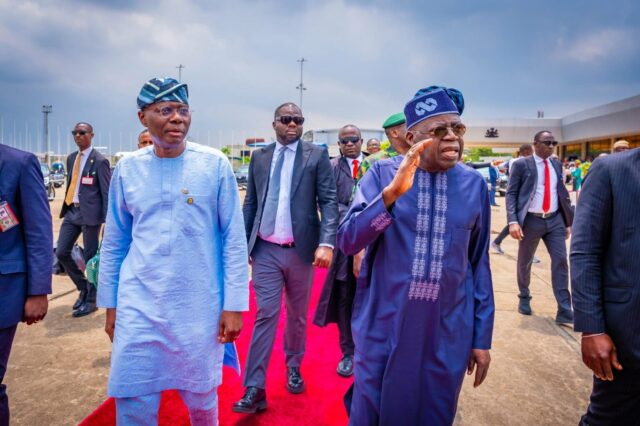
President Bola Ahmed Tinubu arrived in Lagos on Friday for a working visit, following his attendance at the coronation ceremony of the 44th Olubadan of Ibadanland, Oba Rashidi Ladoja, in Ibadan, Oyo State.

This development was confirmed in a statement released by the Special Adviser to the President on Information and Strategy, Bayo Onanuga.

According to the statement, the President’s visit is part of activities leading up to Nigeria’s 65th Independence Anniversary, which will be marked with a modest celebration.

During his stay in Lagos, President Tinubu is expected to hold strategic meetings with leading figures in the private sector, along with top government officials.

After concluding his engagements in Lagos, the President will head to Imo State on Tuesday, September 30, where he is scheduled to commission several projects completed by Governor Hope Uzodimma.

Google search engine

UN To Reimpose Sanctions On Iran As Nuclear Talks Collapse


The United Nations is set to reimpose sweeping sanctions on Iran starting late Saturday, following the collapse of recent nuclear negotiations with Western powers.

This will mark the first time in a decade that such broad UN measures will be enforced against Iran.

According to the UN nuclear watchdog, inspectors were recently allowed back into Iranian nuclear facilities.

However, Western countries concluded that not enough progress was made during high-level talks at the UN General Assembly to justify delaying sanctions.

European powers had initiated the “snapback” mechanism a month ago, accusing Iran of non-compliance with its nuclear obligations and retaliatory actions following military strikes by the US and Israel.

The sanctions will take effect at 0000 GMT on Sunday (8:00 pm Saturday in New York) and will include a global ban on cooperation with any individuals, companies or organizations linked to Iran’s nuclear or missile programs.

Iranian President Masoud Pezeshkian criticized the process, stating that there was no genuine intent to reach a fair deal.

He argued that the U.S and Israel were using pressure tactics to destabilize Iran.

“If the goal had been to resolve concerns about our nuclear program, we could have done that easily,” said Pezeshkian, reiterating that Iran has no intention of developing nuclear weapons.

During his meeting with French President Emmanuel Macron, France had proposed a one-month delay in sanctions if Iran surrendered its stockpile of highly enriched uranium, a proposal Pezeshkian rejected, calling it a “trap.”

He also accused U.S. envoy Steve Witkoff of not being serious in negotiations, blaming him for backtracking on prior agreements.

Russia and China attempted to delay the snapback until April during Friday’s UN Security Council meeting but failed to secure enough support.

Russia’s deputy UN ambassador Dmitry Polyansky declared that Moscow would not recognize the sanctions, calling them “null and void.”

While the U.S. already enforces its own strict sanctions against Iran, particularly targeting its oil exports, China has continued to buy Iranian oil despite American pressure.

These latest UN measures revive sanctions that had been lifted under the 2015 nuclear deal, which the U.S exited under former President Donald Trump during his “maximum pressure” campaign.

The deal had previously curbed Iran’s nuclear activities in exchange for sanctions relief.

The International Crisis Group noted that while Iran has adapted to U.S sanctions over the years, this renewed global effort could further strain its economy, already suffering from inflation, currency issues, and deteriorating infrastructure.

In a fiery address at the UN, Israeli Prime Minister Benjamin Netanyahu backed immediate enforcement of the sanctions and hinted at further Israeli military action, referencing the June strikes that Iran says killed over 1,000 people.

Despite growing pressure, Pezeshkian confirmed that Iran will remain in the Nuclear Non-Proliferation Treaty, warning that unnamed forces were seeking a “superficial pretext to set the region ablaze.”

Google search engine

Tinubu Has No Power To Send INEC Chairman On Terminal Leave – Falana


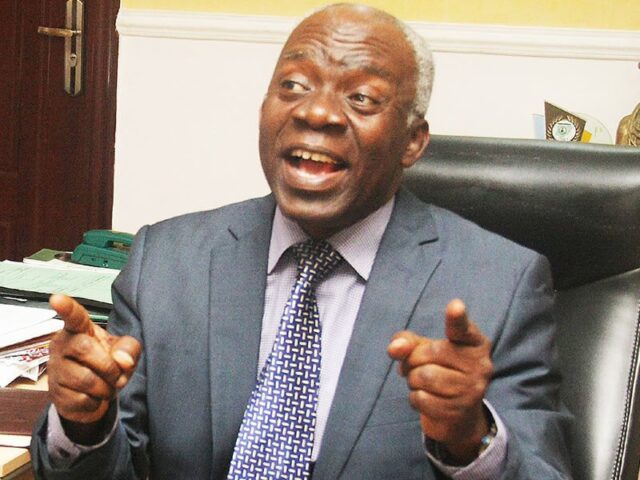
Renowned human rights lawyer and Senior Advocate of Nigeria, Femi Falana, has stated that President Bola Tinubu does not have the constitutional authority to place the Chairman of the Independent National Electoral Commission (INEC), Prof. Mahmood Yakubu, on terminal leave.

Falana’s remarks follow reports that surfaced earlier in the week alleging that President Tinubu had instructed Yakubu to proceed on compulsory leave, purportedly due to a perceived betrayal of the ruling All Progressives Congress (APC).

The report, which remains unconfirmed, claimed the directive was a form of retaliation and has since sparked widespread debate.

The speculation intensified after INEC suddenly cancelled its quarterly consultative meetings with political parties and civil society organisations that were scheduled to begin Wednesday.

Prof. Yakubu, who was appointed in 2015 by former President Muhammadu Buhari and reappointed in 2020 after Senate confirmation, is due to complete his second term in October 2025.

He is the first INEC chairman to serve two full terms since the agency was established.

Although the presidency has not issued any official comment, the reports have led to significant reactions across social media platforms.

While some officials appeared to support the claims, others have dismissed them.

Lere Olayinka, Senior Special Assistant on Public Communications to the FCT Minister, Nyesom Wike, took to X (formerly Twitter) to assert that the directive was indeed genuine and tied to Yakubu’s imminent departure.

However, former Kaduna Central Senator Shehu Sani downplayed the report, describing it as “most likely social media entertainment news.”

Despite the swirling rumours, Yakubu chaired INEC’s weekly management meeting on Thursday and reportedly approved staff promotions—suggesting that he remains in full control of the commission’s affairs.

Reacting to the controversy, INEC’s spokesperson, Rotimi Oyekanmi, urged Nigerians to refer to the 1999 Constitution before forming opinions, highlighting that the law clearly outlines how the INEC chair can be appointed or removed.

Sections 154(1) and 157(1) of the Constitution state that while the President can nominate the INEC Chairman, removal requires a two-thirds majority in the Senate and must be based on proven incapacity or misconduct.

Additionally, Section 160(1) gives INEC autonomy to regulate its own procedures without presidential interference.

In a statement to Saturday PUNCH, Falana emphasized that these constitutional safeguards make it impossible for the President to lawfully direct the INEC Chairman to go on terminal leave.

“Unlike other federal executive bodies, the Independent National Electoral Commission, its powers to make its own rules or otherwise regulate its own procedure shall not be subject to the approval or control of the President.
To that extent, President Bola Tinubu cannot direct the INEC chairman to proceed on terminal leave,” he said.

Falana also referenced a similar rumour from 2015 when it was alleged that then-INEC Chairman Prof. Attahiru Jega had been asked to embark on three months’ terminal leave.

That claim, he said, was eventually proven to be false.

“We pointed out at the material time that the INEC chairman could not be directed by any authority to embark on terminal leave. It turned out that the President did not give any such directive,” Falana added.

Google search engine

Why ADC Could Outshine Tinubu In 2027 – Ex‑Minister Batagarawa


Malam Lawal Batagarawa, former Minister of State for Defence and one of the founding members of the PDP, now a senior figure in the ADC, shares insights on the 2027 election, party dynamics, governance, and Tinubu’s chances.

Batagarawa admits court disputes over recognized ADC leadership have been a distraction.

“You’d rather channel energy into building the party and mobilising support, but these legal battles pull you away,” he says.

Asked about allegations that the current government is behind the court cases, Batagarawa remains cautious but firm: “When a party poses a real threat, those in power may seek to destabilize it through legal or political means. It’s not surprising.”

On the government borrowing tactics he once criticized, Batagarawa warns that current policies are failing the public.

“This administration is underperforming in security, in governance: it’s obvious to all unbiased observers.”

While governors, legislators and local powerbrokers are rallying around Tinubu, Batagarawa says ADC remains undeterred.

“They can make all the loud statements they want. On election day, what counts is organisation, strategy, and connection with the people.”

With prominent former politicians in ADC, Atiku, Peter Obi, El-Rufai and more concerns arise about managing strong personalities. Batagarawa sees diversity as an advantage.

“Nigeria is diverse. If we don’t manage debates, conflicts, and ambitions properly, we can’t lead the country.”

Highlighting one of the government’s biggest failings, Batagarawa links insecurity to economic distress and failed policy direction.

He calls for a dual approach: suppress violence (kinetic) and prevent new recruits to crime (non-kinetic) through community inclusion.

“You can’t separate security from livelihood,” he insists.

Asked about opposition plans, Batagarawa declines full disclosure but insists there’s a strong strategy in place.

Smarter politics, he says, involve groundwork more than flashy posturing.

Batagarawa strongly disputes the administration’s economic claims.

“Subsidy removal and currency devaluation have pushed the economy into a tailspin. Everything they boast about has hurt ordinary Nigerians,” he charges.

Google search engine

EFCC Vows To Break Corruption Siege In Nigeria


The Chairman of the Economic and Financial Crimes Commission (EFCC), Ola Olukoyede, has pledged a more aggressive crackdown on corruption, promising to uphold a culture of integrity within the agency and weed out any officers who deviate.

Speaking at the Passing Out Parade (PoP) of 404 EFCC cadets in Akwanga, Nasarawa State, Olukoyede said the Commission is committed to “breaking the siege of graft in Nigeria” through professionalism, patriotism, and strict accountability.

“The Commission has shown that it is capable of tackling any economic and financial crime,” Olukoyede said.

“Our strength lies in our human capacity. These cadets represent a new era, and we expect them to raise the bar.”

The PoP, held at the Nigeria Police Mobile Force Training College in Ende Hills, featured 294 Detective Superintendent Cadets and 110 Detective Inspector Cadets.

Dignitaries, including Governor Abdullahi Sule of Nasarawa State, were in attendance.

Governor Sule, who served as the Reviewing Officer at the event, reiterated the need for judicial reforms to strengthen the EFCC’s work. He advocated for the creation of special courts dedicated solely to corruption cases.

“Our justice system is burdened. To ensure timely trials, I urge the National Assembly to establish a special anti-corruption court,” the governor said.

“This will help remove bottlenecks and accelerate justice.”

He congratulated the cadets for their resilience and commitment, adding that their performance gave hope for a better Nigeria.

“Today’s display shows you’re ready to serve. The future of Nigeria looks brighter because of young officers like you.”

Sule also called on lawmakers to further empower the EFCC through legislation and funding, especially as the country undergoes constitutional review.

Google search engine

UNGA: Delegates Stage Walkout As Netanyahu Delivers Fiery Speech On Gaza


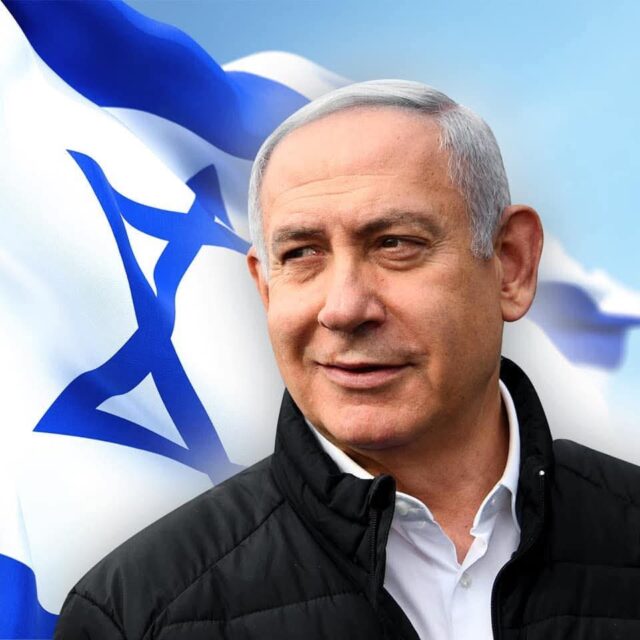
Dozens of country representatives walked out of the United Nations General Assembly (UNGA) on Friday as Israeli Prime Minister Benjamin Netanyahu took the stage to deliver his address, amid growing international criticism of Israel’s military operations in Gaza.

Despite the walkout, Netanyahu pressed forward with a defiant speech focused on Israel’s campaign against Hamas.

“We’re not done yet,” he declared. “The final elements, the final remnants of Hamas, are holed up in Gaza City. They vow to repeat the atrocities of October 7 again and again… That is why Israel must finish the job, and that is why we want to do so as fast as possible.”

In a rare move, Netanyahu’s office announced that the speech would be broadcast live via loudspeakers aimed at Gaza and streamed to the cell phones of residents, including those of hostages still believed to be held by Hamas.

Addressing the hostages directly, Netanyahu said in Hebrew and English:

“Our brave brothers, this is Prime Minister Benjamin Netanyahu speaking to you live from the United Nations. We have not forgotten you, not even for a second… We will not falter and we will not rest until we bring all of you home.”

Turning to Hamas, he issued a stern warning:

“Lay down your arms, let my people go, free the hostages — all of them. If you do, you will live. If you don’t, Israel will hunt you down.”

Using a map previously displayed at the UN to highlight threats from Iran and its allies, Netanyahu recounted Israel’s military operations over the past year:

“We’ve hammered the Houthis, including yesterday. We crushed the bulk of the Hamas terror machine. We crippled Hezbollah, taking out most of its leaders and much of its weapons arsenal.”

He added that “thousands of terrorists dropped to the ground,” in what he described as a sustained counterterrorism campaign.

Netanyahu also credited former U.S. President Donald Trump for assisting Israel in striking Iranian nuclear sites earlier this year:

“President Trump and I promised to prevent Iran from developing nuclear weapons, and we delivered on that promise,” he said, calling the operation a blow to “a mortal threat to the civilized world.”

Before leaving Tel Aviv for New York, Netanyahu condemned leaders who voiced support for Palestinian statehood during the UN summit.

“When the most savage terrorists on Earth are praising your decision, you didn’t do something right, you did something horribly wrong,” he said. “It will be a mark of shame on all of you.”

Outside the UN headquarters in New York, families of hostages still held in Gaza gathered to protest. They urged Netanyahu and world leaders to prioritize efforts to secure the release of the captives.

Meanwhile, inside the General Assembly hall, Netanyahu’s remarks were met with mixed reactions, applause from allies and silence or empty seats from critics.

Google search engine

Enugu: How Hon. John Ogbodo Is Getting Things Done In Nkanu West

By Johnpaul Anih, Ph.D

If you ask around in Nkanu West today, one name comes up with surprising ease and warmth “Hon. John Ogbodo”. Not because he’s making noise or buying headlines, but because he’s quietly and consistently doing the work. For a local government area that had grown used to the politics of promise and fail, what’s happening now almost feels too good to be true.
But it’s real.

Walk into his office any day and you’ll find him on seat, not hidden behind layers of protocol or personal assistants, but right there, present and ready to listen.
You’ll find no red tape, no gatekeepers, no “come tomorrow” excuses. The door is always open, the seat always warm, and the ear ever attentive. Whether you’re a farmer from Umueze, a youth from Agbani or a market woman from Amurri.
His door doesn’t recognize class or status. Go there, you’ll get a chair and you’ll be heard.
That kind of accessibility is rare. Too rare.

He isn’t just occupying space, he’s carrying the weight of the office with seriousness and humility. He understands what it means to be elected. He knows who he’s working for, the people, and he has shown that through actions, not words.

Now, I won’t compare him to his predecessors. That’s not the point.
But to be honest, Nkanu West has entered a different kind of season under his watch.

When the party under the solid leadership of Governor Peter Mbah called on him to serve, the reaction wasn’t mixed. The applause was thunderous. It was joy across board. Streets celebrated and party faithful felt confident.
A loyal party man who understands the delicate dance of political structure had arrived.

And why not? The people knew what they were getting ‘a servant’, not a “boss”, a leader with calloused hands, not manicured detachment.

Since taking office, Hon. Ogbodo has not disappointed. He hit the ground running, not with the empty fanfare of ribbon cuttings, but with the grit of real work.
Take a drive through the communities and you’ll see it. Access roads are under construction, especially those leading to the new Smart Green Schools and Type-Two Hospitals, aligning directly with Governor Mbah’s reforms in education and healthcare.

These are not cosmetic projects, they are providing access to services that were once out of reach.

Environmental sanitation has also received a major boost. Waste bins now stand tall in key locations. Roads that used to be blocked by debris like those in Umueze, Obe, and Ozalla have been cleared and beautified with flowers and landscaping. There’s a touch of pride returning to public spaces.

One project that caught the attention of many is the revamp of the long-abandoned Eke Agbani abattoir. It’s no longer the eyesore it used to be. It has been transformed into a modern facility, complete with toilets, solar-powered boreholes and water tanks. A public health intervention right?

There’s also what’s happening at Four Corner Park in Ozalla where the council is tackling the age-old problem of open defecation. That may not make flashy headlines, but for those living there, it’s a big deal. It’s about dignity.

Drainages along the Enugu – Agbani road have been cleared. Why? Because Hon. Ogbodo understands that a flood doesn’t care about politics, it just destroys.
He quickly addressed the flood threats that once kept residents awake during the rainy season.

The once-choked neighborhoods with the chaos of unplanned buildings are being reclaimed.

Other ongoing projects? The Ngene-Ukwa bridge at Achikpa in Ndegu Akpugo is awaiting commissioning.
Other internal roads? Quiet, but making steady progress.
These projects are the threads stitching together a more mobile and functional Nkanu West.

But beyond the physical projects, it’s his style of leadership that people are talking about, his openness, his respect for all and his refusal to use political power as a tool for revenge or exclusion.
He values results and believes in only one side “the people’s side”.

Gone are the days of political thuggery and strongman tactics. Ogbodo has in turn, elevated competence and credibility.

His philosophy? “Peace toward all, malice toward none.” And from what we’re seeing, it’s not just a catchy line, it’s the reality on the ground.

In today’s Nkanu West, no one is too poor, too unknown or too politically unaffiliated to be heard.
Yes, things are different now.

He has not just raised the bar, he has redrawn the entire beat.

And if this is what local governance looks like under Hon. John Ogbodo, then maybe, just maybe, Nkanu West has finally found its rhythm.

Johnpaul Anih, Ph.D
Academic, Journalist, Researcher

Google search engine

MOST COMMENTED

- Advertisement -
Google search engine