Home Blog Page 315

Report Of Bank Robbery In Port Harcourt Fake, Misleading – Police


The Rivers State Police Command has dismissed as false a viral report alleging a bank robbery in Port Harcourt on September 23, 2025.

In an official statement, the Command’s Public Relations Officer, SP Grace Iringe-Koko, described the circulating report as “false and misleading”, urging members of the public to ignore it.

“The Command categorically states that no such incident occurred anywhere in Port Harcourt or Rivers State. This fake news is clearly designed to cause unnecessary panic and fear among residents,” she stated.

SP Iringe-Koko reassured the public that the Police are fully on ground, conducting regular patrols and maintaining vigilance across the state to ensure public safety.

She also cautioned against the spread of unverified information, warning that individuals found peddling falsehoods aimed at inciting fear or unrest would be prosecuted.

“We encourage residents to verify information through official Police channels before sharing it. Misinformation can lead to avoidable panic and tension in the society,” she added.

The Command reiterated its commitment to the safety and security of all residents and urged the public to remain calm and continue to support law enforcement efforts.

Google search engine

CBN Cuts Interest Rate To 27% Amid Falling Inflation


The Central Bank of Nigeria (CBN) has reduced the Monetary Policy Rate (MPR) by 50 basis points, bringing it down from 27.5% to 27%, in response to ongoing disinflation and improved macroeconomic indicators.

The decision was taken during the 302nd Monetary Policy Committee (MPC) meeting, held on September 22 and 23, where all 12 members voted in favor of the cut.

CBN Governor Olayemi Cardoso said the committee’s decision was driven by Five consecutive months of disinflation, a positive outlook for inflation for the remainder of 2025 and the need to sustain economic recovery efforts.

“The MPC believes the current macroeconomic environment allows for a slight loosening to support growth, without compromising the gains made on price stability,” Cardoso told journalists after the meeting.

The Monetary Policy Rate (MPR) was reduced to 27% (from 27.5%) while the Cash Reserve Ratio (CRR) was cut to 45% for commercial banks and maintained at 16% for merchant banks.

The Liquidity Ratio was held steady at 30% and the standing facilities corridor was adjusted to improve interbank liquidity.

Additionally, a 75% CRR was imposed on non-TSA public sector deposits to manage excess liquidity.

The asymmetric corridor around the MPR was maintained at +260/-250 basis points, underscoring the CBN’s cautious stance on market volatility.

According to the MPC, August 2025 recorded the highest disinflation momentum seen in five months, a trend attributed to tight monetary policy, stable exchange rate, stronger crude oil production, declining petrol (PMS) prices and increased capital inflows.

The Committee said these factors helped anchor inflation expectations, creating room for modest policy easing to stimulate economic activity.

Despite the positive inflation trend, the MPC flagged excess liquidity in the banking system, driven by rising government revenues and fiscal disbursements, as a potential threat to macroeconomic stability.

To address this, the CBN introduced a 75% CRR on non-TSA public sector deposits, aiming to strengthen liquidity management while maintaining financial system stability.

“The stability of the interbank market is critical to effective monetary policy transmission,” the Committee noted, justifying adjustments to the standing facilities corridor.

The rate cut follows encouraging growth figures released by the National Bureau of Statistics (NBS):

  • Q2 2025 GDP: 4.23% year-on-year, up from 3.48% in Q2 2024
  • Agriculture: Grew by 2.82% (up from 2.60%)
  • Industry: Jumped by 7.45% (up from 3.72%)
  • Services: Increased to 3.94% (from 3.83%)

The industry sector’s share of GDP rose to 17.31%, compared to 16.79% in the same period last year.

In nominal terms, aggregate GDP reached ₦100.73 trillion in Q2 2025, a 19.23% year-on-year increase from ₦84.48 trillion in Q2 2024, reflecting sustained recovery and improved business activity.

Google search engine

Malawi’s President Chakwera Concedes Defeat, Pledges Peaceful Transition


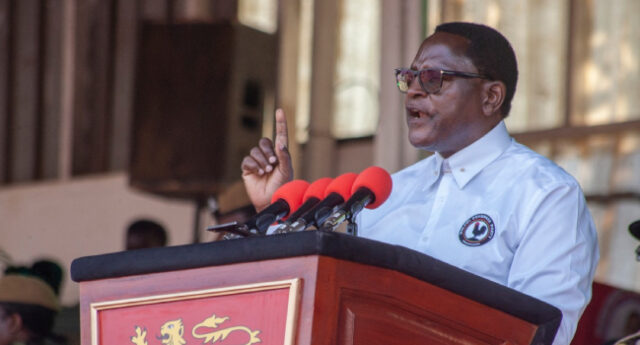
Malawi President Lazarus Chakwera has officially conceded defeat in the country’s recent presidential election, acknowledging the commanding lead of his rival, Peter Mutharika.

In a national address on Wednesday, Chakwera, 70, admitted that the outcome of the September 16 election was clear even before the final results were announced.

“A few minutes ago, I called Professor Mutharika to wish him well,” he said. “It is evident that he has secured an insurmountable lead.”

Chakwera, a former pastor and the Malawi Congress Party (MCP) candidate, took office in 2020 after defeating Mutharika in a historic election re-run. At the time, the vote was hailed as a democratic milestone in Africa.

Now, five years later, economic discontent appears to have turned the tide.

Throughout his presidency, Chakwera faced mounting criticism over rising living costs, soaring inflation, and a perceived failure to combat corruption.

Inflation peaked at 33 percent, with the prices of maize and fertiliserfertiliser, staples in Malawi’s rural economy, climbing sharply.

Voters cited economic hardship and unfulfilled promises, especially around job creation and governance reforms, as key factors in the election.

Chakwera acknowledged the disappointment many of his supporters would feel but reiterated his commitment to stability.

“In the days that remain, I want you to know that I am committed to a peaceful transfer of power,” he said.

Peter Mutharika, a constitutional law expert and leader of the Democratic Progressive Party (DPP), is expected to return to power after his unexpected loss five years ago.

As the country awaits the official declaration from the electoral commission, Chakwera’s concession signals a smooth transition, a gesture widely seen as a boost for Malawi’s democracy.

Google search engine

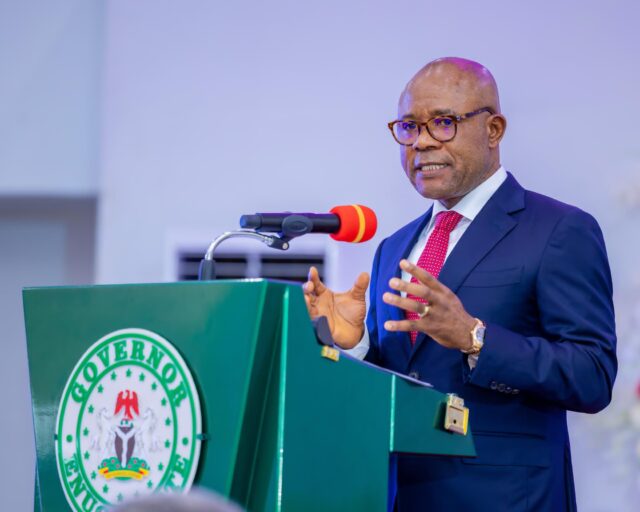
Gov. Peter Mbah And The Tripod Of Transformation

By Johnpaul Anih, Ph.D

An administration that devotes a whopping 30% of its budget to education isn’t just ticking boxes, it’s laying down the building blocks for generational change.

Skepticism hung thick in the air like harmattan dust when the governor rolled out his bold and visionary projects, smart green schools in all 260 wards, revitalization of moribund public assets like Niger Gas and Presidential Hotel, establishment of Type 2 Primary Healthcare Centres and the rescue of Enugu’s water system, many dismissed it as just another set of white elephant projects destined to decorate PowerPoint slides and gather dust in file cabinets.

But then, something remarkable happened. Shovels hit the ground, buildings rose, taps ran and dreams took form.

Anyone who’s had the privilege of encountering Governor Mbah in a private or public conversation will tell you this, the man is an encyclopedia in motion. He reels off statistics with the ease of a seasoned scholar and can speak for hours, weaving facts and vision without ever glancing at a script.

No notes, no teleprompter, just raw mastery !
He is, without exaggeration, a man who carries Enugu State in his head and wears its hopes on his sleeves. He is a leader that educates, inspires and convinces.

In a statewide broadcast few days ago, the governor was candid enough to acknowledge areas that need improvement particularly in the implementation of the smart green school projects. Such rare humility, especially in our political clime where most leaders wear denial like a badge of honour, is worth its weight in gold.

Under Mbah’s watch, transportation in Enugu has shifted gears from the analog to the digital age. The launch of Enugu Air was more than a bold economic move, it was a symbolic one. For the first time, Enugu took to the skies not with borrowed wings, but with its own vision. That initiative alone has bolstered tourism, deepened trade channels and opened the Southeast corridor to aviation partnerships previously considered impossible.

The deployment of CNG-powered buses, along with ultra-modern transport terminals, has injected both style and structure into the daily commute of Ndi Enugu.

Security, the bedrock of any meaningful development has not been left to chance. Governor Mbah’s administration has invested in AI-powered command and control centers, community-based intelligence and smart patrol vehicles. His uncompromising stance against the infamous ‘sit-at-home’ orders, a plague on the region’s productivity, has restored both confidence and commerce to the streets.
Where many leaders tiptoe around insecurity, Mbah has looked the monster in the eye and refused to blink.

Perhaps no achievement speaks louder than the revolution in water supply. From a meagre 5,000 cubic meters per day, Enugu now boasts over 120,000 cubic meters, a quantum leap by any standard. Booster stations have been upgraded, new boreholes sunk, modern pumps installed and revenue collection digitized. For the first time in decades, taps are flowing consistently and the people can drink without dreading disease.

Yet, despite these strides, some critics remain entrenched in pessimism, either by partisan bias or an unwillingness to acknowledge progress.
To them, even the sunrise looks suspicious.
No matter how far the government runs, they move the goalposts. But should that deter a man like Peter Mbah? Absolutely not.

If anything, their criticism is the grit that sharpens his resolve. He sees their cynicism not as a stumbling block, but as a stepping stone.

Of course, no visionary wants their work to become a fading memory. The big question remains: Will this legacy outlive its author?
Will this golden era endure? Will future administrations carry this torch with the same fervor and integrity?

The answer lies in the strength of the institutions being built and the consciousness of the people who must demand continuity.

Johnpaul Anih, Ph.D
Academic, Journalist, Researcher

Google search engine

People, Priorities, Process And Partnership: The Peter Mbah Model Of Governance

By Odo Chukwuemeka Andrew (ACA)

Dr. Peter Mbah, the current governor of Enugu State, stands out as one of the most visionary and action-oriented leaders in recent Nigerian political history. Emerging victorious in a highly contested gubernatorial election, Dr. Mbah did not assume office unprepared. On the contrary, he came with a clear strategic vision and a well-articulated roadmap for transforming Enugu State.

His leadership blueprint is grounded on four key pillars: people, priorities, processes, and partnership. While he has initiated many transformative projects since assuming office, his biggest achievement lies in his holistic approach to governance; a model that has begun to redefine Enugu State’s development trajectory in just under two years.

People-Centered Leadership:
Dr. Peter Mbah’s leadership is fundamentally people centric. Recognizing that government exists to serve the people, he made inclusive governance the cornerstone of his administration. One of his earliest actions in office was to recruit competent professionals from the private sector and academia to join his team.

He understood that to execute his ambitious development plans effectively, he needed a team of technocrats who could bring efficiency, innovation, and global best practices to the public sector. These appointments were not political rewards but merit-based selections, reflecting his commitment to service delivery over patronage.

This deliberate recruitment strategy created a ripple effect across ministries and agencies in the state. With experts at the helm of key institutions, decision-making has become more data-driven and results-oriented. More importantly, this move has inspired confidence among the citizens of Enugu State, who now see their government as credible and capable of delivering on its promises.

Prioritizing Critical Needs: Economic growth and development,infrastructurel development, and social development and empowerment:
Among the first critical issues identified by Dr. Mbah upon assuming office was the acute water scarcity in Enugu.

For decades, access to clean and reliable water has remained a major challenge. Dr. Mbah, however, did not treat this as a long-term goal alone; he immediately rolled out both short-term and long-term strategies to address the crisis. A clearly defined timeline was established to ensure measurable progress.

Today, thanks to his swift action and accountability framework, many neighborhoods that once struggled for water now have improved access, and long-term infrastructure projects are ongoing to ensure sustainable supply across all zones of the state.
Education is another sector where Dr. Mbah has demonstrated extraordinary vision and commitment.

He recognized that Enugu State cannot meet the Sustainable Development Goals (SDGs) without investing in its human capital. To this end, he launched the ambitious “Smart Schools” initiative aimed at building ultra-modern, tech-enabled schools in every ward of the local government in Enugu state. This initiative, originally considered too ambitious for even an 8-year tenure, is already nearing completion in less than two years.

Some smart schools are already completed and operational, while others are at various stages of construction. What sets this initiative apart is not just the scale, but the speed, precision, and attention to quality.

He has also reformed the agricultural creating opportunities for public-Private partnership and enabling youth participation in agricultural sector.

Process Reengineering and Digitization :
Dr. Mbah’s understanding of governance goes beyond policy; he has focused on the systems that support effective delivery. One of his most impactful interventions has been the digitization of government services. By implementing a robust digital governance framework, he has drastically improved transparency, accountability, and efficiency.

This transformation is most evident in internally generated revenue (IGR). For instance, the revenue from tricycle (Keke) operations in the state, which previously hovered around ₦3 million monthly, has skyrocketed to over ₦800 million, thanks to the elimination of leakages and middlemen.

These increased revenues have been reinvested into infrastructure projects that boost economic activity and improve the quality of life. The state has witnessed the renovation of public facilities such as Presidential hotels, the completion of an international conference center, and the construction of five modern bus terminals.

These projects not only improve the functionality and aesthetics of the state but also position Enugu as a growing destination for tourism, business, and international events. A clear testament to this is the recent hosting of the Nigerian Bar Association conference in Enugu, with plans underway to host the national sports festival; a first in the state’s history.

Strategic Partnerships for Sustainable Development:
A distinguishing feature of Dr. Mbah’s administration is his acknowledgement that the government can not do it alone. He has actively pursued strategic partnerships with both local and international development organizations, securing multiple Memoranda of Understanding (MOUs) across key sectors; agriculture, education, health, and technology.

These partnerships are not just symbolic; they come with clear deliverables, timelines, and accountability mechanisms.
Dr. Mbah has also worked to improve the ease of doing business in Enugu, attracting investors by creating a secure, transparent, and investor-friendly environment. His policies have rekindled hope among citizens and private sector players alike, with new investments flowing into the state and jobs being created.
Dr. Peter Mbah’s biggest achievement lies not in any single project or program, but in his transformational approach to leadership; one that places the people at the center, sets clear priorities, enforces structured processes, and builds meaningful partnerships. In less than two years, he has set Enugu State on a new path of sustainable development, accountability, and prosperity. If his current momentum continues, Dr. Mbah will undoubtedly be remembered as one of the most effective governors in the history of Enugu State and a model for governance in Nigeria.

Google search engine

Former Enugu Council Chairman Dumps PDP


The former Chairman of Nkanu East Local Government Area of Enugu State, Chief Ejike Ani, has formally resigned his membership of the People’s Democratic Party (PDP).

In a letter addressed to the PDP Chairman of Amechi Idodo Ward on Wednesday, which he personally signed, Chief Ani, who previously served as a member of the Enugu State Basic Education Board, stated that his decision to leave the party followed “careful consideration” and personal reflection.

He expressed gratitude to the PDP for the support he received during his tenure as a two-term Chairman of Nkanu East LGA, as well as for the valuable experiences and personal growth he gained through his involvement in the party.

In a telephone interview with DAILY GAZETTE, Chief Ani confirmed that he is now aligning with the All Progressives Congress (APC), under the leadership of the Minister of Innovation, Science and Technology, Uche Nnaji.

Google search engine

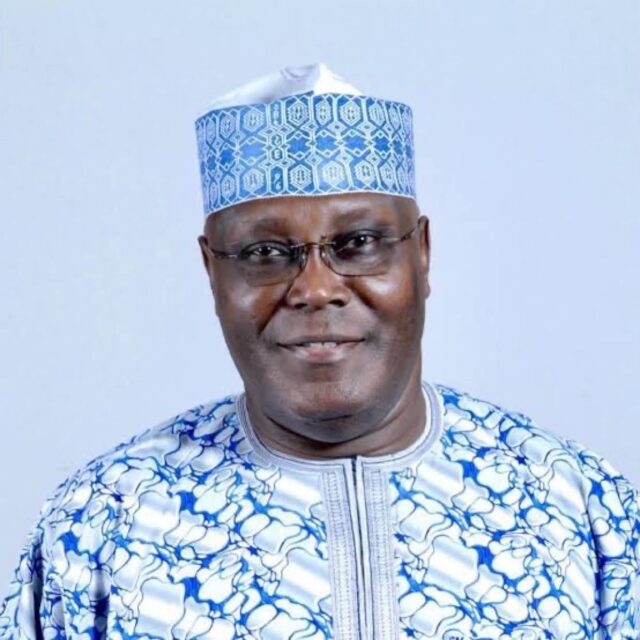
Atiku Accuses Tinubu Of Undermining Nigeria’s Democracy


Former Vice President Atiku Abubakar has accused President Bola Tinubu of systematically eroding Nigeria’s democratic foundations through actions he described as targeted, undemocratic, and aimed at weakening the opposition ahead of the 2027 general elections.

In a statement posted on his verified X (formerly Twitter) account, Atiku welcomed the reopening of Senator Natasha Akpoti-Uduaghan’s previously sealed office but criticized the initial closure as an attempt to silence opposition voices and deny the people of Kogi Central their constitutional representation.

He drew parallels between the incident and the ongoing political turmoil in Rivers State, where Governor Siminalayi Fubara and some members of the state House of Assembly faced suspension.

Atiku described the events as unconstitutional and part of a broader campaign to suppress dissent.

“They are deliberate markers of the Tinubu administration’s strategy as 2027 approaches: to subvert our hard-earned democracy and compromise the will of the people at any cost,” Atiku said.

The former vice president further alleged that the ruling All Progressives Congress (APC) under President Tinubu is using state institutions to intimidate opposition figures.

He cited incidents in Kaduna and Katsina, including reports that former Kaduna Governor Nasir el-Rufai was attacked at an African Democratic Congress (ADC) event.

According to Atiku, these events reflect an alarming trend of political intolerance and growing authoritarianism.

Atiku, who was Tinubu’s main challenger in the disputed 2023 presidential election, warned that the pattern of political suppression could undermine the electoral process as the nation moves towards 2027.

The 2023 polls, which were also contested by Peter Obi of the Labour Party, were upheld by the courts despite widespread claims of irregularities.

In recent months, Atiku and Obi have hinted at the possibility of a coalition to unseat the APC in the next general election.

Reaffirming his commitment to democratic principles, Atiku stated:

“Let it be clear: on our part, we shall do everything legitimate and within the bounds of the law to protect our democracy, defend the sovereignty of the people’s mandate, and rescue our nation from the grip of authoritarianism.”

He also urged Nigerians to remain vigilant and reject any attempts to roll back the democratic gains achieved since the return to civilian rule in 1999.

Google search engine

Peter Mbah And The New Enugu Narrative Of Development By Dr. Malachy Chuma Ochie


In every age, bold visions of progress have faced a predictable obstacle. This obstacle is called cynicism. Cynicism is easy; it requires neither sacrifice nor imagination.

Today, Governor Peter Mbah’s new development narrative for Enugu is confronting this age-old resistance. Some critics dismiss it as elitist, while others oppose it simply for mischief’s sake. But facts are stubborn things: in education and health, the two pillars of human capital development, Mbah is rewriting the story of Enugu State with uncommon courage.

Consider education. For decades, our schools have been plagued by infrastructural decay, rote learning, and outdated teaching methods that left our children poorly prepared for a competitive world. Mbah’s Smart Green Schools initiative is not a cosmetic renovation of dilapidated school buildings; it is a revolutionary leap.

By infusing digital learning, environmental consciousness, and skills for the workplace of tomorrow, Enugu State is saying that her children will not be trapped in the shadows of yesterday.

Critics who call this elitist should ask themselves: is it elitist to insist that every child, from Udenu to Awgu, from Isi-Uzo to Owo and Amagunze deserves access to 21st-century learning tools? Is it elitist to replace chalk-and-talk stagnation with critical thinking, creativity, and problem-solving? If it is, then Enugu must proudly wear the badge of “elitism in excellence.”

The story is the same in health. From strengthening primary healthcare centers to deploying technology for better patient management, the administration is refusing to gamble with the most sacred asset of society—life itself.

Preventive medicine, maternal care, and access to quality services in rural communities are no longer distant promises but realities in the making.

To trivialize these efforts as “elitist” is to trivialize the lives of ordinary citizens whose only demand is to live healthy, dignified lives.

The hypocrisy of cynicism lies in its double standards. Those who sneer at Smart Schools would, without hesitation, send their own children to private institutions that already embody these same ideals.

Those who pour scorn on health reforms would, in private moments, travel abroad or patronize high-end hospitals while denying the poor the right to comparable services at home. Such cynicism is not principled opposition; it is sabotage by envy, inertia, and fear of change.

Governor Mbah’s mission is not to pamper elites, but to democratize access to excellence. His vision is clear: to lift Enugu out of mediocrity and place it on the path of knowledge-driven, health-secured, and globally competitive growth.

What he asks of Ndi Enugu is simple: faith, patience, and collective ownership of this new narrative.

No society has ever leapt into modernity without confronting resistance. The choice before Ndi Enugu is stark and simple: to wallow in cynicism and stagnation, or to buy into a vision that promises their children the skills to thrive, their families the healthcare to live, and their communities the dignity to flourish.

The call, therefore, is urgent: let cynicism give way to courage, let mischief bow before reason, and let all Enugu people rally behind Governor Peter Mbah’s transformative agenda.

The future belongs not to skeptics, but to builders. Enugu State cannot afford to stand still. Governor Peter Mba’s transformative agenda is real. Let’s rally round him.

Google search engine

WHO Says Evidence Linking Paracetamol Use During Pregnancy To Autism Is Inconsistent


The World Health Organization (WHO) has cautioned against claims that paracetamol (acetaminophen) taken during pregnancy causes autism in children, stating that current scientific evidence does not support such a conclusion.

During a press briefing in Geneva, WHO spokesperson Tarik Jašarevic emphasized that while some observational studies hint at a possible link, larger and more recent research has failed to establish a consistent pattern.

“If the link were strong, it would emerge across multiple studies,” he noted.

He added that the agency continues to advise caution in the use of medicines during pregnancy, especially in the first trimester, and recommends they be used only when necessary and under medical supervision.

The European Medicines Agency (EMA) also disputed the claims, confirming that there is no new evidence to warrant a change in the current guidance for paracetamol use in pregnancy.

Health regulators in various countries, including Australia, have reaffirmed that paracetamol remains a safe option when used appropriately during pregnancy.

Autistic‑research experts and medical groups have criticized the remarks, warning that they may cause unnecessary fear and misinformation among expectant mothers.

The controversy began after U.S President Donald Trump suggested that using Tylenol during pregnancy could increase the risk of autism in children.

This followed previous claims linking vaccines to autism, claims that have been scientifically discredited.

Given the lack of conclusive evidence, many experts stress that untreated fever or pain during pregnancy may itself carry risks to the developing baby.

They advise that any medication during pregnancy should be used carefully, at the lowest effective dose and only when necessary.

Google search engine

Natasha To Resume Duties As Senate Unseals Office


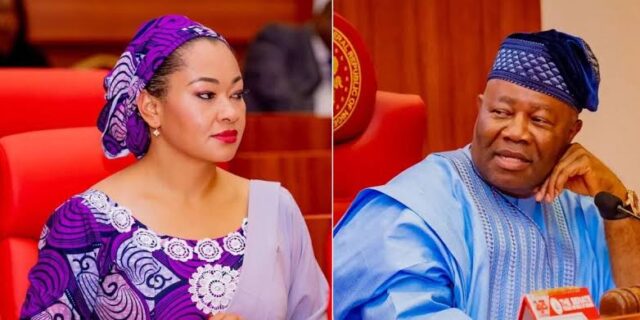
The Senate has ordered that the office of Senator Natasha Akpoti‑Uduaghan, representing Kogi Central, be unsealed, signalling her return to legislative duties after months of suspension.

In a video obtained by DAILY GAZETTE, Alabi Adedeji, Deputy Director and Sergeant‑at‑Arms of the National Assembly, announced, “I, having been directed to unseal the office of Senator Natasha Akpoti‑Uduaghan, hereby unseal the office.”

When reached for comment, Senate Spokesperson Yemi Adaramodu did not elaborate, stating only, “If something was sealed before and now unsealed, it means it has been unsealed.”

All efforts to obtain additional clarification were unsuccessful.

According to insiders, mounting pressure both from within the Senate and from external groups pushed for Senator Akpoti‑Uduaghan’s reinstatement once her six‑month suspension, imposed in March 2025, expired in September.

Earlier, the Senate’s principal officers met, but were quiet about what was decided.

Sources say there is division among senators: some believe she should return immediately, others insist on an apology before resumption, and a third group wants suspension extended pending a ruling by the Court of Appeal.

Despite Senate rules generally prohibiting debate on matters that are sub judice (under judicial consideration), several senators have urged the leadership to override this rule to resolve the impasse.

The initial suspension drew criticism and a legal outcry.

The Federal High Court described the six‑month suspension as “excessive,” while legal scholars have condemned its continuation as a violation of the rights of the people of Kogi Central to representation.

Civil society organizations, women’s rights advocates, and lawyers have all called for her formal reinstatement.

They are also pushing for an independent investigation into Senator Natasha’s accusations of sexual harassment against Senate President Godswill Akpabio, which many say should be treated separately from the Senate’s decision on her suspension.

Prominent legal voices, including Prof. Mike Ozekhome (SAN) and Ebun‑Olu Adegboruwa (SAN), have denounced the prolonged exclusion, saying it undermines representative democracy.

Ozekhome remarked that “you cannot punish a constituency because of one legislator.”

Google search engine

MOST COMMENTED

- Advertisement -
Google search engine